


Belgrade’s office stock tops 1.1M sq m — what that means for property investors

Serbia real estate is moving fast — and investors are paying attention
The real estate Serbia market has shifted from quiet to busy. In the past few years development activity accelerated across offices, retail and housing, and the numbers are now large enough to matter to regional and international investors. If you're watching Central and South‑eastern Europe for the next wave of property opportunities, Serbia — and Belgrade in particular — deserves a clear look.
Quick snapshot up front
- Modern office stock in Belgrade exceeded 1.1 million sq m of GLA in mid‑2022.
- Modern retail supply in Belgrade reached 575,000 sq m of GLA.
- Serbia population: 7.2 million; Belgrade: 1.7 million (Census 2011).
- Country area: 88,361 km².
These are not trivial market sizes. They signal a market that has moved beyond small‑scale local plays into a level that supports institutional considerations: portfolio allocations, purpose‑built office development, and speculative retail planning.
Office market: Belgrade is now a regional office hub
The most visible headline is that Belgrade’s modern office stock topped 1.1 million sq m GLA by mid‑2022. That number matters because it changes how occupiers and investors view the city.
What this means for occupiers and investors
- Companies looking for headquarters or regional hubs can find modern Grade A product and a growing pool of tenants from technology, outsourcing and multinational manufacturing.
- Investors can consider stabilised income from professional tenants or development plays targeting further rental growth if vacancy compresses.
Our analysis: the supply growth shows developer confidence, but it also raises questions. More supply can cap rent growth if demand does not keep pace. For investors we advise to watch absorption metrics and lease durations closely; a high headline GLA only helps if occupancy and effective rents follow.
Tenant mix and demand drivers
The office demand in Belgrade is anchored by:
- Business process outsourcing and shared services that need skilled English‑speaking labour.
- IT and software companies that are expanding headcounts and require flexible floorplates.
- Regional headquarters and international companies that prefer a lower cost base for back‑office operations.
These sectors are less cyclical than retail but still sensitive to global economic trends. For tenants seeking modern standard fit‑outs, Belgrade now offers credible Grade A options.
Residential and retail: prices at historical highs
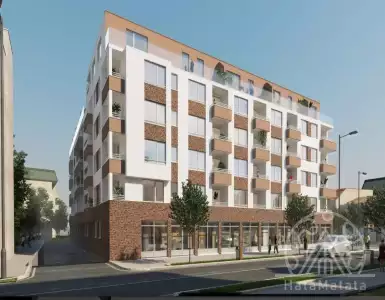
Residential development is active across Belgrade. The rental and sales market has become attractive to both domestic and international developers because of rising prices.
Key facts:
- The residential market is seeing new developments across the city, and the price per sq m has reached a historical high.
- Modern retail supply is 575,000 sq m GLA in Belgrade as of mid‑2022.
For investors this has two implications:
- Housing price growth can support mixed‑use projects where residential sales fund office or retail construction phases.
- Retail landlords should be selective — prime shopping centres and dominant neighbourhood centres still command tenant interest, but peripheral retail competition and online retail trends require careful tenant mix and management.
Our view is pragmatic: residential price records lure capital, but they also increase construction costs and reduce yield margins unless developers control land costs or secure pre‑sales.
Industrial and logistics: strategic potential with development gaps
Serbia’s geography is an asset. The country sits at the intersection of major transport corridors and provides access to EU markets without the higher cost base of EU states.
Relevant infrastructure notes from the market:
- Serbia lies on the intersection of Pan‑European Corridors X and VII (the Danube River), with Corridor X connecting Salzburg through Belgrade and Niš, then branching toward Athens and Sofia.
- Another branch links Belgrade with Budapest.
- The corridor 11 that connects Belgrade with the Montenegrin coast is under construction.
Why this matters for industrial and logistics real estate
- Proximity to these corridors and river transport creates attractive conditions for distribution and export‑oriented manufacturing.
- Serbia enjoys free trade agreements with multiple countries, which is important for manufacturing and logistics tenants that export.
But the market has a clear structural gap: although there has been industrial development, the country still lacks large‑scale, speculative logistics parks. That is an opportunity for early movers but also a risk because speculative logistics requires significant capital and long lease horizons.
For investors we suggest:
- Consider build‑to‑suit deals with anchor tenants, which lower speculative exposure.
- Target last‑mile facilities near Belgrade and major highway nodes where demand from e‑commerce and distribution is most immediate.
- Plan for longer lease structures to amortise development costs if building inland logistics parks.
Why businesses are choosing Serbia: workforce, taxes and trade
Several structural advantages explain why both manufacturing and service firms locate here:
- Skilled workforce: Serbia has a strong technical and IT talent pool. The country is recognised as a growth destination for IT professionals and outsourcing services.
- Favourable tax and business environment: Investors cite competitive corporate tax and incentives in certain sectors.
- Free trade agreements: These make Serbia attractive for export manufacturing since operators can access several markets without duties.
In our view, these elements create a compelling base case for property investors focused on industrial and office assets that serve export and outsourcing sectors.


 1
1
 47
47
 1
28
1
28
 1
1
39
1
1
39
Market participants and local expertise: the role of CBS International
Local market expertise is often the difference between a profitable project and a stalled one. CBS International is a prominent local player with a wide range of capabilities:
- Exclusive affiliate partner of Cushman & Wakefield in Serbia, Croatia and Montenegro.
- Team of over 130 professionals.
- Largest commercial real estate services firm in Serbia in terms of revenue for 12 consecutive years, including 2021 (Source: The Serbian Business Registers Agency).
- Operational metrics: 48 licensed real estate agents, 9 valuers (4 RICS), more than 750,000 sq m rented and sold office space, over 3,000 clients, 37 exclusive projects, and more than 200,000 sq m managed by facilities management.
For foreign investors we recommend engaging a local adviser with transaction experience, valuation capability and property management resources. A firm that can handle site selection, lease negotiation, entitlement and asset management will accelerate execution and reduce regulatory friction.
Risks and constraints investors must weigh
The Serbian market offers clear opportunities, but risks are real and sometimes under‑appreciated:
- Infrastructure projects have long timelines. Corridor upgrades and road links are underway, yet timing and delivery matter for logistics site viability.
- The lack of large speculative logistics parks means early development is capital heavy and requires tenant pre‑commitments.
- Data on vacancy, effective rents and long‑term absorption need regular updating. Headlines about GLA growth do not equal net absorption.
- EU accession is a political and regulatory process; Serbia has candidate status since March 2012, but accession timelines are uncertain and regulatory alignment can be gradual.
We advise investors to factor in longer investment horizons and to stress‑test exit scenarios against slower demand growth and delayed infrastructure delivery.
Practical advice for buyers, developers and institutional investors
If you are considering property in Serbia, consider these practical steps drawn from market practice:
- Start with local data: insist on verifiable performance metrics for comparable assets (occupancy, tenant roster, rent per sq m, lease terms).
- Secure local legal counsel with cross‑border experience for land title, zoning and permit review.
- Use joint ventures for large logistics and industrial projects to share development risk while benefiting from local political knowledge.
- Negotiate long‑term leases or pre‑lets for major industrial schemes to reduce speculative exposure.
- For residential developers, model scenarios that account for higher construction costs and varying sales velocity; consider phased launches.
Those steps reduce execution risk and align projects with market demand rather than speculative building.
How to size opportunities: a short checklist
- Location: proximity to Pan‑European corridors X and VII, and to Belgrade’s CBD.
- Tenant profile: BPO/IT, automotive suppliers, e‑commerce and regional distribution.
- Product type: purpose‑built logistics, Grade A offices, mixed‑use residential where demand is proven.
- Exit options: local institutional buyers, regional funds, or sale to strategic occupiers.
Use that checklist during initial screening to filter realistic opportunities from headline stories.
Conclusion: an active market with selective openings
The Serbian property market is now large enough to host institutional strategies in offices, retail and industrial property. Belgrade’s office stock of over 1.1 million sq m and its retail supply of 575,000 sq m are evidence of that scale. The country’s geostrategic position on the Danube and major Pan‑European corridors, combined with a skilled workforce and trade agreements, supports longer‑term industrial and logistics demand.
At the same time, structural gaps — notably the absence of large speculative logistics parks and the uneven pace of infrastructure delivery — mean investors must be selective and patient. We recommend partnering with experienced local advisers, securing pre‑lets for large builds, and structuring investments to accommodate infrastructure timing.
For practitioners, the practical takeaway is straightforward: Serbia is a market in active growth where careful underwriting and local execution matter more than chasing headline figures.
Frequently Asked Questions
Q: Is Serbia a good destination for property investment right now?
A: Serbia has clear advantages — strategic transport corridors, a skilled workforce, and a market size that now supports institutional office and retail products. For industrial and logistics, the potential is strong but developers should prefer pre‑lets or joint ventures to limit speculative risk.
Q: How big is Belgrade’s modern office market?
A: Belgrade’s modern office stock exceeded 1.1 million sq m GLA by mid‑2022, making it a significant office centre in the region.
Q: Are there ready large logistics parks in Serbia?
A: No. The market has seen industrial development but still lacks large‑scale speculative logistics parks. That gap is an opportunity if you are prepared for the capital and leasing timeframe required.
Q: What local partners should international investors consider?
A: Use a full‑service local real estate firm that offers agency, valuation, project management and facilities management. CBS International is one example of a local firm with national reach and international affiliation; they report over 130 professionals and exclusive partnership with Cushman & Wakefield.
Tags
We will find property in Montenegro for you
- 🔸 Reliable new buildings and ready-made apartments
- 🔸 Without commissions and intermediaries
- 🔸 Online display and remote transaction

International Real Estate Consultant

Subscribe to the newsletter from Hatamatata.com!
Subscribe to the newsletter from Hatamatata.com!
Popular Posts

We will find property in Montenegro for you
- 🔸 Reliable new buildings and ready-made apartments
- 🔸 Without commissions and intermediaries
- 🔸 Online display and remote transaction
International Real Estate Consultant

Subscribe to the newsletter from Hatamatata.com!
Subscribe to the newsletter from Hatamatata.com!
I agree to the processing of personal data and confidentiality rules of HatamatataPopular Offers
 1
45
1
45
 1
1
80
1
1
80
Need advice on your situation?
Get a free consultation on purchasing real estate overseas. We’ll discuss your goals, suggest the best strategies and countries, and explain how to complete the purchase step by step. You’ll get clear answers to all your questions about buying, investing, and relocating abroad.



Irina Nikolaeva
Sales Director, HataMatata