


Portugal’s Wealth Boom: Why UHNW Buyers Are Reshaping the Real Estate Market

Portugal’s luxury property surge: what the numbers say
Portugal’s real estate Portugal market is attracting an unexpected cohort: ultra-high-net-worth individuals (UHNWIs). Within five years the country added 725 ultra-wealthy residents, a rise of almost 50%, according to Knight Frank’s Prime International Residential Index (PIRI). That jump—from 1,462 in 2021 to an estimated 2,187 by 2026—is changing both the luxury housing stock and buyer profile in Lisbon, Cascais, Comporta and the Algarve.
The headline is simple and sharp: more people with at least €25 million in net worth are choosing Portugal as a home base or a place to park capital. That matters for anyone watching housing prices, planning a second-home purchase, or considering real estate Portugal as an investment destination.
Who are these ultra-wealthy buyers?
The composition of Portugal’s UHNW population is more mixed than many commentators assume. Our analysis of the Knight Frank study and interviews with Portuguese private bankers shows three clear groups:
- Domestic entrepreneurs who sold companies or large stakes to private equity and industrial groups. These include owners from traditional industries such as footwear, textiles, glass, plastics and wood, and an increasing number from tech and services.
- Foreign buyers and relocators, drawn by lifestyle, safety and earlier tax incentives like the Non-Habitual Resident (NHR) regime and golden visas (now curtailed for property routes).
- High-net-worth remote workers and digital entrepreneurs who discovered Portugal during the pandemic and converted short stays into permanent residence or property purchases.
Banco Carregosa’s wealth managers put it plainly: UHNWIs in Portugal are not all expatriates. Helena Seruca, the coordinating director of private banking, said many of the newly ultra-wealthy are Portuguese entrepreneurs whose personal liquidity swelled after selling stakes in companies in the post-COVID period. Bruno Minoya Perez, head of private banking at the same bank, offered concrete examples: an entrepreneur who sold a bakery chain to a French group and received €100 million overnight.
How wealth is being created: private equity, consolidation and exits
If you ask where the money is coming from, the short answer is private equity plus deal activity.
Private equity funds have been active in Portugal, taking stakes in family-run or founder-led firms and pushing consolidation in fragmented sectors. The pattern has been:
- Private equity buys stakes to fund growth or consolidation.
- Owners accept offers rather than manage succession into old age.
- Large liquidity events follow, producing sudden new UHNWIs.
Sectors where this is visible include consumer goods, services, funeral homes, and professional services such as law firms. Perez noted that many owners in their 50s and 60s opt to sell when attractive offers arrive; these single exits can create new members of the ultra-wealthy class.
That wave is not limited to traditional industries. We are seeing tech and service-sector exits too. The result is a domestic base of wealthy people who are more likely to buy primary luxury residences and to keep a strong local footprint.
Where the ultra-wealthy buy: price bands and hot spots
Luxury demand is concentrated in a handful of locations and price brackets. Christie’s International Real Estate data and local agents provide a clear snapshot of the market structure.
- Entry-level high-end: around €6,500 per sq m. This is the upper end of mainstream prime housing and is dominated by Portuguese buyers—currently 95% of transactions in this band.
- Luxury: around €11,000 per sq m. Demand here mixes domestic and foreign buyers.
- Ultra-luxury: properties priced well above the €11,000 per sq m mark; examples include villas and estates in prime waterfront or golf locations.
Prime locations include:
- Central Lisbon, where historic luxury apartments and renovated Pombaline or 18th–19th-century buildings attract international buyers seeking city living and capital appreciation.
- Cascais and Quinta da Marinha, where proximity to Lisbon, seafront villas and golf draw weekenders and permanent residents arriving by private jet.
- Comporta and Terras da Comporta, which have attracted luxury second-home buyers and lifestyle investors; the Terras development’s championship golf course (opened in 2023) is marketed to that niche.
- The Algarve’s Golden Triangle (Vilamoura, Vale do Lobo and Quinta do Lago), a long-established magnet for wealthy international buyers, with ultra-luxury villa stock and gated estates.
João Cília, CEO of Porta da Frente Christie’s, highlighted that Cascais and Lisbon account for over 26% of the luxury housing supply Christie’s analysed across Europe; Cascais alone ranks ahead of London and Madrid in the network’s market representation. One listed example—a nine-bedroom Guia villa in Cascais priced at €20.4 million—illustrates how ceiling prices now rival other top European markets.
Branded residences and changing product preferences
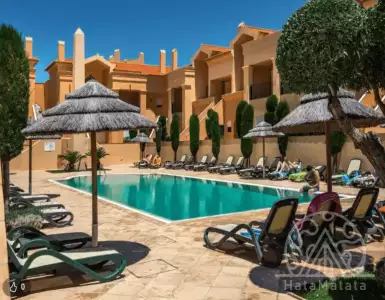
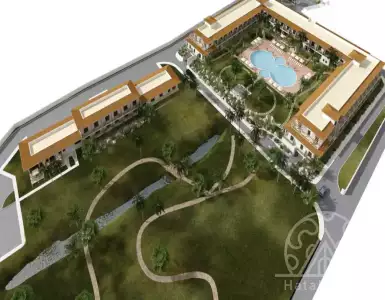
A distinctive element of Portugal’s high-end market is the growth of branded residences. Portugal leads Europe in this type of product, with about 1,200 branded units that make up 30%–50% of the country’s luxury residential market, depending on how you count.
The appeal is concrete for international buyers who spend months abroad. Branded residences offer:
- Hotel-style amenities and management.
- An option to place the property into hotel operation while absent, generating yield and reducing owner hassle.
- A consistent standard that appeals to wealthy buyers used to international brand credentials.
This product type is particularly attractive where supply of traditional ultra-luxury homes is limited. Cília says many foreign buyers now treat Portugal as a place to anchor a multi-country lifestyle; branded residences make that easier.
Buyer origins: who is coming and why this matters
The foreign buyer mix is evolving. Historically, Brazilians and North Americans were the dominant foreign buyers in luxury segments. Newer flows include investors from the Middle East, with Qatar cited as a growing source of interest, driven by geopolitical tensions in the region and a search for safe, euro-denominated assets within the EU.
Key buyer origins and traits:
- North America and Brazil: established sources for Lisbon and coastal luxury.
- Israel and Turkey: investors active in refurbishment plays—buying city apartments and upgrading them for rental or resale.
- Gulf states: an expanding presence in ultra-luxury deals and branded residences.
This diversity matters for pricing dynamics.






Policy shifts: NHR, golden visas and what changed demand
Portugal’s earlier attraction to the rich was partly engineered through public policy. The NHR regime, created in 2009, offered tax benefits for a decade to attract skilled professionals and foreign pensioners. Golden visas allowed residency via investment, including property purchases—until the property route was phased out.
Recent tightening has reduced the direct tax incentives for newcomers:
- The golden visa property route is no longer an option for new applicants.
- The NHR regime now applies only to selected scientific and highly qualified activities, and its broad tax appeal has narrowed.
Knight Frank estimates these changes may dampen international demand but will not eliminate it. Our view is more nuanced: incentives were an accelerant, not the only cause. Quality of life, political stability, climate and the emergence of branded residences and high-quality new product are still strong selling points. That said, the removal of easy residency routes shifts the buyer profile toward those already mobile and wealthy enough to move without fiscal tailwinds.
Supply constraints and market risks
Portugal is not a large country, and prime supply in the locations the ultra-wealthy prefer is limited. João Cília warns that supply could be the main constraint on future growth: high-net-worth people want bespoke construction in prime locations, and these plots are finite.
Risks to watch:
- Constrained supply in prime coastal and central districts may push prices into thin segments where liquidity is low.
- Policy uncertainty: further tax or residency changes could affect buyer behaviour, especially among those who came mainly for fiscal benefits.
- Macro shocks: a sudden downturn in global wealth or credit conditions could reduce demand for second homes and ultra-luxury properties faster than the broader market.
- Local affordability tensions: rising luxury prices can increase political pressure for housing policy changes, which could affect the market indirectly.
We think the market will continue to attract wealthy buyers, but the most aggressive price growth is unlikely to be uniform across regions.
Practical takeaways for buyers, investors and expats
For anyone considering property Portugal—whether as an owner-occupier, second-home buyer, or investor—here are practical considerations based on the latest data and market signals:
- Research the micro-market. Lisbon’s neighbourhoods, Cascais enclaves and Algarve estates behave differently for pricing and liquidity.
- Expect entry-level high-end stock to remain dominated by Portuguese buyers; foreign demand is concentrated in the luxury and ultra-luxury tiers where around 65% of buyers today are foreigners.
- If yield is part of the plan, investigate branded residences and management contracts carefully: understand fee structures, occupancy assumptions and exit provisions.
- Factor in residency and tax changes. Golden visas via property are gone; NHR benefits are narrower. Do not base a purchase solely on previous tax frameworks.
- For refurb plays, look to central Lisbon and Porto where investors from Israel and Turkey are active—just be realistic about renovation timelines and local permitting.
As private bankers told us, wealthy buyers often prioritize asset protection, tax planning and succession. So if you are an investor aiming to attract UHNW buyers—developers need to offer scarcity, service and compliance with luxury standards.
Outlook: modest continuation of growth, with caveats
Knight Frank forecasts the UHNW population in Portugal will reach 2,452 by 2031. We accept that projection as plausible given current deal flow and continued appeal. But there are caveats: limited prime supply, tightened tax regimes and global economic shifts could slow the pace.
My assessment is blunt: Portugal’s combination of safety, EU membership and lifestyle will keep it on the radar for wealthy buyers, yet the market is maturing. Early-policy advantages are fading; what remains is product quality, brand-led development and pockets of domestic wealth creation through private equity exits.
Frequently Asked Questions
Who counts as an ultra-high-net-worth individual (UHNWI)?
In the Knight Frank study, a UHNWI has a net worth of at least €25 million. This is the threshold used to monitor the ultra-wealthy population in the PIRI index.
How much has Portugal’s ultra-wealthy population grown?
Portugal had 1,462 UHNWIs in 2021 and is projected to reach 2,187 by 2026, an increase of 725 people or almost 50% over five years. Knight Frank forecasts 2,452 UHNWIs by 2031.
Are most luxury property buyers in Portugal foreigners?
The buyer mix depends on the price band:
- Entry-level high-end: about 95% Portuguese buyers.
- Luxury and ultra-luxury segments: roughly 65% foreign buyers, primarily from North America and Brazil, with growing interest from the Middle East.
Have Portugal’s tax and residency changes killed foreign demand?
No. The property route for golden visas has ended and the NHR regime has narrowed, which reduces some fiscal drivers. But Knight Frank and local agents report demand remains, driven by lifestyle, political stability and branded residences. Expect demand to be less incentive-driven and more focused on product and lifestyle.
End note: Portugal’s luxury property market is now shaped by two engines—domestic wealth creation through private equity exits and a diverse pool of international buyers. For buyers and investors the immediate lesson is concrete: pick the right micro-location, understand product types like branded residences, and plan around the post-incentive landscape rather than hoping for a return to the old fiscal regime.
Tags
We will find property in Portugal for you
- 🔸 Reliable new buildings and ready-made apartments
- 🔸 Without commissions and intermediaries
- 🔸 Online display and remote transaction

International Real Estate Consultant

Subscribe to the newsletter from Hatamatata.com!
Subscribe to the newsletter from Hatamatata.com!
Popular Posts

We will find property in Portugal for you
- 🔸 Reliable new buildings and ready-made apartments
- 🔸 Without commissions and intermediaries
- 🔸 Online display and remote transaction
International Real Estate Consultant

Subscribe to the newsletter from Hatamatata.com!
Subscribe to the newsletter from Hatamatata.com!
I agree to the processing of personal data and confidentiality rules of Hatamatata

Need advice on your situation?
Get a free consultation on purchasing real estate overseas. We’ll discuss your goals, suggest the best strategies and countries, and explain how to complete the purchase step by step. You’ll get clear answers to all your questions about buying, investing, and relocating abroad.



Sales Director, HataMatata