


House in Indonesia


Choosing a property in Indonesia for your request
- 🔸 Reliable new buildings and ready-made apartments
- 🔸 Without commissions and intermediaries
- 🔸 Online display and remote transaction

International Real Estate Consultant
Need help choosing a property?
Leave a request and our manager will contact you.
International Real Estate Consultant

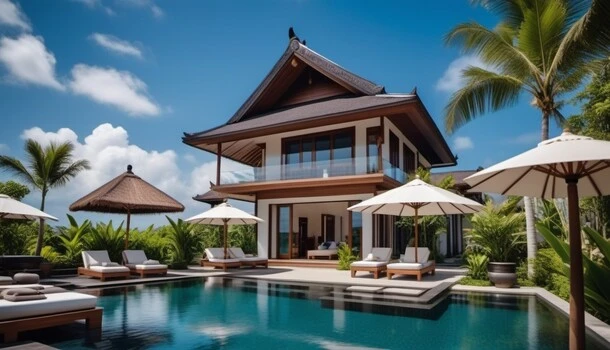
Weather in Indonesia
For Sale house in Indonesia
Houses in Bali
 2
2
 2
2
 80
80
 3
2
138
3
2
138
 1
1
100
1
1
100
Didnt find the right facility?
Leave a request - we will handle the selection and send the best offers in a short period of time



Irina Nikolaeva
Sales Director, HataMatata
House in Indonesia
Choosing a property in Indonesia for your request
- 🔸 Reliable new buildings and ready-made apartments
- 🔸 Without commissions and intermediaries
- 🔸 Online display and remote transaction
International Real Estate Consultant
Need help choosing a property?
Leave a request and our manager will contact you.
International Real Estate Consultant
Individual selection houses in Indonesia
Save time — for free we will select objects for your budget and goals
🇮🇩 Ownership rules, taxes, and financing for residential property in Indonesia
Indonesia is a vast archipelago of more than 17,000 islands with extremely varied landscapes — from the dense megacity of Jakarta and the industrial ports of Surabaya and Medan, to tourist magnets like Bali (Seminyak, Canggu, Ubud) and emerging resort corridors in Lombok and Mandalika. These geographic and infrastructural features shape demand for House in Indonesia: coastal villas attract holiday rental streams, suburban gated houses near Jakarta and BSD City draw families and executives, and worker housing in Batam and Bintan serves industry-linked rental markets. Climate and natural risk (tropical monsoon, seismic activity, volcanic terrain) also affect construction standards, insurance costs and resale liquidity, pushing buyers toward well-serviced zones with reliable power, ports and airports such as Soekarno–Hatta (Jakarta), Ngurah Rai (Bali) and Juanda (Surabaya).
💶 How much House costs in Indonesia
Buying real estate in Indonesia shows wide price variance depending on island, city and property format. In Bali, small private villas in Canggu and Seminyak typically start around USD 100,000–300,000 for one-bedroom units and climb to USD 500,000–3,000,000+ for premium beachfront or branded residences in Nusa Dua and Uluwatu. Jakarta metropolitan houses in established neighborhoods (Pondok Indah, Menteng) generally range from USD 1,000,000 to over USD 10,000,000 for luxury compounds, while suburban houses in Tangerang, BSD City and Bekasi begin at USD 120,000–450,000 for modest family homes and USD 450,000–1,200,000 for larger modern houses.
Prices by city and format:
- Jakarta metro: USD 120,000–10,000,000 (suburbs to central mansions)
- Bali (Seminyak, Canggu, Ubud): USD 100,000–5,000,000+
- Surabaya / Medan: USD 80,000–800,000
- Lombok / Mandalika: USD 150,000–1,500,000
- Batam / Bintan: USD 70,000–500,000 Market dynamics show steady demand in tourist and Gateway corridors, with higher capital appreciation and resale velocity in Bali and Jakarta satellite cities and softer but stable yields in industrial islands.
🎯 Which region of Indonesia to choose for buying house in Indonesia
Selecting the right region depends on purpose: living, rental, or capital gain. Bali remains the primary choice for short-term rental strategy and lifestyle buyers because of international flight connectivity, established villa management companies, and stable tourist flow; Seminyak and Canggu deliver high occupancy for holiday lets while Ubud appeals to wellness and long-stay guests. Jakarta and its satellite cities (BSD City, Karawaci, Bintaro) serve buyers targeting corporate rentals and relocation due to proximity to office towers, international schools and hospital clusters.
Regions and practical considerations:
- Bali (Seminyak, Canggu, Nusa Dua): high tourist demand, strong short-term rental occupancy, variable seasonality
- Jakarta metro & BSD City: commuter convenience, family housing, proximity to MRT, toll roads and Soekarno–Hatta
- Surabaya & Medan: industrial clusters, domestic rental demand, lower entry prices
- Lombok & Mandalika: emerging resort investment, government-backed infrastructure projects Infrastructure drives demand: Trans-Java Toll Road shortens logistics, Jakarta-Bandung high-speed rail and MRT Jakarta increase catchment areas and thus affect choice of suburb and price trajectory.
🏙️ Cities in Indonesia where House is most often purchased
Foreign and domestic buyers converge on several hotspots driven by tourism, business and ease of ownership. Bali (Denpasar, Badung regency) is top for foreign investors and holiday-home buyers; Jakarta and its suburbs are favored by executives and families; Surabaya and Medan have strong local buyer bases linked to commerce and manufacturing; Batam and Bintan attract industry-linked housing and short-term rentals around shipping and logistics hubs.
Key cities with practical details:
- Jakarta: direct access to embassies, multinational HQs, leading hospitals (Cipto Mangunkusumo, Siloam), schools (Jakarta Intercultural School); rental demand mostly long-term corporate leases
- Bali (Seminyak, Canggu, Uluwatu): tourist infrastructure, villa management companies, international airport Ngurah Rai; short-term rental yields higher
- Surabaya: port logistics, Juanda Airport connectivity, steady domestic rental; more affordable entry points
- Batam/Bintan: proximity to Singapore, industrial workforce housing, cross-border commuting profile
🏗️ Developers and projects offering House in Indonesia
Major developers shape new supply and standards for houses across urban and resort markets. Recognizable developers include Sinarmas Land (BSD City), Ciputra Group (Ciputra World, Ciputra developments across Java), Agung Podomoro Land (Podomoro City), Summarecon Agung (Summarecon Serpong), Lippo Group (Lippo Village, Kuningan City affiliations), Sinar Mas Land, MNC Land (MNC Lido City), Keppel Land Indonesia and PP Properti. Resort and villa specialists and branded projects include boutique and international operators active in Bali, Lombok and Mandalika.
Representative projects and developer strengths:
- BSD City by Sinar Mas Land / Sinarmas Land: integrated townships with schools, hospitals, retail malls — strong family-housing market
- Podomoro City (Agung Podomoro Land): mixed-use developments with access to transport hubs
- Ciputra developments: premium housing clusters and international-level masterplans in Jakarta and Surabaya
- Summarecon Serpong: planned townships with reliable infrastructure and visible resale liquidity Advantages of buying new projects:
- Developer warranties and staged payments
- Access to on-site amenities (clubhouses, security, schools)
- Higher sales transparency and documented land titles in integrated estates
🏦 Mortgage Indonesia for foreigners and installment options for House in Indonesia
Obtaining mortgage Indonesia for foreigners is possible but conditional. Indonesian banks commonly require residency status (KITAS or KITAP), local income evidence or corporate guarantees; selected banks such as Bank Central Asia (BCA) and Bank Mandiri have offered foreigner lending under strict underwriting. Typical interest rates for property loans are in the region of 6%–10% dependent on tenure and bank; maximum loan terms usually span 10–20 years with down payments of 20%–40% from foreign buyers.
Mortgage and installment specifics:
- Down payment: usually 20%–40% for non-residents
- Interest rates: approximately 6%–10% fixed or floating depending on bank and currency
- Tenor: up to 15–20 years for eligible borrowers
- Developer installment plans:
- Deposit and staged payments tied to construction milestones, sometimes with 10%–30% initial deposit and balance on completion
- Some projects offer cashback or interest-subsidized installment promotions For many foreign buyers the practical route is house in Indonesia with installment plan offered by developers or acquiring via a locally-registered PMA company to meet bank conditions.
📜 Legal process to buy house in Indonesia and ownership rules
The Legal process to buy house in Indonesia requires rigorous checks because foreigners cannot generally acquire freehold title (Hak Milik). Typical foreign routes are leasehold (Hak Sewa), right-to-use (Hak Pakai) titles, or acquisition through a locally established foreign investment company (PMA) which may obtain rights over certain property types, notably apartments under the right-to-use regime. Notary (notaris) and registration with the National Land Agency (BPN) are mandatory steps, with the notary preparing sale and purchase agreements, deed of transfer and coordinating title transfer.
Step-by-step transaction flow:
- Due diligence: verify land title, seller’s encumbrances, building permits (IMB), developer permits
- Promissory contract and deposit: sign reservation/DD agreements and pay initial deposit to escrow when available
- Deed of sale & transfer at notary: notary executes the deed, manages tax withholding and submits to BPN for registration
- Registration and handover: BPN updates land registry and issue certificate of right or lease assignment Typical timelines and costs:
- Due diligence and contract: 2–6 weeks
- Notary and registration: 2–8 weeks
- Transaction costs (house purchase costs in Indonesia): include BPHTB transfer tax (~5% of taxable base), notary fees (variable), and registration charges — budget 5%–8% beyond the purchase price in transactional expenses.
⚖️ Property taxes in Indonesia for foreigners and ownership obligations
Property taxes in Indonesia for foreigners follow the same primary tax instruments as for locals, with specific treatment for non-resident income. The main levies are the BPHTB (transfer duty, commonly ~5% of transaction value or assessed value), annual land and building tax PBB (often around 0.1% of NJOP — the value set by authorities) and income tax on rental revenue, which depends on tax residency and entity structure. Non-resident rental receipts may be subject to withholding; developers and notaries typically advise tax clearances and registration for VAT or withholding as applicable.
Tax and compliance checklist:
- BPHTB: approximately 5% on transfer base
- PBB: annual, generally low (around 0.1% of NJOP) but varies by municipality
- Income tax on rental: requires filing; withholding rules differ for companies vs individuals and for non-residents Mandatory procedures include registration with tax office (NPWP), filing for transfer at BPN and maintaining documents for possible audit. Purchase does not automatically grant residency: keywords clarity — Residence permit through house investment in Indonesia and Golden visa through house investment in Indonesia are not available as automatic pathways; residence or citizenship requires separate immigration or investment structures and thresholds.
🧭 Which purposes suit buying House in Indonesia and where to buy accordingly
House purchases in Indonesia serve distinct uses: primary residence, relocation, seasonal holiday home, short-term rental, long-term rental for corporate leasing, family compound or premium luxury portfolio. Each use case aligns with specific locations and property types. For expatriate families needing schools and hospitals, Jakarta suburbs (BSD City, Bintaro, Kemang) deliver family houses with school networks. For holiday-rental investors seeking high occupancy and management services, Bali (Seminyak, Canggu, Nusa Dua) and Lombok/Mandalika are top choices. For industrial or workforce rental plays, Batam, Bintan and Medan provide steady demand.
Recommended match-ups:
- Living/Relocation: BSD City, Kemang, Jakarta CBD adjacency — medium/large houses near international schools
- Seasonal residence / Holiday rental: Bali (Seminyak/Canggu), Lombok (Senggigi), high turnover, villa management
- Investment house in Indonesia (capital appreciation): Bali prime villas, Jakarta gated estates, Mandalika resort plots
- Family use / Premium segment: Menteng, Pondok Indah, Uluwatu clifftop villas
Market prospects remain positive where infrastructure, tourism and urbanization intersect. Continued investment in airports, toll roads and township projects increases accessibility and demand; tourism resilience in Bali and growth of secondary destinations such as Lombok and Mandalika support short-term rental markets, while Jakarta’s role as a business nucleus sustains demand for family and corporate housing. Buyers focusing on legal structure, tax planning and location fundamentals typically secure better rental yield for house in Indonesia and a predictable ROI on house in Indonesia over a medium-term investment horizon.
Frequently Asked Questions
Nationwide average house prices typically range around IDR 1–1.5 billion (≈USD 65k–100k). Major urban or tourist centres are higher: homes and condos in Jakarta, Bali or central Surabaya often start at IDR 2–10+ billion. Prime Jakarta per‑sqm can be in the IDR 20–70 million range. Market-wide annual price growth commonly falls between about 4%–8%, varying by location and product.
Foreigners cannot generally hold freehold land (Hak Milik). Typical legal routes: buy apartments with eligible strata title, acquire long‑term use rights (Hak Pakai) or hold property through a foreign investment company (with HGB/Hak Pakai). Leases and 25–30+ year use rights are common; extensions and corporate structures require careful legal setup and notarised contracts.
No. Indonesia does not offer residency or citizenship simply for property purchases; there is no golden visa program tied to buying a home. Residence is obtained through visas (work, retirement, family) or investor/company visas tied to business investment, not private property ownership. Citizenship requires long legal residence and naturalisation procedures.
Gross rental yields in major cities typically range 4%–7%; tourism hotspots like Bali can see higher seasonal gross yields around 6%–9%. Net yield after taxes, management and maintenance is lower. Investors often plan a 5–10 year horizon for capital growth and break‑even on transaction costs and improvements.
Key costs: acquisition duty (BPHTB) roughly 5% of assessed value above thresholds, notary/transfer fees (about 1%–3%), and final income tax on property sales often applied (commonly a ~2.5% final rate on gross transaction). Annual property tax (PBB) is low (small fraction of assessed value). Exact amounts depend on local NJOP and transaction structure.
Some local banks lend to foreigners but conditions are stricter: valid KITAS/KITAP, Indonesian income or guarantor, lower LTV (often 50%–70%), and shorter terms (up to 15–20 years). Interest rates vary by bank and currency, commonly in the domestic range for housing credit. Approval rates and documentation requirements are stricter than for locals.
For relocation: Jakarta for jobs and services; Yogyakarta for education/culture; Bali for lifestyle. For investment: Bali and Jakarta for tourism and rental demand; Surabaya and industrial corridors for steady rental to local professionals. Choose by horizon: relocation needs immediate amenities; investment focuses on rental demand, infrastructure and 3–10 year appreciation prospects.
Verify land title type (Hak Milik, HGB, Hak Pakai), check for mortgages/encumbrances, confirm building permit (IMB) and zoning, review tax payment history, and get a certified sale deed from a notary. Use a local legal adviser and require English translations and certified copies; due diligence typically takes weeks to complete before signing.
Returns in IDR are subject to currency swings; repatriation of proceeds is permitted but requires correct banking and tax documentation. Political or regulatory shifts can affect property rules and taxes. Investors mitigate risk by hedging currencies, holding diversified locations, and planning a medium‑term horizon (5–10 years) to smooth volatility.
Long‑term strengths: a young population and growing middle class, expanding urbanisation and infrastructure, strong tourism demand in key islands, and affordable entry prices versus many markets. These fundamentals support steady housing demand and multi‑decade capital appreciation potential for well‑located properties with proper legal structuring.
Properties by Region
- Houses in Bali (1858)
Properties by Country
- Real estate in Bulgaria (11408)
- Real estate in Montenegro (5373)
- Real estate in Indonesia (2423)
- Real estate in Spain (2289)
- Real estate in Portugal (1975)
- Real estate in Italy (1897)
- Real estate in Turkey (1699)
- Real estate in Cyprus (1590)
- Real estate in Thailand (1565)
- Real estate in Croatia (1431)
- Real estate in Greece (1082)
- Real estate in USA (1013)
- Real estate in France (1006)
- Real estate in Georgia (519)
- Real estate in Serbia (328)
- Real estate in Slovenia (123)
- Real estate in Egypt (23)
Don't know where to start buying a property in Indonesia?
Leave a request and receive free advice on prices, taxes, residence permits and the real estate market. in Indonesia.

Maria Guven
Head of Direct Sales Department
+90-507-705-8082