


Townhouse in Indonesia


Choosing a property in Indonesia for your request
- 🔸 Reliable new buildings and ready-made apartments
- 🔸 Without commissions and intermediaries
- 🔸 Online display and remote transaction
Our managers will help you choose a property

Liliya
International Real Estate Consultant
Need help choosing a property?
Leave a request and our manager will contact you.
Our managers will help you choose a property
Liliya
International Real Estate Consultant

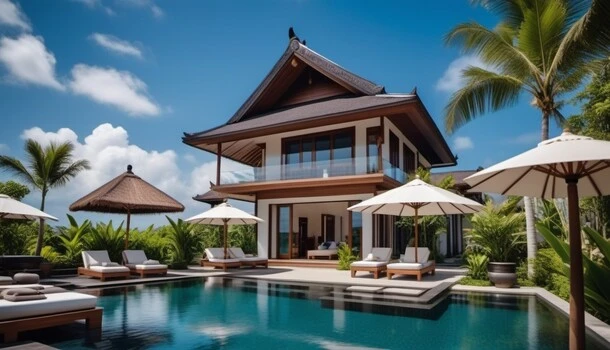
Weather in Indonesia
For Sale townhouse in Indonesia
Townhouses in Bali
 2
2
 2
2
 102
102
 2
3
132
2
3
132
 2
73
2
73
Didnt find the right facility?
Leave a request - we will handle the selection and send the best offers in a short period of time



Irina Nikolaeva
Sales Director, HataMatata
Townhouse in Indonesia
Choosing a property in Indonesia for your request
- 🔸 Reliable new buildings and ready-made apartments
- 🔸 Without commissions and intermediaries
- 🔸 Online display and remote transaction
Our managers will help you choose a property
Liliya
International Real Estate Consultant
Need help choosing a property?
Leave a request and our manager will contact you.
Our managers will help you choose a property
Liliya
International Real Estate Consultant
Individual selection townhouses in Indonesia
Save time — for free we will select objects for your budget and goals
🇮🇩 Townhouse market overview in Indonesia: prices, neighborhoods, ownership rules
Buying a townhouse in Indonesia combines tropical lifestyle, rapid urban growth and strong tourist demand with a market that rewards location and developer credibility. For all buyers — private, expatriate or institutional investors — understanding land titles, regional price differentials and local infrastructure is essential to secure value and legal clarity. This overview explains where demand is strongest, how prices break down by city and format, which developers dominate townhouse supply, financing options for foreigners, the legal purchase steps, tax and rental rules, and realistic scenarios for living, seasonal use and investment.
🗺️ Why geography, climate and infrastructure in Indonesia shape the Townhouse in Indonesia market
Indonesia’s archipelago geography concentrates demand in major islands and economic corridors; Java and Bali capture the largest share of townhouse interest because of proximity to jobs, airports and tourism. Coastal and resort belts such as Bali (Canggu, Seminyak, Nusa Dua) and transit corridors like Greater Jakarta (BSD, Bintaro, Bekasi, Tangerang) see high demand for compact low-rise living and vacation rentals. Climatic factors — tropical monsoon with wet and dry seasons — affect construction standards (raised foundations, proper drainage) and therefore maintenance costs and resaleability.
Urban infrastructure projects strongly influence where townhouses appreciate: the development of Jakarta MRT, Trans-Java toll network, Soekarno-Hatta and Ngurah Rai airports, and upgraded ports at Tanjung Priok and Tanjung Perak has shifted demand toward well-connected suburbs and satellite cities. Commuter rail (KRL), new toll links and airport connectivity shorten effective travel times and create pockets where townhouse units become commuter hubs for professionals and families. Investors targeting rental yield look for properties close to business districts, universities and international schools.
Tourism and business centers create dual-purpose demand: Bali’s seasonal tourism drives short-term rental markets in Seminyak, Canggu and Ubud, while Jakarta’s CBDs (SCBD, Kuningan, Sudirman) and industrial clusters in Surabaya, Batam and Bintan support longer-term leases to corporate tenants and expat families. These locational drivers mean townhouse product that sits near transport nodes, retail and education typically commands higher occupancy and premium pricing.
💶 How the economy and investment climate in Indonesia affect Townhouse for sale in Indonesia
Indonesia’s large domestic market and steady urbanization underpin residential demand; GDP growth driven by consumption, manufacturing and tourism creates a resilient base for housing. Foreign direct investment into manufacturing and infrastructure increases demand for employee housing in corridors around Jakarta, Surabaya and Batam, enhancing liquidity for mid-market townhouses. Tourism inflows to Bali, Lombok and Bintan sustain the short-stay rental pool supporting higher yields for holiday-oriented townhouse formats.
Tax and regulatory frameworks matter for buyers assessing Investment townhouse in Indonesia prospects. Corporate tax regimes and incentives for tourism zones (special economic zones in Bintan, Batam, Mandalika) affect profitability for developers and operators, while land-use regulations and restrictions on foreign freehold ownership shape legal structures for cross-border capital. Overall, market liquidity is higher in established cities and tourist belts where resale markets and property management services are available.
Market sentiment for townhouse segments tracks infrastructure roll-outs, occupancy statistics and developer balance sheets; areas with completed toll links or new international flight routes typically show faster appreciation. For professional investors monitoring ROI on townhouse in Indonesia, combining rental yield metrics with expected capital appreciation in connected corridors provides a realistic valuation framework.
💰 How much Townhouse costs in Indonesia with breakdown by city, format and status
Prices vary widely by island, proximity to core infrastructure and project positioning. Typical formats range from compact two-storey townhouses (built area 80–140 sqm) to luxury detached townhomes and villa clusters (150–350+ sqm).
- Jakarta & Greater Jakarta (BSD, Bintaro, Bekasi, Tangerang)
- Price range: $120,000 – $800,000+
- Price per sqm: $1,000 – $4,500 per sqm
- New gated developments and townhouse clusters dominate mid-market supply.
- Bali (Canggu, Seminyak, Ubud, Nusa Dua)
- Price range: $150,000 – $2,500,000
- Price per sqm: $1,200 – $6,000 per sqm in premium coastal sectors
- Resort-style townhouse and villa compounds aimed at holiday rental.
- Surabaya & East Java (Pakuwon City, Darmo)
- Price range: $80,000 – $400,000
- Price per sqm: $800 – $2,500 per sqm
- Batam, Bintan, and Lombok (Mandalika)
- Price range: $70,000 – $800,000
- Close proximity to Singapore raises demand and yields for short-term lets.
- Yogyakarta, Bandung and secondary cities
- Price range: $50,000 – $250,000
- Affordable townhouses attractive to local buyer pool and domestic rental market.
Market dynamics: completed projects in prime areas command premiums and higher liquidity; off-plan launches frequently offer staged payments and attract investors seeking lower entry pricing. Townhouse purchase costs in Indonesia typically include booking fees (1–5%), down payment (20–40%), notary and transfer fees (2–5%), and annual property taxes.
📍 Which region of Indonesia to choose for buying townhouse in Indonesia and why
Greater Jakarta remains the largest market for commuter and family townhouses due to corporate HQs, international schools and hospitals concentrated in South Jakarta, Kemang, Kuningan and BSD City; rental demand is year-round from professionals and families. Bali is the top choice for seasonal and short-term rental strategies with high tourist occupancy in Seminyak, Canggu, Ubud and Nusa Dua; villas and townhouse compounds near beaches and lifestyle hubs capture the highest rental yield for holiday lets.
Surabaya and East Java serve industrial and university-driven demand; Pakuwon City and Ciputra-developed estates target middle-to-upper market tenants and relocating families. Batam and Bintan are popular among Singapore-linked investors because of ferry links and resort positioning, offering competitive purchase prices and potential for higher Rental yield for townhouse in Indonesia. Secondary city options such as Bandung and Yogyakarta are attractive for lower entry prices and steady domestic rental markets tied to students and local professionals.
Price differences reflect infrastructure, legal clarity and demand intensity: townhouses near MRT stations or major toll exits command price premiums, while properties deeper in peri-urban zones trade at discounts but may offer stronger capital appreciation if planned infrastructure reaches them.
🏗️ Leading developers and projects offering Townhouse in Indonesia
Major Indonesian developers with townhouse products include:
- Sinar Mas Land / BSD City — large-scale township developments with townhouse clusters and integrated amenities.
- Ciputra Development — CitraGarden and mixed-use townships with residential clusters and schools.
- Summarecon Agung — Summarecon Serpong and Bekasi townhouse clusters with retail integration.
- Lippo Karawaci / Lippo Village — gated townhouse communities and healthcare/retail ecosystems.
- Pakuwon Jati — Pakuwon City in Surabaya with mid-to-high-end townhouse offerings.
- Agung Podomoro — urban townhouse projects within Jakarta’s mixed-use developments.
- PT Intiland Development — projects in Surabaya and Jakarta focused on modern townhouse living.
- Resort and island-focused developers and authorities such as ITDC (Mandalika) and Bintan Resorts operators provide villa and townhouse-style units targeted to hospitality and rental.
These developers deliver product across segments: entry-level townhouses within gated townships, premium garden townhouses near urban CBDs and resort villas/townhomes in tourist belts.
🏦 Mortgage Indonesia for foreigners and townhouse in Indonesia with installment plan options
Access to bank mortgages for non-residents in Indonesia is possible but restricted; many banks require a valid residence permit (KITAS), Indonesian tax registration (NPWP), proof of income, and an Indonesian guarantor or collateral. Typical mortgage conditions for foreigners include down payments of 30–50%, loan tenors often shorter than for locals (commonly 5–15 years), and interest rates that vary by bank and currency denomination. Some lenders offer loans in IDR while foreign-currency facilities also exist under specific conditions.
Developer financing and installment plans are widely used: common structures include interest-free construction-period installments (12–36 months), stage payments tied to construction milestones and flexible post-completion financing top-ups. For buyers seeking townhouse in Indonesia with mortgage, combining a developer installment plan during construction with bank refinancing after title transfer is a common strategy to lower initial cash outflow.
Mortgage Indonesia for foreigners requires careful due diligence on bank policy and currency exposure; interest rates and loan-to-value ratios are negotiated case-by-case and depend on borrower documentation and the developer’s reputation.
📝 Step-by-step Legal process to buy townhouse in Indonesia
Buying process typically follows these sequential steps with timelines varying by complexity:
- Pre-purchase checks: Verify land title type (Sertifikat Hak Milik, HGB or Hak Pakai), review building permits (IMB), ensure no encumbrances at the National Land Agency (BPN) and check homeowner association rules. Legal due diligence protects against title disputes.
- Sales agreement and payments: Sign a Sale and Purchase Agreement (PPJB) with clear milestones, pay booking fee and down payment, and follow staged payments. Developers provide payment schedules; private resales use notary-mediated escrow arrangements if available.
- Title transfer and registration: A licensed notary/PPAT prepares the deed of transfer (Akta Jual Beli, AJB), pay transfer taxes and fees, and register the new title at BPN. Expect administrative processing from weeks to a few months depending on locality.
- Closing: Settle remaining purchase price, obtain certified land certificate, secure tax clearance, and register for municipal services and property tax (PBB). Notary fees, transfer taxes, and registration complete the legal ownership transition.
This Legal process to buy townhouse in Indonesia should be guided by a reputable notary and local counsel experienced in foreign transactions to prevent title or compliance issues.
⚖️ Property taxes in Indonesia for foreigners and legal ownership rules
Foreigners cannot generally hold freehold land title (Sertifikat Hak Milik); ownership routes are commonly Hak Pakai (Right of Use) for individuals or HGB via a foreign-owned company (PMA) for investment/commercial purposes. Long-term leases (commonly 25–30 years with renewal options) are widely used for landed townhouses by foreigners. Purchase does not automatically grant residence permit or citizenship; investor residency requires separate immigration or company-based investment processes.
Taxes and fees relevant to buyers include:
- Annual Land and Building Tax (PBB): typically a low percentage of assessed municipal value.
- Transfer and notary fees: broadly 2–5% of transaction value depending on negotiation and region.
- Rental income tax: taxed under personal or corporate income tax schedules; corporate tax applies if property held via company.
- VAT and luxury goods tax (if applicable): may apply on new developments above certain price thresholds.
Rental regulation: short-term rentals in Bali and some tourist zones may require business permits and compliance with local hospitality rules; landlords must register revenue and remit relevant taxes. Property taxes in Indonesia for foreigners are effectively the same obligations as for residents, although ownership structure (lease vs company) affects tax treatment.
🏠 Which purposes suit Buy townhouse in Indonesia and where to choose for each use
Living and relocation: For families relocating to Jakarta, BSD City, Bintaro, Kemang and South Jakarta townhouses offer proximity to international schools, hospitals and corporate offices. These areas provide family-sized layouts (120–250 sqm) and community amenities. For expats seeking resort lifestyle year-round, Bali neighborhoods such as Sanur, Canggu and Seminyak provide villa-like townhouses close to beaches and lifestyle venues.
Seasonal residence and holiday rental: Townhouses in Seminyak, Canggu, Ubud, Nusa Dua and Mandalika are optimized for short-term letting with high tourist occupancy and management services; these areas typically yield gross rental returns of 5–8% in prime locations. Buy-to-let and investment townhouse in Indonesia strategies favor proximity to airports, beaches and tour operators to maximize occupancy.
Investor and premium segment: Investors targeting capital growth and higher ROI on townhouse in Indonesia should focus on transit-oriented developments near Jakarta MRT stations, Bali beachfront districts and SEZs in Batam/Bintan. Institutional or portfolio buyers often select townhouse clusters in projects by Sinar Mas Land, Ciputra and Summarecon for asset management scale, predictable maintenance and stronger resale channels.
Market prospects remain positive as urbanization and tourism continue to expand; improved connectivity (airports, commuter rail, toll roads) and established developer reputation are key determinants of future value. For foreigners, structuring ownership via long lease or a PMA company is necessary, and property purchase alone does not confer residency or citizenship, so plan immigration separately. Working with experienced local lawyers, reputable developers and licensed notaries will protect investment, optimize financing with developer installment plans or bank mortgages, and help capture rental demand in Indonesia’s most dynamic townhouse corridors.
Frequently Asked Questions
Foreigners cannot generally hold Indonesian freehold land (Hak Milik). They can buy townhouses via leasehold (commonly 25–30 years, extendable), acquire strata apartments with Right-to-Use titles, or use an approved foreign-invested company (PMA) to hold HGB/Hak Pakai for commercial projects. Structure choice affects tenure, taxes and resale.
Prices vary widely: typical townhouses in secondary cities range IDR 1–5 billion (≈USD 65k–330k), urban cores and Bali can exceed IDR 10–20 billion (≈USD 650k–1.3M). Market demand concentrates in Jakarta, Greater Jakarta and Bali; many buyers expect 3–7% annual appreciation in major urban areas depending on location and project quality.
No: purchasing a townhouse does not automatically give residency or citizenship in Indonesia. Foreigners seeking stay rights use work visas, investor KITAS or business visas tied to company investment; establishing a qualifying PMA often requires significant capital (commonly USD 100k+). Citizenship via investment is not available.
Expect transaction costs: acquisition duty (BPHTB) commonly ~4–5% of sale value, VAT on new developments often 10%, and annual land/building tax (PBB) typically under 0.5% of assessed value. Rental income and capital gains are taxable under Indonesian income tax rules with various withholding rates; budget for legal and notary fees (1–3%).
Some Indonesian banks and lenders offer mortgages to non-residents with stricter terms: down payments often 20–40%, loan tenors up to 15–20 years, and interest rates that vary by lender (commonly mid-single to low-double digits). Approval needs residency documentation, income proof and title-structure compliance.
Gross residential yields in Indonesian cities commonly range 4–7% annually; townhouses in tourist or suburban hubs may achieve slightly higher short-term yields. Typical investor hold period is 5–10 years to balance rental income and capital appreciation; location and property management drive performance.
Rules vary by region: many municipalities require registration, tourist accommodation permits and payment of local hotel/tourist taxes. Bali and some city complexes have stricter restrictions or management rules. Expect permit processing of weeks to months and additional taxes/fees that can add ~10–15% to operating costs.
Repatriation is allowed through formal banking with proper documentation: taxed income clearance, sale paperwork and bank declarations. Expect bank processing and tax clearance to take days to a few weeks. Non-compliance can delay transfers; always use licensed banks and keep tax receipts for smooth remittance.
Essential checks: confirm land/title type (Hak Milik, HGB, Hak Pakai), developer permits and IMB building permits, encumbrances, zoning, strata rules, outstanding taxes, and tenancy contracts. Professional legal/title search plus a building inspection typically take 2–8 weeks. Verify resale rules for foreigners in the contract.
Indonesia offers scale and demographics: population ~275 million, median age near 30 and rising urbanization (~55–60%) support housing demand. Ongoing infrastructure and tourism expansion in key regions boost rental markets. For long-term investors, location-led supply constraints and growing middle class can deliver steady demand and capital appreciation over 5–15 year horizons.
Properties by Region
- Townhouses in Bali (1858)
Properties by Country
- Real estate in Bulgaria (11408)
- Real estate in Montenegro (5186)
- Real estate in Indonesia (2423)
- Real estate in Spain (2289)
- Real estate in Portugal (1975)
- Real estate in Italy (1910)
- Real estate in Turkey (1699)
- Real estate in Cyprus (1593)
- Real estate in Thailand (1565)
- Real estate in Croatia (1431)
- Real estate in Greece (1082)
- Real estate in USA (1013)
- Real estate in France (1006)
- Real estate in Georgia (519)
- Real estate in Serbia (328)
- Real estate in Slovenia (123)
- Real estate in Egypt (23)
Don't know where to start buying a property in Indonesia?
Leave a request and receive free advice on prices, taxes, residence permits and the real estate market. in Indonesia.

Maria Guven
Head of Direct Sales Department
+90-507-705-8082