


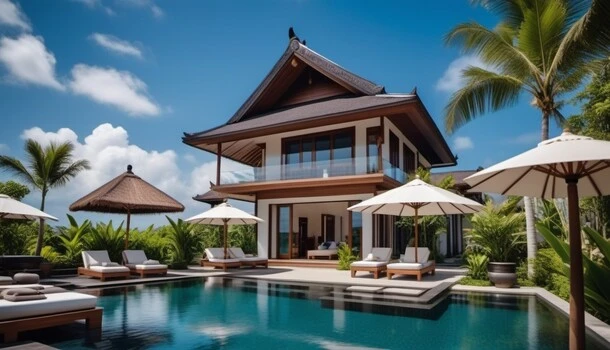
Villa in Indonesia


Choosing a property in Indonesia for your request
- 🔸 Reliable new buildings and ready-made apartments
- 🔸 Without commissions and intermediaries
- 🔸 Online display and remote transaction
Our managers will help you choose a property

Liliya
International Real Estate Consultant
Need help choosing a property?
Leave a request and our manager will contact you.
Our managers will help you choose a property
Liliya
International Real Estate Consultant

Weather in Indonesia
For Sale villa in Indonesia
Villas in Bali

 2
2
 2
2
 88
88
 3
3
240
3
3
240
 5
5
330
5
5
330
Didnt find the right facility?
Leave a request - we will handle the selection and send the best offers in a short period of time



Irina Nikolaeva
Sales Director, HataMatata
Villa in Indonesia
Choosing a property in Indonesia for your request
- 🔸 Reliable new buildings and ready-made apartments
- 🔸 Without commissions and intermediaries
- 🔸 Online display and remote transaction
Our managers will help you choose a property
Liliya
International Real Estate Consultant
Need help choosing a property?
Leave a request and our manager will contact you.
Our managers will help you choose a property
Liliya
International Real Estate Consultant
Individual selection villas in Indonesia
Save time — for free we will select objects for your budget and goals
🇮🇩 Villa ownership in Indonesia: legal rules, popular regions, and typical costs
Indonesia is a diverse archipelago that combines tropical landscapes, major transport hubs and booming tourism to create one of Asia’s most active villa markets. Buyers encounter a mix of leasehold and company-structured freehold options, strong seasonal rental demand in Bali and emerging opportunities on Lombok, Komodo and Batam near Singapore. Understanding title regimes, local infrastructure and developer reputations is essential before you Buy villa in Indonesia or evaluate an Investment villa in Indonesia.
💶 How much Villa costs in Indonesia
Prices for a Villa in Indonesia vary widely by island, proximity to airports, and project specification. In Bali (Seminyak, Canggu, Nusa Dua, Uluwatu) small two-bedroom villas typically start at $250,000–$600,000, mid-range three-bedroom pool villas run $600,000–$1.5M, and luxury branded villas in Nusa Dua or Uluwatu reach $1M–$10M. In Lombok and Komodo/Labuan Bajo prices are lower on average but premium waterfront or cliff-top villas still command $500,000–$3M. Developers and market format create distinct pricing bands: off-plan condominium-villas inside integrated resort developments are priced differently from standalone private villas on freehold plots or leasehold land. Typical plot sizes for villas range from 150–1,000+ sqm with built areas from 80–800 sqm. Market dynamics show that completed product in prime holiday zones sells at a premium of 10–30% over off-plan inventory; resale in high-season tourist hubs often achieves rapid liquidity. Typical villa purchase costs in Indonesia include the purchase price plus transfer taxes, notary fees and any due diligence; expect transaction-related add-ons commonly representing 3–8% of the purchase price.
🎯 Which region in Indonesia to choose for buying villa
Choosing a region depends on your objective: capital appreciation, vacation use or rental income. Bali remains the global magnet for holiday rentals, driven by Ngurah Rai International Airport and a mature villa rental ecosystem (property managers, OTAs, concierge services). Lombok and the Gili islands attract buyers seeking lower entry prices and rising tourism; Labuan Bajo (Komodo) targets luxury eco-tourism and yacht charters. Investors looking at corporate relocation, long-term tenants or secondary homes often consider Jakarta suburbs (Bogor, Puncak) and Surabaya for business access; these regions offer better year-round occupancy for expatriates and executives. Batam and Bintan are chosen for short-haul gateway access to Singapore with ferry and fast-boat services appealing to cross-border leisure renters. Practical decision factors to compare by region:
- Accessibility: Ngurah Rai Airport, Soekarno-Hatta Airport, Lombok International Airport, Hang Nadim (Batam)
- Medical and retail infrastructure: BIMC Bali, Siloam Hospitals, major shopping malls by Lippo and Summarecon
- Demand drivers: tourism seasons, MICE in Jakarta, cruise and diving in Komodo
🧭 How Indonesia’s geography and infrastructure shape villa demand
Indonesia’s geography—an island chain with world-class beaches, volcano-backed rice terraces and marine parks—creates concentrated demand pockets that favor villas close to beaches and scenic outlooks. Coastal clusters near international airports consistently outperform remote inland locations for short-stay rentals. Ngurah Rai International Airport connectivity underpins Bali’s market depth, while Lombok International Airport and Komodo’s airport in Labuan Bajo have spurred regional price appreciation. Transport infrastructure upgrades, toll-road expansions around Jakarta and investments in ports and marinas directly affect liquidity and rental performance. For example, improved road access to Uluwatu and the Bali bypass enhanced day-trip logistics for guests, increasing weekday occupancy for villas near surf breaks. Local infrastructure that matters for buyers:
- Airports: Ngurah Rai, Soekarno-Hatta, Lombok International, Komodo (Labuan Bajo)
- Ports and marinas: Benoa Harbor (Bali), Batam ferry terminals
- Healthcare and schools: hospitals (BIMC, Siloam), international schools in Bali and Jakarta
- Road networks: Bali Mandara and regional toll roads
📈 Indonesia economy and investment climate for villa buyers
Indonesia’s economy is driven by domestic consumption, tourism and resource exports, creating resilient demand in holiday and lifestyle real estate. Strong inbound tourism flows to Bali and rising international arrivals to secondary destinations translate into stable occupancy cycles for high-quality villas and branded residences. Business hubs like Jakarta and Surabaya generate year-round corporate rental demand. Taxation and corporate rules influence investment structure: many international buyers use a foreign-owned PT PMA to acquire HGB (Right to Build) title for more secure long-term holdings and clearer exit options. Corporate taxation and VAT impact net ROI, while domestic consumer growth supports higher-end second-home markets. Key economic and investment indicators that affect villa liquidity:
- Tourism visitor flows into Bali and rising secondary island destinations
- Corporate tax environment and developer finance availability
- Currency volatility versus USD-denominated transactions that many sellers accommodate
🏷️ Villa prices in Indonesia: detailed breakdown by city and format
Price segmentation helps set expectations for Villa for sale in Indonesia across formats and locations:
- Bali — Seminyak / Canggu / Uluwatu:
- Starter villas (1–2 BR): $250,000–$600,000
- Mid-range pool villas (3 BR): $600,000–$1.5M
- Luxury branded villas: $1M–$10M
- Ubud and Central Bali:
- Boutique four-season villas: $300,000–$2M
- Lombok and Gili:
- Waterfront and villa estates: $150,000–$1.2M
- Labuan Bajo / Komodo:
- High-end eco-lodges and private villas: $500,000–$3M
- Batam / Bintan (near Singapore):
- Entry villas and resort villas: $100,000–$600,000
- Jakarta / Bogor / Puncak:
- Executive villas and estates: $200,000–$2M Market format price notes:
- Off-plan discounts vs completed stock: 10–25% potential depending on developer and payment plan
- Land plot plus build packages: pricing starts around $80–$200 per sqm for land in secondary regions
- Typical villa lot sizes: 150–1,000 sqm, built areas 80–800 sqm
🌆 Key cities and regions in Indonesia where buyers look for villa
Markets with consistent buyer interest and infrastructure advantages include:
- South Bali (Seminyak, Canggu, Nusa Dua, Uluwatu): international flight access, luxury hospitality cluster, high Airbnb/short-stay demand.
- Ubud: cultural tourism, wellness retreats, appealing for boutique villa buyers and retreat operators.
- Lombok (Senggigi, Kuta Lombok) and Gili islands: cost-competitive entry with growing tourism infrastructure.
- Labuan Bajo (Komodo): premium eco-tourism and yacht charter clientele, limited high-end inventory.
- Batam and Bintan: proximity to Singapore, demand from short-stay weekenders, cross-border income potential. Infrastructure and rental demand differences:
- Bali commands the highest average nightly rates and occupancy for villas
- Labuan Bajo shows the strongest year-on-year revenue growth potential for luxury stays
- Batam/Bintan offer lower entry prices but seasonal occupancy tied to Singapore traffic
🏗️ Leading developers and villa projects in Indonesia
Notable developers and operators active in the villa space include:
- Ciputra Group — large mixed-use projects and premium residential clusters across Java and Bali
- Sinar Mas Land (BSD City) — integrated townships offering luxury residences and private estates
- Agung Podomoro Land — urban developments with premium villa projects in resort-style enclaves
- Lippo Group and Summarecon Agung — residential developers with high-quality gated communities
- Resort and branded villa operators:
- Bvlgari Resort Bali, Banyan Tree Ungasan, COMO Hotels and Resorts, Four Seasons Resort Bali at Sayan, Mandapa (Ritz-Carlton Reserve) — these brands operate villa inventory that commands premium pricing and rental rates Representative projects and product types:
- Integrated resort villas in Nusa Dua and Jimbaran
- Boutique villa estates in Canggu and Ubud
- Eco-luxury compounds in Labuan Bajo
💳 Mortgage and installment conditions in Indonesia for foreigners
Financing for foreign buyers is available but more limited than for locals. Typical parameters observed in market practice:
- Down payments commonly 20–40% for foreigners; developer promotions occasionally permit staged deposits via installment plans.
- Mortgage Indonesia for foreigners variably offered by local banks and some regional lenders with interest rates that are generally higher than local mortgages; typical reference ranges around 6–10% depending on credit and loan currency.
- Tenors commonly range from 5–15 years for foreign borrowers; longer terms may be available via developer financing or offshore lending structures. Developer and bank installment options:
- villa in Indonesia with mortgage is possible through major banks if collateral and residency proofs meet requirements
- villa in Indonesia with installment plan frequently offered by developers with 12–36 month payment schedules, sometimes extended to multi-year construction financing Bank and lender conditions:
- Proof of income, tax returns, minimum stay or residency documentation and higher DP for non-residents
- Some international buyers use foreign currency loans or bridge loans with local refinancing on company (PMA) structures
⚖️ Legal process to buy villa in Indonesia
The legal steps for property acquisition and title transfer are structured but require specialist assistance:
- Due diligence: verify land title with BPN (National Land Agency), check zoning and building permits, and confirm absence of encumbrances; engage a local lawyer and surveyor.
- Purchase contracts and notary (PPAT): a sale-purchase agreement is signed, payments scheduled, and transfer deed executed by a licensed notary (PPAT) who files with BPN for title transfer.
- Taxes and registration: pay transfer taxes, notarial fees and register new title; the purchaser is responsible for settlement of BPHTB and any applicable withholding taxes. Transaction timeline and checkpoints:
- Typical timeline from reservation to title transfer is 2–6 months for completed properties; off-plan buys follow project construction schedules
- For foreigners, structuring via PT PMA or leasehold requires additional corporate registration steps and compliance checks
📜 Property taxes in Indonesia for foreigners and ownership rules
Foreign nationals cannot generally hold the default Indonesian freehold title (Hak Milik) directly; typical legal ownership pathways include Hak Pakai (Right to Use), Hak Guna Bangunan (HGB) via a foreign-owned PT PMA, or leasehold arrangements. Property taxes in Indonesia for foreigners and standard tax items to budget for:
- Transfer tax (BPHTB) commonly around 5% of the assessed sale value (varies by region)
- Annual land and building tax (PBB) is typically nominal relative to market value and calculated on NJOP
- Income tax on rental: rental income may be subject to withholding and progressive tax rates; non-resident arrangements can attract different withholding levels Other legal and administrative notes:
- Purchase does not automatically provide a residence permit; Residence permit through villa investment in Indonesia is not granted by property acquisition alone
- There is no formal program equivalent to a Golden visa through villa investment in Indonesia; residence options usually require company investment, employment, or other qualifying visas
🏡 Buy villa in Indonesia for living, relocation, rental, or investment
Villa purchase objectives align with specific locations and product types:
- Living and relocation: families and expatriates often choose Jakarta suburbs, Bali (Sanur, Canggu) and Bintan for access to international schools, hospitals and staff availability; typical properties are 3–5 bedroom detached villas.
- Seasonal residence and second home: South Bali and Lombok are popular for owners seeking short-stay flexibility and high service standards; smaller 2–3 bedroom villas or branded residences fit this use.
- Short-term rental and investment: buyers targeting higher Rental yield for villa in Indonesia focus on Canggu, Seminyak, Nusa Dua, where gross yields typically range 5–8% and premium properties can achieve higher seasonal returns.
- Premium and lifestyle investment: Labuan Bajo and private-island developments attract buyers seeking exclusivity, often with investment targets oriented to boutique hospitality conversions. Use-case mapping:
- Living/relocation: Jakarta (executive villas), Ubud (wellness living)
- Rental/investment: Seminyak/Canggu/Nusa Dua for higher nightly rates and managed services
- Family use with rental top-up: Bogor/Puncak for weekend homes with occasional corporate rentals
Indonesia’s villa market continues to present differentiated opportunities across islands and buyer profiles, with a resilient tourism base and improving infrastructure supporting long-term demand. Investors and private buyers should prioritize legal structuring, developer track record and exact title type to protect liquidity and returns, and seek professional advice on Buy villa as a foreigner in Indonesia and the full Legal process to buy villa in Indonesia to ensure compliance. With the right location choice and structured financing, ROI on villa in Indonesia and long-term appreciation remain attractive for disciplined buyers assessing Investment villa in Indonesia options.
Frequently Asked Questions
Foreigners cannot generally hold freehold land in Indonesia. Typical legal routes are leasehold (Hak Pakai) often 25 years with renewals, or via a foreign-invested company (PT PMA) holding Hak Guna Bangunan (HGB) for around 30 years renewable. Nominee structures are illegal and risky.
Villa prices in Indonesia vary widely: secondary islands from roughly USD 50k–150k, tourist hubs like Bali commonly USD 150k–2M+, and luxury coastal homes above USD 2M. National median residential values are around IDR 1 billion (~USD 65k), while prime market segments command much higher per-unit prices.
Short-term rental yields in Indonesian tourist areas like Bali commonly range 4–8% gross. High season occupancy spikes returns; annualized net yields after costs typically fall to 2–6%. Expect higher yields in proven tourist corridors and lower in undeveloped islands.
Buyers should budget acquisition tax (BPHTB) around 5% of the transaction value, notary and registration fees, and annual land/building tax (PBB) which is modest. Sellers may face final income tax on transfers. Total closing costs commonly add 6–8% on top of the sale price.
Indonesia does not offer citizenship or a golden visa by property purchase. Foreign investors can obtain investor KITAS via a PT PMA, or other KITAS types (work, retirement 55+) with renewals; permanent residence (KITAP) typically requires years of continuous residence and qualifying status.
Some local and international banks provide mortgages to foreigners with residency and steady income. Typical loan-to-value is up to 60–70%, with loan terms often 10–20 years. Requirements include residence permit, tax documents, and higher down payments than for locals.
Tourist and infrastructure corridors—Bali, parts of Lombok, and Jakarta-adjacent areas—offer demand driven by tourism, connectivity, and development. Demographic trends and new transport links improve long-term prospects; coastal resorts near international airports perform best.
Verify land title type (Hak Pakai, HGB), check zoning and permits, confirm seller identity and tax history, obtain a notarial sale deed, and use an independent surveyor. Allow 4–8 weeks for proper due diligence and registration in Indonesia depending on complexity.
Remote management is common; local property managers handle bookings, maintenance, and staff. Expect management fees of 15–30% for short-term rentals or fixed monthly rates for long lets. Budget for routine maintenance at 1–3% of property value annually.
Risks include land-title disputes, regulatory changes, seasonality and currency volatility. Mitigate by clean legal title, conservative financing, and diversified bookings. Exit options: resale to domestic buyers, conversion to long-term rental, or sale via a PT PMA structure—allow 3–12 months on average to sell depending on market.
Properties by Region
- Villas in Bali (1858)
Properties by Country
- Real estate in Bulgaria (11408)
- Real estate in Montenegro (5186)
- Real estate in Indonesia (2423)
- Real estate in Spain (2289)
- Real estate in Portugal (1975)
- Real estate in Italy (1910)
- Real estate in Turkey (1699)
- Real estate in Cyprus (1593)
- Real estate in Thailand (1565)
- Real estate in Croatia (1431)
- Real estate in Greece (1082)
- Real estate in USA (1013)
- Real estate in France (1006)
- Real estate in Georgia (519)
- Real estate in Serbia (328)
- Real estate in Slovenia (123)
- Real estate in Egypt (23)
Don't know where to start buying a property in Indonesia?
Leave a request and receive free advice on prices, taxes, residence permits and the real estate market. in Indonesia.

Maria Guven
Head of Direct Sales Department
+90-507-705-8082