


Bali Boutique Hotel Project Promises Up to 18% Annual Returns — What Investors Must Know

Amani Melasti: a new play in real estate Indonesia with bold return claims
A new beachfront project on Bali is claiming something few investments promise: annual returns of between 14% and 18%. For anyone tracking the real estate Indonesia market, the Amani Melasti boutique hotel proposal on Melasti Beach demands attention. Announced by international developer PT Teus Group and presented as a Wyndham Hotels & Resorts property, the concept mixes high-end hospitality design with a targeted income profile. Our analysis separates the facts from sales talk and outlines what buyers, investors, and expats should verify before committing capital.
Quick facts up front
- Developer: PT Teus Group, more than 80 years' track record in design
- Award: Design Initiative of the Year - Indonesia at the Real Estate Asia Awards 2025
- Location: Melasti Beach, Bukit Peninsula, Bali — 1-minute walk to the beach, no other upscale hotels within 1.5 km
- Operator: Wyndham Hotels & Resorts network (over 9,300 properties in more than 95 countries)
- Scale: 90 rooms, 27–71 sq m each, pool or ocean view options
- Projected annual return: 14–18% (as stated by Teus Group)
- Construction schedule: begins 2025, targeted completion Q2 2027
These are the anchor data points we will use to assess the commercial logic and practical implications for investors.
What Amani Melasti will offer and why it matters
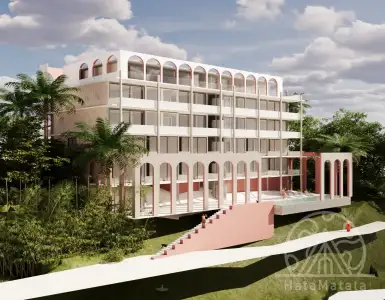
Amani Melasti is pitched as an upscale, five-storey boutique hotel located on Melasti Beach in the Bukit Peninsula. The developer emphasises luxury amenities intended to attract higher-paying leisure travellers and longer stays. Prominent design features the developer highlights include a rooftop infinity pool with ocean views, a spa, a fine-dining restaurant, and a dedicated workspace.
Why that matters for investors:
- Higher-end amenities allow the operator to target premium average daily rates (ADR) and lengthen stays, both of which raise revenue per available room (RevPAR).
- The affiliation with Wyndham Hotels & Resorts gives the project access to global distribution systems, loyalty programmes, and professional operational protocols, which can improve occupancy and yield management.
- A modest room count of 90 units positions the hotel to offer personalised service and keep operating costs more controllable than a much larger resort.
As always, design awards and brand partners improve credibility but do not replace contract-level due diligence or financial verification.
Location analysis: Melasti Beach and the Bukit Peninsula
Location is the single most important variable in hotel performance. Amani Melasti sits a one-minute walk from Melasti Beach, and the developer emphasises that there are no other upscale hotels within a 1.5-kilometre radius. The Bukit Peninsula is already a high-demand area for international tourists and high-net-worth visitors.
Key location drivers:
- Tourist volume: the region draws more than 16 million tourists annually, which supports year-round demand for hospitality capacity.
- Infrastructure: Bali’s modern airport connectivity and growing hospitality ecosystem—private villas, beach clubs, golf clubs, gated communities—supply a ready market for premium hotels.
- Exclusivity: the claim of a 1.5 km buffer from other upscale hotels can translate into pricing power if it is true and remains so through construction and operation.
What investors should verify on location:
- Firm confirmation on competitive supply within the stated 1.5 km radius; projects announced today can change the competitive picture quickly.
- Access and egress details, road upgrades, and local zoning that might affect guest access during peak season.
- Local environmental and cultural restrictions that can limit operating hours or expansions.
The investment case: understanding the 14–18% projection
Teus Group positions Amani Melasti as an income-generating asset with an expected return of 14–18% per year. That figure will be attractive to yield-hungry buyers, particularly those who compare it with typical residential returns in the region.
What the projection likely depends on:
- Premium ADR obtained through Wyndham’s distribution and the hotel’s high-end positioning.
- Strong occupancy supported by Bali’s tourist volume and the property’s beachfront position.
- Additional revenue streams such as F&B, spa, and events that increase GOPPAR (gross operating profit per available room).
Questions investors must ask to move from headline returns to credible cash-flow expectations:
- Is the 14–18% projection a gross yield or a net yield after management fees, franchise fees, taxes, and capex reserves? The difference can be material.
- What assumptions are used for occupancy and ADR across high and low seasons? Beach destinations are seasonal and forecasts need clarity.
- What are the exact management and franchise fee structures with Wyndham, and how do they affect net operating income?
- Are the payment plans linked to performance clauses or is the scheme a fixed leaseback?
We advise investors to obtain a full pro forma, sensitivity analyses, and historical performance comparables from similar branded boutique hotels in Bali before relying on headline yields.
Legal and regulatory risks specific to Indonesian property investments
Indonesia has rules on foreign ownership that differ from many Western markets. The article does not specify ownership structures for Amani Melasti units or how foreign buyers will participate, so this is an area that requires careful attention.
Points to confirm with the developer and legal counsel:
- Title type for units being sold to investors: is this leasehold, strata title under an HGB (Hak Guna Bangunan), or another structure?
- If the sale targets foreign investors, what mechanisms are in place for property rights and profit repatriation? Many projects use long-term leases or corporate structures (PT PMA) to enable foreign participation.
- Permits and approvals: confirm that building permits and environment assessments are in place or on track, and ask to see the IMB (building permit) and Amdal or UKL/UPL where applicable.
- Taxation issues: GST/VAT on transactions, withholding tax on distributions to foreign investors, and other local levies that affect net returns.
Failure to secure clear, market-standard ownership documentation can erode projected yields and limit exit options.
Construction, timing and operational risk
The timeline announced by Teus Group is construction start in 2025 with completion planned in Q2 2027. Those dates are realistic for a boutique hotel of this size but not guaranteed.
Construction risk checklist:
- Confirm the project’s permitting status and any outstanding approvals before transferring funds.
- Ask for a construction contract with liquidated damages or performance guarantees to protect investors against delays.
- Request a phased payment schedule tied to project milestones and escrow arrangements to limit developer risk.
Operational risk considerations:
- Branded hotels reduce some operating risk but introduce franchise and management costs; understand the balance between brand uplift and contractual obligations.
- Assess reliance on international leisure travel; global travel disruptions can compress occupancy and ADR.
How to approach a purchase: practical steps for investors
If you are considering an allocation to Amani Melasti, here are practical steps to follow.
- Request a detailed pro forma
- Demand transparent assumptions on occupancy, ADR, seasonality, operating expenses, taxes, management fees, and capex reserves.
- Secure legal advice in Indonesia
- Retain a local law firm with a hospitality or real estate practice to verify title, permits, corporate structures, and foreign ownership options.
- Clarify exit and resale mechanics
- Ask the developer for expected buyback windows, right of first refusal, or secondary market support. Understand local resale processes and any transfer taxes.
- Review the management agreement
- Check the length of the Wyndham management or franchise agreement, termination clauses, performance standards, and revenue split.
- Verify payment plan protections
- Prefer escrow accounts, milestone payments, and clear refund provisions. Avoid large upfront payments without contractual safeguards.
- Run stress tests
- Model scenarios where occupancy or ADR are 20–30% below the developer’s base case. See how that affects net income and your yield.
These steps will help move from a pitch to a transaction that stands up to market stress.
Market context and comparables in Bali hospitality
Amani Melasti enters a market where branded boutique and luxury hotels have been among the better-performing segments over recent recovery cycles.


 5
5
 5
5
 360
360
 2
2
90
2
2
90
 2
2
130
2
2
130
 2
2
163
2
2
163
That said, investors should compare the pro forma to comparable branded boutique hotels in the Bukit and Uluwatu areas. Ask the developer for a list of comparable properties and their historical occupancy, ADR, and RevPAR trends. Do not rely on awards or renderings alone; operational comparables provide the clearest picture of likely performance.
Who should consider this project — and who should not
This project is likely to appeal to the following investor profiles:
- Yield-focused buyers who can accept tourism cyclicality and are comfortable with Bali market dynamics.
- Buyers who value a branded solution and want access to a professional operator rather than self-management.
- Investors willing to conduct robust legal and financial due diligence and to accept leasehold or corporate ownership structures common in Indonesia.
This project may not suit:
- Buyers seeking residential freehold ownership under a clear title—Indonesia’s rules around foreign freehold ownership are restrictive and must be reconciled with the offering.
- Investors who require immediate liquidity; boutique hotels are not as liquid as listed real estate assets.
- Those uncomfortable with construction and operational risks without ironclad contractual protections.
Final takeaways for property investors in Indonesia
Amani Melasti is a credible-sounding project with several positive signals: an international brand manager in Wyndham, a developer with a long design track record, and a prestigious design award. The most headline-grabbing claim is the 14–18% annual return, but investors must translate that claim into verifiable net income after fees, taxes, and capex.
In our analysis, the project’s success will hinge on three things: whether the projected ADR and occupancy assumptions are realistic; whether the legal and ownership structure protects investors; and whether construction and market risks are contractually mitigated. We recommend demanding full financials, local legal opinions, and an independent market comparables analysis before committing funds.
Construction is planned to start in 2025 with completion in Q2 2027, and the developer highlights the site's immediate beach access and lack of nearby upscale competition within 1.5 km. Those facts are concrete; the projected returns require verification.
Frequently Asked Questions
Q: What does the 14–18% return actually mean? A: The developer states 14–18% annual returns. You must ask whether that figure is a gross or net return after management fees, franchise fees, taxes, and reserves for repairs and capex. Request a full pro forma with sensitivity scenarios.
Q: Can foreign buyers own units in an Indonesian hotel project? A: Indonesian property law restricts freehold ownership by foreigners. Common structures for foreign participation include long leaseholds, strata under an HGB, or corporate ownership via a PT PMA. Investors should obtain local legal advice to confirm the structure offered for this project.
Q: How reliable is Wyndham’s involvement as an operator? A: Wyndham is a large global operator with a large reservation network; operator involvement typically improves distribution and professional standards. Confirm whether Wyndham is a franchise partner or an operator under a management agreement, and review the exact terms, length, and fee schedule in the contract.
Q: What are the main risks to the projected returns? A: Key risks include construction delays, overly optimistic occupancy/ADR assumptions, management and franchise fees reducing net yield, regulatory or permitting issues, currency and tax issues for foreign investors, and tourism demand shocks. Always run downside scenarios and obtain contractual protections.
End note: construction is scheduled to start in 2025 and finish by Q2 2027, and the developer’s projected 14–18% annual return should be validated against a full pro forma and local legal review before any investment decision.
We will find property for you
- 🔸 Reliable new buildings and ready-made apartments
- 🔸 Without commissions and intermediaries
- 🔸 Online display and remote transaction

International Real Estate Consultant

Subscribe to the newsletter from Hatamatata.com!
Subscribe to the newsletter from Hatamatata.com!
Popular Posts

We will find property for you
- 🔸 Reliable new buildings and ready-made apartments
- 🔸 Without commissions and intermediaries
- 🔸 Online display and remote transaction
International Real Estate Consultant

Subscribe to the newsletter from Hatamatata.com!
Subscribe to the newsletter from Hatamatata.com!
I agree to the processing of personal data and confidentiality rules of HatamatataPopular Offers
 0
0
 4
38
4
38
 2
96
2
96
Need advice on your situation?
Get a free consultation on purchasing real estate overseas. We’ll discuss your goals, suggest the best strategies and countries, and explain how to complete the purchase step by step. You’ll get clear answers to all your questions about buying, investing, and relocating abroad.



Irina Nikolaeva
Sales Director, HataMatata