


BTS’s D:CODE Sri Nakarin Could Rewire How Thais Buy Homes — Here’s What It Means

A new script for property Thailand: why D:CODE Sri Nakarin matters
The D:CODE Sri Nakarin launch has a simple headline — a new condominium from BTS Group — and a hidden subtext that may matter to anyone watching the property Thailand market. The development tests a buyer-selection system that restricts who wins the right to purchase. That procedural tweak is as important as location or price because it changes how access to homes is managed.
We think this project is a live experiment in managing demand. If you are a buyer, investor or a renter looking at Bangkok real estate, this matters for how units are allocated, what buyers pay upfront and what the resale market may look like.
What D:CODE Sri Nakarin is and how it differs from a standard condo launch
D:CODE Sri Nakarin is a low-rise condominium project from BTS Group. On paper it looks familiar: residential units, communal services, a location in Srinakarin. But BTS is selling more than space. The project is designed as a living ecosystem integrated with BTS services and digital access.
Key facts:
- Selection and rights allocation ceremony: 10am on 20 April at BTS Visionary Park
- Price range: 1.89–3.79 million baht
- Unit sizes: 30–60 square metres
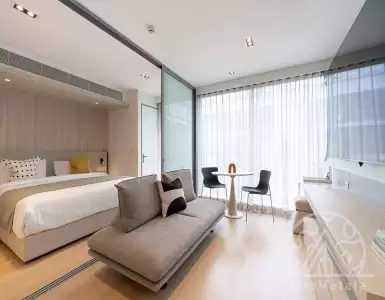
- Units come furnished with air-conditioning, TV, sofa, dining table, bed and wardrobe
Two elements set D:CODE apart: a managed buyer-selection process and the product being delivered as a fully finished, service-integrated offering. That combination changes buyer economics and could reduce speculative buying if the model works.
A ‘BTS lifestyle’ product
BTS is bundling services such as Rabbit card access, a smart condo application, Rabbit Life and Rabbit Care services, plus security systems and robots. From a practical perspective, that means occupants gain digital access and membership-style services that integrate with the wider BTS network. For households who value convenience and predictable monthly costs, that can be an advantage.
The buyer-selection process: why limiting buyers matters
BTS required pre-registration and verification of Thai nationality, limiting eligibility to one unit per person. The allocation is decided by a selection process rather than by speed of payment.
This is a deliberate shift in market logic. In most launches, the buyer who moves fastest and has capital on hand can secure units; speculators with cash or buying teams often capture a large share. BTS is testing a different route: manage access to ensure the housing goes to a target group — young professionals, small families — rather than to whoever can outbid others on transaction speed.
From a policy and market perspective, several effects follow:
- It reduces the advantage of cash-heavy speculators in the primary sale
- It improves transparency around buyer selection when the draw is public and committee-supervised
- It may change how developers price and position entry-level product
We see this as an attempt to use process to control buyer mix. If the system is transparent and well-enforced, it can limit speculative flipping at launch. But that depends on enforcement, follow-through and how the secondary market reacts.
Pricing, product and the economics for buyers
At 1.89–3.79 million baht, D:CODE is aimed at the middle segment of the Bangkok condo market — buyers who are starting careers, small households and some buy-to-let players. The project pushes against the current trend of shrinking unit sizes by offering 30–60 sqm units with distinct functional spaces.
Why this matters for buyers:
- Furnished units reduce hidden costs: typical entry-level condos often require additional spending on furniture and appliances. D:CODE includes essentials such as air-conditioning and appliances, so the advertised price is much closer to the true outlay buyers face.
- Larger rooms improve liveability and lengthen owner residency: units sized at 30–60 sqm are more likely to be used as long-term homes rather than short-term starter properties.
- Economies of scale: the project’s size allows BTS to include more features without pushing the price up, a possible competitive advantage against smaller developers.
From an investment perspective, the package is a mixed bag. The inclusion of services and digital access may raise tenant appeal and reduce vacancy risk. On the other hand, the selection system may limit rapid flipping opportunities that speculators rely on. Returns may depend more on rental yield and long-term appreciation than quick resales.
Location: Srinakarin’s shift from corridor to residential cluster
Srinakarin once functioned mainly as a transit route; today the area is becoming residential. It benefits from:
- Major shopping centres
- The Yellow Line mass transit
- New mixed-use developments
- International schools and hospitals
D:CODE is not just selling an apartment, it is selling access to a neighbourhood that is gaining public transport and large-scale amenities. For families and working professionals commuting across Bangkok, proximity to the Yellow Line and BTS services will be a major consideration.
Practical note for buyers: check planned station locations, travel times during peak hours and last-mile connectivity.








Data: the hidden asset behind the development
BTS is collecting structured data through its pre-registration and verification process. That data can show real demand by demographics, income bands and geographic patterns. The company can use that insight to refine product design, retail partnerships, transport planning and loyalty services.
Why data may be more valuable than the project’s margin:
- It informs future pricing and product specs for different catchment areas
- It lets BTS tailor ecosystem services (Rabbit Life, Rabbit Care) to likely customers
- It supports cross-selling within the BTS network, where transport and lifestyle services can be bundled
This raises questions about privacy and data governance. Buyers should ask how their registration data will be used, stored and shared. Transparency here affects trust in the selection system and the wider acceptance of similar models.
Risks and trade-offs for buyers and investors
The D:CODE model is interesting, but it carries risks. We outline the main ones below.
- Market acceptance risk: buyers may resent restrictions on purchase or see the draw as unfair, which could affect reputation and secondary demand.
- Regulatory risk: a private company managing buyer eligibility based on nationality and selection could attract scrutiny if it goes beyond normal sales practices.
- Liquidity risk: if the model deters speculative buyers, the immediate resale market could be thinner, affecting price discovery.
- Data risk: how BTS uses personal data could create regulatory or reputational headaches if not managed well.
For investors, a likely outcome is a shift from capital-gains-led play to yield-led play when projects use selection systems. Rental demand could be steadier if units are occupied by genuine residents, but capital appreciation may depend more on macro market movement and infrastructure delivery.
What this means for different buyer types
We assess practical implications for the main buyer categories.
Homebuyers (first-jobbers, small families):
- The selection system increases your chance of buying if you meet the criteria and are drawn. It reduces the need to compete with speculators who buy en masse.
- The furnished, move-in-ready delivery lowers upfront spending after purchase.
- Larger unit sizes improve liveability compared with micro-studios.
Investors and buy-to-let players:
- Expect a different risk-return profile. With speculative buyers filtered out, appreciation may be more modest in early resale but rental demand might be stronger and more stable.
- Check whether any resale restrictions or developer-imposed conditions (not reported here) attach to primary sales that could affect exit timing.
Expats and foreign buyers:
- The D:CODE selection process required Thai nationality verification. That means this particular primary sale excluded non-Thai buyers from the allocation route.
- Foreign buyers who can legally own condos in Thailand should consider the foreign quota and typical market channels if they still want exposure to Bangkok property.
Developers and competitors:
- Smaller developers may be unable to match the package and pricing that come from BTS’s scale and integrated services.
- The model may encourage other large players to test managed allocation if it is seen to reduce speculative purchase and boost occupancy.
Practical checklist for prospective buyers and agents
If you are considering applying or investing, here is what to look for:
- Verify eligibility rules and required documents for registration
- Check the details of the draw process: who oversees it, whether it is recorded and whether there is an appeals process
- Inspect the finished products and checklist of items included in the furnished package
- Confirm expected service fees or recurring costs for Rabbit Life and other integrated services
- Assess last-mile connectivity and peak-hour travel to common work locations
- Ask how your registration data will be used and whether consent is required for marketing or analytics
These steps reduce surprises and help buyers judge the real cost of ownership beyond the headline price.
Could this model scale across Thailand’s property market?
The D:CODE Sri Nakarin pilot tests three ideas: managed buyer allocation, ecosystem integration, and buyer-mix control to limit speculation. If successful, developers could adopt similar models for affordable segments where governmental pressure to keep housing accessible exists.
But scaling has constraints:
- Legal and policy scrutiny: civic authorities may examine whether private firms can legitimately manage access to housing in ways that restrict market freedom.
- Market pushback: buyers unused to allocation by draw may prefer traditional sales if they believe it reduces their chance to buy.
- Competitive dynamics: smaller developers lacking BTS’s integrated network may be pushed into niche products rather than compete head-on.
We expect the model to be tested selectively, especially in projects aimed at local occupiers rather than international investors.
Conclusion: a test with practical consequences
D:CODE Sri Nakarin is a large-scale experiment in property sales that combines a buyer-selection draw, finished move-in units and an ecosystem of BTS services. The project is priced at 1.89–3.79 million baht for 30–60 sqm units and held its allocation draw at 10am on 20 April at BTS Visionary Park. This test changes the incentives for buyers and may nudge developer strategy toward products that prioritise genuine occupancy over quick resales.
For buyers, the immediate advantage is reduced hidden costs and a clearer shot at primary-market purchase if you meet the eligibility rules. For investors, the trade-off is a potential shift from short-term flips to rental-led returns.
If you plan to participate, bring your ID and proof of Thai nationality to registration and be prepared for a public draw overseen by a committee. That procedural transparency is the feature to watch next: whether it actually results in a different buyer mix and steadier occupancy, or if market participants find ways around the system.
Frequently Asked Questions
Q: Who was eligible to buy at D:CODE Sri Nakarin? A: Registration required verification of Thai nationality, and eligibility was limited to one unit per person. The allocation was determined by a selection process rather than first-come, first-served.
Q: What is included in the unit price? A: Units are sold fully furnished with essentials including air-conditioning, a television, a sofa, dining table, bed and wardrobe, which reduces additional setup costs after purchase.
Q: How does the selection draw work and where was it held? A: The draw was scheduled for 10am on 20 April at BTS Visionary Park. BTS explained rules publicly and involved a committee to oversee the process to promote transparency.
Q: Can foreigners participate in the D:CODE Sri Nakarin allocation? A: The pre-registration and selection required Thai nationality, so this particular allocation excluded non-Thai registration. Foreign investors should use standard condo purchase channels subject to Thailand’s foreign ownership rules.
If you plan to join a BTS selection, check eligibility documents and the draw rules in advance; the draw time was 10am on 20 April at BTS Visionary Park and proof of Thai nationality was mandatory.
We will find property in Thailand for you
- 🔸 Reliable new buildings and ready-made apartments
- 🔸 Without commissions and intermediaries
- 🔸 Online display and remote transaction

International Real Estate Consultant

Subscribe to the newsletter from Hatamatata.com!
Subscribe to the newsletter from Hatamatata.com!
Popular Posts

We will find property in Thailand for you
- 🔸 Reliable new buildings and ready-made apartments
- 🔸 Without commissions and intermediaries
- 🔸 Online display and remote transaction
International Real Estate Consultant

Subscribe to the newsletter from Hatamatata.com!
Subscribe to the newsletter from Hatamatata.com!
I agree to the processing of personal data and confidentiality rules of Hatamatata
Need advice on your situation?
Get a free consultation on purchasing real estate overseas. We’ll discuss your goals, suggest the best strategies and countries, and explain how to complete the purchase step by step. You’ll get clear answers to all your questions about buying, investing, and relocating abroad.



Sales Director, HataMatata