


Burj Khalifa Duplex Listed for Dh12m a Year — What That Means for UAE Property

A record rent forces a rethink of the real estate UAE market
A Burj Khalifa duplex offered for Dh12 million a year (about $3.2 million) has refocused attention on Dubai's top-end property market and raised practical questions for buyers and investors. The listing, for a 1,000-square-metre apartment on the 87th floor, is being framed by its owner and brokers as evidence that Dubai's ultra-luxury segment is mature enough to sustain eight-figure annual leases.
This is an extreme example—one that compels us to ask what a single headline transaction says about demand, supply and risk across the UAE property market. We dug into the numbers, developer statements and broker commentary to draw lessons for people considering purchases, sales or rentals in Dubai today.
The apartment: specifications, renovation and price tags
The unit is unusual for several reasons and the sales history and fit-out costs help explain the Dh12 million asking rent.
- Size: 1,000 sq m (about 10,764 sq ft).
- Annual rent advertised: Dh12,000,000 (approx $3.2 million).
- Original purchase: owner Karl Haddad bought the property for Dh180 million.
- Renovation costs reported: Dh33 million.
- Furnishing value: Dh14.6 million.
- Bang & Olufsen audio system reported at Dh3.6 million.
- Private cinema size: 93 sq m.
- Unique features: the only duplex in Burj Khalifa with a balcony and 25 artworks embedded with Swarovski crystals.
- Construction detail: merging two units into the duplex took three years and the internal stair construction cost Dh13 million.
Karl Haddad, chief executive of IRC Invest and a long-term resident of Burj Khalifa, describes the property as a "one-of-one trophy asset." He told reporters the duplex was created by combining two units and that further work is planned to expand the total area to 1,400 sq m, which would change its valuation dynamics again.
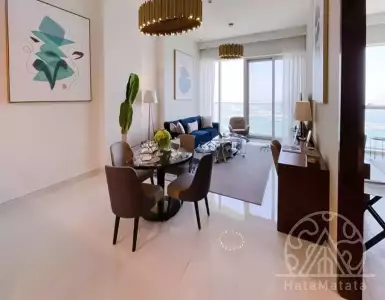
From a technical standpoint the apartment is a high-specification asset: marble walls, floor-to-ceiling panoramic glazing, a spa area, sauna and a gym with custom fittings. These details push the unit into a very narrow market segment and help explain why a single tenant might be prepared to pay a seven-figure annual rent.
What an eight-figure annual lease signals about Dubai's ultra-prime market
When a residence in Dubai commands an annual rental sum in the same order as the purchase prices of many luxury properties, several underlying trends are visible.
- The ultra-prime rental segment is expanding its depth. As Omar Abu Innab, co-founder and CEO of Keyper, put it: a Dh12 million annual lease would have been unthinkable a few years ago and now signals the "depth and maturity" of the ultra-prime rental segment.
- Ultra-high-net-worth individuals are prioritising flexibility. Keyper told reporters the transaction reflects demand for lease structures that preserve privacy and scale while offering short-term or flexible occupancy solutions.
- Trophy assets perform differently. A global cohort of buyers and renters treats a property like this as a consumable status asset or an operational base for high-net-worth lifestyles. That changes liquidity and valuation expectations compared with mainstream apartments.
From our perspective this transaction is impressive but risky for anyone using leverage. The implied gross rental yield against the owner's reported purchase price is notable: Dh12m / Dh180m = 6.67%. For an asset of this kind, that is a strong cash return on purchase price, but it ignores upkeep, management, marketing to ultra-high-net-worth tenants and potential vacancy periods between leases.
Market context: sales, supply pipeline and regional shocks
The Dh12 million listing arrives against a mixed-market backdrop.
- Dubai Land Department recorded 3,570 sales transactions worth Dh11.93 billion in the first week after recent regional escalation.
- Developers are planning substantial handovers: Binghatti Holding expects to hand over 13 to 16 projects this year, while the market faces a large volume of new supply around 10,000 units in 2026 and a similar number the following year.
- Binghatti told reporters it employs more than 22,000 people, operates six UAE factories and has stockpiles of materials that give it short-term resilience to shipping disruptions.
Regional tensions have created specific logistical pressures. Jebel Ali Port experienced closures and a backlog of containers transiting the Strait of Hormuz has forced some developers and contractors to route goods by road from Fujairah. That raises construction cost and schedule risk depending on the developer's supply chain resilience.
Shehzad Janab, chief financial officer of Binghatti, said the company had not felt an immediate impact on construction because of material reserves, but he warned the true effects could appear over weeks and months. For the wider market the litmus test will be how well the market absorbs the large number of new units coming online.
Price adjustment, discounts and payment-plan changes: how developers are reacting
Developers and brokers are already adjusting sales strategies in response to shifting demand and an uncertain short-term outlook.
Key patterns seen in the market:
- Discounting: some developers are prepared to negotiate up to 15% off list prices for serious buyers.
- Payment plan changes: traditional upfront schedules required 80% in construction and 20% on handover. More developers now offer profiles such as 30% down-payment and 70% at handover, which reduces finance strain during construction.
- Buyer profile: brokers report activity across price bands, from properties priced around $272,000 up to $60 million penthouses in Downtown Dubai.
From an investor's standpoint these concessions create tactical opportunities. Cash buyers can extract discounts and favourable terms. Off-plan buyers can reduce their near-term financing needs. But these tactics cut both ways: they can depress resale price growth and create a mismatch if supply outpaces demand.
Practical advice for buyers and investors — how to act in the current cycle
We advise different strategies depending on buyer type. Here are practical, experience-based pointers for people active in or considering entry to the UAE property market.
For cash-rich investors:
- Use the leverage to negotiate. Developers have shown willingness to offer lower prices and flexible payment plans to secure committed buyers.
- Focus on quality of location and developer track record. Trophy assets like the Burj Khalifa duplex are inherently niche; quality and scarcity matter more than short-term price movements.
For buy-to-let investors:
- Model yields conservatively.

 1
1
 1
1
 56
56
 5
6
313
5
6
313
 4
3
400
4
3
400
 1
45.86
1
45.86
 1
2
80
1
2
80
 1
127
1
127
For first-time buyers and owner-occupiers:
- Beware of flipping strategies that rely on pre-handover price gains. Brokers warn that buyers who plan to flip multiple off-plan units before handover may be overleveraged.
- Take advantage of improved payment plans to limit immediate cash outlays, but confirm escrow protections and construction milestones.
Due diligence checklist we use in reporting and that buyers should insist on:
- Confirm construction completion percentages and handover schedules.
- Check escrow arrangements and whether developer uses independent warranties.
- Review historical sales and rentals for comparable units to validate yield expectations.
- Stress-test for geopolitical and supply-chain shocks; ask the developer about material stockpiles and alternative logistics plans.
Valuation perspective: what the numbers mean
A simple calculation shows the rough yield on the transaction juxtaposed with purchase history. Against the owner’s reported purchase price of Dh180 million, a Dh12 million annual rent translates into a gross yield of 6.67%. In dollar terms that is about $3.2 million rent on a $49 million purchase price.
That yield is high for a trophy residence that requires substantial maintenance and specialised management. Net yield after operating costs, management fees, service charges and potential vacancy will be materially lower. Still, the figure demonstrates why ultra-prime real estate can draw investor interest even in uncertain times: the total return profile is not purely capital appreciation but also significant rental income potential when a property is truly unique.
Risks and downside scenarios we are watching
No market moves in isolation. Key risks for the UAE property market include:
- Supply surge: the planned completion of thousands of units over the next two years could strain resale markets and compress price growth.
- Geopolitical shocks: disruptions at key ports or a protracted regional conflict could drive up construction costs and delay handovers.
- Overleveraging: investors who have bought multiple off-plan units with short-term flip intentions face higher risk if handover pricing or demand softens.
- Liquidity in the ultra-prime market: while headline transactions make news, finding buyers for Dh50m-plus units can be slow in weaker markets.
We think the most likely near-term market scenario is a period of slowed price appreciation, selective discounting by developers and a period of consolidation that favours cash buyers.
How brokers and platforms are positioning themselves
Specialist platforms and brokers are adapting to the changing profile of demand. Keyper, the platform that ran the Dh12m listing, is pitching to ultra-high-net-worth clients who want turnkey leasing and property management services. Brokers are also using more bespoke payment structures to close transactions.
That change matters because it shows the market is fragmenting into tiers: mainstream resale and off-plan buyers focused on affordability, and a small cohort of global wealth looking for trophy assets and flexible use. The two tiers require very different marketing and risk management approaches.
Frequently Asked Questions
Q: Is the Dh12 million rent a sign that Dubai property is overheating?
A: No. It is a signal about the ultra-prime micro-market rather than the broad market. That rent applies to a unique, heavily renovated duplex in the Burj Khalifa and cannot be generalized across mainstream housing.
Q: Should I expect developers to keep offering 30% down-payment plans?
A: Offers like 30% down with the balance at handover appear to be short-term incentives as developers compete for buyers. Confirm terms in writing and verify any Escrow protections.
Q: Does the Burj Khalifa lease imply strong rental yields across Dubai?
A: Not necessarily. The implied gross yield on this transaction is about 6.67% against the owner’s reported purchase price, but most Dubai properties will not command such high rents. Ultra-prime yields and mainstream yields follow different dynamics.
Q: Are discounts of up to 15% realistic for investors now?
A: Developers quoted in recent reporting said they could negotiate up to 15% for serious buyers, particularly for larger purchases or off-plan contracts. The exact discount depends on project, developer cashflow and buyer profile.
Final assessment and practical takeaway
This Dh12 million listing is proof that Dubai's ultra-luxury rental market has depth and that trophy assets can attract extraordinary demand even amid geopolitical uncertainty. For most investors and buyers, the more actionable trends are: developers offering larger concessions and more flexible payment plans; the market facing a large volume of new supply over the next two years; and logistics risks that could affect construction timelines.
If you are an investor with cash, there are clear negotiating advantages right now, including potential price reductions of up to 15% and lower upfront payments. If you rely on short-term leverage and plan to flip pre-handover, be prepared for at least an 18-month recovery window cited by brokers. These are concrete considerations to factor into any acquisition plan.
We will find property in UAE (United Arab Emirates) for you
- 🔸 Reliable new buildings and ready-made apartments
- 🔸 Without commissions and intermediaries
- 🔸 Online display and remote transaction

International Real Estate Consultant

Subscribe to the newsletter from Hatamatata.com!
Subscribe to the newsletter from Hatamatata.com!
Popular Posts

We will find property in UAE (United Arab Emirates) for you
- 🔸 Reliable new buildings and ready-made apartments
- 🔸 Without commissions and intermediaries
- 🔸 Online display and remote transaction
International Real Estate Consultant

Subscribe to the newsletter from Hatamatata.com!
Subscribe to the newsletter from Hatamatata.com!
I agree to the processing of personal data and confidentiality rules of HatamatataPopular Offers
 1
1
31
1
1
31
 4
38
4
38
 3
213
3
213
Need advice on your situation?
Get a free consultation on purchasing real estate overseas. We’ll discuss your goals, suggest the best strategies and countries, and explain how to complete the purchase step by step. You’ll get clear answers to all your questions about buying, investing, and relocating abroad.



Irina Nikolaeva
Sales Director, HataMatata