


Croatia Opens Property Market to All OECD Citizens — What Buyers and Locals Should Know

Croatia equalizes property purchase rights for OECD citizens: a measured change, not a market shock
Croatia has moved to remove the last administrative barriers preventing citizens of all OECD countries from buying property on the same terms as Croatian nationals. For readers tracking the real estate Croatia market, this change is important to understand but unlikely to trigger an immediate buying spree. In the first 100 words: this adjustment to the Property Ownership and Other Real Rights Act affects how foreign buyers from OECD states acquire land, but the data and legal safeguards suggest the practical impact will be limited.
In this article we examine the amendments, the data behind the debate, the political arguments, and what this means for buyers, sellers, and local housing markets. I will give specific steps investors and potential purchasers should take and outline the legal and regional caveats that matter in practice.
What exactly changed in the law?
The government has amended the Property Ownership and Other Real Rights Act to equalize purchase rights for Croatian citizens and citizens of all OECD member states. Until now, 36 of the 38 OECD members could purchase property in Croatia on reciprocity grounds; Mexico and Costa Rica were the two exceptions. The new amendment removes the last formal difference between Croatian buyers and buyers from those two countries.
Key legal points:
- The change applies to property ownership rights as governed by the amended act.
- The government retains the ability to place time-limited restrictions on purchases by specific OECD states.
- Purchases in designated protected zones remain subject to the Nature Protection Act and other spatial planning regulations.
Minister of Justice, Administration, and Digital Transformation Damir Habijan told MPs the change should not materially alter the flow of foreign buyers into Croatia and that procedural safeguards are part of the legislation.
What the data actually says: small current foreign share
Numbers matter here, and the government supplied specific figures during parliamentary debate. They put the likely scale of change into context.
- From 2013 to 2024, authorities recorded 10,320 requests from foreigners to acquire property in Croatia.
- Of all properties registered in the land registry, about 4% (roughly 321,000) are linked to foreign nationals' tax numbers (OIB).
- Properties owned by citizens of OECD states account for only 0.5% of all registered properties.
Those figures point to a small existing footprint for OECD buyers in Croatia’s property register. My read of the data is straightforward: removing the remaining administrative barrier will not by itself create a flood of new ownership because the existing baseline is low.
Opposition concerns: housing affordability, local ownership, and protected areas
Opposition MPs framed the amendment as a risk to affordability and local access to land. Their arguments are political and reflect real local anxieties.
Main objections raised in parliament:
- Affordable housing: SDP’s Peđa Grbin said the amendment risks worsening Croatia’s housing crisis and recommended concrete domestic housing measures instead. He cited Istria’s average price of €3,800 per square metre as evidence of already high regional costs.
- Protected natural zones: Miro Bulj warned that foreign buyers might acquire property in Croatia’s protected natural areas, calling it a “disaster.”
- Loss of family land: Marin Miletić cited personal examples of properties built by locals that could attract foreign buyers in the future.
Those concerns matter politically and socially. Opposition voices are focusing on prices in hotspots such as coastal Istria and on the symbolic issue of foreign ownership of sensitive land.
Government response and legal safeguards
Government defenders of the amendment offered counterpoints and emphasized safeguards that will remain in force.
Points from the governing side and ministers:
- Danijela Blažanović (HDZ) highlighted that the amended law introduces restriction mechanisms that were not explicitly available before.
- Minister Habijan argued that economic conditions in foreign buyers’ home countries are a stronger driver of cross-border purchases than administrative rules.
- The Nature Protection Act and spatial planning laws remain the regulatory framework for purchases in protected areas.
The government also noted it can impose restrictions on individual OECD countries for a set period, which provides a political tool should a sudden surge of purchases ever materialize.
How this matters for different types of buyers and investors
For anyone who is considering property or real estate investment in Croatia, the practical implications depend on the buyer profile, the locations targeted, and the sector (residential vs. commercial vs. agricultural).
Who benefits or sees a change:
- Citizens of Mexico and Costa Rica now have the same statutory purchase rights as other OECD nationals. That removes a legal barrier they previously faced.
- Existing foreign buyers who already had access via reciprocity see little change.
- Local sellers in coastal and tourist regions may face a slightly expanded pool of potential buyers over time, but not necessarily immediate higher demand.
Practical steps and due diligence we recommend for prospective buyers:
- Confirm reciprocity and residency rules with a Croatian notary and local municipal office before signing agreements.
- Obtain an OIB (Croatian tax number) early in the process; it is required for property registration and tax handling.
- Check land-use zoning and any Nature Protection Act restrictions that affect whether and how you can develop or use land.
- Review national and local taxation rules for non-resident owners, including property taxes and any gains tax on future sale.
- For heritage or protected properties, check environmental permits and restrictions; transactions that ignore those rules can be blocked or reversed.
Risks to keep in mind:
- Regional price spikes remain possible in tourist hotspots if foreign demand increases, but that requires broader macro drivers not reflected in the current data.
- Administrative approval remains necessary in specific cases, especially in protected zones and for agricultural land.
- Political backlash and future policy shifts could reintroduce stricter limits if local pressure mounts.
Regional effects: where prices and pressure could move first
Not all Croatian regions are equal. Coastal and touristic districts have different dynamics from inland cities.
Regions to watch:
- Istria: Opposition singled out Istria, where the average price is €3,800 per m2; high prices here mean any incremental foreign demand could be more visible.
- Dalmatian coast and islands: These areas draw international buyers for holiday homes, short-term rentals, and lifestyle purchases.
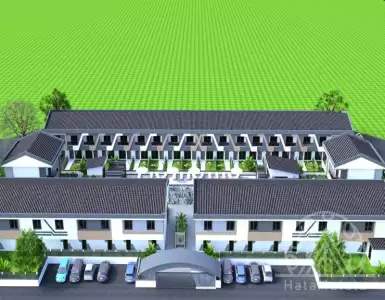


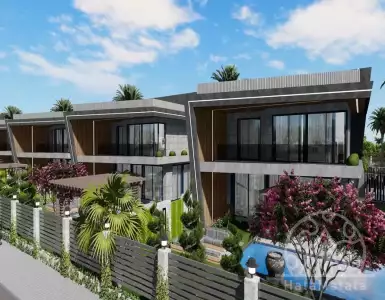
For investors focused on yield rather than lifestyle, the local rental market fundamentals, tourist seasons, and property management costs will matter more than a legal parity for OECD citizens.
Market outlook: why administrative change is not the same as economic change
The government argues that broader economic conditions in buyers’ home countries determine cross-border purchasing power. I agree with that assessment.
Factors that will drive any real change:
- Exchange rates and interest rates in source countries.
- Economic growth and disposable wealth among potential buyer cohorts.
- Travel and tourism trends that influence the appeal of second homes.
- Local Croatian planning policy and municipal attitudes toward foreign owners.
Given the 0.5% share of registered properties owned by OECD citizens and 10,320 recorded acquisition requests over 11 years, a legal tweak alone is not a demand engine. The stronger risks to local affordability come from domestic supply shortages, tourism-driven short-term rentals, and speculative development, not the formal removal of the final national-origin restriction.
Practical advice for policymakers and local stakeholders
If I were advising Croatian local authorities or municipalities, I would recommend a mix of monitoring and targeted policy:
- Implement a registry-based monitoring system that tracks foreign acquisition trends in real time to spot any cluster increases.
- Use spatial planning tools to protect high-value natural habitats and limit development pressure in protected zones.
- Prioritise affordable housing measures for locals in regions under tourist pressure rather than relying solely on foreign purchase restrictions.
- Communicate transparently with local residents about what the legal changes do and do not allow; misinformation fuels political backlash.
These measures reduce the chance of abrupt market distortions while respecting Croatia’s new reciprocity obligations.
How the change affects non-OECD foreign buyers and agricultural land rules
This amendment is targeted at OECD citizenship parity; other categories of foreign buyers remain governed by existing rules and reciprocal arrangements. Agricultural land and forests often face separate restrictions and approval processes.
If you are a non-OECD national or interested in agricultural land, you should:
- Check whether bilateral reciprocity applies; some non-OECD nationals can have purchase rights via treaties.
- Confirm any special approvals required for agricultural land, which may involve additional ministry permissions.
Frequently Asked Questions
Will property prices rise because of this law change?
Short answer: unlikely to rise across the country solely because of the legal change. The data show a very small current share of properties owned by OECD citizens (0.5%), and the government can impose temporary restrictions on purchases by specific countries. Localized price impacts in tourism hotspots remain a possibility if macroeconomic factors increase foreign buying power.
Can foreigners buy property in protected natural areas?
Purchases in protected zones are governed by the Nature Protection Act and spatial planning laws. Those frameworks set the conditions for construction, use, and environmental protection. The real estate law equalization does not override nature protection rules.
What documents do foreign buyers need to buy property in Croatia?
Foreign buyers typically need an OIB (Croatian tax number), proof of identity and residency, and a notarised sale contract for registration in the land registry. Additional permits may be necessary for specific land types, such as agricultural or protected land.
Will the government reintroduce restrictions if foreign buying surges?
Yes. The amended law includes the option to impose time-limited restrictions on purchases by individual OECD states. Political pressure and evidence of rapid market change could prompt such measures.
Final takeaways for buyers and locals
The amendment equalises purchase rights for citizens of all 38 OECD countries, removing the last formal barrier for buyers from Mexico and Costa Rica. But the numbers provided by the government show limited foreign presence in Croatia’s land registry: 10,320 requests from 2013–2024, 4% of registered properties linked to foreign OIB numbers (~321,000), and only 0.5% owned by OECD nationals.
That combination of legal change and small existing foreign share means the amendment is an administrative step more than an immediate market driver. For buyers, the practical work remains the same: secure an OIB, confirm zoning and nature protection constraints, and factor local rental and demand fundamentals into purchase decisions. For local policymakers, the relevant policy levers to protect housing affordability lie in supply-side measures and planning, not in nationality-based purchase restrictions.
If you are considering buying property in Croatia, start by obtaining an OIB and consulting a Croatian notary to confirm reciprocity, zoning, and any nature protection constraints that apply to the parcel you want. End with this practical fact: as of the government's figures, OECD citizens own 0.5% of registered Croatian properties, so the immediate numerical change in ownership is likely to be small unless broader economic drivers shift significantly.
We will find property in Thailand for you
- 🔸 Reliable new buildings and ready-made apartments
- 🔸 Without commissions and intermediaries
- 🔸 Online display and remote transaction

International Real Estate Consultant

Subscribe to the newsletter from Hatamatata.com!
Subscribe to the newsletter from Hatamatata.com!
Popular Posts

We will find property in Thailand for you
- 🔸 Reliable new buildings and ready-made apartments
- 🔸 Without commissions and intermediaries
- 🔸 Online display and remote transaction
International Real Estate Consultant

Subscribe to the newsletter from Hatamatata.com!
Subscribe to the newsletter from Hatamatata.com!
I agree to the processing of personal data and confidentiality rules of Hatamatata
Need advice on your situation?
Get a free consultation on purchasing real estate overseas. We’ll discuss your goals, suggest the best strategies and countries, and explain how to complete the purchase step by step. You’ll get clear answers to all your questions about buying, investing, and relocating abroad.



Irina Nikolaeva
Sales Director, HataMatata