


Dubai Real Estate Hits AED 16.11bn in One Ramadan Week — What Buyers and Investors Need to Know

Dubai’s real estate UAE surge: why one week mattered
Dubai’s real estate UAE market recorded a headline-grabbing total of AED 16.11 billion in transactions during the fourth week of Ramadan, and that figure demands attention. The number is striking because it came amid ongoing regional tensions and a global economic backdrop that has many investors asking whether Dubai is decoupling from geopolitical noise. Our analysis looks at what happened, who was buying, how mortgages behaved, and what a newly announced office tower in Barsha Heights means for commercial demand.
A quick hook for investors and buyers
If you buy or manage property in the Gulf, these weekly flows matter: more than AED 12 billion of the AED 16.11 billion was real estate sales, while mortgages and donations accounted for the remainder. That level of activity in five working days is a signal of sustained demand and market confidence, but it is not without risk. We break down the numbers and give practical takeaways for buyers and investors.
What the numbers say: Ramadan week by the figures
Dubai’s market posted AED 16.11 billion in total real estate transactions for the fourth week of Ramadan. The breakdown is precise and revealing:
- Real estate sales during the five working days topped AED 12 billion.
- Ready-made property sales were AED 6.94 billion across 1,231 transactions.
- Off-plan sales were AED 5.06 billion across 2,313 transactions.
- Total sales transactions numbered 3,544, split into:
- 2,804 residential unit transactions
- 355 building transactions
- 385 land transactions
- Mortgage value for the week was about AED 3.66 billion from 1,147 transactions (817 for residential units, 114 for buildings, 216 for land).
- Donations recorded AED 457.05 million via 82 transactions.
- Combining sales, mortgages and donations for the week produced roughly 4,773 transactions overall.
From the start of Ramadan to the week’s end, cumulative flows are even more telling:
- Sales since the beginning of Ramadan: AED 47.72 billion across 14,167 transactions (11,414 residential, 1,231 buildings, 1,522 land).
- Mortgages since the start of Ramadan: AED 14.34 billion across 3,727 transactions.
- Donations since the start of Ramadan: AED 3.91 billion across 635 transactions.
- Total real estate transactions since Ramadan began: AED 65.97 billion across 18,529 transactions.
These figures are precise and sourced from the transactional data disclosed for the emirate. They show that transactional momentum is not concentrated in one segment alone but spread across ready-made, off-plan, mortgages and even philanthropic transfers.
Where activity concentrated and what that means for housing prices
The split between ready-made and off-plan sales matters for price dynamics. The week showed:
- Ready-made properties generated AED 6.94 billion from 1,231 deals, which is higher value per transaction than off-plan in aggregate.
- Off-plan sales reached AED 5.06 billion but came from 2,313 deals, implying smaller average ticket sizes per transaction relative to ready stock.
What this suggests to buyers and investors:
- Demand for completed units is high enough that buyers are willing to transact at larger ticket sizes. That often supports secondary-market pricing and can lift asking prices in popular communities.
- Off-plan activity remains robust, which means developers are still finding buyers and pre-sales channels are active; this can compress time-to-completion pricing risk for developers but may lengthen supply pipelines to market.
For anyone tracking housing prices in Dubai, note that a shift toward larger ready-made transactions usually correlates with upward pressure on resale values in established areas. At the same time, strong off-plan uptake indicates continued confidence in new supply absorption.
Mortgage activity: leverage is returning to the market
Mortgage flows are a secondary headline in this dataset but they matter because they reveal how buyers are financing purchases.
- AED 3.66 billion in mortgages for the week with 1,147 transactions is substantial.
- Since Ramadan began, mortgages totaled AED 14.34 billion over 3,727 transactions.
Practical implications:
- Lenders are active and buyers are using financing; that tends to widen the buyer pool and supports demand dynamics.
- The split shows most mortgage transactions are for residential units (817 out of 1,147 in the week), which confirms that owner-occupiers and investor buy-to-let purchasers are using leverage rather than cash alone.
A risk to watch: interest rate direction and tightening of loan-to-value rules could cool financed demand if central bank or regulator policy shifts. For now, the mortgage numbers show healthy appetite for debt-backed purchases.
Who is transacting: residential, buildings and land
Transaction counts reveal market composition:
- Residential units dominate with 2,804 transactions in the week and 11,414 since Ramadan began. That shows mainstream buyer interest is in apartments and villas rather than speculative land plays.
- Buildings and land still trade meaningfully—355 building deals and 385 land deals in the week—signaling activity among investors and developers concerned with larger-scale projects or redevelopment.
For investors that means:
- If you want rental yield, residential stock still moves quickly and mortgage finance is accessible.
- If you seek development upside, land and building deals exist but expect more due diligence on title, planning and financing because those transactions are less liquid and carry different execution risks.
National Real Estate’s Barsha Heights tower: a 500m dirham commercial bet
Parallel to transactional data, National Real Estate announced a new Class A commercial tower in Barsha Heights with a development value of AED 500 million. Key facts:
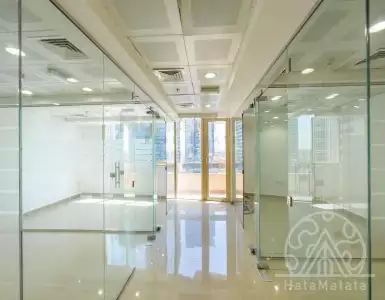
- The project has 26 floors, 22 of which are office floors, delivering about 225,000 sq ft of leasable office space.
- The site is strategically located with a direct connection to Sheikh Zayed Road.
- Construction is set to start in the beginning of Q2 2026 and finish in Q4 2028.
Why this matters:
- Institutional-scale office development signals confidence in Dubai’s commercial leasing market and in long-term demand for premium workspace.
- 225,000 sq ft of new Grade A office product in a well-connected node like Barsha Heights will compete with established office hubs and may shift leasing dynamics where tenants hunt for quality inventory and connectivity.
For investors considering commercial real estate in Dubai:
- Expect a multi-year development horizon before the asset comes to market, which matters for yield forecasts and capital allocation.
- Office demand has been recovering post-pandemic, but the success of new stock depends on job creation, corporate relocations, and hybrid-work arrangements in the UAE.
Risks, headwinds and what could change the picture
The numbers are strong, but markets are not immune to shocks.

 1
1
 1
1
 56
56
 5
6
313
5
6
313
 4
3
400
4
3
400
 1
45.86
1
45.86
 1
2
80
1
2
80
 1
127
1
127
- Geopolitical risk: regional tensions can change sentiment quickly. Dubai is resilient, but cross-border investment flows and tourism can be affected.
- Interest rates and lending rules: if rates rise sharply or regulators tighten loan-to-value ratios, mortgage-fueled demand could slow.
- Supply pipeline: robust off-plan sales today create future supply that can exert downward pressure on pricing if demand cools before completions are absorbed.
- Office demand uncertainty: the Barsha Heights project assumes sustained demand for Grade A office; shifts in corporate footprint strategies or slower corporate hiring could affect lease-up timelines.
We are realistic: the emirate’s market has momentum, but that momentum is not guaranteed, and investors should model downside scenarios in cash flow forecasts.
Practical strategies for buyers and investors right now
Based on the transactional data and the new commercial project, here are practical, experience-driven moves:
- For owner-occupiers: prioritize ready-made stock if you value immediate occupancy and resale liquidity; ready-made transactions are commanding larger per-deal values, a sign of stronger secondary demand.
- For buy-to-let investors: target neighbourhoods with proven rental demand and limited upcoming completions; check mortgage terms and factor in vacancy and maintenance costs.
- For off-plan buyers: insist on developer track record, construction timelines, and exit strategies. Off-plan deals can offer price advantages but carry completion risk.
- For commercial investors: the Barsha Heights tower will add high-quality office stock; evaluate competing supply and tenant demand in Barsha Heights and along Sheikh Zayed Road before committing large capital.
- For land and development buyers: run sensitivity analysis on sales absorption and construction costs; land deals can produce higher returns but require longer horizons and active asset management.
Checklist for due diligence before any purchase:
- Verify title, developer credentials and RERA registration where applicable.
- Run rent roll and vacancy stress tests for investment properties.
- Confirm mortgage pre-approval and model scenarios under higher interest rates.
- Inspect community infrastructure and transport links, especially for Barsha Heights and Sheikh Zayed Road proximate assets.
How this week fits into the wider picture for Dubai’s property market
The Ramadan figures are not an isolated spike. They fit a pattern of strong transactional activity seen across Dubai in recent months. What is notable is the balanced nature of the figures: sales, mortgages and donations all moved materially, and both ready-made and off-plan segments were active.
That balance reduces the risk that the market is being driven by a single speculative cohort. It tells us that both owner-occupiers and investors are participating, and that financial intermediaries are willing to lend. From a market health perspective, those are positive signals — as long as macro conditions do not deteriorate rapidly.
Final practical takeaway
Dubai’s market recorded AED 16.11 billion in one Ramadan week and nearly AED 66 billion since the start of the month when combining all transaction types. For buyers and investors this means demand is present and financing is available, but you should price in interest-rate and supply risks when calculating returns. The Barsha Heights office project is another example of institutional-scale commitment to Dubai real estate; it will deliver 225,000 sq ft of office space by late 2028 and will be one to watch for leasing trends.
Frequently Asked Questions
Q: Are these Ramadan-week figures typical for Dubai?
A: Transaction volumes in Dubai can spike during periods of investor confidence and market rallies. AED 16.11 billion in a single week is high but consistent with prior active periods; the difference here is the balance between ready-made and off-plan sales plus strong mortgage activity.
Q: Should I expect housing prices to rise because of these numbers?
A: The data show upward pressure on resale values where ready-made sales dominate, but final price direction depends on future supply, interest rates and broader economic conditions. Use scenario-based pricing rather than assuming continuous price rises.
Q: How does the Barsha Heights office project affect investors?
A: National Real Estate’s AED 500 million tower will add 225,000 sq ft of leasable Grade A office space by Q4 2028. That increases high-quality supply and will influence leasing dynamics; it is of particular interest to investors tracking office yields and corporate tenant demand.
Q: What should a mortgage-ready buyer do now?
A: Secure pre-approval to understand your financing envelope, model higher-rate scenarios, and target properties with strong rental demand or resale liquidity. The weekly mortgage flows confirm lenders are active, but conditions can change.
End note: Dubai’s market is active and financed, but prudent investors will stress-test cash flows, track the delivery pipeline, and keep an eye on macro drivers such as interest rates and regional geopolitics.
We will find property in UAE (United Arab Emirates) for you
- 🔸 Reliable new buildings and ready-made apartments
- 🔸 Without commissions and intermediaries
- 🔸 Online display and remote transaction

International Real Estate Consultant

Subscribe to the newsletter from Hatamatata.com!
Subscribe to the newsletter from Hatamatata.com!
Popular Posts

We will find property in UAE (United Arab Emirates) for you
- 🔸 Reliable new buildings and ready-made apartments
- 🔸 Without commissions and intermediaries
- 🔸 Online display and remote transaction
International Real Estate Consultant

Subscribe to the newsletter from Hatamatata.com!
Subscribe to the newsletter from Hatamatata.com!
I agree to the processing of personal data and confidentiality rules of HatamatataPopular Offers
 1
1
31
1
1
31
 4
38
4
38
 3
213
3
213
Need advice on your situation?
Get a free consultation on purchasing real estate overseas. We’ll discuss your goals, suggest the best strategies and countries, and explain how to complete the purchase step by step. You’ll get clear answers to all your questions about buying, investing, and relocating abroad.



Irina Nikolaeva
Sales Director, HataMatata