


Frasers Property’s big bet: Industrial estates and One Bangkok lift Thailand real estate scale

Frasers Property doubles down: what this means for Thailand real estate
Thailand real estate is shifting as Frasers Property (Thailand) broadens its footprint across industrial, logistics and premium commercial assets. The company has announced a move that changes its scale and operational depth: expanded exposure to industrial estates, greater integration of commercial mixed-use properties and a tightened leadership structure to manage the integration.
This is a strategic pivot with measurable scale. Our analysis finds the move is impressive for its scope but carries execution and market risks that investors and occupiers need to weigh carefully.
The headline numbers you need to know
- Frasers Property Thailand’s industrial and logistics portfolio is expected to exceed 4 million square metres of assets under management this year.
- The company has added industrial-estate exposure with ARAYA The Eastern Gateway at over 4,600 rai and a newly acquired industrial estate in Chonburi of 2,200 rai.
- The integrated commercial portfolio now totals 1,846,000 square metres of commercial mixed-use gross floor area in Bangkok’s CBD.
- For the financial year ending September 2026 FPT expects revenue of THB 15,045 million.
Those figures explain why Frasers Property Thailand describes this as a “step change” in scale. For investors and occupiers, the balance between recurring-income commercial assets and development-led residential projects is central to the company’s stated aim of greater resilience across market cycles.
Industrial and logistics: deeper into the value chain
Frasers Property has built what it calls Thailand’s largest industrial and logistics business, spanning logistics facilities and warehouses. The notable change is expansion beyond individual logistics assets into industrial estates and ecosystems.
Why that matters:
- Industrial estates give developers and operators control over contiguous land, planning, infrastructure delivery and estate-level services. That can accelerate leasing and raise long-term asset value compared with standalone warehouses.
- ARAYA The Eastern Gateway, at more than 4,600 rai, is described as an integrated industrial estate and innovation ecosystem. Paired with the 2,200 rai acquisition in Chonburi, the combined estate exposure is material for Thailand’s industrial land market.
- Exceeding 4 million square metres of logistics and industrial AUM this year places FPT among the largest industrial landlords active in Southeast Asia.
Our take: moving into industrial estates shifts FPT from being an asset operator to an estate developer and manager. That broadens revenue streams—estate-level fees, infrastructure rebates, serviced land sales and estate management income—but it also raises capital intensity and governance demands. Execution risk increases when projects require long-lead infrastructure and approvals, and cycles in manufacturing and trade demand can influence absorption rates for large estates.
One Bangkok and the commercial mixed-use integration
A second major strand of the company’s strategy is commercial consolidation in Bangkok. The operational integration of One Bangkok into FPT’s single local operating platform creates what the company calls Thailand’s largest premium commercial mixed-use portfolio under unified management.
Key implications:
- The company now manages 1,846,000 square metres of commercial mixed-use GFA, spanning seven mixed-use projects and 10 office buildings across nine mass transit connections.
- Centralised leasing, asset management and tenant engagement aim to standardise service levels across buildings, speed decision-making and create a more user-friendly experience for tenants.
- Consolidation strengthens FPT’s position along the Rama IV corridor, a part of Bangkok under active repositioning as a commercial and transport-oriented office corridor.
From an occupier and investor perspective, a single operating platform can reduce friction: consistent leasing policies, predictable operations and potential cross-portfolio occupancy synergies. However, concentration in premium CBD assets can raise exposure to office demand cycles, remote working trends and sector-specific tenancy risk (for example, banking or corporate headquarters downsizing). For buyers of commercial property or for institutional investors considering stakes in FPT, the integration reduces fragmentation but raises the stakes on effective asset management.
Leadership alignment: how FPT is structuring execution
As the business scales, Frasers Property Thailand has aligned leadership responsibilities to drive closer links between commercial, industrial and residential operations. The executive team listed in the company release includes:
- Lim Hua Tiong, Chief Executive Officer
- Somboon Wasinchutchawal, Deputy CEO of Frasers Property Thailand
- Worawat Srisa‑an, Deputy CEO of One Bangkok
- Kriangkrai Pokanukrom, Chief Financial Officer of Frasers Property Thailand
Business leads named for key segments are:
- Worawat Srisa-an, Retail
- Urasate Navanugraha, Office & Hotel
- Peerapat Srisukont, Industrial & Logistics
- Kamonkarn Kongkathong, Industrial Estate
- Pawarun Udomsiri, Landed Residential
- Withawat Koottatep, High-Rise Residential
That management alignment is a governance signal. Bringing industrial estate leadership together with office, retail and residential leads should support coordinated leasing strategies and cross-selling between tenants and residents. For investors, a transparent and accountable leadership structure is a positive indicator for execution—provided the team can deliver on integration timelines and synergies.
Financial outlook and what that means for investors
FPT projects revenue of THB 15,045 million for the financial year ending September 2026.






What to consider:
- Revenue growth expectations depend on stabilised leasing in both the industrial and commercial portfolios and on residential development sales cycles.
- Recurring income from logistics and commercial leasing is positioned as a stabiliser against residential development volatility. Stability matters for investors seeking predictable distributions or long-term income.
- Expansion into industrial estates will increase asset-backed exposure and could require further capital allocation. Equity or debt funding needs might affect leverage ratios and therefore investor returns.
We note the forecast is a top-line figure. Investors should seek detailed financials about margins, operating expenses, occupancy and debt levels before drawing conclusions about profitability or distributable cash.
What this means for different market participants
Buyers, occupiers, investors and developers each face a different set of implications.
For property investors:
- The scale of FPT’s industrial portfolio supports income diversification away from cyclical residential sales.
- Premium commercial assets concentrated in Bangkok CBD can deliver stable rents from multinational tenants, but they are sensitive to office demand trends and rental reversion.
- Industrial-estate exposure may offer stronger long-term land value capture, yet it brings capital expenditure and estate-level operating obligations.
For occupiers and tenants:
- Unified leasing and tenant engagement across the One Bangkok and other FPT-managed buildings may mean faster approvals and standardised service levels.
- Companies seeking logistics or industrial sites can access larger, contiguous land parcels with estate services, useful for integrated supply chains.
For residential buyers and developers:
- The integration of commercial and residential teams could produce better amenity alignment for mixed-use projects and potentially higher asset value for adjacent residential schemes.
- Residential sales still depend on market affordability, mortgage availability and local demand, so benefits from commercial scale are not automatic.
Risks and downside scenarios investors should monitor
No expansion is risk-free. We identify several points to watch:
- Execution risk: Industrial estates require long-term infrastructure, utilities and approvals. Delays or cost overruns can pressure returns.
- Market cyclicality: Office demand can contract with economic slowdowns or structural remote-work shifts. Industrial demand ties to trade and manufacturing cycles.
- Concentration risk: The company’s large commercial GFA in Bangkok CBD increases exposure to that market’s health.
- Capital and leverage: Growing AUM and estate development may need further capital injections; the impact on balance-sheet metrics and borrowing costs matters for yield-focused investors.
- Tenant mix: Heavy reliance on a narrow tenant base in any asset class increases vacancy and rent-renegotiation risk.
Those risks do not negate the strategy, but they require active management and clear reporting. We advise investors to insist on transparency around occupancy, rental reversion, lease expiry profiles and capital expenditure plans.
How to approach opportunities in Thailand real estate today
If you are considering exposure to Thailand property, whether through direct purchases, leasing or indirect investment, here are practical steps:
- Request detailed asset-level data: occupancy rates, tenant sectors, lease expiry schedules, average lease terms and rent levels.
- Review the capital structure: understand the company’s leverage, debt maturities and any planned funding for estate development.
- Examine the estate plan: for industrial assets, get the masterplan, infrastructure delivery schedule and permitted land uses.
- Consider diversification: combine exposure to industrial/logistics and commercial assets to balance cyclical risks.
- Factor in location premium: Rama IV and other transport-linked corridors may command higher rents but also require higher capex.
For international investors, local regulatory and tax regimes matter. Foreign ownership rules, leasehold structures and repatriation of profits should form part of any due diligence.
Strategic outlook: pragmatic, not guaranteed
Frasers Property Thailand has expanded along two vectors: deeper industrial-estate exposure and greater commercial consolidation under one operating platform. The numbers are tangible. AUM in industrial and logistics is expected to top 4 million square metres, and the company now runs 1,846,000 square metres of commercial GFA in Bangkok’s CBD.
Our view: this move improves FPT’s ability to smooth revenue across cycles by blending recurring income with development returns. Execution is the critical variable. Industrial-estate delivery and commercial leasing performance will determine whether the strategy converts scale into sustainable returns.
Frequently Asked Questions
Q: How large is Frasers Property Thailand’s industrial footprint?
A: The industrial and logistics portfolio is expected to exceed 4 million square metres of assets under management this year, including ARAYA The Eastern Gateway at over 4,600 rai and a 2,200 rai estate in Chonburi.
Q: How much commercial space does the company manage in Bangkok?
A: FPT operates 1,846,000 square metres of commercial mixed-use gross floor area across seven mixed-use projects and 10 office buildings in the CBD.
Q: What revenue does Frasers Property Thailand expect?
A: The company forecasts revenue of THB 15,045 million for the financial year ending September 2026.
Q: What are the main risks to watch following this expansion?
A: Key risks include execution on industrial-estate infrastructure, office demand cycles, capital requirements for development, concentration in Bangkok CBD assets and tenant-mix exposure.
We recommend that buyers and investors focus on asset-level metrics and capital-structure transparency before committing capital. The company’s stated figures—over 4 million sq m of industrial/logistics AUM and THB 15,045 million revenue guidance—are the most concrete yardsticks available today; tracking delivery against those figures will be the best way to assess whether the strategy is working.
We will find property in Thailand for you
- 🔸 Reliable new buildings and ready-made apartments
- 🔸 Without commissions and intermediaries
- 🔸 Online display and remote transaction

International Real Estate Consultant

Subscribe to the newsletter from Hatamatata.com!
Subscribe to the newsletter from Hatamatata.com!
Popular Posts

We will find property in Thailand for you
- 🔸 Reliable new buildings and ready-made apartments
- 🔸 Without commissions and intermediaries
- 🔸 Online display and remote transaction
International Real Estate Consultant

Subscribe to the newsletter from Hatamatata.com!
Subscribe to the newsletter from Hatamatata.com!
I agree to the processing of personal data and confidentiality rules of Hatamatata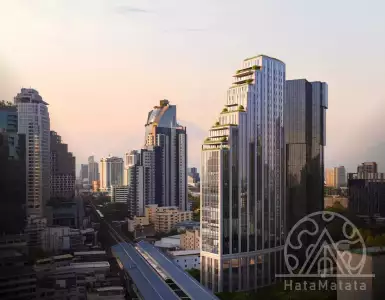

Need advice on your situation?
Get a free consultation on purchasing real estate overseas. We’ll discuss your goals, suggest the best strategies and countries, and explain how to complete the purchase step by step. You’ll get clear answers to all your questions about buying, investing, and relocating abroad.



Irina Nikolaeva
Sales Director, HataMatata