


Greece’s Bold Renovation Push: Up to 95% Subsidies to Rewire the Housing Market

Greece’s renovation overhaul: what it means for the real estate Greece market
Greece is rolling out a revamped version of its flagship housing scheme, “I Renovate,” that moves the conversation about the real estate Greece market from piecemeal fixes to full rebuilds of functionality and energy performance. The programme is being promoted with subsidies of up to 95%, and its detailed rules set out a framework designed to return properties to the long-term market rather than to short-term holiday lets.
This is one of the clearest examples in recent years of state policy trying to directly alter housing supply and the country’s housing stock quality. For buyers, landlords and investors active in Greece’s housing market, the scheme is impressive but risky: it creates unusually generous financial incentives while imposing strict conditions on occupancy and rental use.
What the revamped “I Renovate” offers
The Ministry of National Economy and Finance has structured the programme to force comprehensive upgrades rather than cosmetic work. Key headline features include:
- Total budget: €500 million aimed at upgrading 15,000–20,000 homes, with priority given to older apartments built in the 1980s–1990s.
- Financial support up to €300 per square metre, with a maximum subsidy of €36,000 per property.
- The scheme is publicised with subsidies “up to 95%,” while the explicit subsidy scale in published details lists a base rate of 80%, rising to 85% for island or mountainous properties and 90% for defined social groups (large families, people with disabilities).
- Work must be split between renovation works (60%–80% of costs) and energy upgrades (20%–40%) so that properties get both functional repairs and efficiency improvements.
Eligible renovation works include:
- Plumbing and electrical system upgrades
- Structural repairs and reinforcement
- Flooring replacement
- Kitchen and bathroom renovations
- Interior and exterior painting
Energy interventions require at least three measures, which can include:
- Thermal window replacements
- Solar water heaters or other renewable systems
- Heating/cooling upgrades such as heat pumps
- Targeted insulation works
An Energy Performance Certificate (EPC) will be required before and after works to demonstrate an improvement of at least one energy class.
Who can apply and how the numbers stack up for homeowners
Access rules are wider than in many previous Greek support schemes. The ministry has broadened eligibility to attract both private owners and landlords back into the formal long-term market.
Income and applicant rules:
- Income limits: €25,000 for a single applicant and €35,000 for a couple, with a €5,000 top-up per child.
- Applies to both vacant and occupied properties.
- No age limit for applicants and no cap on the number of applications an owner can submit.
Subsidy mechanics:
- €300/sq m cap up to €36,000 per property.
- Standard subsidy rate: 80% of eligible costs.
- Higher rates: 85% for island or mountainous properties and 90% for eligible social categories.
- In some instances homeowners may only need to cover 10% of total costs out of pocket.
What this means in practice: a mid-sized apartment of 80 sq m could qualify for up to €24,000 at €300/sq m, while the subsidy portion of eligible works would pay most of the bill under the 80–90% scale. But applicants must meet the work mix rules and the energy class improvement target to receive funds.
Energy upgrades: more flexible but still demanding
The scheme’s energy component is less rigid than past “Save”-type programmes, but it still forces a minimum set of interventions that change how investors plan projects.
Requirements and implications:
- At least three energy interventions must be completed, with two of them allowed to be basic upgrades.
- The energy budget share must be 20%–40% of total eligible costs.
- EPCs before and after the work are mandatory and must show a minimum improvement of one energy class.
For investors this means planning packages that combine plumbing and structural repairs with renewable or thermal upgrades. Heat pumps, thermal windows and solar water heaters are the most likely to appear in approved lists because they improve energy class and are commonly cost-effective. These measures will also raise the long-term operating costs and attractiveness of properties for tenants, but they increase upfront project complexity.
Obligations designed to enlarge long-term rental supply
One of the most consequential elements of the scheme is its use restrictions aimed at freeing up housing for longer tenancies.
Key obligations:
- Renovated vacant properties must be rented long-term or occupied for a minimum of five years.
- Owner-occupiers who receive grants must keep the property as their primary residence for five years.
- Short-term rentals (e.g., Airbnb) are prohibited for five years after renovation.
These rules aim to channel refurbished stock into the long-term market and discourage a simple upgrade-to-Airbnb model that some investors use to capture tourist income. The requirement is blunt but straightforward to enforce through registry checks and later audits linked to the grant.
From a policy perspective, this is a deliberate shift toward supply-side intervention to cool pressure on rents in urban areas where short-term lettings have reduced long-term supply. For landlords, these obligations will change exit strategies and expected yields—higher rents from short-term lets will not be available for at least five years where grants are received.
Market impact: who benefits and who faces new limits
The scheme will affect different market participants in different ways.
Likely winners:
- Owners of older urban apartments who need deep renovation and want to refinance value via long-term rent.
- Buyers looking to acquire undervalued stock to renovate and hold for rent, provided they meet income/ownership conditions.
- Tenants, who should see some upward pressure on the supply of better-quality long-term homes.
Potential losers or cautious groups:
- Investors who rely on short-term holiday lets as their core business model—those properties will be ineligible for grant-driven refurbishment without changing the business model for five years.
- Owners who cannot finance the required minimum outlay if they do not qualify for the top subsidy rates.
- Contractors facing administrative bottlenecks and price volatility in materials.
There is also a timing and scale risk. The scheme aims to help 15,000–20,000 homes with €500 million, which is significant but small relative to total housing stock in cities such as Athens and Thessaloniki. Expect selective impact in targeted neighbourhoods—older pockets where 1980s–1990s-era buildings dominate.
Implementation risks, construction costs and likely bottlenecks
The success of the scheme depends on sharp execution. There are clear sources of risk:
- Construction inflation: the programme launches as prices for steel, aluminium, timber and energy remain high. That will raise project costs and the gap between estimated eligible costs and real quotes.
- Administrative load: EPC checks, work verification, and rental status audits require staffing; delays will frustrate applicants and contractors.
- Enforcement: policing the five-year occupancy and short-term rental bans requires cross-checks with tax and registry data to catch violations.
Contractors and homeowners should expect longer lead times and competition for labour in the initial wave of applications. We expect some applicants to experience quotes that exceed the capped rate of €300/sq m for certain intensive works, in which case out-of-pocket contributions rise.
Practical steps for homeowners and investors
If you are considering the programme, here is how to approach it:
- Start with an EPC: get an energy assessment to determine baseline and likely achievable post-work class.
- Obtain detailed contractor quotes that separate renovation and energy work so you can demonstrate the 60%/40% split required.
- Check your income eligibility against the stated limits (€25,000 single, €35,000 couple plus €5,000 per child).
- Factor in the five-year occupancy/rental restrictions into your expected returns and exit planning.
- Plan for material price volatility—include contingency in your budget.
- If you own property on islands or in mountainous zones, verify whether the higher subsidy rate (85%) applies to your location.
For investors buying to renovate and rent, we recommend running two pro forma scenarios: one with the grant and five-year long-term rental constraint, and one without the grant but with short-term rental flexibility. The grant may increase net present value only if you are willing to commit to five years of long-term rentals.
How this sits within broader housing policy
The programme addresses two consistent problems in Greece’s housing market: poor-quality older stock and constrained long-term rental supply.




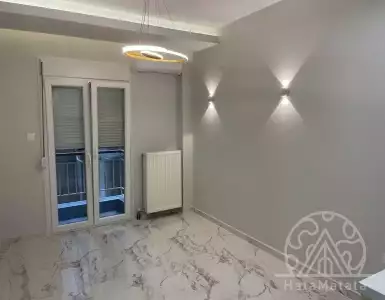

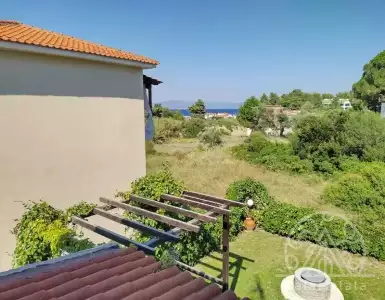
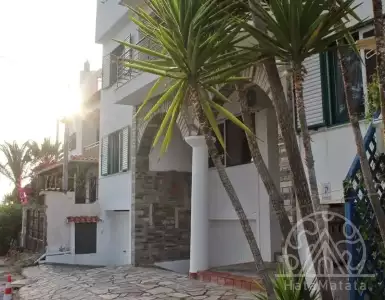
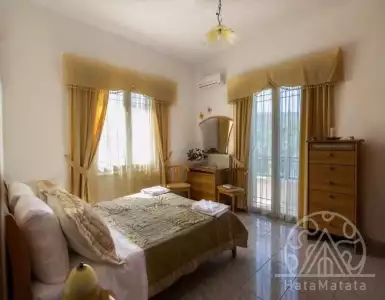
There is political logic: improving the energy efficiency of thousands of homes reduces household energy bills and helps climate goals, while moving refurbished units into the rental market addresses affordability. But this mix of social, environmental and supply objectives creates trade-offs. Higher-quality housing may reduce maintenance and energy costs per household, but strict restrictions on short-term rental uses may reduce some owners’ appetite to invest.
Frequently Asked Questions
Who can access the I Renovate scheme?
Homeowners who meet the income limits—€25,000 for single applicants and €35,000 for couples, plus €5,000 per child—can apply. Both occupied and vacant properties are eligible. There is no age limit and no cap on the number of applications per owner.
How much money is available per property?
Funding is limited to €300 per square metre with a maximum subsidy of €36,000 per property. The overall programme budget is €500 million, aimed at upgrading 15,000–20,000 homes.
What percentage of costs does the grant cover?
The base subsidy rate is 80%, rising to 85% for properties on islands or in mountainous areas and 90% for eligible social groups like large families or people with disabilities. The scheme is promoted with subsidies of up to 95%, but the published breakdown lists rates up to 90%.
What restrictions apply after renovation?
Renovated vacant properties must be rented long-term or occupied for five years. If the owner lives in the property and receives a grant, it must be their primary residence for five years. Short-term rentals such as Airbnb are banned for five years following renovation.
Final assessment: who should move and what to watch for
The programme is a strong incentive for owners of older apartments and investors willing to commit to five-year long-term rentals. It will improve energy performance and habitability in thousands of homes, and the combination of renovation plus energy efficiency is sensible from a household-cost perspective.
At the same time, applicants and investors must be realistic about hidden costs and administrative friction. Expect construction quotes to exceed historic averages because of rising prices for steel, aluminium, timber and energy. Expect audits to enforce the five-year occupancy and rental rules. If you are relying on short-term rental income, this scheme forces a rethink.
If you plan to apply, begin by commissioning an EPC and detailed contractor quotes that split renovation and energy work. Bear in mind the fixed caps and the five-year use restrictions when modelling returns. The programme’s budget is €500 million and it aims to upgrade 15,000–20,000 homes; that is a concrete number to keep in mind when sizing the likely impact on the Greek housing market.
We will find property in Greece for you
- 🔸 Reliable new buildings and ready-made apartments
- 🔸 Without commissions and intermediaries
- 🔸 Online display and remote transaction

International Real Estate Consultant

Subscribe to the newsletter from Hatamatata.com!
Subscribe to the newsletter from Hatamatata.com!
Popular Posts

We will find property in Greece for you
- 🔸 Reliable new buildings and ready-made apartments
- 🔸 Without commissions and intermediaries
- 🔸 Online display and remote transaction
International Real Estate Consultant

Subscribe to the newsletter from Hatamatata.com!
Subscribe to the newsletter from Hatamatata.com!
I agree to the processing of personal data and confidentiality rules of Hatamatata
Need advice on your situation?
Get a free consultation on purchasing real estate overseas. We’ll discuss your goals, suggest the best strategies and countries, and explain how to complete the purchase step by step. You’ll get clear answers to all your questions about buying, investing, and relocating abroad.



Sales Director, HataMatata