


Phuket and Koh Samui Buyers Rethink Villas as Thailand Tightens Ownership Rules

Thailand tightens the rules — what villa buyers need to know
If you follow property Thailand, the opening months of 2024 have been a wake-up call. New enforcement against nominee ownership and additional oversight from April 1 have pushed foreign buyers on Phuket and Koh Samui to change how they approach buying a villa.
Demand for resort homes has not collapsed, but decision cycles have lengthened as buyers scrutinise legal structures more closely. In this article we break down what has changed, how the market is reacting, who is still buying, and the practical steps investors and second-home buyers should take before committing to a Phuket or Koh Samui villa.
What changed: the crackdown on nominee ownership
Thai authorities increased enforcement from 1 January 2024 on arrangements that allowed foreigners to control land via Thai nominees. Additional rules introduced on 1 April 2024 tightened supervision of nominee-controlled companies and land-holding structures. Media reports have even mentioned raids on villas, businesses and a lawyer’s office.
The practical consequence is simple: previously tolerated informal schemes are now under greater scrutiny, and any structure that appears to be a front for foreign land ownership risks challenge. That has forced buyers and developers to favour transparent, legally robust routes to ownership.
Why this matters for buyers
- Foreigners cannot hold land in their own name in Thailand. They can buy leasehold rights over land and freehold condominium units subject to the 49% foreign quota under the Thai Condominium Act.
- Many of the opaque arrangements used in the past relied on nominee shareholders and complex company ownership. Authorities are aiming to prevent circumvention of the land ownership rules.
For buyers, this raises transaction risk and increases the premium placed on verified legal structures. It also slows decision-making as purchasers seek independent counsel and more complete documentation.
The preferred route now: protected leasehold structures
With freehold land ownership off the table for most foreigners, the market has coalesced around long-term leasehold models that offer contractual protections.
Key features of the model most buyers seek:
- An initial lease term commonly set at 30 years, with contractual renewal options extending total tenure to 90 years.
- The land is often held by a Thai company, while villa purchasers receive long leasehold interests in the building and the land use.
- In some projects, purchasers also buy shares in the land-holding company and obtain voting rights to help secure lease renewals collectively.
Industry practitioners refer to these as “protected leasehold structures.” They are not simple short leases that expire without remedy; their value depends on the legal certainty of the renewal mechanisms and the enforceability of contractual protections.
We stress this point: the legal details matter. Not all leasehold arrangements provide the same protections. Buyers should insist on seeing the original land title, the lease agreement, renewal mechanics and any shareholder or company documents that tie into ownership and control.
Legal and practical risks buyers must assess
Because the new enforcement targets nominee and opaque structures, the key risks are legal challenge and enforceability issues. Specific items to check include:
- Whether lease renewal clauses are binding and can be enforced in Thailand.
- How the land-holding company is structured, who controls it, and whether there are minority protections for foreign shareholders.
- Whether the lease or share agreements are registered at the Land Department or other relevant Thai authorities.
- Tax and inheritance implications under Thai law and in the buyer’s home jurisdiction.
Our analysis: hire a Thailand-licensed property lawyer who has worked on villa transactions in Phuket or Koh Samui within the last three years. Ask for recent examples of disputes they have resolved and the outcomes. Experience in the local courts and with the Land Department is more useful than academic credentials alone.
Market snapshot: scale, value and visitor fundamentals
Despite the regulatory shift, fundamental demand factors remain supportive for resort property in Phuket and Koh Samui.
- Phuket recorded 4.9 million visitors between January and April 2024, of which 3.5 million were international arrivals and 1.3 million were domestic tourists. Average hotel occupancy was 81.85%, according to the Tourism Authority of Thailand.
- By unit count, villas account for 7% of Phuket’s residential stock but make up 31% of the market’s value.
- Phuket’s villa segment comprises 6,563 units valued at THB207.568 billion in total; 3,949 units have been sold, leaving 2,614 units available.
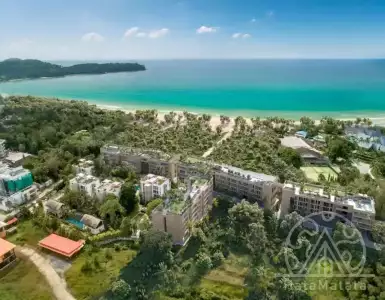
These figures show that villas are a small slice of the housing stock but dominate value because of high per-unit prices. Development activity remains visible, especially in the Bang Tao–Layan corridor where more than 80 projects are at various stages.
Price ranges and what buyers are paying
Pricing in Phuket and Koh Samui spans a wide spectrum, reflecting different buyer needs and locations.
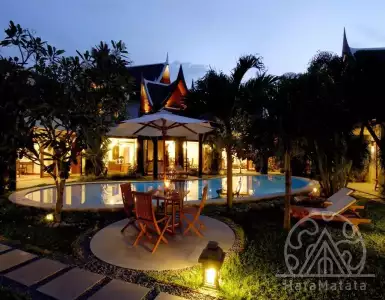
- Ultra-prime hillside villas in Phuket can sell for US$25–30 million. The market is opaque at that level, with many private negotiated deals.
- Koh Samui generally caps around US$5–6 million for most luxury villas. Exceptions exist, such as the Three new villas at Four Seasons Koh Samui that start from US$12 million each.
- Examples from recent deals reported by market practitioners:
- Villa Papillon (Surin Beach views): US$14.29 million.
- A custom-built Koh Samui parcel bought for US$700,000 with estimated construction costs of about US$2.7 million.
- An entry-level luxury villa in Phuket (13,000 sq ft land, 7,535 sq ft built) sold for US$1.6 million.
- A Pacific Sunset hillside villa near Four Seasons Koh Samui sold for US$765,000 off-plan.
Pricing at the top end is less transparent than in other markets.







Who is buying and why they still come
Buyer profiles differ between Phuket and Koh Samui.
- Koh Samui draws many European buyers, notably French, plus Singaporeans and regional buyers seeking a holiday or retirement base.
- Phuket attracts a broader mix: the Middle East, India, mainland China, Europe, the US and Southeast Asia.
We see some patterns of demand:
- Professionals based in Singapore, including fund managers, want a second home with flexible access to work and lifestyle.
- Families from the UAE and other Gulf states have used Phuket and Koh Samui as temporary relocation bases during geopolitical tensions; enquiries increased but often did not lead to immediate purchases.
- Buyers are motivated by lifestyle, rental income potential, and long-term capital preservation in a tourism-driven market.
Crucially, demand has not evaporated. Instead, buyers move more cautiously and insist on legal clarity before committing.
Supply dynamics and development pressures
New supply in the mid-to-high luxury band is thinning in certain price brackets. According to market specialists, stock in the US$4–8 million range is becoming scarce, especially well-presented resale villas and projects by developers with established track records.
Construction cost pressures are another factor. Developers have reported contractors quoting as much as 20% higher than pre-war rates for fuel and materials. For projects already under construction, developers absorb part of those costs; later phases or new launches may pass increases to buyers.
For investors, this means two things:
- Completed, well-located, renovated villas may outperform new supply on a risk-adjusted basis.
- Off-plan purchases require careful cost and completion risk assessment because contractors’ input costs are volatile.
How to approach a villa purchase in 2024: practical checklist
If you are considering a Phuket or Koh Samui villa, follow a disciplined process. From our reporting and conversations with market lawyers and agents, here is a pragmatic checklist:
- Engage a local, licensed property lawyer early. Insist they provide examples of recent leasehold or company-structure transactions and disputes handled.
- Verify the land title by registry search. Confirm whether the land is private freehold, agricultural, or subject to other restrictions.
- Demand the full lease and renewal documentation. Look for firm renewal mechanics extending to 90 years in total where possible.
- Inspect the land-holding company’s articles, shareholder register and any shareholder agreements that can affect your rights.
- Check whether lease or share agreements are registered with the Land Department or relevant authorities and whether any transfer restrictions apply.
- Confirm tax obligations, including withholding taxes on sale, transfer taxes, and any corporate taxes relevant to the holding company.
- Assess the developer’s or seller’s track record. In the opaque ultra-prime market, track record is often the best proxy for pricing and delivery reliability.
- Consider escrow, staged payments and holdback mechanisms tied to construction milestones when buying off-plan.
- Factor operating costs, property management fees and likely renovation expenses into your total cost of ownership.
- If you plan to rent out the villa, check local zoning and resort/strata rules that affect short-term rentals.
This list is not exhaustive, but it reflects steps that reduce legal and financial risk in the current environment.
A balanced view: why we are cautious yet not alarmed
The enforcement drive removes convenient, informal workarounds and forces greater transparency. That is painful for some buyers and developers, but from a market-quality perspective it can be healthy. Transparent title and documented lease protections increase liquidity and long-term durability of property rights.
At the same time, buyers face real obstacles:
- Legal clarity may cost time and money; transactions will take longer.
- Top-end pricing opacity means comparative valuation is harder unless you work with active market participants.
- Construction cost inflation can affect project delivery and future margins.
Our assessment is pragmatic: the market has real demand supported by tourism fundamentals, but success now depends more than ever on legal certainty and realistic pricing.
Closing practical takeaway
If you are serious about buying a villa in Phuket or Koh Samui, start by engaging a Thailand-licensed property lawyer and confirm whether the lease terms include contractual renewal rights extending to a total of 90 years. That single step will likely determine whether the asset is legally secure and whether your purchase delivers the lifestyle or investment outcome you expect.
Frequently Asked Questions
Q: Can foreigners still buy villas on Phuket and Koh Samui?
A: Yes. Foreigners cannot hold land in their own name but can buy leasehold interests in landed property and freehold condominiums subject to the 49% foreign quota. Leasehold structures with contractual renewal rights are now the common route.
Q: What is a ‘protected leasehold’?
A: It is a long-term lease structure that typically starts with 30 years and includes contractual renewal options extending to 90 years in total, often combined with shareholding arrangements in the land-holding company to improve security.
Q: Are villa prices falling because of the crackdown?
A: No broad price collapse has been reported; rather, buyer decisions have slowed. High-end market pricing remains opaque, but demand fundamentals, including tourism figures and limited prime new supply, continue to support values.
Q: What immediate steps should a buyer take?
A: Hire a Thailand-licensed property lawyer, verify land titles and lease renewal mechanics, examine company documents if the land is company-held, and factor construction and operating cost inflation into your budget.
For buyers and investors, the message is clear: the era of informal nominee structures has ended. Legal certainty now costs time and professional fees, but it is the price of owning a secure villa in Thailand’s top resort markets.
Tags
We will find property in UAE (United Arab Emirates) for you
- 🔸 Reliable new buildings and ready-made apartments
- 🔸 Without commissions and intermediaries
- 🔸 Online display and remote transaction

International Real Estate Consultant

Subscribe to the newsletter from Hatamatata.com!
Subscribe to the newsletter from Hatamatata.com!
Popular Posts

We will find property in UAE (United Arab Emirates) for you
- 🔸 Reliable new buildings and ready-made apartments
- 🔸 Without commissions and intermediaries
- 🔸 Online display and remote transaction
International Real Estate Consultant

Subscribe to the newsletter from Hatamatata.com!
Subscribe to the newsletter from Hatamatata.com!
I agree to the processing of personal data and confidentiality rules of Hatamatata


Need advice on your situation?
Get a free consultation on purchasing real estate overseas. We’ll discuss your goals, suggest the best strategies and countries, and explain how to complete the purchase step by step. You’ll get clear answers to all your questions about buying, investing, and relocating abroad.



Sales Director, HataMatata