


Ukrainian Councillor Buys Third Bulgaria Property and Adds 6,428 Foreign Securities

A councillor’s quiet build-up of Bulgaria property and global stocks
A Ukrainian city councillor has quietly expanded her holdings abroad: in 2025 Natalia Horbenko purchased another Bulgaria property, adding to earlier purchases and a large package of foreign securities. In this report we review the facts in her public declaration, explain what such cross-border holdings mean for buyers and investors, and flag governance and due diligence issues that matter when political figures hold foreign real estate and listed assets.
From the outset let me be frank: this is impressive in scale but it raises questions an ordinary buyer should ask before investing in the Bulgaria property market or buying into international securities while holding public office.
What the declaration shows — assets, values and dates
The details are drawn from Horbenko’s 2025 declaration filed with the NACP registry. Key facts from the filing include:
- Three rooms in Bulgaria:
- 39.89 sq.m acquired in 2022, valued at 531,881 UAH.
- 58.34 sq.m acquired in 2024, valued at 2,900,000 UAH.
- 43.65 sq.m acquired in 2025, valued at 1,700,000 UAH.
- Total securities ownership: 6,428 securities acquired on foreign exchanges in 2025 and earlier, including:
- 42 shares of Amazon.com, Inc.
- 60 shares of NVIDIA Corporation
- 4 shares of Alibaba Group Holding
- ETFs such as SPDR Portfolio S&P 500 Growth (155 units), Dow Jones Industrial ETF (39 units), iShares Short-Term Corporate Bond ETF (405 units), Vanguard Short-Term Inflation-Protected Securities ETF (425 units), and SPDR Gold Shares (25 units)
- Sector and regional ETFs including iShares Core MSCI Pacific (80 units) and Invesco Aerospace & Defense ETF (25 units)
- Agricultural and commodity exposure via shares in MHP SE (915), Kernel Holding SA (100), Ferrexpo PLC (4,100)
- Two US Treasury bonds and 1 share of Warner Bros. Discovery (held since 2024).
- Dividend and interest income from foreign assets: nearly 72,000 UAH in dividends plus 951 UAH interest from US Treasury bonds.
- Domestic real estate and land: a residential house of 354.5 sq.m in Mykolaiv owned by her husband since 2025; husband also holds two land plots — 65,609 sq.m in Vinnytsia region valued at 655,015 UAH, and 22,674 sq.m in Khmelnytskyi region valued at 212,687 UAH.
- Vehicles: a Mazda CX-3 (2019) registered to Horbenko and an older ZAZ pickup registered to her husband.
- Bank balances and savings: 73,727 UAH and 1,194 USD in Ukrainian accounts, 64,532 EUR in Bulgaria, 11,314 EUR in Ukraine, credit union contributions of 10,000 EUR and 10,415 USD, and 500,000 UAH in cash.
- Income and receipts: Horbenko reported 494,500 UAH as entrepreneur income for 2025, 901,793 UAH in salary from the charitable organization "Shchedryk", plus proceeds from asset disposals: 3.1 million UAH from real estate sales and 1.14 million UAH from the disposal of securities and corporate rights in Tesla Inc.
- Outstanding loan: in 2024 Horbenko took a loan of 3,000,000 UAH from Serhii Kolesnyk, a fellow local official and president of BO “Shchedryk”, which has not been repaid according to the declaration.
These are the items recorded in the public filing. The mix of small residential units in Bulgaria and a broad basket of foreign-listed securities is the story here.
How to read the Bulgaria property purchases
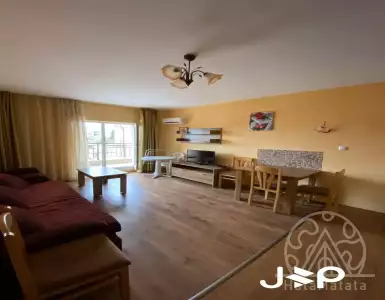
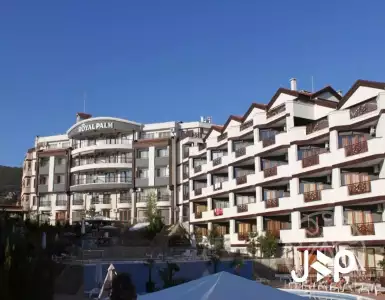
Three separate rooms of modest floor area are visible in the declaration: 39.89 sq.m, 58.34 sq.m, and 43.65 sq.m. Those sizes typically correspond to studio or one-bedroom units in many European cities. For buyers and analysts this pattern prompts several observations:
- Small units are easy to buy and often easier to rent out, but they demand active management and can have higher per-square-metre transaction costs compared with larger flats.
- The valuations are declared in Ukrainian hryvnias: 531,881 UAH, 2,900,000 UAH, and 1,700,000 UAH. Currency conversion and timing matter when comparing to local euro-priced listings in Bulgaria.
- Owning several separate rooms can be a strategy to diversify within a single property market — different buildings, addresses, or ownership conditions. It can also reflect the way local sellers market individual rooms as separate tenure units.
For investors in Bulgaria property, those points translate into practical checks: confirm the title (ownership of a room can mean shared common parts), verify the legal status of the unit with local notary records, and review condominium rules and maintenance liabilities.
The investment portfolio: what 6,428 securities mean in practice
Owning 6,428 securities is not an abstract number — it is broad exposure across US equities, ETFs, regional funds and corporate stocks listed outside Ukraine. The declaration lists well-known names: Amazon, NVIDIA, Alibaba and several ETFs tracking the S&P 500 and the Dow Jones.
From an investor perspective the takeaways are:
- Diversification across sectors and instruments can reduce firm-specific risk, but it increases demands on custody, tax reporting and compliance when you own foreign securities across multiple jurisdictions.
- Dividend receipts recorded as almost 72,000 UAH signal these holdings produce income, albeit modest relative to the size and diversity of the portfolio.
- US Treasury bonds and inflation-protected ETFs add defensive exposure, which is notable for someone who also holds equity and commodity-linked assets.
For private buyers considering a similar mix, custody fees, withholding taxes on dividends, and the complexity of cross-border estate planning are immediate practical hurdles. If you hold property in Bulgaria while owning securities in US and UK markets, ask your lawyer and tax adviser how income will be declared in your home jurisdiction and whether double tax treaties apply.
Why Bulgarian property attracts buyers like Horbenko
There is no single reason shown in the declaration for why Horbenko bought Bulgarian rooms, but common drivers for Ukrainians and other regional buyers include:
- Proximity and travel convenience compared with more distant EU countries.
- EU membership status of Bulgaria that offers a perception of stability for real estate tenure and property rights.
- Relative affordability compared with Western Europe.
From a practical standpoint for prospective buyers we recommend these checks:
- Confirm whether the unit is a separate legal title or a share of a larger property; in some cases "rooms" are marketed inside larger, multi-owner buildings with shared areas.
- Investigate local municipal taxes, occupation fees for rentals, and typical management costs in the building.
- Review currency exposure: purchase prices and local fees are paid in euros or leva while your declared income and savings may be in hryvnia.
Governance and transparency questions — why declarations matter
Public asset declarations exist to promote transparency and to allow citizens to scrutinise whether public officials have unexplained wealth or conflicts of interest. Horbenko’s filing is an example of how a local councillor can hold:
- Domestic property and agricultural land via a spouse.
- Foreign property and bank accounts abroad.
- A substantial portfolio of foreign securities.
Two items that invite scrutiny from a governance perspective:
- The 3 million UAH loan taken in 2024 from a fellow local official and not repaid, which creates questions about related-party exposure and influence.
- The mixture of charitable income, business income and asset sales, which complicates transparency unless full supporting documentation is available.
For investors and residents, the lesson is simple: when officials hold foreign property, conflict-of-interest rules, procurement involvement and public decision-making should be watched closely.
 1
1
 1
1
 57
57
 2
2
90
2
2
90
 1
41
1
41
 1
1
68
1
1
68
Practical considerations for anyone buying property in Bulgaria
If you are thinking about buying in the Bulgaria property market, or using a similar investment mix, here are practical steps we advise:
- Legal due diligence: obtain a full title search and certificate of encumbrances from a Bulgarian notary.
- Confirm VAT status: new developments may carry VAT implications while older buildings may not.
- Understand ownership restrictions: non-EU buyers often face limitations concerning agricultural land. For apartments and urban real estate, foreign ownership is routine but confirm specific local rules.
- Financial planning: budget for municipal taxes, property management fees, utilities and potential renovation costs. Small units can have higher per-square-metre service charges.
- Tax reporting: plan for cross-border taxation — dividend withholding, capital gains, rental income and reporting obligations in your home country.
- Exit strategy: consider resale prospects in that neighbourhood, as liquidity can vary between coastal resorts and inland urban centres.
These are practical checks that Horbenko’s case underlines: owning foreign assets is operational work, not a set-and-forget decision.
Risks and red flags to monitor
Owning foreign property and a large basket of securities brings clear benefits but also risks. From the facts in the declaration we highlight several risks investors and citizens should monitor:
- Currency risk when holdings are declared in UAH but assets and liabilities are in euros, dollars or pounds.
- Legal complexity of title for small units listed as rooms rather than full apartments.
- Reputation and governance risks when public officials accept large loans from other officials or control business entities that bid for municipal contracts.
- Tax-compliance risks if cross-border income is not fully declared in the correct jurisdictions.
For private investors, the practical takeaway is to build a compliance checklist before purchase: legal, tax, currency, and property management.
Our analysis in plain terms
We view Horbenko’s asset mix as strategic diversification: small-scale physical property in an EU country and a broad international securities portfolio. Those moves mirror what many private buyers do to spread risk across asset classes and currencies. But the presence of an unpaid intra-elite loan and the ownership of sizeable land parcels by her husband complicate the public governance picture.
From an investment perspective, small residential units in Bulgaria can be sensible for short-term rentals or as affordable second homes. From a public-interest perspective, officials who hold cross-border assets attract legitimate scrutiny about sources of funds and possible conflicts when they participate in local decisions that affect land use or procurement.
Frequently Asked Questions
Q: How many properties in Bulgaria does Natalia Horbenko own?
A: According to her declaration, Horbenko owns three rooms in Bulgaria: 39.89 sq.m (2022), 58.34 sq.m (2024) and 43.65 sq.m (2025) with values declared as 531,881 UAH, 2,900,000 UAH, and 1,700,000 UAH respectively.
Q: What foreign securities does she hold?
A: The declaration lists a total of 6,428 securities including shares in Amazon, NVIDIA, Alibaba, ETFs tracking the S&P 500 and Dow Jones, bond ETFs, commodity ETFs such as SPDR Gold, and two US Treasury bonds.
Q: Does owning property in Bulgaria give residency rights?
A: Ownership of real estate in Bulgaria does not automatically grant residency. Residency and visa rules are separate from property ownership and depend on Bulgarian and EU immigration laws; buyers should consult immigration specialists for personal cases.
Q: Should political exposure influence a private buyer’s decision?
A: Yes. Political exposure raises additional compliance and reputational considerations. If a public official or someone connected to an official owns property in an area, confirm that procurement and local decisions were handled transparently and that no conflicts of interest exist.
Final takeaway
Horbenko’s filings show a deliberate split between three Bulgaria rooms and 6,428 foreign securities, plus domestic property and farmland held by her family. For anyone considering the Bulgaria property market, the concrete lesson is this: cross-border holdings require real legal checks, careful tax planning and clarity about title. Horbenko declared 64,532 EUR in Bulgarian bank accounts, which is one concrete financial detail you can verify when examining similar investments.
We will find property in Bulgaria for you
- 🔸 Reliable new buildings and ready-made apartments
- 🔸 Without commissions and intermediaries
- 🔸 Online display and remote transaction

International Real Estate Consultant

Subscribe to the newsletter from Hatamatata.com!
Subscribe to the newsletter from Hatamatata.com!
Popular Posts

We will find property in Bulgaria for you
- 🔸 Reliable new buildings and ready-made apartments
- 🔸 Without commissions and intermediaries
- 🔸 Online display and remote transaction
International Real Estate Consultant

Subscribe to the newsletter from Hatamatata.com!
Subscribe to the newsletter from Hatamatata.com!
I agree to the processing of personal data and confidentiality rules of Hatamatata
Need advice on your situation?
Get a free consultation on purchasing real estate overseas. We’ll discuss your goals, suggest the best strategies and countries, and explain how to complete the purchase step by step. You’ll get clear answers to all your questions about buying, investing, and relocating abroad.



Sales Director, HataMatata