


Flat in Thailand


Choosing a property in Thailand for your request
- 🔸 Reliable new buildings and ready-made apartments
- 🔸 Without commissions and intermediaries
- 🔸 Online display and remote transaction
Our managers will help you choose a property

Liliya
International Real Estate Consultant
Need help choosing a property?
Leave a request and our manager will contact you.
Our managers will help you choose a property
Liliya
International Real Estate Consultant


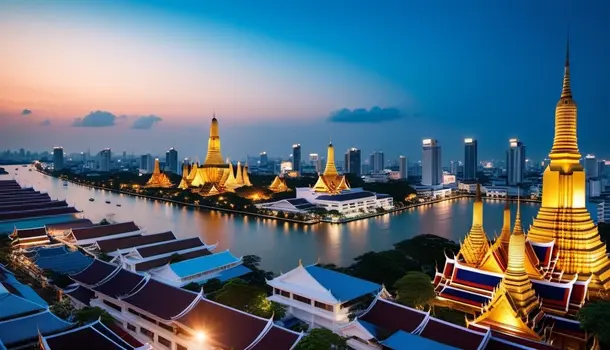
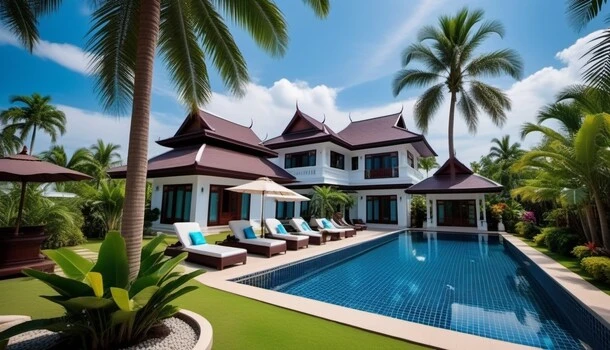
Weather in Thailand
For Sale flat in Thailand
Flats in Pattaya




Flats in Bangkok
Choosing a property in Thailand for your request
- 🔸 Reliable new buildings and ready-made apartments
- 🔸 Without commissions and intermediaries
- 🔸 Online display and remote transaction
Our managers will help you choose a property
Liliya
International Real Estate Consultant
Flats in Phuket
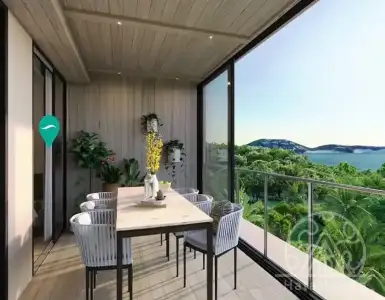
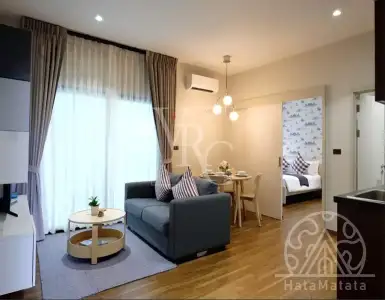
Flat in Thailand
Choosing a property in Thailand for your request
- 🔸 Reliable new buildings and ready-made apartments
- 🔸 Without commissions and intermediaries
- 🔸 Online display and remote transaction
Our managers will help you choose a property
Liliya
International Real Estate Consultant
Need help choosing a property?
Leave a request and our manager will contact you.
Our managers will help you choose a property
Liliya
International Real Estate Consultant
Individual selection flats in Thailand
Save time — for free we will select objects for your budget and goals
🇹🇭 Thailand flat ownership rules, fees and foreign quota for condominiums and leaseholds
Buying a flat in Thailand brings together tropical lifestyle, solid tourism demand and a varied property market that serves budget buyers, expats and institutional investors. Bangkok, Phuket, Pattaya, Chiang Mai, Koh Samui and Hua Hin each present different liquidity profiles, price bands and rental patterns driven by infrastructure, international arrivals and local employment hubs. Understanding titles, foreign freehold quotas and seasonal demand is essential before committing capital or signing an off-plan contract.
🌴 Where to buy Flat in Thailand: geography, climate and infrastructure
Bangkok is Thailand’s transport and business hub with two international airports — Suvarnabhumi and Don Mueang — an expanding BTS and MRT network and major business districts like Sathorn, Silom, Sukhumvit and Ratchadapisek, which shape demand for central condos. Coastal regions such as Phuket and Pattaya rely on international airports — Phuket International and U-Tapao — plus marinas and resort infrastructure for holiday rental occupancy.
Northern centers like Chiang Mai and Chiang Rai combine lower price per sqm with strong domestic leisure demand and digital nomad attraction near Nimmanhaemin Road and Chiang Mai University. Island markets — Koh Samui, Koh Phangan — pivot on ferry links and smaller airports, producing short-stay rental peaks tied to holiday seasons.
Flat supply and demand are shaped by climate and zoning: flood-prone lowlands around Bangkok increase interest in high-rise living, while hillside Phuket and Koh Samui favour villas and premium condominiums with sea views. Proximity to hospitals (Bumrungrad, Bangkok Hospital), international schools (Bangkok Prep, Harrow), CBD offices and shopping malls (CentralWorld, ICONSIAM, Central Festival Phuket) lifts both prices and rental yield.
📈 Economy and investment climate in Thailand affecting flats
Thailand’s economy is export- and tourism-driven, with services and manufacturing hubs concentrated in Bangkok, Rayong and the Eastern Economic Corridor (EEC). Tourism contributes a significant share of GDP and sustains short-term rental markets in Phuket, Pattaya and Chiang Mai through consistent international arrivals.
Business investment, including multinational corporate regional offices and tech startups in One Bangkok and Sathorn, supports long-term rental demand for 1–2 bedroom flats near BTS and MRT lines. Tax policy and incentives in the EEC attract industrial projects that create local housing demand in Rayong and Chonburi provinces.
Liquidity in the flat market reflects macro factors: stable domestic demand in Bangkok, high seasonality on islands and cyclical investor interest in Pattaya. Key indicators to watch include occupancy rates in serviced apartments, inbound tourist numbers in the tens of millions annually and GDP growth that fuels domestic buyer confidence.
💶 How much Flat costs in Thailand
Prices for Flat in Thailand vary dramatically by city, location and project status, with clear differentiation between new developments and completed resale units. Typical price bands in US dollars are:
- Bangkok (CBD): $150,000–$1,500,000 for 30–200+ sqm units; prime penthouses exceed $3,000,000.
- Phuket: $120,000–$1,200,000 for condos near Patong, Kata and Surin; beachfront and villa-conversion projects climb higher.
- Pattaya/Jomtien: $80,000–$600,000 with strong vacation rental potential.
- Chiang Mai: $60,000–$350,000, attractive for long-term rentals and retirees.
- Koh Samui/Hua Hin: $120,000–$900,000, premium beachfront apartments and small villa projects dominate.
Property formats and market dynamics: - Studios and 1-bed flats (25–45 sqm) commonly $60,000–$250,000 depending on city and proximity to transport.
- 2–3 bedroom flats (60–140 sqm) typically $150,000–$800,000 in urban centers.
- Serviced residences and branded residences command premiums of 10–40% over standard condos, especially in projects like One Bangkok, The River and branded resorts in Phuket.
Market trends show steady interest in compact, well-located units for rental, while larger luxury flats and penthouses remain niche but resilient.
🎯 Which region of Thailand to choose for buying flat
Bangkok remains the first choice for buy-to-let investors due to corporate tenancy, university students and long-stay expats, with Sukhumvit, Thonglor, Ari and Ratchathewi lines as hotspots. Bangkok’s rental demand supports professional tenants and yields typically centered around 4–6% in prime zones.
Phuket and Pattaya serve short-stay holiday rental markets with higher seasonal yields; Kata, Patong, Bang Tao in Phuket and Jomtien, Wongamat in Pattaya attract international tourists and produce rental yield for flat in Thailand often 5–8% for well-managed properties. Chiang Mai and Hua Hin are favored for retirees and digital nomads, with lower price points and stable long-term rental demand.
Industrial and coastal areas such as Rayong and the EEC attract workers and expatriates tied to manufacturing and logistics, creating consistent mid-market demand and reasonable entry prices compared to central Bangkok.
🏗️ Leading developers and Flat projects in Thailand
Reputable developers with track records include Sansiri (Edge, Ashton), AP Thailand (AP) (Whizdom, Aspire), Ananda Development (IDEO series near BTS), Raimon Land (The River, The Lofts), Pace Development (MahaNakhon), Noble Development (Noble Series), LPN (Lumpini), Frasers Property and Central Pattana for mixed-use.
Notable projects that illustrate market segments:
- MahaNakhon (Bangkok) for ultra-prime mixed-use and branded residences.
- The River (Riverside Bangkok) for luxury riverside living with strong long-term capital appeal.
- Park Origin / Ideo (Sukhumvit/BTS clusters) for transit-oriented mid- to high-rise flats.
- Laguna Phuket and Dusit Thani projects in Phuket for resort-branded residences and holiday rentals.
Developers commonly offer pre-sale incentives, long installment plans and sometimes rental guarantee programs for select launches.
🏦 Mortgage Thailand for foreigners and installment options for flat in Thailand
Thai banks provide limited mortgages to non-residents, and policies vary by institution; Mortgage Thailand for foreigners often requires higher down payments and stricter documentation. Typical conditions include:
- Down payments of 30–50% for foreigners, sometimes higher for non-resident applicants.
- Loan-to-value (LTV) ratios generally 30–70% depending on residency status and bank discretion.
- Interest rates vary by borrower profile, with some competitive variable rates and special packages from international banks.
Developer finance is widely used: flat in Thailand with installment plan options include staged payments during construction, deferred payment schemes and short 0% interest promotional periods. Developer installment plans commonly require a reservation deposit (often $2,000–$10,000) followed by staged payments and final transfer at the Land Department.
📝 Legal process to buy flat in Thailand explained step by step
Step 1 is due diligence: verify the condo’s foreign freehold quota, review the title deed type (Chanote) and confirm building completion certificates. Step 2 is reservation with deposit and signing a sale and purchase agreement in both Thai and English, often with lawyer review and escrow arrangements. Step 3 is foreign currency transfer: funds must be converted to Thai baht with a Foreign Exchange Transaction form (FET) when remitted and presented at transfer.
Final transfer occurs at the Land Department, where buyer pays transfer fees and taxes; documents include passports, FET forms and proof of funds. Buyers should instruct a Thai lawyer or licensed agent to perform a title search, check for encumbrances and confirm the condominium juristic person is in good standing.
Timelines vary: completed resale transfers can take a few weeks after paperwork, while off-plan properties follow construction milestones and handed-over units are transferred after full payment and final certification. Proper escrow and legal oversight reduce risks of disputes.
⚖️ Property taxes in Thailand for foreigners and ownership rules for Flat in Thailand
Foreigners can own flats freehold up to 49% of a condominium project’s total saleable area under Thai law, while land ownership remains restricted to Thai nationals and Thai majority companies; common alternatives are leasehold (typically up to 30 years) or Thai company structures with legal advice. Property taxes in Thailand for foreigners and locals include transfer fees (commonly 2% of registered value), stamp duty (0.5%) or specific business tax (3.3%) if the seller is a business and sale falls within taxable periods, plus municipal and annual land/building taxes which are modest relative to purchase price.
Rental rules permit short-term and long-term leasing, but projects can set their own rules via the condominium juristic person. There is no automatic Residence permit through flat investment in Thailand nor Golden visa through flat investment in Thailand purely based on property purchase; foreign buyers should pursue official visa schemes such as long-stay retirement visas or the Thailand Elite program instead.
Buyers must declare transactions properly, obtain the FET receipt for foreign currency transfers to support ownership registration, and budget for closing costs, maintenance fees and periodic taxes that affect net ROI.
🏡 Which purposes suit buying Flat in Thailand: living, rental, investment
Living and relocation: central Bangkok flats near BTS/MRT — Sukhumvit, Silom, Asoke — suit executives and families with access to international schools and hospitals. Chiang Mai and Hua Hin suit retirees seeking lower costs and community lifestyle.
Rental and investment: holiday destinations like Phuket, Pattaya and Koh Samui perform for short-stay rentals, while Bangkok and Rayong deliver stable corporate and long-term tenancy. Typical property types per purpose:
- Urban professionals: 1–2 bedroom flats (30–80 sqm) near BTS/MRT.
- Holiday rental investors: studio to 2-bedroom serviced flats in resort zones, often with management companies.
- Premium buyers: penthouses and branded residences in MahaNakhon, The River, One Bangkok chapters of the market.
Each scenario affects liquidity, expected rental yield for flat in Thailand and ROI on flat in Thailand; urban long-lets often yield 3–6%, while well-managed holiday flats can yield 5–8% in high season.
Market prospects point to steady demand for well-positioned flats in transit-oriented Bangkok locations, resilient holiday markets in Phuket and Pattaya supported by international arrivals, and niche growth in city-regional corridors tied to industrial investment. Developers with strong reputations and projects near major infrastructure upgrades will remain the primary source of new inventory, while buyers and investors who prioritize legal checks, clear foreign ownership quotas and realistic rental projections will achieve the best long-term ROI on flat in Thailand.
Frequently Asked Questions
Yes—foreigners can directly own condominium units subject to the 49% foreign quota per building. Foreigners cannot own land outright; options for houses include long-term leaseholds (commonly 30 years) or corporate structures with strict rules. Typical purchase completion including title transfer takes 30–90 days after contracts and due diligence.
Prices vary widely: Bangkok condos typically range ~100,000–200,000 THB/sqm; resort areas 80,000–150,000 THB/sqm; secondary cities 30,000–70,000 THB/sqm. A one‑bed in central Bangkok often sells for 2–6 million THB. Expect transaction timelines of 30–90 days and regional price dispersion of tens of percent.
No—property purchase alone does not grant residency or citizenship in Thailand. Options include retirement visas (commonly require age 50+, financial proof such as ~800,000 THB in bank or equivalent income), work or investment visas, or paid long‑stay programmes. Permanent residency requires years of legal stay, qualifications and government approval, often a multi‑year process.
Typical transaction costs: transfer fee about 2% of registered value; specific business tax commonly 3.3% if applicable; stamp duty 0.5% if SBT not charged. Sellers may face income or withholding tax depending on status. Overall closing costs typically total roughly 3–6% of the price; taxes are settled at transfer, same day at the Land Office.
Yes, some Thai and international banks lend to foreigners. Loan‑to‑value usually ranges 50–70% for non‑residents; terms up to 20–30 years are possible depending on lender. Approval typically requires proof of income, tax documents and residency status; processing takes 2–6 weeks. Foreign‑currency mortgages are rare.
Long‑term rental yields for city condos are commonly 3–5% gross. Short‑term holiday rentals in resort areas can reach 5–8% gross but are seasonal and incur higher management costs. Expect an investment horizon of 5–10 years for capital growth; yields and vacancy rates vary by location and tourism cycles.
Common steps: reservation deposit (often 10%–30%), due diligence/title checks, sales contract with deposit, mortgage approval if used, and Land Department transfer with final payment. From reservation to transfer expect 30–90 days; developer off‑plan projects follow staged payments over construction (months to years).
Best title for security is Chanote (full freehold certificate). Other types like Nor Sor 3 Gor are less clear and may need extra checks. Leaseholds commonly run 30 years with possible contractual renewals. Verifying title at the local Land Office is standard and can be completed in days during due diligence.
Register incoming foreign funds with a Foreign Exchange Transaction (FET) form at purchase to repatriate sale proceeds in foreign currency. Repatriation is processed within days once documentation is provided. Expect THB FX volatility; plan a 5–10+ year horizon and consider hedging or diversified holdings to limit currency risk.
Thailand offers a large tourism sector (double‑digit % contribution to GDP), strategic ASEAN location, lower cost of living, and growing urban infrastructure. Urbanisation and transport projects support demand in key cities and resorts. Typical investor horizon is 5–20 years to capture rental income and capital appreciation potential.
Properties by Region
Properties by Country
- Real estate in Bulgaria (11408)
- Real estate in Montenegro (5186)
- Real estate in Indonesia (2423)
- Real estate in Spain (2289)
- Real estate in Portugal (1975)
- Real estate in Italy (1910)
- Real estate in Turkey (1699)
- Real estate in Cyprus (1594)
- Real estate in Thailand (1565)
- Real estate in Croatia (1431)
- Real estate in Greece (1082)
- Real estate in USA (1013)
- Real estate in France (1006)
- Real estate in Georgia (519)
- Real estate in Serbia (328)
- Real estate in Slovenia (123)
- Real estate in Egypt (23)
Don't know where to start buying a property in Thailand?
Leave a request and receive free advice on prices, taxes, residence permits and the real estate market. in Thailand.

Maria Guven
Head of Direct Sales Department
+90-507-705-8082