


House in UAE (United Arab Emirates)


Choosing a property in UAE (United Arab Emirates) for your request
- 🔸 Reliable new buildings and ready-made apartments
- 🔸 Without commissions and intermediaries
- 🔸 Online display and remote transaction

International Real Estate Consultant
Need help choosing a property?
Leave a request and our manager will contact you.
International Real Estate Consultant

Weather in UAE (United Arab Emirates)
For Sale house in UAE (United Arab Emirates)
Houses in Dubai

 4
4
 6
6
 230
230
 3
6
218
3
6
218
 4
3
252
4
3
252
Didnt find the right facility?
Leave a request - we will handle the selection and send the best offers in a short period of time



Irina Nikolaeva
Sales Director, HataMatata
House in UAE (United Arab Emirates)
Choosing a property in UAE (United Arab Emirates) for your request
- 🔸 Reliable new buildings and ready-made apartments
- 🔸 Without commissions and intermediaries
- 🔸 Online display and remote transaction
International Real Estate Consultant
Need help choosing a property?
Leave a request and our manager will contact you.
International Real Estate Consultant
Individual selection houses in UAE (United Arab Emirates)
Save time — for free we will select objects for your budget and goals
🇦🇪 UAE house ownership: legal requirements, fees and popular residential areas
Buying a house in the UAE (United Arab Emirates) combines modern infrastructure, tax-efficient ownership and high rental demand with a diverse market from Dubai’s waterfront villas to Abu Dhabi’s gated communities and emerging northern emirates. For private buyers, families relocating for work, seasonal residents and investors seeking yield or capital growth, the UAE offers clearly segmented product types—villas, townhouses, mansions and gated compounds—with transparent title regimes in designated freehold zones, strong developer credentials and ready access to international airports, seaports and business districts. This guide outlines geography, economy, prices, regions, developers, financing, legal steps and ownership rules so you can evaluate buying a House in UAE (United Arab Emirates) with confidence.
🏝️ Where geography, climate and infrastructure shape demand in UAE (United Arab Emirates)
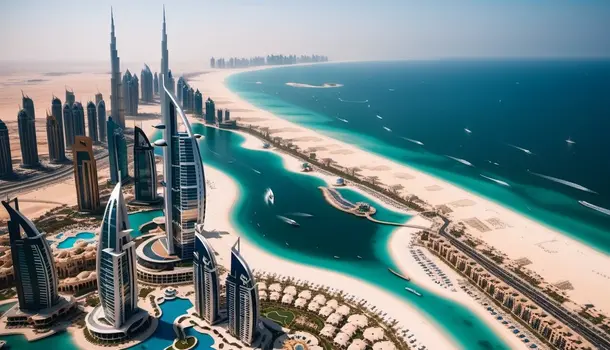
The UAE’s coastal geography and desert hinterland determine where houses are most attractive: coastal Abu Dhabi and Dubai, islands like Palm Jumeirah and Saadiyat, waterfront developments on Al Reem Island and Yas Island, and suburban master-planned communities such as Arabian Ranches and Jumeirah Golf Estates draw highest demand because of beach access, green space and leisure infrastructure. Climate—hot, arid summers and mild winters—drives demand for air-conditioned, well-insulated houses with pools and shaded outdoor areas, making properties with energy-efficient design and private gardens premium assets.
Transport corridors such as Sheikh Zayed Road, Dubai Metro, Abu Dhabi’s Sheikh Zayed Bin Sultan Street, and proximity to Dubai International Airport (DXB) and Abu Dhabi International Airport are decisive for commuting buyers and tenants, pushing up prices near hubs. The presence of international schools (DPS, GEMS, Repton), hospitals (Cleveland Clinic Abu Dhabi, Mediclinic, NMC), and retail anchors (Dubai Mall, Yas Mall) increases family-oriented demand and long-term rental stability. Tourist and business centers—Dubai Marina, Downtown Dubai, Business Bay, and Abu Dhabi’s Al Maryah Island—sustain short-term rental markets and corporate leases.
Infrastructure projects—new metro lines, road upgrades, ports and free zones—continue to redirect demand to emerging districts like Meydan, Dubai South and Masdar City, where early buyers can find lower entry prices and future-facing amenities. Developers often align community design with utilities, district cooling, and private security, which directly affects maintenance costs and resale values for houses in the UAE (United Arab Emirates).
💼 Economy and investment climate in UAE (United Arab Emirates) affecting the House market
The UAE’s diversified economy—oil-linked fiscal strength, plus real estate, tourism, aviation, logistics and financial services—provides stable employment inflows and expatriate residency that underpin housing demand. GDP growth tied to trade, tourism and free-zone expansion supports both capital appreciation and sustained rental pools in top markets such as Dubai and Abu Dhabi. The business-friendly regulatory framework and numerous free zones attract multinational companies, corporate relocations and skilled foreign workers who form the primary tenant base for high-quality houses.
Tax policy is investor-friendly: there is no annual property tax for owners, no federal wealth tax and capital gains are generally tax-free for individuals, though transaction and registration fees apply at the emirate level; this improves ROI on house in UAE (United Arab Emirates) compared to many global markets. Tourism flows—millions of international visitors annually concentrated in Dubai and Abu Dhabi—support short-stay rental demand and seasonal premium pricing in leisure-focused communities such as Palm Jumeirah and Saadiyat Island, increasing potential rental yield for house in UAE (United Arab Emirates).
Market liquidity benefits from a mature developer ecosystem and active secondary markets; resale volumes cluster in established neighborhoods and new masterplans where title registration and escrow mechanisms are robust. Investor sentiment is sensitive to interest rate cycles, mortgage availability and visa-linked investment incentives that can stimulate demand for investment house in UAE (United Arab Emirates).
💶 How much House costs in UAE (United Arab Emirates) — prices and formats
Prices for houses vary widely by city, plot size, finish level and proximity to amenities. Typical ranges in USD are:
- Dubai (villas & townhouses): $600,000 to $20,000,000 — Dubai Marina and Palm Jumeirah commanding premium end; Arabian Ranches and Dubai Hills Estate mid- to high-end.
- Abu Dhabi (villas & beachfront houses): $500,000 to $15,000,000 — Saadiyat and Al Raha Beach on premium side; Khalifa City A & B offer family homes at moderate prices.
- Sharjah, Ras Al Khaimah, Ajman (villas/townhouses): $250,000 to $1,500,000 — affordable family options, growing rental demand.
- Emerging zones (Dubai South, Al Reem Island, Yas Island): $300,000 to $4,000,000 — good entry points with infrastructure-led appreciation.
Property formats and sample sizes:
- Townhouse: 3–5 bedrooms, 200–450 m² land, from $600,000.
- Detached villa: 4–7 bedrooms, 350–1,500 m² plot, $900,000–$5,000,000+.
- Luxury waterfront villa: premium plots and private quay, $3,000,000–$20,000,000.
Market dynamics show rising demand for larger layouts and private outdoor space post-relocation trends, with rental yield for house in UAE (United Arab Emirates) commonly ranging 4–7% in established Dubai suburbs and 5–8% in high-demand vacation zones, while ROI on house in UAE (United Arab Emirates) depends on location, holding period and financing structure.
📍 Which region of UAE (United Arab Emirates) to choose for buying House
Dubai remains the primary magnet for international buyers seeking liquidity, high tourist inflows and world-class retail and transport; Downtown, Palm Jumeirah, Dubai Marina, Emirates Hills, Jumeirah and Dubai Hills are top picks for premium houses and strong resale values. Abu Dhabi attracts buyers seeking governmental stability, diplomatic presence and family-focused neighborhoods with Saadiyat Island, Yas Island, Al Raha Beach and Khalifa City offering waterfront living and proximity to government and corporate hubs.
Northern emirates—Sharjah, Ras Al Khaimah and Ajman—appeal to budget-conscious buyers and long-term rental strategies, with lower entry prices and growing infrastructure investments boosting capital growth potential. Emerging districts such as Dubai South (near Al Maktoum International), Al Reem Island and Masdar City provide value buyers with modern masterplans, strong connectivity and future upside as infrastructure completes.
Considerations by region:
- Accessibility to airports, metro lines and highways.
- Proximity to international schools and hospitals.
- Short-term rental regulations and tourist demand.
- Price per square metre and resale volatility.
🏗️ Leading developers and projects offering House in UAE (United Arab Emirates)
Market-leading developers with proven delivery and post-handover service affect risk perception and resale performance. Notable names and projects include:
- Emaar Properties — Dubai Hills Estate, Arabian Ranches, Address Residences and large villa communities.
- Nakheel — Palm Jumeirah villas and The Palm’s waterfront mansions.
- Aldar Properties — Saadiyat Island, Al Raha Beach and Yas Island masterplans in Abu Dhabi.
- DAMAC Properties — luxury townhouses and villas in bespoke communities.
- Sobha — Sobha Hartland with luxury villas, gardens and private schools.
- Meraas — La Mer adjacent projects and beachfront community development.
Developer reputation key points:
- Delivery record and escrow protection.
- Post-sales property management and community facilities.
- Quality of landscaping, security, district cooling and utility provisioning.
🏦 Mortgage and installment conditions for foreigners in UAE (United Arab Emirates)
Foreign buyers can access finance but terms differ by emirate, bank and residency status. Typical mortgage parameters:
- Down payments: Non-resident foreigners usually 20–35% for apartments, 25–40% for villas; residents often 15–25% depending on loan-to-value limits.
- Loan terms: Up to 20–25 years for owner-occupiers; shorter terms for non-residents.
- Interest rates: Variable and fixed options; approximate ranges 3.5–6.5% depending on lender and credit profile.
- Eligibility: Proof of income, employment contract, bank statements, credit history and valuation report.
Banks and developer plans:
- Major UAE banks (Emirates NBD, ADCB, Abu Dhabi Islamic Bank) offer Mortgage UAE (United Arab Emirates) for foreigners with full documentation.
- Many developers provide house in UAE (United Arab Emirates) with installment plan on off-plan and completed projects—down payments from 10–30% with staged payments during construction and handover.
- house in UAE (United Arab Emirates) with mortgage is common in secondary market purchases with standard bank processing and valuation.
📝 Legal process to buy house in UAE (United Arab Emirates) — step-by-step
The Legal process to buy house in UAE (United Arab Emirates) typically follows a structured sequence: selection and reservation, sales agreement and escrow (for off-plan), due diligence, final payment, title registration and transfer at the relevant Land Department. Buyers must obtain a No Objection Certificate if applicable, secure bank finance, and rely on certified contracts verified by legal counsel or the developer’s sales center.
Key steps:
- Reservation deposit and signing a Memorandum of Understanding (MoU) or SPA with payment schedule.
- Verification of title via the Land Department and checks on outstanding service charges, mortgages or liens.
- Transfer of title at Land Department: payment of registration fees (varies by emirate), agency commission and any transfer taxes where applicable.
Timelines depend on whether the property is off-plan, under construction or ready. Off-plan completion and handover include defect liability periods and handover paperwork, while secondary-market purchases can close within weeks when financing is pre-approved. Exact timelines and required documents vary; always verify identification, POA requirements and currency rules with your chosen legal counsel.
⚖️ Property taxes and legal ownership rules for House in UAE (United Arab Emirates)
Property taxes in UAE (United Arab Emirates) for foreigners are minimal compared to many countries: there is no annual federal property tax and no personal capital gains tax on property sales for individuals in most scenarios, but buyers face transactional charges such as registration fees, Dubai Land Department fee (~4% in Dubai), mortgage registration and agent commissions typically 1–2%. VAT applies to certain developer services and new builds in specific circumstances.
Ownership regimes:
- Freehold ownership exists in designated zones across emirates—foreigners can Buy house as a foreigner in UAE (United Arab Emirates) in those zones with full title deeds.
- Leasehold or long-term usufruct arrangements may apply in other areas; check emirate-specific law.
- Rental rules: landlords must register with the local rental committee and follow regulated eviction and rent-increase protocols in some emirates; short-term rental licensing is mandatory for holiday lets in several jurisdictions.
Residence and citizenship:
- A house purchase sometimes supports a residency application under investor or property-linked schemes—search criteria vary by emirate, and thresholds are applied. For high-value investments, applicants may qualify for long-term permits; Golden visa through house investment in UAE (United Arab Emirates) and Residence permit through house investment in UAE (United Arab Emirates) are available under specific criteria and thresholds, which differ across emirates and require verification with immigration authorities.
🎯 Best purposes for buying House in UAE (United Arab Emirates) — living, rental and investment
Living and relocation: Families relocating to Abu Dhabi often choose Khalifa City, Saadiyat, Al Raha Beach for schools and government offices; Dubai families prefer Emirates Hills, Jumeirah, Arabian Ranches for schools and community amenities. Seasonal residence: Holiday villas on Palm Jumeirah, Saadiyat and Yas Island suit buyers seeking beachfront living and short-term rental income.
Rental and investment: Investors targeting yield often choose established suburbs with stable tenant demand—Dubai Hills, Al Barsha, Jumeirah Village Circle—where rental yield for house in UAE (United Arab Emirates) typically falls in the 4–7% band for family homes and higher near tourist hotspots. High-net-worth and luxury investors pursuing capital growth select waterfront mansions in Palm Jumeirah and Emirates Hills for long-term appreciation and prestige.
Commercial use and portfolio diversification: Institutional investors and private owners buy multiple houses to scale rental operations; Investment house in UAE (United Arab Emirates) strategies include buy-to-let in expatriate corridors and short-stay platforms in tourist districts. Evaluate ROI on house in UAE (United Arab Emirates) using local rent comparables, occupancy rates and service cost assumptions.
Market prospects are underpinned by continued infrastructure investment, free-zone expansion and a diversified economy attracting skilled expatriates; demand for quality houses in prime Dubai and Abu Dhabi locations is likely to remain robust, while emerging emirates offer value entry points with potential for capital appreciation tied to transport and tourism projects. Overall, the combination of favorable tax regimes, transparent registration, flexible financing options such as Mortgage UAE (United Arab Emirates) for foreigners and developer installment plans make the UAE an attractive market to Buy house in UAE (United Arab Emirates), whether you plan to Buy house as a foreigner in UAE (United Arab Emirates) for residence or to acquire an Investment house in UAE (United Arab Emirates) with a clear path to rental income and capital growth.
Frequently Asked Questions
Yes. Foreigners can buy freehold property in designated areas across the UAE (United Arab Emirates), notably in Dubai and parts of Abu Dhabi. Ownership in freehold zones is permanent; registration and title transfer typically complete in 2–6 weeks after contract signing.
Prices vary widely: across the UAE (United Arab Emirates) apartments commonly range AED 800,000–2,500,000 and villas AED 2,500,000–10,000,000. A national average transaction price sits around AED 1.2M. Rental yields average 4–7% annually; market-wide price gains have been visible over the past 3–4 years.
Yes. The UAE (United Arab Emirates) offers property-based residency: many emirates issue short-term residency linked to ownership (1–5 years). A property investment of roughly AED 2,000,000 or more can qualify for a 10-year Golden Visa in applicable programs; processing generally takes weeks to a few months.
Expect one-off costs around 3–6% of price (transfer/registration and agent fees) plus mortgage setup fees ~1% and title searches. Annual service charges vary by community (thousands to tens of thousands AED yearly). Most fees are payable at transfer; service charges billed yearly.
Yes. Banks lend to non-residents in the UAE (United Arab Emirates); typical loan-to-value (LTV) for expats is 50–75% depending on bank and emirate. Loan terms run up to 25 years, and approvals usually take 2–8 weeks after application and document checks.
Gross rental yields across the UAE (United Arab Emirates) typically fall between 4–7% annually; prime locations may be 3–6%. Rents are usually contracted for 1 year with annual payment cycles; professional management fees are commonly 5–10% of annual rent.
Property in the UAE (United Arab Emirates) is often used for capital preservation: the dirham is pegged to the USD (since 1997), there is no federal personal income tax, and many investors see real estate as an inflation hedge. Typical rental yields 4–7% and price cycles usually play out over 3–5 years.
From search to moving: property search and due diligence 2–12 weeks; contract, mortgage and title transfer 2–6 weeks; total 1–5 months. Residency processing via purchase or work/residence visa usually adds weeks to a few months depending on the visa route.
Check title deed and registration with the emirate land department, outstanding service charges, mortgage status, and any developer escrow arrangements. Obtain a sale contract review and No Objection Certificate where needed; these checks and document clearances typically take days to 3–4 weeks.
Liquidity varies by emirate and area: prime locations often sell in weeks to a few months, secondary markets can take 2–6 months. Expect to price competitively for a fast sale—often a 5–10% discount to market—and transfer/registration to complete in 1–3 months after an accepted offer.
Properties by Region
Properties by Country
- Real estate in Bulgaria (11408)
- Real estate in Montenegro (5360)
- Real estate in Indonesia (2423)
- Real estate in Spain (2289)
- Real estate in Portugal (1975)
- Real estate in Italy (1897)
- Real estate in Turkey (1699)
- Real estate in Cyprus (1590)
- Real estate in Thailand (1565)
- Real estate in Croatia (1431)
- Real estate in Greece (1082)
- Real estate in USA (1013)
- Real estate in France (1006)
- Real estate in Georgia (519)
- Real estate in Serbia (328)
- Real estate in Slovenia (123)
- Real estate in Egypt (23)
UAE Developers
Don't know where to start buying a property in UAE (United Arab Emirates)?
Leave a request and receive free advice on prices, taxes, residence permits and the real estate market. in UAE (United Arab Emirates).

Maria Guven
Head of Direct Sales Department
+90-507-705-8082