


Bangkok’s Office Boom: 616,000 sq m of New Space Forces Major Redevelopments

Bangkok’s office market faces a make-or-break wave
Bangkok's office market is about to test every owner's nerve: more than 616,000 sq m of new Grade A supply will enter the market between 2026 and 2031, and real estate Thailand investors and occupiers must decide fast. This is not simply another construction cycle. It is a structural shift in how occupiers value workspace, and it is already forcing owners of older buildings to spend heavily on modernisation or risk losing tenants.
The facts are clear. Bangkok's total office stock stood at 9.15 million sq m after a pause in completions in Q2 2026, with the Central Business District (CBD) accounting for over 5 million sq m. But recoveries are uneven: Grade A vacancy in the CBD fell to 21.9% this quarter from 23.3%, showing demand has returned for high-spec projects. Older Grade A and Grade B properties, which make up 58% of the city's stock and with more than half older than ten years, are under the most pressure.
In this article I examine what this supply wave means for landlords, investors and tenants, identify practical strategies for asset owners to defend or enhance value, and flag the risks buyers should factor into underwriting and exit planning.
What changed: from price wars to a value battle
The story of the past three years is well known. After a surge in premium Grade A supply, Bangkok’s office market slid into oversupply: vacancy peaked near 28% in late 2024, equivalent to about 800,000 sq m of empty offices. Aggressive rent cuts followed. As Ukrit Pornpattanapairoj, head of Office Agency at Cushman & Wakefield (Thailand), told Krungthep Turakij journalist Bussakorn Phusae, that narrative has shifted.
Today tenant demand is targeting newer, operationally efficient buildings that meet contemporary workplace and wellness requirements. Landlords have moved away from headline rent reductions; instead they offer richer service packages and lease structures to protect net effective rents. Average asking rents for Grade A have largely stabilised at roughly 943 Baht per sq m per month, but headline rates tell only part of the story.
Key shifts we are seeing:
- Tenants prioritise building systems, health and wellness certification, and integrated tech platforms.
- Landlords compete on the total cost of occupation rather than headline rent.
- Incentives are tactical and often capital-linked: fit-out contributions, rent-free periods, turnkey fit-outs and bespoke lease terms.
This is a market judged on asset quality, operational delivery and occupier experience rather than simply size of floor plates or price per sq m.
Who bears the pain: older Grade A and Grade B stock
The sector most exposed is the older mid-market stock. Grade B assets still account for 58% of Bangkok’s office inventory. More than half of these buildings are over 10 years old and lack modern HVAC, access control, digital building management and sustainability credentials that multinational occupiers now demand.
Why tenants leave older buildings:
- Higher operational costs from inefficient systems increase the total cost of occupation.
- Insufficient amenities and poor air quality reduce attraction for talent.
- Limited flexibility for hybrid work models and plug-and-play requirements.
For investors and landlords the choice is stark: spend on major capex to reposition, accept lower long-term yields, or consider disposition or repurposing to alternative uses.
How landlords are responding: incentives, capex and repositioning
Owners are deploying a mix of short-term leasing incentives and long-term capital programmes to protect income and asset value. The tactics fall into three broad categories:
- Short-term leasing levers
- Tenant fit-out capital contributions to lower up-front tenant costs.
- Generous rent-free periods and service fee discounts for initial years.
- Fully-fitted, turnkey office solutions to speed tenant move-ins and reduce downtime.
- Flexible lease structures including graded rent, shorter terms and options for expansion.
- Novel approaches such as corporate barter deals where owners and tenants exchange services rather than cut headline rents.
- Mid-term operational upgrades
- Installing smart building management systems to reduce energy and maintenance costs.
- Outsourcing building operations to specialist asset managers to lift service levels and tenant satisfaction.
- Upgrading vertical mobility and communal areas to improve circulation and amenity value.
- Long-term repositioning and redevelopment
- Full façade and MEP (mechanical, electrical and plumbing) overhauls to match newer Grade A benchmarks.
- Converting surplus office floors into flexible workspace, logistics or residential use where planning permits.
- Partnering with co-working operators to introduce managed floors that deliver immediate income while upgrading building profile.
These actions require significant capital expenditure. For many owners, the financial model depends on whether the market can sustain higher net effective rents after incentives and capex are included.
Where the new supply will land and why location still matters
The projected 616,000 sq m of new office space to 2031 is not limited to the CBD.









Submarket breakdown of existing stock (post Q2 2026 pause):
- CBD: over 5 million sq m
- Mid-city: 2.41 million sq m
- Suburban: 1.71 million sq m
Location matters because transport links, catchment for talent and surrounding amenities will drive leasing velocity. New mixed-use projects bundle retail, residential and leisure with offices, which helps occupiers with attraction and retention and reduces vacancy risk.
For older assets in fringe submarkets the options are fewer: unless an owner can execute quick, visible upgrades and improve service, tenant migration to newer hubs will continue.
What this means for investors and buyers of real estate in Thailand
If you are an investor considering Bangkok offices, here are the practical implications we see:
- Underwrite conservatively: assume higher capex needs to meet sustainability and tech standards if the asset is over 10 years old.
- Model net effective rent, not headline rent: incentives and fit-out subsidies materially reduce initial income.
- Stress-test tenant retention: a single large tenant vacating an older building can create prolonged vacancy that is costly to rectify.
- Consider repositioning strategies: partial conversion to flexible workspace or ancillary uses can de-risk income in the medium term.
- Factor location upgrade potential: proximity to mass transit and mixed-use ecosystems improves re-leasing and resale prospects.
From an investor perspective, opportunities exist in well-located buildings that can be upgraded efficiently. But buyers must price for capex and longer leasing lead times. The gap between pricing for new Grade A and older stock will likely persist while tenants continue to prize modern systems and wellness standards.
Advice for occupiers and tenants negotiating leases
For occupiers the current market is useful. Tenants can extract concessions and secure space in newer buildings that match global corporate mandates.
Negotiation pointers:
- Focus on the total cost of occupation: ask for clear breakdowns of service charges, energy efficiency targets and capex commitments.
- Seek tenant fit-out contributions and defined schedules for completion to avoid business disruption.
- Negotiate flexible expansion rights or break options tied to service-level key performance indicators.
- Evaluate net effective rent across a 3–5 year period rather than headline monthly rent.
Choosing a building with modern amenities and efficient operations can reduce absenteeism, lower running costs and support recruitment. That benefit can exceed modest differences in headline rent.
Risks and downsides landlords must weigh
The supply wave brings upside when demand is concentrated in high-quality projects, but there are clear hazards:
- Continued oversupply in certain submarkets could drag effective rents for older stock for years.
- Rising interest rates and higher construction costs increase the capex burden and compress returns.
- Regulatory or zoning changes could restrict conversion options for obsolete offices.
- ESG and tenant requirements will rise; owners who delay upgrades face higher forced capital costs later.
Practical contingency steps: build a five-year capex roadmap, secure contractor frameworks to manage costs, and align incentives with long-term service providers to preserve tenant relationships.
A short playbook for owners who want to hold and improve value
- Conduct a technical audit to calculate realistic capex to reach a competitive standard.
- Prioritise investments that lower operating expenses and improve tenant experience: HVAC, lifts, air quality and common areas.
- Create flexible product offers: managed floors, plug-and-play suites and short-term leasable space to capture hybrid workers.
- Package offers around total cost savings: demonstrate energy, maintenance and productivity benefits to tenants.
- Monitor competitive completions and adjust leasing strategy dynamically; timing matters for fit-out funding and rent-free offers.
Final assessment: quality and execution will decide winners
The next five years will be a test of asset management, not just development capacity. Bangkok’s market is moving from a volume-driven cycle to one dominated by asset quality, tenant experience and operational efficiency. For landlords of ageing offices, the choice is to invest, reposition or exit. For tenants, the current environment is an opportunity to secure high-spec space with attractive concessions; for investors, selective underwriting and an honest capex budget will separate successful acquisitions from underperformers.
Sources: Krungthep Turakij (Bussakorn Phusae) and Cushman & Wakefield (Thailand), including comments from Ukrit Pornpattanapairoj. Figures cited in this article are taken from those reports and industry updates.
Frequently Asked Questions
Q: How much new office space is expected in Bangkok between 2026 and 2031? A: More than 616,000 sq m of new office space is projected to complete between 2026 and 2031.
Q: What is the current total office stock in Bangkok and CBD share? A: Total office stock is 9.15 million sq m, with the CBD accounting for over 5 million sq m.
Q: What is the Grade A vacancy rate in the CBD right now? A: Grade A vacancy in the CBD recently dropped to 21.9%, its lowest since 2023.
Q: What practical steps should an owner of an older Grade B building take? A: Commission a technical audit, prioritise upgrades that cut operating costs and improve wellness, offer flexible lease structures, and consider partial repurposing where zoning allows.
End note: expect the competitive advantage to shift to owners who can combine targeted capex with smarter lease incentives and demonstrable reductions in tenants’ total cost of occupation.
We will find property in Thailand for you
- 🔸 Reliable new buildings and ready-made apartments
- 🔸 Without commissions and intermediaries
- 🔸 Online display and remote transaction

International Real Estate Consultant

Subscribe to the newsletter from Hatamatata.com!
Subscribe to the newsletter from Hatamatata.com!
Popular Posts

We will find property in Thailand for you
- 🔸 Reliable new buildings and ready-made apartments
- 🔸 Without commissions and intermediaries
- 🔸 Online display and remote transaction
International Real Estate Consultant

Subscribe to the newsletter from Hatamatata.com!
Subscribe to the newsletter from Hatamatata.com!
I agree to the processing of personal data and confidentiality rules of Hatamatata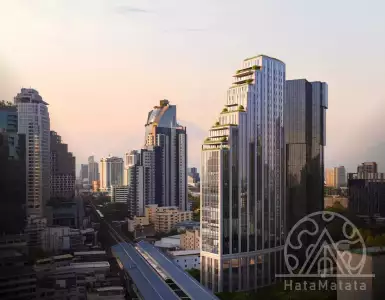


Need advice on your situation?
Get a free consultation on purchasing real estate overseas. We’ll discuss your goals, suggest the best strategies and countries, and explain how to complete the purchase step by step. You’ll get clear answers to all your questions about buying, investing, and relocating abroad.



Sales Director, HataMatata