


Can Arab Developers Turn Egypt’s Property Boom into Shareholder Gains?

Why U.S. and global investors should care about real estate Egypt now
Egypt's real estate Egypt market is attracting attention again, and Arab Developers Holding (ISIN EGS694A1C018) is one of the smaller listed names that promises exposure to that recovery. The quick hook: the company has a meaningful project pipeline, a land bank bought before the boom, and a presales-driven model that can limit upfront capital needs. But macro risks—currency swings, inflation, political noise—are large and visible.
In this piece we assess what Arab Developers is selling to investors, what makes its business model work, where the risks are concentrated, and which data points professional and retail portfolios should monitor before adding this stock as an emerging markets real estate allocation. Our analysis is aimed at buyers, investors, and expats looking for practical, tradeable signals rather than headline optimism.
Company profile: what Arab Developers Holding is and how it makes money
Arab Developers Holding is a full-cycle developer focused on mid-to-high-end residential and mixed-use projects in Greater Cairo and the North Coast. The company uses a land-acquisition, development, presales, and handover model that is common across emerging-market property firms.
Key facts:
- ISIN: EGS694A1C018
- Focus on gated communities, upscale apartments, retail and office components
- Target buyers: local middle-class families, Gulf buyers, and diaspora investors
The company’s financing approach relies heavily on presales to fund construction. For investors this means revenue visibility is tied to the rate of presales and the conversion of those presales into actual handovers. In stable markets this model reduces balance-sheet leverage; in volatile markets it exposes developers to cash-flow interruptions if buyer confidence falls.
Where Arab Developers stands out is a land bank purchased before price inflation accelerated. That gives it a cost advantage versus rivals who buy at current market rates. But land advantage is only meaningful if projects are delivered on time and final pricing maintains margins.
Projects, product mix and target demand
Arab Developers’ product set includes family-oriented gated communities, mid-rise and high-rise apartment blocks with amenities, and some commercial retail space. The company has been pitching features that appeal to diaspora buyers and affluent locals: financing plans, smart-home fittings, and green design elements.
Geographic footprint and demand drivers:
- Greater Cairo projects capture urban migration and overspill demand from the capital.
- North Coast projects benefit from tourism recovery and seasonal Gulf buyers.
- Commercial assets provide leasing income to smooth cash flow between residential project cycles.
The company targets urban millennials and non-resident Egyptians with flexible installment plans, which helps sales in a high-inflation and high-rate environment. Use of virtual tours and off-plan sales channels increases reach among Gulf and diaspora buyers.
From an investor’s viewpoint the mix is sensible: residential sales drive large, lumpy revenue, while retail and office leasing provide recurring cash flow. But the execution risk is the watchpoint—construction delays or material-cost inflation are the fastest ways to erode profit margins.
Macro tailwinds that matter for Egypt property and for Arab Developers
Several structural drivers back the recovery in Egypt’s property market:
- Population: more than 100 million, supporting long-term housing demand.
- Urbanization: above 40%, pushing demand toward large cities and new satellites.
- Major infrastructure spending, including the New Administrative Capital (USD 58 billion), which shifts real estate activity to new corridors.
- Regulatory changes that ease foreign ownership, attracting Gulf and other external capital.
Interest-rate dynamics are critical. If the Central Bank of Egypt cuts rates further, mortgages become more affordable, and presales can accelerate. Gulf sovereign and private capital flows are another tailwind—Saudi and UAE investors have shown appetite for Egyptian real estate, which supports off-plan sales and price discipline.
But tailwinds come with caveats. Large peers such as Talaat Moustafa Group and SODIC have far larger land banks and stronger brand recognition, which makes the competitive environment tough. Arab Developers’ edge is agility and pre-boom land cost, but that edge narrows if macro stress forces price competition.
Financial profile and analyst view: what the market thinks now
Sell-side coverage is limited to local houses such as Beltone Financial and EFG Hermes.
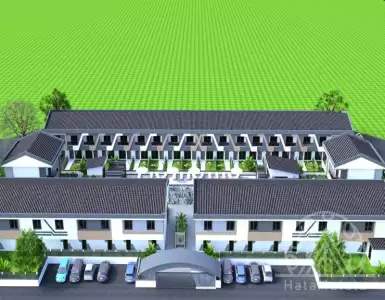


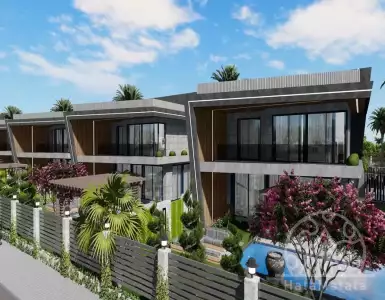
Analyst notes emphasise:
- Low leverage and a visible pipeline of projects covering 3–5 years.
- Presales volume and handover rates that act as near-term revenue signals.
- Sensitivity to inflation and foreign-exchange moves driving input costs.
For U.S. and global investors the practical takeaway is that Arab Developers is a micro-cap exposure to Egypt’s real estate cycle. That can magnify returns in an upcycle but also magnify downside if execution slips or currency devaluation accelerates.
Risks that could undo the thesis
Real estate in frontier markets carries concentrated risks. For Arab Developers the principal threats are:
- Currency risk: EGP depreciation raises the cost of imported materials and can compress margins. The company uses local financing, but many inputs are priced in hard currency.
- High inflation: Erodes buyer affordability and requires higher list prices, which reduces the pool of off-plan buyers.
- Political stability: Policy shifts or disruptions can delay permits and project timelines.
- Execution risk: Delays, labor or supply-chain bottlenecks, and poor handover rates undermine both reputation and cash flow.
- Refinancing risk: In a high-rate environment debt rollover is costlier and can constrain launches.
- Competition: Large developers with deeper pockets can outspend or undercut in key districts.
Investors should treat these risks as measurable. For example, track the EGP movement vs USD, monthly presales conversion rates, and disclosed capex schedules. If presales slow below the company’s planned thresholds, revenue recognition and cash flow will be the first areas to deteriorate.
How U.S. and English-speaking investors can access this exposure
For international investors the practical route is through the Egyptian Exchange listing or via instruments that offer Egyptian equities exposure. Key points:
- Arab Developers trades under ISIN EGS694A1C018 on the Egyptian Exchange.
- U.S. retail investors can access the stock via brokers that list Egyptian shares or through regional ETFs or ADRs if available.
- Interactive Brokers and similar platforms often provide Egyptian equity access; institutional investors may use regional custodians.
Tax and operational notes:
- Existing tax treaties can ease dividend flows between Egypt and some countries, but withholding rules apply—check local tax advisors.
- Liquidity is thinner than developed-market names, so use order limits and expect wider spreads.
From an asset allocation perspective I see Arab Developers as a satellite holding—a way to gain selective exposure to growth in Egypt real estate while limiting overall portfolio risk. For conservative allocations, exposure via diversified Egyptian real estate funds or regional EM property ETFs is preferable.
A checklist for investors: what to watch next (data points and timing)
If you consider a position in Arab Developers, monitor these indicators closely:
- Quarterly presales: the most direct demand measure; look for growth and stable deposit-to-handover conversion rates.
- Project handover rates and timelines: delivery discipline signals revenue recognition and confidence.
- Egypt GDP growth revisions: consumer income and employment feed housing demand.
- Central Bank rate decisions: mortgage affordability shifts when rates move.
- EGP exchange rate vs USD: import costs and margin pressure correlate with currency moves.
- Peer tender wins and land auctions: a loss or gain of government tenders signals competitive positioning.
Decision framework I use:
- Strong presales + macro easing = consider accumulation in tranches.
- Weak delivery metrics or FX shock = reduce or avoid.
Size positions modestly; this is frontier-market real estate exposure, not a core developed-market equity.
Our view: balanced, conditional, actionable
We are cautiously interested in Arab Developers as a way to capture upside from Egypt's housing demand. The company has several favourable traits: pre-boom land bank, presales-led funding, and projects in high-demand corridors. Yet those strengths will not fully defend against rapid EGP depreciation, sustained high inflation, or political disruptions.
In our view, the stock is suitable for investors who:
- Have the risk tolerance for frontier-market equities.
- Can monitor presales, FX, and central-bank signals regularly.
- Will size positions as a satellite allocation, not a core holding.
Practical entry approach:
- Stagger buys across quarters to average in on presales updates.
- Set stop-loss rules tied to presales declines or sharp EGP depreciation.
- Consider pairing the equity with a small allocation in a regional EM property fund to smooth single-company execution risk.
Frequently Asked Questions
Q: How does Arab Developers fund projects?
A: The company relies mainly on presales—off-plan buyer deposits and installment plans—to fund construction and reduce balance-sheet borrowing.
Q: What are the main demand drivers for property in Egypt?
A: Key drivers are a population of over 100 million, urbanization above 40%, government infrastructure projects like the New Administrative Capital (USD 58 billion), and increasing foreign investment from Gulf states.
Q: Which metrics should investors watch most closely?
A: Monitor quarterly presales, project handover rates, Egypt GDP growth, central bank interest-rate moves, and the EGP exchange rate.
Q: Is Arab Developers a good hedge against inflation?
A: Real estate can act as an inflation hedge in the medium term, but for Arab Developers the effectiveness depends on the company’s ability to pass higher costs to buyers and maintain presales in a high-inflation environment.
Final practical takeaway
Arab Developers Holding gives direct equity exposure to Egypt's housing recovery through ISIN EGS694A1C018, with potential upside if presales and macro settings improve. Approach as a tactical, small-sized EM real estate position, and make investment decisions tied explicitly to presales data, EGP moves, and central-bank rate signals—those three metrics will likely determine whether the company converts its development pipeline into durable shareholder value. Updated: 20.04.2026.
We will find property in UAE (United Arab Emirates) for you
- 🔸 Reliable new buildings and ready-made apartments
- 🔸 Without commissions and intermediaries
- 🔸 Online display and remote transaction

International Real Estate Consultant

Subscribe to the newsletter from Hatamatata.com!
Subscribe to the newsletter from Hatamatata.com!
Popular Posts

We will find property in UAE (United Arab Emirates) for you
- 🔸 Reliable new buildings and ready-made apartments
- 🔸 Without commissions and intermediaries
- 🔸 Online display and remote transaction
International Real Estate Consultant

Subscribe to the newsletter from Hatamatata.com!
Subscribe to the newsletter from Hatamatata.com!
I agree to the processing of personal data and confidentiality rules of Hatamatata
Need advice on your situation?
Get a free consultation on purchasing real estate overseas. We’ll discuss your goals, suggest the best strategies and countries, and explain how to complete the purchase step by step. You’ll get clear answers to all your questions about buying, investing, and relocating abroad.



Sales Director, HataMatata