


FDI Floods Factories as Thailand’s Housing Market Stalls — Investors Take Note

Thailand’s split market: industrial boom versus residential slowdown
Thailand’s property Thailand story in 2026 is stark: one sector is straining under record household debt while another is expanding on an unprecedented inflow of foreign capital. Within the first half of the year, investment promotion applications surged and multinational firms moved quickly to secure land, factories and data-centre capacity. At the same time, mortgage approvals tightened and developers scaled back housing launches. Our analysis explains why these two trends are happening at once and what they mean for buyers, occupiers and investors.
Quick snapshot of the numbers you need to know
- Household debt is around 87% of GDP, among the highest in ASEAN, reducing mortgage take-up.
- Frasers Property Thailand (FPT) reported total revenue down 25.6% year-on-year to 3,015 million baht and net profit down 23% to 497 million baht for the quarter ending June 2026.
- Revenue from residential sales dropped 28.6% to 1,744 million baht for the same quarter.
- The Board of Investment (BOI) saw applications for investment promotion reach 1.473 trillion baht in H1 2026, up 37% year-on-year, with the digital industry at 1.115 trillion baht.
- Knight Frank estimates serviced industrial land at 191,292 rai, with take-up rising 17.5% to 5,503 rai.
- Cushman & Wakefield calculates average industrial land prices near 8.4 million baht per rai.
- FPT reports factory occupancy at about 99% for ready-built space, and its total industrial portfolio is about 3.5 million square metres.
These figures explain why a company with a portfolio that spans homes, offices, malls, warehouses and factories can report both distress in housing sales and near-capacity industrial assets at the same time.
Why housing is weak: debt, lending standards and price sensitivity
The housing market’s soft patch is not a simple demand problem. It is a credit issue layered over affordability and risk aversion. Banks are rejecting more mortgage applications because household leverage is high. The Real Estate Information Center (REIC) shows more residential transactions in volume yet weaker values: nationwide residential transfers were up 11.2% year-on-year in Q1 2026, but transfer value rose only 3.1%, which means buyers are shifting toward lower-priced units.
From a buyer and investor perspective this matters for several reasons:
- Mortgage risk is real: standard buyers in mass-market segments face higher rejection rates, slowing absorption for new launches.
- Developers chasing volume run the risk of unsold inventory, price cuts and margin compression.
- Luxury and ultra-luxury segments show resilience because high-net-worth buyers often do not rely on mortgages.
FPT’s strategy has been to slow new housing launches and focus on product cost, construction quality and post-sale service. That is a defensive posture that supports margins but removes short-term sales volume. For buyers this means greater caution among developers and potentially fewer speculative projects; for investors it implies selective opportunities: low-rise, well-priced projects in commuter belts may see demand, but mass condominium supply in secondary locations could lag.
Where capital is flowing: the industrial and logistics surge
The other side of the story is dramatic. Thailand is seeing a new wave of industrialisation driven by semiconductor assembly, electronics, batteries and digital infrastructure. BOI data is unmistakable: investment promotion applications totalled 1.473 trillion baht in H1 2026, up 37%, and the digital sector — data centres, hosting and cloud services — accounted for 1.115 trillion baht.
How that translates to real estate:
- Demand for serviced industrial land is rising fast; take-up rose 17.5% to 5,503 rai in H1.
- Supply growth has lagged demand: over four to five years industrial land supply rose only about 8%, while demand rose roughly 18% according to Cushman & Wakefield.
- The result is land-price inflation, with average prices near 8.4 million baht per rai.
Developers with industrial portfolios are the primary beneficiaries. FPT and rival WHA control more than half the industrial and logistics market; FPT’s industrial footprint is roughly 3.5 million square metres and the company reports 99% occupancy in ready-built factories. That rapid absorption reflects a shift in investor preference: build-to-suit projects still matter, but multinational tenants are moving faster and often choose ready-built space to shorten time-to-market.
For investors, these are the practical implications:
- Industrial land and logistics assets are cash-flow assets in high demand; yield compression is possible but rental fundamentals are strong.
- Value-add strategies (e.g., leasing to high-tech manufacturing or data-centre tenants) require familiarity with technical build standards and power/utility needs.
- Land scarcity means speculative land banking is riskier now because prices are high and permitting remains a constraint.
The Bangkok office market: quality out, old stock empty
The Bangkok office market is splitting by age and standard. Headline vacancy rates obscure that differentiation. Industry consultants give a clearer picture:
- Knight Frank reported Bangkok office occupancy at 77.6% in Q1 2026, with about 436,000 sqm of new supply due that year.
- CBRE recorded occupancy at 79.3%, the second consecutive quarterly rise.
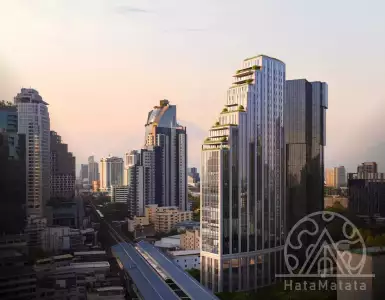
But those averages hide divergence. Tenants prefer newer office towers outside the traditional CBD where rents can be lower and amenity fit is better. Older 20- to 30-year-old CBD buildings with outdated mechanical and electrical systems are losing occupiers. One Bangkok — a large, new Grade A mixed-use complex — is showing early traction with an average occupancy around 50% across its office blocks. Developers are responding with fewer new Grade A projects likely to break ground for two to three years.
For occupiers and investors this creates clear strategies:
- Tenants should favor newer buildings with energy-efficient systems and hybrid-work amenity packages; capital expenditure to retrofit old stock is rising.
- Investors in office real estate must assess obsolescence risk; assets without modern MEP and ESG credentials may face long vacancy periods.
- REITs that specialize in industrial assets are finding investor appetite stronger than office-and-retail REITs.
REITs, capital recycling and sustainability as a business filter
FPT’s capital recycling — selling and securitising assets into REITs — is a case study in adapting to sectoral shifts. Its industrial REIT has grown assets under management at roughly 7% compound annual growth for 15 years, while its office-and-retail REIT has been a more difficult sell.
Sustainability is no longer optional.









What this means in practice:
- Institutional investors will pay premiums for certified logistics parks, modern factories and data-centre-ready campuses.
- Asset managers should price in retrofit costs when underwriting older properties lacking green credentials.
- REIT structures remain attractive for liquidity and tax-efficient returns, but sector selection matters.
Risks and what could derail the current runs
The industrial boom looks durable but is not risk-free. Here are the main downside scenarios and practical warning signs for investors:
- Macro slowdown: The World Bank cut Thailand’s 2026 GDP growth forecast to 1.6%, citing weaker trade, high household debt and softer tourism. A deeper slowdown could reduce domestic demand for industrial goods and slow expansions.
- Overconcentration risk: With a few large players like FPT and WHA controlling more than half the market, market access for smaller operators is constrained and land prices could be pushed to levels that erode long-term yields.
- Infrastructure bottlenecks: High-tech tenants require robust power, water and connectivity. Delays in grid upgrades or permitting could slow project timelines.
- Policy shifts: Incentives under BOI approvals are driving much of the FDI; changes in tax or incentive regimes would alter investor calculus.
For buyers and investors we recommend scenario planning: stress-test cash flows for a slower GDP path, allocate capital to assets with shorter lease-up horizons, and prioritise tenants with long-term corporate commitments in semiconductors, data-centre operations or battery manufacturing.
Tactical moves for different types of market participants
For private buyers:
- Avoid projects that rely heavily on mortgage take-up in the mass-market segment; investigate historical mortgage rejection rates at the developer’s preferred lenders.
- Consider secondary markets where transfers show volume growth but lower values, as these may offer better entry pricing if you plan to hold long term.
For institutional investors and funds:
- Prioritise industrial/logistics platforms and ready-built factories for faster income.
- Use local partners or platforms with international tenant relationships; these channels are key in directing multinational occupants to Thailand.
For developers and asset owners:
- Focus on build quality, sustainability certification and service after sale or lease. The market will reward superior product and operations over sheer volume.
- Consider staging developments and offering ready-built options to win tenants that must move quickly.
For REIT investors:
- Industrial-focused REITs are attracting capital on clearer fundamentals; office-and-retail REITs need careful asset-level analysis.
- Look for REIT managers with a track record of tenant selection in high-tech manufacturing, logistics and digital infrastructure.
How to watch the market over the next 3–5 years
Key indicators to monitor:
- BOI approval flows and the composition of applications by sector.
- Industrial land take-up and serviced land supply figures from Knight Frank and Cushman & Wakefield.
- Household debt-to-GDP ratios and mortgage approval rates as reported by REIC and the Bank of Thailand.
- Office vacancy split by submarket and building age; look for divergences between CBD and decentralised Grade A assets.
We expect competition to shift toward product quality, tenant service and technical capability. Developers and landlords that invest in durable infrastructure and green certification are likely to see stronger occupancy and pricing power.
Frequently Asked Questions
Q: Is now a good time to buy residential property in Thailand?
A: For primary homebuyers who need mortgages, timing is difficult because household debt at about 87% of GDP is constraining approvals. If you can buy without financing or target higher-end segments where buyers often do not need mortgages, opportunities exist. For investors seeking rental yield in mass-market condos, weigh mortgage rejection risk and potential slower capital growth.
Q: Where should I look for industrial real estate exposure in Thailand?
A: Focus on serviced industrial parks near major logistics corridors and power infrastructure. Developers with large portfolios and international tenant relationships — for example those with ready-built factories and high occupancy — offer faster cash flow. Land prices are rising to about 8.4 million baht per rai, so expect yield compression versus historic levels.
Q: Are Bangkok offices a bad investment now?
A: Not uniformly. Office demand is splitting by quality and location. New Grade A buildings and decentralised offices with modern systems are seeing stronger absorption. Older CBD buildings without upgrades face rising vacancy. Due diligence must include building MEP condition and lease covenants.
Q: How important are BOI approvals for the property market?
A: Very important. BOI applications in H1 2026 totalled 1.473 trillion baht, heavily weighted to digital and advanced manufacturing. That flow is the engine behind industrial land demand and factory occupancy; monitor BOI trends closely as a leading indicator for industrial real estate.
Final takeaway: Thailand’s property market is not collapsing; it is reconfiguring. The housing sector is under strain because mortgage capacity has contracted as household debt sits near 87% of GDP, while industrial and digital real estate are absorbing large amounts of FDI. For investors and buyers, the practical response is to favour quality industrial, logistics and modern office assets, to stress-test residential investments against tighter mortgage conditions, and to track BOI approvals and serviced land supply closely. The next three to five years are likely to reward operators that invest in build quality, sustainability and tenant service rather than volume alone.
We will find property in Thailand for you
- 🔸 Reliable new buildings and ready-made apartments
- 🔸 Without commissions and intermediaries
- 🔸 Online display and remote transaction

International Real Estate Consultant

Subscribe to the newsletter from Hatamatata.com!
Subscribe to the newsletter from Hatamatata.com!
Popular Posts

We will find property in Thailand for you
- 🔸 Reliable new buildings and ready-made apartments
- 🔸 Without commissions and intermediaries
- 🔸 Online display and remote transaction
International Real Estate Consultant

Subscribe to the newsletter from Hatamatata.com!
Subscribe to the newsletter from Hatamatata.com!
I agree to the processing of personal data and confidentiality rules of Hatamatata

Need advice on your situation?
Get a free consultation on purchasing real estate overseas. We’ll discuss your goals, suggest the best strategies and countries, and explain how to complete the purchase step by step. You’ll get clear answers to all your questions about buying, investing, and relocating abroad.



Sales Director, HataMatata