


Greece Raises the Price of Residency: New Golden-Visa Thresholds Hit Buyers' Budgets

Greece's property-linked residency after 2024: what buyers need to know
If you are watching the intersection of real estate Greece and immigration policy, the last two years have changed the ground rules. Greece remains the most prominent European Union member offering a property-based residency route, but reforms completed in 2024 and 2025 have raised entry costs and tightened eligible locations. That matters for anyone buying for residency, an eventual move, or a yield-driven investment.
In this report we explain the new thresholds, how the Greek scheme works, where value now sits in the market, and what practical steps and risks buyers should weigh before committing capital. We aim for clear, actionable guidance for buyers and investors weighing real estate investment in Greece against other global residency programs.
How the Greek property-to-residency program works now
The Greek program issues a residency permit to foreign buyers who meet property investment thresholds. Key facts from the reforms are:
- Minimum investment: €800,000 in Athens, Thessaloniki, Mykonos, and Santorini
- Minimum investment: €400,000 in other regions of Greece
- €250,000 threshold applies to single-building conversions
- Permit length: five years, renewable indefinitely while the qualifying property is retained
- Stay requirement: none — holders do not have to live in Greece to keep the permit
- Family coverage: spouse, children under 21, and dependent parents
- Work rights: not included with the permit
- Path to citizenship: seven years of residence plus passing a Greek language exam
These figures are the official post-reform conditions. The government narrowed eligible zones and increased thresholds to reduce pressure on local housing markets and direct investment toward higher-value developments.
Why the changes matter for buyers and investors
From an investor’s standpoint the reforms shift the calculus in clear ways:
- Higher price floors push many foreign buyers away from central Athens and high-demand islands unless they target premium inventory.
- The lower €400,000 tier outside major zones becomes more attractive for buyers who do not require immediate access to island life or capital-city amenities.
- The €250,000 conversion route opens opportunities for investors able to identify redevelopment projects, although such deals bring project risk and construction oversight demands.
From an immigration perspective:
- The five-year permit that renews while you own the property still provides a durable residency status without mandatory residence days, making it suitable for owners who want the right to live in Greece without relocating.
- The permit does not grant the right to work, so buyers expecting employment mobility should plan for separate work authorization.
- Citizenship remains possible but is a long process, requiring actual residence for seven years and a language exam.
In short: the program still offers a straightforward residency route, but at a higher cost and with fewer cheap entry points than before.
Where to consider buying: zones, liquidity and yields
The market implications are simple: rules create two tiers. The €800,000 tier covers central Athens and the most famous islands; the €400,000 tier covers much of the rest of Greece. A third, more specialised route applies to conversions at €250,000.
What this means on the ground:
- Central Athens and city-centre apartments: Expect higher per-square-metre prices and better long-term liquidity. These address buyers wanting cultural and transport links, but the purchase price requirement has reduced the pool of eligible buyers.
- Popular Aegean islands (Mykonos, Santorini): The €800,000 threshold targets upper‑tier properties. These markets remain seasonal with strong short-term rental demand, but they can be volatile and management-intensive.
- Secondary islands and mainland regional centres: The €400,000 threshold often buys higher-square-metre value, and these areas can deliver steadier long-term yields and easier property management.
- Single-building conversions at €250,000: These can look attractive on paper, but they are development projects with permitting, construction, and delivery risk. Returns depend heavily on execution and local planning terms.
Investors who prioritise rental income should analyse seasonal demand, occupancy rates, and local management costs. Buyers focused on residency should weigh lifestyle factors and access to health and education services.
Practical steps for buyers and legal due diligence
Buying property for residency is more than a purchase: it is an immigration application backed by a real asset. Our practical checklist reflects common pitfalls and essential steps:
- Engage a local, licensed real estate lawyer early to review title deeds, encumbrances, planning permissions, and the cadastre record.
- Confirm the property meets the program’s eligibility (price zone, valuation method, and whether the property type qualifies).
- Budget for transaction costs: transfer taxes, notary and legal fees, registration costs, and any VAT on new builds.
- Obtain a Greek tax number (AFM) and open a local bank account to handle deposits, taxes, and utility set‑ups.
- Use a trusted real estate agent with a track record of handling residency-driven sales and rental management if your plan includes letting the property.
- If choosing a conversion project, verify permits, developer credentials, and realistic timelines for completion.
- Prepare immigration documents: proof of ownership, police certificates, passport copies, medical insurance, and any forms required by immigration authorities.
Because the permit renews while you retain the qualifying property, ownership title must be clear and uncompromised. Any liens, mortgages, or disputes can jeopardise renewal.
Tax, residency and long-term implications
A Greek residency permit obtained through property purchase is not the same as tax residency. Buyers should understand these distinctions:
- The permit grants the right to live in Greece but does not automatically make you a tax resident.
- Tax residency in most jurisdictions hinges on days spent and other ties; buyers should seek advice on the 183‑day rule and Greek tax law to avoid unexpected liabilities.
- Owning property can create local reporting obligations and liabilities, including property tax and income tax on rental earnings.
We advise consulting a tax adviser to model scenarios: short-term rental, long-term lease, or personal use. Cross-border tax rules, double tax treaties, and EU reporting requirements affect net returns.
How Greece compares to other property-residency programs
As governments reassess the balance between foreign investment and housing affordability, several countries have modified or closed similar schemes.




- Portugal: Removed standard residential property from its golden visa in 2023.
- Spain: Ended its program in 2025 amid political pressure.
- United Arab Emirates: Golden Visa requires AED 2 million (about $545,000) and now accepts off‑plan and mortgaged properties; permit length 10 years, work rights included.
- Turkey: Residence from $200,000 purchases; $400,000 held three years can lead to direct citizenship.
- Cyprus: Fast-track citizenship scheme closed in 2020; permanent residency remains for €300,000 in new residential real estate, VAT inclusive.
- Malta: Permanent residence from €375,000 purchase (or lower rental option), plus government contribution; permanent status issued outright.
- Panama: Permanent residency available from $300,000 in real estate with a five-year hold requirement.
- Hungary: Relaunched a real estate-linked program in 2024 with a minimum €500,000 investment for a 10-year permit.
- Egypt: Offers lower-cost options starting at $100,000 for short-term permits.
Greece’s updated thresholds place it in the mid-to-high bracket for EU programs that remain open. Unlike the UAE and Turkey, Greek permits do not include work rights. Unlike Malta, Greece does not grant immediate permanent status; the initial permit is five years, renewable while property is retained.
Risks and red flags to watch
Real estate-linked residency is attractive, but buyers should treat it as a complex investment combining property and immigration rules. Key risks include:
- Political and regulatory risk: Portugal and Spain show that programs can be curtailed or narrowed by domestic policy shifts. Greece’s 2024–25 reforms are a reminder that thresholds and zones can change.
- Market and liquidity risk: Higher thresholds can reduce the pool of eligible buyers, which may affect resale liquidity for properties primarily marketed to residency buyers.
- Development and execution risk: Conversion projects at the €250,000 level may involve construction, delays, or permit disputes.
- Legal risk: Faulty title, unresolved encumbrances, or incomplete cadastre records can prevent permit approval or renewal.
- Misaligned expectations: A residency permit without work rights may not suit buyers planning to relocate and seek employment immediately.
We recommend conservative underwriting: assume you will hold the asset for multiple years and plan exit strategies that do not rely solely on a pool of residency buyers.
Who should consider Greece’s program — and who should not
Consider the Greek route if:
- You want a credible EU residency card without immediate relocation.
- You can meet the €400,000–€800,000 thresholds and want access to Greek property markets.
- You plan to use the property personally, rent it seasonally with professional management, or hold it as a long-term asset.
Think twice if:
- You need the right to work in Greece immediately; the permit does not include work authorization.
- You want a fast route to EU citizenship; the citizenship path takes seven years of residence plus a language exam.
- You are seeking the lowest-cost entry point; other jurisdictions offer lower thresholds but with different trade-offs.
Practical timeline and checklist for applying
A typical path from contract to residency approval looks like this:
- Property identification and preliminary agreement
- Legal due diligence and clearance of title
- Execution of a sale contract and payment of deposit
- Obtain Greek tax number and open bank account
- Complete purchase at notary and register property
- Submit residency application with proof of ownership and required documents
- Permit issuance and collection; plan for renewals while owning the property
Processing times can vary. Work with a local immigration specialist familiar with the residence-by-investment track to avoid document issues and delays.
Frequently Asked Questions
Can I get Greek residency by buying any property?
No. The property must meet the program’s thresholds and be located in eligible zones. Post-2024 rules set €800,000 for Athens, Thessaloniki, Mykonos and Santorini, €400,000 elsewhere, and €250,000 for single-building conversions.
Does the Greek residency permit allow me to work?
No. The property-based permit does not include work rights. If you intend to work in Greece you will need separate work authorization or a different immigration route.
Do I have to live in Greece to keep the permit?
No. The permit has no mandatory stay requirement and renews while you retain the qualifying property, but tax residency is a separate matter and depends on days spent and other ties.
How long until I can apply for Greek citizenship?
The route to citizenship requires seven years of residence under the standard rules and passing a Greek language exam. Owning property alone is not an automatic fast track to a passport.
Final assessment and practical takeaway
Greece remains one of the few EU countries where buying property still leads to a renewable residency permit, but the 2024–25 reforms have shifted the economics. If your priority is an EU-linked residency solution with minimal physical presence, Greece can work — provided you accept the new minimums: €800,000 for prime urban and island locations, €400,000 elsewhere, and €250,000 for single-building conversions. Remember: the permit does not include work rights, and citizenship requires seven years of residence and a language exam. For buyers, the immediate task is clear: verify eligibility, complete rigorous legal due diligence, and underwrite for longer holds and policy risk rather than assuming rapid resale to residency buyers.
Tags
We will find property in Portugal for you
- 🔸 Reliable new buildings and ready-made apartments
- 🔸 Without commissions and intermediaries
- 🔸 Online display and remote transaction

International Real Estate Consultant

Subscribe to the newsletter from Hatamatata.com!
Subscribe to the newsletter from Hatamatata.com!
Popular Posts

We will find property in Portugal for you
- 🔸 Reliable new buildings and ready-made apartments
- 🔸 Without commissions and intermediaries
- 🔸 Online display and remote transaction
International Real Estate Consultant

Subscribe to the newsletter from Hatamatata.com!
Subscribe to the newsletter from Hatamatata.com!
I agree to the processing of personal data and confidentiality rules of Hatamatata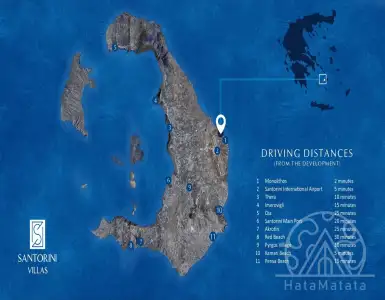

Need advice on your situation?
Get a free consultation on purchasing real estate overseas. We’ll discuss your goals, suggest the best strategies and countries, and explain how to complete the purchase step by step. You’ll get clear answers to all your questions about buying, investing, and relocating abroad.



Sales Director, HataMatata