


Greece’s Housing Paradox: Households Spend 35% of Income While 2.28M Homes Sit Empty

Greece’s housing pinch: why real estate Greece feels both hot and frozen
The numbers feel wrong at a glance: Greeks now spend a far bigger share of their income on shelter even as millions of houses remain unused. In plain terms, the real estate Greece market has an affordability problem at one end and excess supply in another — and both are dragging living standards down.
This article breaks down the data from the recent study by diaNEOSIS and IOBE, assesses the causes, evaluates the proposed remedies, and explains what buyers and investors need to weigh. Our analysis is drawn directly from the research and focuses on what the facts mean for people who live in Greece, plan to move here, or consider property as an investment.
A national housing emergency in numbers
The study paints a stark statistical picture:
- Greek households spent 35.5% of disposable income on housing in 2024, compared with the EU average of 19.2%. That gap is large and persistent.
- From 2019 to 2024 housing affordability in Greece declined, contrary to the trend in most EU countries.
- In urban areas approximately 29.1% of households spend more than 40% of their disposable income on housing; in rural areas the figure is 27.7%.
- The share of people living in households with debts (covering rent, mortgages, utilities, instalments) is 42.8% in Greece versus 9.2% across the EU.
- In 2024 about one in ten households were in arrears on mortgage or rent payments.
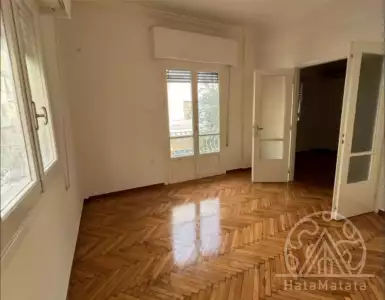
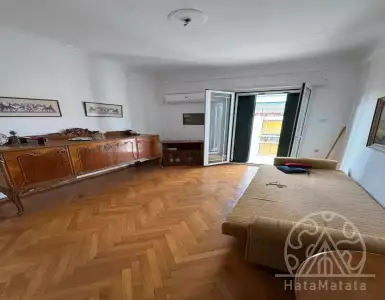
- The country has 2,277,615 vacant homes, representing 35% of the housing stock (2021 census).
- Housing loan disbursements fell dramatically: €1.4 billion in 2024 versus €15.5 billion in 2006.
Those figures do more than alarm — they reveal mismatches in the market. Affordability is worse than in most of Europe, a high share of households carry housing-related debt, and at the same time a very large portion of the building stock is not active in the market.
Who bears the brunt: renters, young people and small households
The crisis is not evenly distributed. The study shows clearly that certain groups are much more exposed:
- Renters are the most squeezed: roughly 6 out of 10 renting households spend more than 40% of their income on housing.
- Households with mortgages are also pressured: about half of mortgage holders spend over 40% of disposable income on housing, despite mortgage-holders being a relatively small share (around 7% of the population).
- Young people, single-person households, and single-parent households face elevated risk. Almost two out of three single-parent households spend more than 40% of their income on housing.
- Basic housing quality measures remain weak in aggregate, although overcrowding indicators have improved for the poorest households.
From a policy perspective this concentration matters: renters and smaller households have much less access to credit, limited collateral and often less political voice than owners. The result is a social and economic squeeze: limited mobility for young workers, weaker saving rates, and increased household vulnerability to shocks.
What went wrong: supply, finance and incentives
The study identifies several structural and cyclical drivers that have combined to make housing both expensive and poorly distributed.
Supply-side and stock issues
- The existence of 2.28 million vacant homes (35% of stock) is striking. Many are holiday homes or rural residences, and only a portion are feasible candidates for the rental or sales market without investment.
- Household composition has shifted toward smaller units. As one-person and two-person households rise, demand for smaller dwellings has increased while the market remains biased toward larger properties.
- High construction and energy costs raise the price of new supply. This is a global issue but it hits Greece hard when supply must be renovated for rental use.
Finance and demand
- Mortgage lending collapsed after the financial crisis and has not recovered: €1.4bn in loans in 2024 compared with €15.5bn in 2006. Tighter bank lending standards limit buyers’ access to mortgage credit and reduce transactional activity.
- International demand — tourism-led and foreign buyers — has concentrated pressure on certain locations, particularly in islands and historic urban cores.
Taxation, regulation and short-term rentals
- Tax rules such as ENFIA and other levies affect the cost of ownership. The study notes that taxation and investment incentives shape both the value of assets and owners’ willingness to rent.
- Short-term rental platforms and the Golden Visa program have changed incentives for owners to keep properties off long-term rental markets.
- Bureaucracy in transfers and a weak framework for auctioned properties limit liquidity, making it harder to bring dormant stock back into circulation.
Taken together, these factors explain how a market can show both acute affordability pressures and a very high vacancy rate.
Policy toolbox: what the diaNEOSIS–IOBE study recommends
The study compares European practices and frames a set of recommendations adapted for Greece's institutional context. Key proposals include:
- Create a centralised state body to implement a National Housing Strategy and coordinate local pilot projects in Athens and Thessaloniki.
- Implement measures to limit excessive rent increases while strengthening legal protections for property owners to avoid chilling investment.
- Scale up programmes that bring vacant homes to market, for example a revised "Renovate–Rent" scheme with rental caps, minimum lease durations, and targeted tax relief for landlords offering reduced rents.
- Expand social and student housing and introduce rental subsidies or allowances targeted at the most vulnerable.
- Tighten regulations for short-term rentals and reconsider Golden Visa conditions in areas under housing pressure.
- Reduce bureaucracy on property transfers and institutionalise transparent procedures for handling non-performing mortgage portfolios to restore market liquidity.
- Invest in transport and decentralisation measures, including teleworking support, to reduce concentrated demand in Attica and improve accessibility in regional centres.
The study points to examples from Austria, France, Spain and Portugal but notes that Greece’s strong homeownership culture and fragmented tenure regime mean policies must be adapted, not copied.
What this means for buyers, investors and residents — practical takeaways
For buyers and investors
- Expect regional variation in both risk and opportunity.





For renters and residents
- Renters face the sharpest pressure: about 6 in 10 pay over 40% of income on housing. Look for subsidised schemes, social housing options, or local municipal programmes offering capped rents.
- Student housing is a remaining policy gap; if you are a student or family of a student, expect limited purpose-built supply and competition for city-centre units.
For policymakers and local authorities
- Targeted interventions that convert even a fraction of vacant stock into long-term rentals could reduce pressure. Our calculations show that converting 10% of the 2,277,615 vacant homes would add 227,762 dwellings — a meaningful volume if well located and affordable.
- Balance is essential: excessive protection for tenants without safeguards for landlords will reduce supply; conversely, unfettered short-term rental expansion will keep long-term rents high.
Implementation risks and political trade-offs
The study's proposals are practical, but implementation will face challenges:
- Activating vacant homes requires capital for renovation, clear tenure rules and incentives that outweigh owners’ preference for leaving properties idle or using them for tourism.
- Introducing rent controls can protect households but may reduce private rental supply unless paired with tax incentives and guarantees for landlords.
- Centralising housing policy in a new state body could improve coordination but demands political consensus and long-term funding.
- Measures that affect foreign buyers — such as modifications to Golden Visa rules — carry diplomatic and investment implications.
We argue that incremental, pilot-based reforms tied to data and evaluation are the wisest path. Scaling successful local pilots can reduce political risk and reveal which fiscal incentives actually bring vacant units to market.
How this could reshape investment strategy in Greece
Our analysis suggests investors should take a selective, risk-aware approach:
- Focus on renovation-ready units in commutable regional hubs where transport upgrades are planned. These properties may benefit from decentralisation and telework trends.
- Avoid speculative bets solely on short-term rental returns in areas likely to face regulatory tightening.
- Consider partnerships with government programmes (if they emerge) that offer tax relief or guarantees for bringing vacant stock into long-term rental markets.
- Monitor political signals around rent policy and Golden Visa changes — policy shifts will materially affect return models.
Frequently Asked Questions
Q: Is the housing problem in Greece mainly about supply or demand?
A: It is both. Demand patterns shifted toward smaller households and foreign buyers concentrated demand in certain places; supply is constrained by high renovation and construction costs, tight mortgage lending, and a large portion of the stock that is vacant or unavailable for long-term rent.
Q: Could bringing vacant homes back into use solve affordability quickly?
A: Reactivating vacant homes can help, especially near cities and transport links, but converting dormant units requires investment for renovation, legal clarity, and incentives for owners. Without these, many vacant homes will stay unused.
Q: Should investors worry about rent controls?
A: Yes. The study recommends measures to curb excessive rent increases. Investors should stress-test income projections for scenarios that include stricter rent regulation and consider longer-term leases or mixed-use strategies.
Q: What is the most immediate lever policymakers could use?
A: Strengthening programmes that target vacant homes with renovation grants or tax relief tied to long-term leases, combined with clear tenant protections, would be an immediate, scalable step.
We do not sugarcoat the challenge: Greece has an affordability problem that is deep and uneven, created by finance, fiscal incentives and evolving household structure. But there are pragmatic policy levers and market responses that could relieve pressure if they are implemented with care and data-driven oversight. One concrete benchmark to watch is the 2,277,615 vacant homes figure; changes in that number over the next census cycle will reveal whether policy and market action are translating into more available housing.
Tags
We will find property in Portugal for you
- 🔸 Reliable new buildings and ready-made apartments
- 🔸 Without commissions and intermediaries
- 🔸 Online display and remote transaction

International Real Estate Consultant

Subscribe to the newsletter from Hatamatata.com!
Subscribe to the newsletter from Hatamatata.com!
Popular Posts

We will find property in Portugal for you
- 🔸 Reliable new buildings and ready-made apartments
- 🔸 Without commissions and intermediaries
- 🔸 Online display and remote transaction
International Real Estate Consultant

Subscribe to the newsletter from Hatamatata.com!
Subscribe to the newsletter from Hatamatata.com!
I agree to the processing of personal data and confidentiality rules of Hatamatata
Need advice on your situation?
Get a free consultation on purchasing real estate overseas. We’ll discuss your goals, suggest the best strategies and countries, and explain how to complete the purchase step by step. You’ll get clear answers to all your questions about buying, investing, and relocating abroad.



Irina Nikolaeva
Sales Director, HataMatata