


Housing Costs Surge, Investors Watch: Egypt's 2026 Real Estate Crossroads

A tense year ahead for real estate Egypt: what's changing and why you should care
If you're watching the real estate Egypt market in 2026, the mix of macro pressure and policy signals means assumptions that held in 2023–25 no longer apply. The Enterprise report from 7 January 2026 frames the year as one in which inflation, currency moves and state policy will determine who can build, who can buy and where capital flows. Our analysis parses those forces and explains what buyers, developers and foreign investors should plan for.
Quick summary
- Main drivers for 2026: inflation and exchange-rate volatility, construction-cost inflation, shifting government regulation and evolving foreign-investor demand.
- Winners and losers: cash-rich investors and projects with dollar-linked revenues may fare better; developers reliant on imported materials face margin pressure.
- Practical takeaway: expect higher delivered costs, longer delivery schedules and a heavier role for pricing strategies, hedging and policy monitoring.
Macro backdrop: inflation and the exchange rate are the story
The Enterprise piece places macroeconomic pressure at the center of the outlook. For real estate Egypt in 2026, two linked items matter most: domestic inflation and exchange-rate movements.
Inflation changes buying power: higher general prices cut household affordability and increase mortgage repayment burdens in real terms. Exchange-rate gyrations matter because a significant share of construction inputs—steel, cement additives, advanced fixtures, mechanical equipment—are priced in dollars. When the Egyptian pound weakens, those inputs jump in local-currency terms, driving up construction costs and forcing developers to either absorb losses or pass costs to buyers.
What this means for markets
- Developers that import materials or finance in foreign currency face margin compression.
- Projects with sales denominated in foreign currency or targeted at expatriates and foreigners will be more resilient to pound volatility.
- Homebuyers relying on local-currency mortgages will see affordability decline if interest rates track inflation.
As investors, we look for assets with revenues that hedge against local currency risk—tourism-linked short-term rentals, dollar-denominated leases or free-zone commercial properties.
Policy and regulation: more active government role expected
Enterprise flags possible changes in government policy and regulation that could reshape both residential and commercial development in 2026. The state has tools it can deploy that affect supply, demand and the cost of doing business.
Policy levers to watch
- Land release and allocation rules: any acceleration in releasing state land for development can ease long-term supply constraints but may depress prices near new supply nodes.
- Tax and fee adjustments: changes to VAT practices, property transfer fees or stamp duties would act directly on transaction costs.
- Mortgage and lending rules: tighter borrower requirements or subsidised mortgage schemes change buyer composition and demand timing.
- Residency-by-investment schemes: adjustments to the terms or attractiveness of residency-for-investment can shift foreign demand.
Why developers need to pay attention
- Development timelines are long; a change in land policy or taxation mid-project can alter feasibility. Developers should build contingency scenarios into feasibility studies and maintain flexible procurement clauses.
- Public-sector infrastructure choices—new roads, utilities and metro lines—will determine which micro-markets outperform. Active monitoring of cabinet decisions and governorate plans is now a risk-management requirement, not an optional task.
Demand dynamics: local buyers vs. foreign capital
Demand in Egypt's property market is a two-tier story: local middle-income buyers and domestic investors on one side, and foreign buyers and institutional capital on the other. Each is responding to different incentives in 2026.
Local buyers
- Household budgets are squeezed by inflation. Down-payment and monthly-payment requirements for buyers relying on mortgages are stricter when loans are costlier.
- Middle-market demand for smaller units near job centers remains present, but price sensitivity is rising.



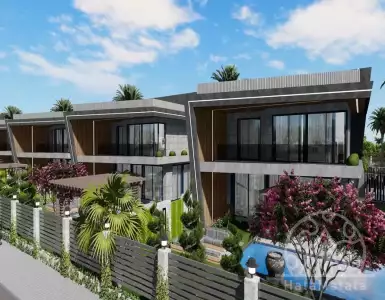
Foreign buyers and investors
- Programs that offer residence through investment still attract interest, particularly from the GCC, Europe and parts of Africa. The attractiveness depends on tax changes and visa facilitation.
- Investment from abroad tends to favour projects that earn or preserve value in foreign currency—hotels, serviced apartments and prime commercial buildings.
Hotspots and cautionary areas
- Tourist destinations and Red Sea resorts keep appeal for foreign buyers because of dollar incomes from tourism and short-term rental markets.
- Peripheral new cities can be a lottery: where infrastructure arrives and delivery is timely, prices can rerate upward; where services lag, absorption slows and carrying costs mount.
Construction costs and project viability: developers face thicker headwinds
Enterprise emphasises that construction-cost inflation is a direct transmission channel from macro to housing prices. For developers and investors, this is the most immediate risk to project viability.
Key cost drivers
- Imported materials and equipment priced in dollars.
- Wage inflation in the construction trades.
- Supply-chain delays that increase on-site holding costs.
How developers are adapting
- Repricing strategies: staged pricing tied to indices or clear escalation clauses in sales contracts are more common.
- Local sourcing: increasing the use of local substitutes where quality standards permit helps, but not all components have domestic equivalents.
- Hedging and dollar financing: some developers seek foreign-currency loans or forward contracts to stabilise costs over multi-year projects.
Practical checklist for developers and equity investors
- Revisit gross development value (GDV) assumptions and stress-test scenarios with higher unit costs and slower absorption.
- Secure procurement contracts with price escalation mechanics that share risk with suppliers.
- Maintain a stronger cash buffer for extended construction timelines and slower sales.
Lending, mortgages and affordability: the middle-class squeeze
Mortgage markets are central to housing demand. The Enterprise article outlines that interest-rate settings and central bank policy will shape mortgage availability and affordability in 2026.
What to watch
- Central Bank signals about rates: tighter monetary policy aimed at controlling inflation raises borrowing costs.
- Mortgage tenure and down-payment norms: longer tenors and lower down-payments support demand, but lenders must manage credit risk.
- Government-backed schemes: subsidies or guarantees change who can access credit and how quickly purchases occur.
For buyers
- If you plan to borrow in 2026, shop for fixed-rate or index-linked products that offer transparency on repayments.
- Re-evaluate affordability using conservative income growth assumptions and higher stress-test rates.
For investors
- Mortgage penetration levels are low relative to some regional peers; that limits the pool of formal buyers and keeps cash sales significant. For developers, structuring in-house payment plans or partnering with mortgage providers can increase absorption rates.
Opportunities for strategic investors: where to look and why
Despite the risks, there are targeted opportunities that look attractive under the 2026 scenario outlined by Enterprise.
Potential opportunities
- Tourism-linked assets in the Red Sea and North Coast areas: dollar yields and short-term rental demand hedge local currency risk.
- Prime Cairo office and logistics assets: limited prime stock can produce defensive cash flows for institutional investors.
- Completed or near-complete residential projects: lower delivery risk appeals when buyers are price-sensitive.
- Projects targeted at high-net-worth buyers: luxury, turnkey offerings for foreign buyers who pay in foreign currency can navigate volatility more easily.
What investors should demand
- Clear revenue hedges or dollar-linked income streams where possible.
- Tight due diligence on developer balance sheets and project cost assumptions.
- Exit plans that account for longer holding periods and possible secondary-market price weakness.
Risks that matter: a sober investor checklist
The Enterprise article urges cautious optimism; we translate that into a practical risk checklist for 2026:
- Currency risk: how exposed is the project to pound depreciation?
- Cost escalation: are procurement and construction contracts fixed-price or open to escalation?
- Policy risk: does the project rely on subsidies, approvals or tax treatments that might change?
- Demand risk: what is the buyer profile—local-currency mortgage buyers, cash domestic buyers, or foreign investors?
- Financing risk: is debt denominated in dollars, and is refinancing likely during the timeline?
If any of these boxes are weak, demand for higher risk-adjusted returns should increase, or the development model should change.
Practical advice for buyers, developers and foreign investors
We offer actionable steps based on the combination of macro signals and policy volatility that Enterprise highlights.
For buyers
- Use conservative affordability calculations: assume higher interest rates and slower income growth.
- Prefer projects with short completion windows or completed units to avoid construction-cost pass-throughs.
- Negotiate clear warranty and completion clauses in purchase agreements.
For developers
- Re-run feasibility models with higher construction costs and slower sales curves.
- Secure forward-procurement agreements or dollar-linked financing where input costs are imported.
- Keep one eye on government land-policy announcements and prepare to pivot if new supply nodes open.
For foreign investors
- Focus on dollar-generating assets or those with lease structures in foreign currency.
- Factor in residency-by-investment rules as one input, not the sole rationale for acquisition.
- Conduct enhanced due diligence on title, approvals and the developer's track record.
Frequently Asked Questions
Q: Will housing prices fall across Egypt in 2026?
A: The Enterprise report does not predict a uniform price drop. Expect price adjustments concentrated where supply increases or affordability crisises are largest; prime and dollar-linked assets are more resilient.
Q: Are residency-by-investment schemes likely to drive big inflows?
A: Such schemes remain an attractor for some foreign buyers, but their effect depends on the rules, tax regime and ease of doing business. They help demand for certain segments but are not a panacea for broad market weakness.
Q: Should I delay buying in hopes of lower prices?
A: That depends on your risk tolerance and financing. If you need housing, buying a completed unit or one near completion reduces the risk of construction-cost pass-throughs. If you are an investor seeking capital appreciation, patience may pay off in select micro-markets.
Q: How can developers protect margins against currency swings?
A: Options include dollar-denominated financing, forward contracts for imported inputs, index-linked sales contracts and local sourcing to the extent feasible.
Final assessment: prepare for complexity, not a single outcome
The Enterprise analysis for 2026 makes clear that the real estate Egypt market will be driven by a mix of macroeconomic forces and policy choices. We see a year of higher delivered costs, selective demand and a premium on execution. Investors and buyers who build conservative financial models, insist on contractual clarity and align revenue currency with cost exposures will be best placed to navigate the year.
A specific practical fact to end on: monitor the central bank's policy announcements and any cabinet decisions on land allocation—those two items will materially affect construction costs and the timing of new supply in 2026.
We will find property in Thailand for you
- 🔸 Reliable new buildings and ready-made apartments
- 🔸 Without commissions and intermediaries
- 🔸 Online display and remote transaction

International Real Estate Consultant

Subscribe to the newsletter from Hatamatata.com!
Subscribe to the newsletter from Hatamatata.com!
Popular Posts

We will find property in Thailand for you
- 🔸 Reliable new buildings and ready-made apartments
- 🔸 Without commissions and intermediaries
- 🔸 Online display and remote transaction
International Real Estate Consultant

Subscribe to the newsletter from Hatamatata.com!
Subscribe to the newsletter from Hatamatata.com!
I agree to the processing of personal data and confidentiality rules of Hatamatata
Need advice on your situation?
Get a free consultation on purchasing real estate overseas. We’ll discuss your goals, suggest the best strategies and countries, and explain how to complete the purchase step by step. You’ll get clear answers to all your questions about buying, investing, and relocating abroad.



Irina Nikolaeva
Sales Director, HataMatata