


Why Cyprus Property Is Seeing a Surge as Middle East Tensions Rise

Cyprus property demand spikes as regional war prompts buyers to look for an EU ‘Plan B’
Cyprus property has again emerged as a refuge for buyers and investors reacting to the latest round of violence involving the US, Israel and Iran. Within days of the crisis starting, industry trackers and agents reported sharp increases in enquiries from Israel, Lebanon and Iran — and some platforms recorded interest up by 300%. That level of immediate demand is hard to ignore, but the real question for buyers and investors is whether this is a short-lived flight-to-safety or the start of a longer real estate cycle.
Quick take
- Foreign buyers already make up around 40% of purchases across Cyprus, with the share often over 50% in Paphos and Larnaca, according to market notes cited by industry experts.
- Some portals reported enquiry rises of up to 300% since the outbreak of hostilities.
- There are roughly 16,000 short-term rental properties in Cyprus that face income risks if tourism flows fall.
In this piece we pull together on-the-ground comments from three Cypriot market experts, combine them with practical investor guidance, and outline scenarios that could affect prices in the months ahead. We write from the perspective of advisers who have tracked the market through several crises, so you can see what has happened before and what it may mean now.
How past crises shaped the Cyprus real estate response
Cyprus has a track record for absorbing shocks that push buyers to seek nearby EU residency. The recent commentary from local professionals reinforces that memory.
- After the Beirut port explosion in 2020, Lebanese buying interest increased, particularly for homes in Larnaca and Limassol.
- The Ukraine war in 2022 prompted companies and individuals to relocate to Cyprus, lifting both sales and rents, notably in Limassol.
- The attacks on Israel in 2023 produced a similar, if shorter, wave of interest.
Pavlos Loizou, CEO of Ask Wire, points out that the market now “has a clear track record” in reacting to regional instability. Andreas Christophorides, CEO of the Landbank Group, told Phileleftheros that transactions have continued with composure and that only a small, natural dip in activity was observed in the immediate aftermath — a pattern that echoed 2022. This pattern matters because experience shows initial hesitancy often gives way to renewed buying when tensions persist.
From our work reviewing historical transaction flows, the sequence looks like this: a short pause as buyers assess risk, then stronger demand from people seeking relocation or asset protection if the uncertainty continues. That is not guaranteed, but it has repeated enough to be a meaningful signal.
Who is buying, what are they buying and where?
The current wave of interest is not focused on trophy assets. Instead, demand is concentrated in segments that meet practical needs for families and relocating professionals.
Buyer origins and motives
- Primary buyer groups: Israel, Lebanon, Iran, with secondary interest from people connected to Dubai.
- Motive: a “Plan B” residence within the EU that is geographically close and offers predictable legal and tax frameworks.
Asset types in demand
- Ready-made two- and three-bedroom apartments and family houses.
- Properties near international schools, quality healthcare and reliable transport links.
- Locations in highest demand: Limassol, Larnaca and selected developments in Paphos.
Loizou says many buyers want a practical, move-in-ready home that can be used for family occupation or rented out. That explains why mid-market family housing and mainstream apartment stock are moving first, rather than ultra-luxury villas.
This buyer profile matters for pricing and liquidity. Standard family homes are easier to finance, sell and let than bespoke luxury units, which can limit downside risk for investors who focus on solidly occupied segments.
Price dynamics: why prices are holding and what could push them higher
Multiple market forces are aligning in a way that supports current price levels.
- Supply is limited: inventory of ready-to-occupy family housing in the most sought-after suburbs is thin.
- Demand is growing from abroad: foreign buyer share is about 40% nationally and often above 50% in Paphos and Larnaca.
- Construction costs are rising, which makes new supply more expensive to deliver.
As Andreas Christophorides put it, prices “are being reinforced” by the combination of rising demand and constrained supply. Leonidas Hadjinicolaou of Danos International added that higher material costs and settling cancellations in tourist arrivals could push prices higher.
From an investor point of view, the implication is clear: if demand remains elevated and new supply cannot scale quickly because of higher input costs and labour limits, price support is likely. However, that support depends on the duration of geopolitical tension and on tourism resilience. If guest arrivals fall sharply, short-term rental yields could compress and reduce returns for investors who rely on tourist income.
The short-term rental risk: why 16,000 properties matter
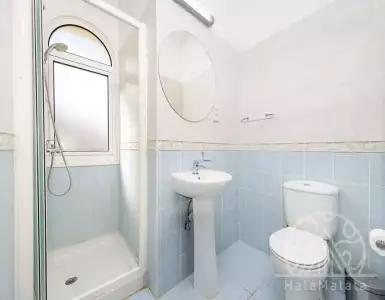
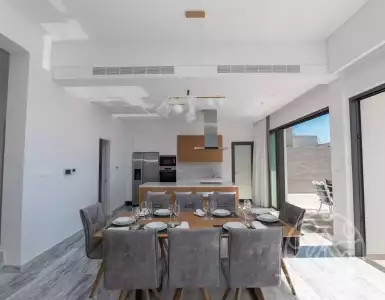
Cyprus currently has an estimated 16,000 short-term rental properties in operation.






Immediate risks for the short-term rental segment
- Lower occupancy and reduced nightly rates.
- Rising unemployment in tourism-exposed areas, which can weigh on local housing demand.
- Investors who bought specifically for holiday-letting could see returns fall and holding costs rise, producing distressed sales in some pockets.
This is not a remote scenario. Hadjinicolaou warned that cancellations and delayed arrivals are already visible after the start of hostilities. For investors focused on short lets, we recommend stress-testing projected yields under a range of tourism drop scenarios and considering conversion strategies to long-term leases where feasible.
Legal and title complications: what to watch for in the occupied areas
There is an additional legal risk that international buyers must not ignore. Hadjinicolaou highlighted that between 2015 and 2025 thousands of title deeds were issued to foreign nationals for properties in some occupied areas, including Famagusta and Trikomo. Buyers who do not confirm legal status and title registration can face long-term disputes or be unable to realise their asset’s full value.
Practical checks every buyer should complete
- Confirm ownership and title history with a Cyprus-licensed lawyer.
- Use a local notary or title search to verify registration in the government Land Registry.
- Avoid properties with unclear documentation in occupied territories unless you accept the legal uncertainty and have independent legal advice.
Where the law is clear, Cyprus title deeds are robust; where they are not, disputes can last years. As an adviser, I urge buyers to invest in professional legal checks before exchanging contracts.
What investors and owner-occupiers should do now
If you are considering Cyprus real estate, the current environment requires measured moves rather than emotion-driven purchases.
Checklist for buyers
- Define purpose: residency, long-term rental income, holiday home or diversification.
- Prioritise liquidity: choose properties in established suburbs with easy transport links if you may need to sell quickly.
- Hire local professionals: an English-speaking lawyer, a licensed surveyor and a reputable local agent are non-negotiable.
- Stress-test your yield: run scenarios with 20–40% lower short-term occupancy if your model relies on holiday lets.
- Consider long-term leases: converting to a year-round rental can stabilise income if tourism dips.
Financing and tax notes
- Mortgage terms for foreign buyers differ by bank; expect deposit requirements to be higher than for locals.
- Cyprus tax regime remains attractive relative to many EU peers, but tax planning needs careful local advice.
- Residency routes and visa options are available for investors, but rules change so confirm current requirements with immigration counsel.
We advise investors to prioritize fundamentals: location, clear title, rental market depth and realistic yield estimates. In the current environment, buying purely out of fear could lead to poor choices; buying with a clear plan reduces that risk.
Four likely scenarios for prices and demand
To make sense of the market we lay out four plausible scenarios and what they mean for buyers.
- Short conflict, quick de-escalation
- Outcome: temporary pause in buying, then normalisation.
- Price effect: limited long-term change; short-lived volatility.
- Prolonged regional instability
- Outcome: sustained demand from buyers seeking EU residence.
- Price effect: upward pressure due to higher demand and constrained supply; construction costs reinforce this.
- Tourism shock but stable relocation demand
- Outcome: short-term let returns fall while owner-occupier and long-let demand grows.
- Price effect: mixed; coastal holiday segments soften while family housing holds value.
- Economic contagion in investor source countries
- Outcome: capital flight reduces; buyers have less liquidity.
- Price effect: downward pressure where buyers lack funds; core family housing still more resilient.
No single scenario is certain. We think the market is most likely to see a mix of scenarios two and three if tensions persist beyond a few months. That would mean steady demand from people seeking to relocate and selective softening in tourist-dependent assets.
Government and market communications: information matters
Hadjinicolaou urged the government and industry to make accurate, timely representations abroad so potential investors get fact-based updates. That matters because perception drives behaviour. If misinformation magnifies risk beyond reality, buyers may delay purchases unnecessarily; if reality is worse than reported, quick action may be needed to manage fallout.
From an investor standpoint, track:
- Official statements on travel and security.
- Visa and residency rule updates.
- Local market data on sales, new listings and rental occupancy.
We recommend subscribing to a reputable Cyprus property research newsletter or working with local consultancies that publish monthly transaction and enquiry data.
Final assessment: impressive resilience, but not risk-free
Cyprus property is again performing the role it often has in regional crises: an accessible EU jurisdiction where families and investors can seek shelter. The market benefits from close geography, a familiar time zone and an established base of services and schools that appeal to relocating households.
At the same time, risks are clear: the short-term rental sector is exposed, construction costs will keep new supply expensive, and legal questions remain for certain properties in occupied areas. For investors the blend of higher interest and limited supply supports prices; for owner-occupiers the need for careful legal and practical checks is urgent.
We recommend that buyers proceed with rigor: focus on mainstream family housing in Limassol, Larnaca and Paphos; verify title and registration; stress-test rental income; and choose advisors who can provide timely market intelligence.
End with a practical fact: foreign buyers already account for about 40% of purchases across Cyprus and the share often exceeds 50% in Paphos and Larnaca, a proportion that helps explain why regional upheaval translates quickly into higher enquiry levels.
Tags
We will find property in Cyprus for you
- 🔸 Reliable new buildings and ready-made apartments
- 🔸 Without commissions and intermediaries
- 🔸 Online display and remote transaction

International Real Estate Consultant

Subscribe to the newsletter from Hatamatata.com!
Subscribe to the newsletter from Hatamatata.com!
Popular Posts

We will find property in Cyprus for you
- 🔸 Reliable new buildings and ready-made apartments
- 🔸 Without commissions and intermediaries
- 🔸 Online display and remote transaction
International Real Estate Consultant

Subscribe to the newsletter from Hatamatata.com!
Subscribe to the newsletter from Hatamatata.com!
I agree to the processing of personal data and confidentiality rules of Hatamatata


Need advice on your situation?
Get a free consultation on purchasing real estate overseas. We’ll discuss your goals, suggest the best strategies and countries, and explain how to complete the purchase step by step. You’ll get clear answers to all your questions about buying, investing, and relocating abroad.



Sales Director, HataMatata