


Why Your Thailand Luxury Property Bet Now Hangs on the Developer, Not the View

A new rule for real estate Thailand buyers: start with the developer
When you shop for luxury property Thailand in 2026, location, architecture and price still matter — but they are not the first question any serious buyer should ask. With household debt at 89% of GDP and banks tightening mortgage conditions, the mid-market has slowed sharply while the ultra-luxury segment continues to attract international buyers and domestic UHNWI investors. In that environment, our analysis finds that the developer behind a project is the single most important risk filter for high-end buyers.
We have seen a market split: mainstream housing slows as lending tightens, and projects repositioned into the luxury tier multiply. That creates a buyer’s problem — how to separate genuinely deliverable ultra-luxury developments from projects that are luxury in name only. The answer is to treat developer credibility as the starting point for any purchase or investment in real estate Thailand.
2026 snapshot: what is happening in Thailand’s property market
The Thai housing sector is bifurcating. Key facts:
- Household debt is at 89% of GDP.
- Banks have tightened lending standards, reducing the pool of buyers who rely on Thai mortgage finance.
- Several large local developers are shifting capital away from volume housing to higher-margin ultra-luxury products aimed at international and UHNWI buyers.
- Ultra-luxury demand is holding, but buyers are more selective and ask tougher questions about delivery risk.
The effect is two-fold: mass-market launches stall and a new crop of projects labelled "luxury" appears, many backed by developers whose track records are predominantly volume residential. That mismatch increases execution risk for buyers who assume a luxury price tag equals luxury delivery.
Why developer track record now matters more than ever
At mid-market price levels, a consistent domestic delivery record is a useful indicator. At the ultra-luxury end, however, domestic delivery alone is not enough. Ultra-luxury real estate involves complex, multi-use programmes, long-term asset management and sustained capital intensity over extended build cycles. Those capabilities are shown by a developer’s international trophy assets and by their practice of holding and operating completed properties.
Three developer questions that separate reliable operators from opportunistic entrants:
- Has the developer acquired, transformed and operated internationally recognised assets in markets with strong governance?
- Does the developer retain and operate completed assets instead of selling immediately upon completion?
- Is the developer’s financial standing independently rated, and does that rating indicate balance sheet strength for long development cycles?
If the answer to these is yes, the developer is more likely to deliver the specification and to maintain standards after completion. If the answers are no, the buyer faces higher delivery risk and possible mismatch between promised and delivered quality.
Five practical checks buyers must run before committing
For any luxury property investment in Thailand we advise running the following five checks. They are practical and document-based, not wishful thinking.
- International portfolio
- Verify completed and operating assets outside Thailand. Projects in the UK, Singapore, Hong Kong or other markets with strong governance provide verifiable proof of capability.
- Check public records, local press coverage, and management contracts for those assets.
- Independent financial rating
- Ask for the developer’s most recent third-party credit or rating agency report. An independent rating like AA+ or similar is a visible sign of balance sheet strength.
- If a rating is older than three years, insist on updated financial statements and lender confirmations.
- Scale of committed capital
- Request the total committed project capital and compare it to similar regional developments. A high committed amount reduces the chance the project will be abandoned in a downturn.
- Use committed capital as a proxy for the developer’s financial skin in the game.
- Long-term asset ownership and operations
- Confirm whether the developer typically holds and manages assets after completion or sells them on. Ownership models change incentives for maintenance and operating standards.
- Look for operating subsidiaries, hotel or club management contracts, and evidence of long-term operating budgets.
- Independent awards and peer recognition
- Check awards from independent organisations and match award dates with delivery milestones. Awards announced before completion are less reliable.
- Seek awards that recognise long-term operations and heritage restoration, not only marketing activity.
We recommend that buyers request copies of audited financial statements, credit-rating reports, management contracts for any associated hotels or clubs, and details of capital escrow arrangements before signing reservation agreements.
Case study: Reignwood Park — why scale and an international record matter
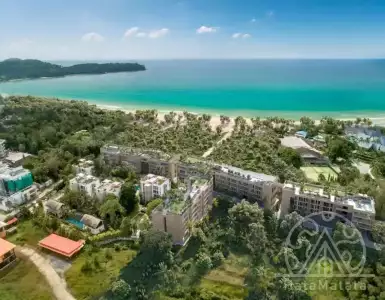
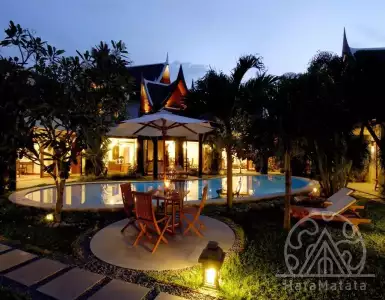
Reignwood Park is a useful case study.




- Wentworth Club in Surrey, England — acquired September 2014; the group invested over £20 million in facilities after purchase.
- Ten Trinity Square in London — a Grade II* listed building redeveloped to house the Four Seasons Hotel London at Tower Bridge; the project took seven years and won the City Heritage Award in 2019.
- An AA+ rating (as of 2019) and operating experience across the UK, Beijing and Singapore.
Reignwood Park also won Thailand Mega Project of the Year at the DOT Property Thailand Awards 2025, an independent recognition of scale and ambition. For buyers, the practical takeaway is this: a developer with completed high-profile assets in regulated markets and significant committed capital is demonstrably more able to underwrite a multi-year luxury build and ongoing operations than a local volume developer that is newly repositioning into luxury.
That said, even with a strong example like Reignwood, buyers should probe the details. The AA+ rating cited is from 2019 — ratings can change, and a large committed investment still requires active monitoring of funding structures, construction milestones, and staffing for long-term operations.
How developers’ business models change investor risk
Developers who sell completed units immediately produce a different risk profile compared with developers who retain and operate assets. Consider these contrasts:
- Developers who hold assets have an incentive to invest in long-term quality and service; their revenue is tied to operations and reputation.
- Developers who exit at completion prioritise sales volume and may compress specifications to meet margins.
In a market where many local developers are pivoting from volume housing to luxury product, misaligned business models lead to problems. A developer accustomed to rapid presales and off-plan exits may overstate finishes or defer critical operational systems to keep costs down. In tightening credit conditions, that gap becomes more visible.
Risk management: how buyers can protect themselves
Serious buyers can negotiate contractual protections that reduce delivery and operator risk. Key clauses and structures include:
- Milestone-linked payment schedules: tie payments to certified construction stages, verified by an independent engineer.
- Performance bonds or parent company guarantees: require guarantees from the developer’s holding company or a bank-backed performance bond.
- Escrow accounts: place buyer deposits in independent escrow with release tied to milestones.
- Independent inspections and snagging lists: contract for certified pre-handover inspections and retained funds until snagging is complete.
- Management agreements: secure long-term management contracts for hotels, clubs or concierge services with penalties for non-performance.
These instruments are standard in well-regulated luxury markets and are increasingly essential in Thailand’s current cycle.
Negotiation priorities for international buyers and UHNWI
When negotiating on a luxury project in Thailand, focus on these priorities:
- Proof of international delivery: insist on documentation of comparable completed projects, not only marketing images.
- Updated financial information: request the latest audited accounts, credit rating updates and lender commitments.
- Clarity on operations: obtain drafts of operating budgets, staffing plans and brand/management agreements for hotels and amenities.
- Exit alignment: match the developer’s likely exit timing with your expected holding period. If the developer typically sells at completion, expect resale market risk if you plan a long hold.
We have advised investors to involve experienced local counsel and independent technical advisors early in negotiations. Legal agreements in Thailand can protect buyers only if they are matched with enforceable performance mechanisms and credible counterparty strength.
Practical checklist before you sign
Use this checklist to structure due diligence before you make any deposit on a luxury property in Thailand:
- Obtain proof of the developer’s completed international assets and operating records.
- Secure the most recent independent credit rating or equivalent lender confirmation.
- Ask for the total committed project capital and a breakdown of funding sources.
- Confirm whether the developer typically retains assets and review examples of long-term operation.
- Demand milestone-linked payments, escrow, or a performance bond.
- Request copies of management contracts for hotels, clubs and major amenities.
- Insist on independent progress verification and pre-handover inspections.
If even one of these items is missing or unverifiable, you should treat the investment as higher risk.
Frequently Asked Questions
Q: Can I rely on a domestic delivery record when buying a luxury condo in Bangkok?
A: A domestic track record is useful for mid-market purchases, but for ultra-luxury units you should expect proof of international delivery at comparable scale and quality. Managing a trophy asset is a different operational challenge than volume housing.
Q: How much weight should I give to an older credit rating?
A: Older ratings provide context but are not definitive. Ask for updated audited financials and lender confirmation. If the rating is more than three years old, treat it as partial evidence only.
Q: Is a large committed capital figure a guarantee of completion?
A: No guarantee, but a large committed capital number, such as more than 60 billion THB on a single project, materially lowers the likelihood of abandonment because the exit cost is high. Still verify funding sources and construction escrow arrangements.
Q: What is the single most protective contractual clause for buyers?
A: Milestone-linked payments combined with escrow accounts and a parent company or bank performance guarantee provide the strongest protection against developer default during construction.
Final assessment and practical takeaway
Thailand’s property market in 2026 is split between a softening mid-market and a cautious ultra-luxury segment where buyer discipline matters. For investors and high-net-worth buyers, developer credibility is the primary filter — proven by an international portfolio, an independent financial rating, significant committed capital, and a track record of holding and operating assets.
Specific fact to act on: if a developer can show completed, operating assets in regulated markets, an independent credit rating and a committed investment above tens of billions of THB, the execution risk for a luxury Thai project is materially lower. Verify each of those items with current documents before you sign.
We will find property in Thailand for you
- 🔸 Reliable new buildings and ready-made apartments
- 🔸 Without commissions and intermediaries
- 🔸 Online display and remote transaction

International Real Estate Consultant

Subscribe to the newsletter from Hatamatata.com!
Subscribe to the newsletter from Hatamatata.com!
Popular Posts

We will find property in Thailand for you
- 🔸 Reliable new buildings and ready-made apartments
- 🔸 Without commissions and intermediaries
- 🔸 Online display and remote transaction
International Real Estate Consultant

Subscribe to the newsletter from Hatamatata.com!
Subscribe to the newsletter from Hatamatata.com!
I agree to the processing of personal data and confidentiality rules of HatamatataPopular Offers

 1
1
 0
0
 2
2
80
2
2
80
 4
4
166
4
4
166
Need advice on your situation?
Get a free consultation on purchasing real estate overseas. We’ll discuss your goals, suggest the best strategies and countries, and explain how to complete the purchase step by step. You’ll get clear answers to all your questions about buying, investing, and relocating abroad.



Sales Director, HataMatata