


Land in Red Sea
Do you want to buy land in Red Sea? We'll tell you where to start

Liliya
International Real Estate Consultant
Need help choosing a property?
Leave a request and our manager will contact you.
Our managers will help you choose a property
Liliya
International Real Estate Consultant
Land in Red Sea
Do you want to buy land in Red Sea? We'll tell you where to start
Liliya
International Real Estate Consultant
Need help choosing a property?
Leave a request and our manager will contact you.
Our managers will help you choose a property
Liliya
International Real Estate Consultant
Selection lands in Red Sea in 15 minutes
Leave a request and we will select the 3 best options for your budget
Weather in Red Sea
 !
!
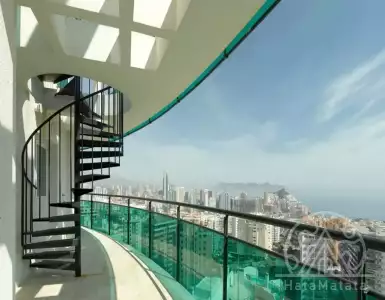
For sale Flat , Spain 211 143 $
📌 A few apartments for sale in Cala de Finestrat - a cozy place between Benidorm and Vieijahoyosa with a...
 !
!
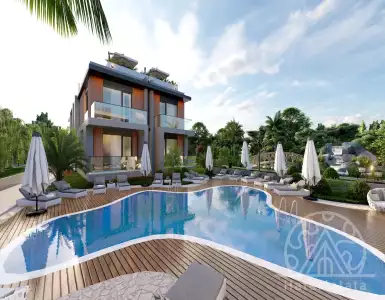
Flat for sale , Cyprus 127 157 $
The new residential complex is located in the foothills of Alsanjak. The complex consists of two two-storey buildings. Block A - 12...
For Sale land in Red Sea
Didnt find the right facility?
Leave a request - we will handle the selection and send the best offers in a short period of time



Irina Nikolaeva
Sales Director, HataMatata
Selection lands in Red Sea in 15 minutes
Leave a request and we will select the 3 best options for your budget
🇪🇬 Land purchase requirements and zoning in Egypt's Red Sea region
Land in the Red Sea region of Egypt combines sun-drenched coastline, reliable tourist demand and a growing infrastructure spine that makes buying land in Red Sea attractive to private buyers and investors. Whether you seek a beachfront plot for a family retreat in El Gouna, an investment parcel near Hurghada airport, or agricultural and commercial land around Marsa Alam, the market offers clear tiers of value, predictable rental pools and developer-backed delivery options. This text outlines how the region’s geography, economy, prices, developers, legal process and finance options shape opportunities to buy land in Red Sea and make informed investment decisions.
💶 How much Land costs in Red Sea — price ranges and market dynamics
Land prices in the Red Sea governorate vary dramatically by location, access and intended use, from small inland parcels to premium beachfront lots. Average price ranges observed across the market are: inland plots USD 20–200 per sqm, resort-adjacent plots USD 150–800 per sqm, and prime beachfront USD 400–1,500+ per sqm, depending on exact position and infrastructure. Market dynamics show stronger demand and faster price growth in areas with airports and marinas.
Land formats commonly traded include vacant residential plots, hotel/resort plots, mixed-use commercial land and agricultural parcels; each has different pricing drivers.
Strong tourist flows and developer activity concentrate liquidity into El Gouna, Sahl Hasheesh, Soma Bay and sections of Hurghada and Makadi Bay, where resale land in Red Sea and new developments of land in Red Sea command premiums. Typical plot sizes range from 500–5,000 sqm for private home plots to 10,000–100,000+ sqm for resort or commercial land.
- Typical price examples by format:
- Private home plot (500–1,000 sqm): USD 75–600 per sqm depending on proximity to beachfront.
- Resort/commercial parcel (10,000+ sqm): USD 100–900 per sqm with negotiated terms.
- Agricultural/outskirt land: USD 20–120 per sqm.
🎯 Which district of Red Sea to choose for buying Land — location advantages and demand
El Gouna remains the most established private-and-investor market in the Red Sea, with organized infrastructure, a full marina, hospitals and a consistent high-end tourist profile. El Gouna neighborhoods such as Downtown, Abu Tig and Mangroovy attract buyers who want secure community services, private marinas and stable rental demand.
Hurghada is the commercial hub with broad developer supply, diversified neighborhoods and direct service through Hurghada International Airport (HRG); districts like Sahl Hasheesh (southern Hurghada) and Makadi Bay offer both mid-range and premium land opportunities.
Marsa Alam and Safaga present more affordable investment land, supported by Marsa Alam International Airport (RMF) and expanding dive- and eco-tourism; these areas are preferred for larger, lower-cost parcels and for investors targeting long-term appreciation.
- Key locations and their strengths:
- El Gouna: upscale buyers, marina access, high resale values.
- Sahl Hasheesh: fast-developing resort district, strong hotel infrastructure.
- Soma Bay: luxury resort plots, golf and spa infrastructure.
- Marsa Alam / Safaga: cost-effective land, diving and niche tourism growth.
- Hurghada (central & outskirts): most liquid market, wide selection.
🏗️ Developers and projects offering Land in Red Sea — leading names and delivery formats
Major developers active in the Red Sea region provide both finished plots and structured land products; buying within a known development reduces execution risk. Orascom Development is a central name, responsible for El Gouna, Makadi and Soma Bay communities with phased infrastructure and homeowners’ associations. Egyptian Resorts Company (ERC) is the primary developer behind Sahl Hasheesh, delivering master-planned plots and mixed-use parcels.
Developments often offer turnkey infrastructure: roads, utilities, sewage, potable water and access to resort amenities; plot handovers are typically tied to the completion of these services. Projects usually include flexible payment schedules and developer installment plan for land in Red Sea to attract both domestic and foreign buyers.
Project types and completion level vary:
- Representative developers and project features:
- Orascom Development — El Gouna, Soma Bay: fully serviced plots, marina/golf infrastructure, phased handover.
- Egyptian Resorts Company (ERC) — Sahl Hasheesh: mixed-use resort parcels, hotel plots, direct beach access.
- Local hotel operators and resort consortia — custom commercial plots and build-to-suit opportunities in Hurghada and Makadi Bay.
🏦 Mortgage and installment conditions for foreigners buying Land in Red Sea — practical finance routes
Mortgages for land in Egypt for foreigners are uncommon from the major local banks unless the buyer has residency or significant local collateral; typical bank lending focuses on completed properties rather than raw land. Foreign buyers frequently use cash or developer finance as the primary funding routes.
Developer installment plans are widespread and frequently more accessible: common structures are down payments of 10–30% and installments over 2–7 years, sometimes interest-free for a period and sometimes with small annual interest rates. For premium plots the developer may require higher down payments and shorter repayment windows.
When financing is required, international buyers may consider:
- Typical financing options:
- Developer installment plan for land in Red Sea: 10–30% down, 24–84 months payment, staged installments.
- Bank mortgage for land in Egypt for foreigners: rare, usually requires residency, larger down payment and local income proof.
- Structured JV or equity purchase: investors partner with developers or local firms to secure long-term financing.
📋 Legal process of buying land in Red Sea — step-by-step practical guide
Selection starts with identifying serviced land plots and verifying developer status or private seller title. Reservation is normally done with a deposit; after reservation perform technical and legal due diligence including cadastral checks, title clearance from the Real Estate Public Registry, and confirmation of zoning and building rights.
Sales contract and payment terms are negotiated with a notary or legal representative; full payment triggers registration. Registration at the local real estate registry and the land registry office is mandatory to create enforceable ownership, with a notary and municipal sign-offs often required.
Buyers should budget for mandatory transactional costs:
- Typical mandatory costs and timelines:
- Reservation/deposit: 5–20% of agreed price.
- Registration and notary fees: commonly 2–4% of sale price plus fixed administrative fees.
- Agency fees and legal due diligence: typically 1–3%.
- Timeline: reservation to registration typically 2–8 months depending on complexity and whether infrastructure is complete.
⚖️ Legal aspects of owning Land in Red Sea — taxes, permits and residency implications
Foreign nationals can buy urban and resort land in Egypt but purchases of agricultural land are restricted or require special approvals; due diligence must check land classification and allowed uses under local zoning. Ownership requires registration with the land registry; contracts must be notarized and transferred to effect legal title.
Property taxes on land in Egypt include annual real estate taxes and taxes on rental income; buyers also face transfer/registration fees and potential capital gains tax upon resale. Registration fees and stamp duties are predictable transactional costs buyers should include in a financial plan.
Acquisition of land in Red Sea does not automatically grant a residence permit or citizenship; Egypt does not operate a straightforward property-for-residence or property-for-citizenship program. Investors seeking residency should pursue appropriate investor visas or government approvals; thresholds and procedures vary and typically require demonstrable business activity or employment generation.
🏡 Why buy Land in Red Sea — use cases, rental yield and investor profiles
Buying land in Red Sea suits a range of purposes: a second home plot in El Gouna for seasonal living, a build-to-rent villa near Sahl Hasheesh targeting holiday lettings, a resort plot for hotel development in Soma Bay, or a larger parcel in Marsa Alam for long-term appreciation. Each purpose aligns with different districts and yields.
Rental yield of land in Red Sea is indirect (land itself does not generate rent) but yields come from constructed properties; typical gross rental yields for short-term holiday lets in prime districts range 4–8% depending on occupancy and management. ROI on land in Red Sea for developers and builders can be strong where infrastructure and tourist demand are stable.
Practical buyer profiles and matches:
- Typical scenarios and recommended locations:
- Second home land in Red Sea: El Gouna (Downtown, Abu Tig) for community services.
- Investment land for resale: Sahl Hasheesh and Hurghada outskirts with airport proximity.
- Commercial/resort development: Soma Bay and Makadi Bay with established tourism anchors.
- Long-term value play: Marsa Alam and Safaga for lower entry cost and niche tourism growth.
The Red Sea market remains shaped by steady tourist arrivals from Europe, GCC and domestic tourism, expanding airport connectivity and developer confidence in master-planned resorts; for buyers this means a layered market where entry cost, liquidity and operational complexity vary by district but clear value exists at multiple price points. Future prospects for investment land in Red Sea point to steady demand for serviced plots near marinas and airports, developer-backed installment plans that lower entry barriers, and niche opportunities in eco-tourism and dive-based resorts that can deliver differentiated returns for informed investors.
Frequently Asked Questions
Land prices in Red Sea vary widely: coastal resort plots typically range about $150–$800 per sqm, while inland/desert parcels often trade around $10–$80 per sqm; region-wide averages fall roughly $30–$300 per sqm. Transaction and registration usually close in 4–12 weeks; total buying costs (fees and taxes) commonly add 2–8% to the sale price.
Yes — foreigners can buy non‑agricultural land in Red Sea with government approval; agricultural or strategic border plots are often restricted. Expect document checks and ministry clearances; typical approval and registration process takes 4–12 weeks. Legal fees and translation/document legalization commonly cost $500–$3,000.
Typical timeline: due diligence 2–6 weeks, contract and deposit 1–2 weeks, approvals 2–12 weeks, formal registration 2–4 weeks — overall 1–4 months. Complex or large deals can extend to 6+ months. Expect closing costs totaling about 2–8% of the price.
Common costs: registration/transfer fees and stamp duties typically total around 2–5% of price; legal/notary and survey fees add 0.5–2%; agent fees vary 1–3%. Annual municipal or service charges depend on location. Budget 3–8% extra and allow 2–8 weeks for payment and registration steps.
Returns vary by location: prime coastal plots have seen capital growth commonly 5–15% annually in active markets; inland lots usually lower, 2–6% p.a. Rental yields for developed resort assets often 3–7% gross. Typical investment horizon to realize meaningful gains: 5–10 years; liquidity depends on market demand.
Local banks often restrict land loans for non‑residents; mortgages are more available to Egyptian residents and for developed properties. Typical LTVs are 50–70% for eligible buyers; application and approval take 4–12 weeks. Many foreign investors use cash or international financing instead.
Key checks: verified title deed, cadastral plan, zoning/use rights, utility access, environmental permits, debt encumbrances and boundary survey. Budget 2–6 weeks for document checks and 1–3 weeks for technical surveys; professional survey and legal review typically cost $300–$2,000 depending on scope.
Buying land in Red Sea does not automatically grant citizenship. Property ownership can support residency permit applications, which are usually issued as 1‑year renewable permits; processing typically takes 1–3 months. There is no standard ‘golden visa’ by land purchase in Egypt.
Developed coastal towns in Red Sea have mains electricity, municipal water and sewage; remote parcels often need boreholes, septic systems or solar/diesel generation. Hook‑up costs vary $1,000–$50,000 and take 1–12 months depending on distance and permits. Mobile data coverage is widely available in populated areas.
Main risks: coastal erosion, sea‑level rise and rare flash floods. Mitigation: choose plots set back 50–200m from shoreline or elevated >2–3m, secure permits for coastal development, and budget for protective works. Risk assessments and engineered measures typically add 5–15% to construction costs and take 3–12 months to implement.
Properties by Region
- Lands in Red Sea (19)
Properties by Country
- Real estate in Bulgaria (11408)
- Real estate in Montenegro (5186)
- Real estate in Indonesia (2423)
- Real estate in Spain (2289)
- Real estate in Portugal (1975)
- Real estate in Italy (1910)
- Real estate in Turkey (1699)
- Real estate in Cyprus (1594)
- Real estate in Thailand (1565)
- Real estate in Croatia (1431)
- Real estate in Greece (1082)
- Real estate in USA (1013)
- Real estate in France (1006)
- Real estate in Georgia (519)
- Real estate in Serbia (328)
- Real estate in Slovenia (123)
- Real estate in Egypt (23)
Free real estate consultation in Red Sea
Don't know which area to choose in Red Sea? We will tell you in which areas it is better to live or invest, and show you the appropriate options.

Maria Guven
Head of Direct Sales Department
+90-507-705-8082