


80,000 Buyers Chasing 8,000 Luxury Homes in Spain — Where Savvy Investors Should Look

Spain’s luxury real estate squeeze: the headline numbers
Spain’s real estate Spain luxury segment has reached an uncomfortable arithmetic: more than 80,000 prospective buyers are being matched against just 8,000 listed properties in a single brokerage’s portfolio. That figure came from Engel & Völkers during its recent market presentation and it tells you everything you need to know about scarcity in prime locations.
I want to be blunt: this is not a broad-based residential boom. It is a concentrated, competitive market driven by pockets of intense demand, high levels of cash buying and a clear split between the winners and the rest. Buyers and investors need to read the fine print on where growth is happening, who is buying and how financing patterns are changing.
Why this matters for buyers and investors
Short supply and surging demand push asking and closing prices higher, raise barriers to entry and change negotiation dynamics. For owners and developers this is great; for buyers looking for yield or value it creates added risk. In the sections below we break down the regions, the cash-buying trend, the foreign buyer profile and what the outlook means for strategy.
Which markets are driving price gains
Engel & Völkers highlights several markets as the engines of luxury demand. These are not interchangeable. Each one requires a different buying strategy.
-
Madrid: The capital has become one of the most active and robust property markets in Europe. According to E&V transactions, the average price in Madrid is €7,145/m², a year-on-year increase of 15.5%. Within Madrid the Salamanca district is the top tier, with closing prices exceeding €18,000/m². Other high-turnover neighbourhoods include Chamartín, Chamberí and Retiro, while newer developments such as Sanchinarro have seen averages pass €6,000/m².
-
Costa del Sol: Momentum remains strong along this coastline. Places like Estepona and Benalmádena show particularly sharp growth. The western side of Marbella is notable for the volume of cash deals — in parts of western Marbella 95% of purchases are completed without mortgage financing.
-
San Sebastián: The Basque gateway is pulling in more buyers and more cash. The share of transactions closed without a mortgage rose to 38% in 2025 from 19% the year before.
-
Valencia and the Costa Blanca: Valencia’s new-build segment now sees 65% cash purchases, while in exclusive Costa Blanca towns such as Orihuela cash purchases rose from 75% to 85%.
These numbers show how concentrated luxury demand is: urban prime and coastal prime are performing very differently from the national average.
The rise of cash buyers and what it changes
One of the most striking shifts in the Spanish luxury market is how many buyers now pay in cash. Across the strongest micro-markets the share of cash purchases has surged.
-
Why cash dominance matters
- Cash buyers cut out mortgage underwriting, accelerate closing times and strengthen negotiating positions.
- Sellers with limited supply can pick from multiple bids, often favoring cash offers for certainty and speed.
- For investors who use leverage, competing against mostly cash buyers can compress yields and make bidding wars costly.
-
Where cash buying is strongest
- Western Marbella: 95% cash purchases in some municipalities
- Costa del Sol pockets: up to 84% cash purchases in certain towns
- San Sebastián: cash share rose to 38% in 2025
- Valencia new-builds: 65% cash
- Orihuela (Costa Blanca): from 75% to 85% cash
What do these patterns mean in practice? If you are an international buyer headquartered abroad, bringing funds ready to close removes a key disadvantage. If you are a mortgage-dependent buyer, expect to be outpriced in the most sought-after enclaves unless you find a motivated seller or an off-market opportunity.
Foreign appetite: half of buyers and much higher on the coasts
Engel & Völkers reports that around half of buyers of Spain’s most exclusive homes are foreign nationals. That share is significantly higher in resort markets: on the Costa Blanca and the Costa del Sol foreign buyers account for 70–90% of buyers.
This has two practical implications:
- Demand drivers are international. Currency strength, travel freedom and tax regimes in buyer home countries influence flows into Spain. Events outside Spain, such as currency moves or residency rule changes in buyers’ origin countries, can shift demand quickly.
- Market vulnerability to cross-border shifts. When a large share of buyers are non-resident, local housing prices can decouple from domestic wage growth and local economic conditions.


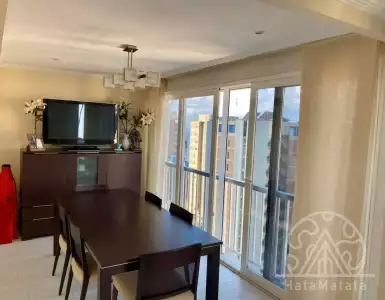



As analysts and practitioners we have to accept that prime coastal markets behave like globally traded assets more than local housing markets.
Polarisation across Spain: micro-markets, not one market
One of the central points Engel & Völkers makes is that Spain is not a single market but many micro-markets. The spread in average prices between the most expensive regions and the cheapest exceeds 70%, with Madrid at the top end and Extremadura at the bottom.
This polarisation shows up in several ways:
- Price dispersion within cities. Wealthy neighbourhoods see price pressure while secondary areas feel far less heat.
- Coastal premium. Prime beaches and marinas attract international buyers and cash transactions, lifting local prices above national averages.
- New-build versus resale. Developers in the right locations can command higher margins, while older stock in less desirable areas sees muted demand.
For investors this means selection matters more than macro timing. Picking the correct micro-market, property type and neighbourhood is a bigger determinant of returns than national-level forecasts.
Price trajectory and the short-term outlook
Engel & Völkers frames recent years as a three-stage period: 2024 was the year of recovery, 2025 the year of acceleration, and 2026 will be the year of transformation, according to Juan-Galo Macià, the company’s president for Iberia and South America. Their analysis suggests prices will remain under pressure but not match the strong growth of 2024–25.
Key takeaways on price dynamics:
- Strong growth in 2024–25: Madrid’s +15.5% year-on-year move is evidence of rapid appreciation in prime areas.
- 2026: slower momentum: E&V expects price growth to moderate as the recovery phase gives way to a normalization and the market re-segments.
I read this as a market maturing rather than collapsing. After rapid gains, the pace of appreciation should slow. That reduces the upside for quick capital gains, while still supporting medium-term stability in the best locations.
What this means for different types of buyers
Not every buyer should react the same way to these numbers. Here is how I would think about strategy depending on your profile.
-
Owner-occupiers
- If you intend to live in the property, prioritise location and quality. Expect competition and higher prices in prime districts and coastal towns.
- Bring liquidity if possible. Cash purchases close faster and are preferred by sellers.
- Consider off-market listings and local brokers to avoid bidding battles.
-
Yield-focused investors
- Be cautious in markets dominated by short-term capital appreciation rather than rental demand, as high purchase prices compress yields.
- Seek neighbourhoods with steady rental fundamentals, such as access to transport, year-round demand and government-friendly short-term rental regulation.
-
Long-term investors
- Prime assets in Madrid and top coastal towns still offer a hedge against currency risk and potential capital appreciation, but expect a slower path forward.
- Diversify across micro-markets rather than concentrating in one trophy asset.
-
Buyers dependent on financing
- Recognise you are negotiating from a weaker position where many sellers prefer cash.
- Secure pre-approval and be ready to flex on terms other than price, such as closing timeline or deposit size, to remain competitive.
Risks and negotiation tactics
Even a red-hot luxury market carries risks. Investors must weigh them carefully.
- Liquidity risk: When supply is tight, exit windows can be narrow. If you buy at the market peak you may have to hold through a cooling period.
- Concentration risk: Heavy exposure to one micro-market or to coastal leisure demand increases sensitivity to changes in tourism, travel policy or currency moves.
- Financing mismatch: Competing with cash buyers while using leverage reduces your competitiveness and may lead to overpaying.
Tactical moves I recommend:
- Use local specialist brokers who can source off-market opportunities and provide neighbourhood-level intelligence.
- Prepare a clean, fast offer if you plan to buy in prime areas; that can beat slightly higher-priced, slower bids.
- Account for transaction costs, taxes and renovation budgets in your total return model; they can materially alter yield calculations.
- Consider staged purchases or buy-to-let structures in markets with more balanced supply-demand dynamics to preserve liquidity.
How developers and sellers should think about the market
Developers have an advantage in environments with constrained supply. They can benefit from higher margins but must be mindful of shifting demand patterns:
- Product matters: buyers in prime segments expect quality finishes and services; cookie-cutter stock will underperform.
- Pricing discipline: pulling supply to market when demand is oil-slicked with cash buyers can accelerate sales and maintain momentum.
- Off-plan risk: in markets with a high share of cash buyers, pre-sales finance models should be stress-tested for slower uptake among financed buyers.
Practical checklist for buyers entering Spain’s luxury segment
Before you start touring properties, make sure you have these in place:
- Proof of funds or mortgage pre-approval ready to present to sellers.
- A shortlist of target micro-markets tied to your goal: lifestyle usage, capital appreciation or rental yield.
- Local legal and tax advisors to assess residency, inheritance and rental rules.
- A realistic exit timeline and contingency for slower resale markets.
Frequently Asked Questions
How much are prime Madrid prices rising?
Engel & Völkers reports the average price in Madrid at €7,145/m², a 15.5% increase year-on-year, with Salamanca exceeding €18,000/m² in recent transactions.
Is cash buying the norm in Spain’s luxury market?
Cash buying is dominant in many prime locations. Examples include parts of western Marbella with 95% cash purchases and coastal towns where cash deals reach 84%. Even in San Sebastián and Valencia the share of cash purchases rose to 38% and 65% respectively in key segments.
How much of the luxury buyer pool is foreign?
About half of buyers in Spain’s top-tier market are foreign, and that proportion rises to 70–90% in prime coastal areas like the Costa Blanca and the Costa del Sol.
What should mortgage-dependent buyers do to stay competitive?
Secure pre-approval, be ready to shorten closing timelines, and work with brokers who can identify motivated sellers or off-market deals. Consider co-investing or partnering with cash-ready buyers when targeting the most competitive enclaves.
Bottom line for investors and buyers
The Spanish luxury property market is concentrated, increasingly cash-driven and split between a handful of high-performing micro-markets and many lagging areas. That split produces both opportunity and risk. If you are buying in Madrid or on the prime coasts, expect to compete with many cash buyers and to pay a premium that reflects scarcity: 80,000 interested clients vs 8,000 properties in one major broker’s portfolio is a clear indication of pressure in supply-constrained spots. For buyers who cannot compete with cash, the practical move is to identify off-market options, focus on neighbourhoods with better yield fundamentals, or wait for the market to normalise through 2026 when Engel & Völkers expects a slowdown in momentum.
Tags
We will find property in Spain for you
- 🔸 Reliable new buildings and ready-made apartments
- 🔸 Without commissions and intermediaries
- 🔸 Online display and remote transaction

International Real Estate Consultant

Subscribe to the newsletter from Hatamatata.com!
Subscribe to the newsletter from Hatamatata.com!
Popular Posts

We will find property in Spain for you
- 🔸 Reliable new buildings and ready-made apartments
- 🔸 Without commissions and intermediaries
- 🔸 Online display and remote transaction
International Real Estate Consultant

Subscribe to the newsletter from Hatamatata.com!
Subscribe to the newsletter from Hatamatata.com!
I agree to the processing of personal data and confidentiality rules of HatamatataPopular Offers

 1
1

 1
1
 1
52
1
52
 1
1
58
1
1
58
Need advice on your situation?
Get a free consultation on purchasing real estate overseas. We’ll discuss your goals, suggest the best strategies and countries, and explain how to complete the purchase step by step. You’ll get clear answers to all your questions about buying, investing, and relocating abroad.



Sales Director, HataMatata