


Bangkok Land Prices Surge: 5 Hotspots Driving Thailand Real Estate Gains

Bangkok land values are moving fast — what buyers must know
If you're tracking the real estate Thailand market, Bangkok's land prices are sending a clear message: developers and investors are concentrating on plots near megaprojects and new rail lines, and prices are following. In the past one to two years a handful of large mixed-use schemes and transit expansion have reset expectations for central and fringe locations. We review the five hottest land locations, explain why prices are rising, and give practical guidance for buyers, investors and expats.
Why this matters now
Land is the foundation of real estate returns in Bangkok. Where land prices rise, developers can justify denser, higher-margin projects such as luxury condos, office towers and mixed-use complexes. That in turn changes the rental and resale prospects for property buyers across nearby submarkets. Our analysis draws on the valuation team at Colliers Thailand and recent transactions that are already shaping asking prices across the capital.
The drivers: megaprojects and rail expansion
Tanakorn Thanuthanud, manager of the valuation department at Colliers Thailand, points to large-scale mixed-use developments — examples include One Bangkok and Dusit Central Park — as the principal force behind recent land price increases. These multi-hundred-billion-baht projects act as demand magnets: they bring jobs, retail spending and expectations of long-term capital growth.
At the same time, the expansion of Bangkok’s electric rail network raises the value of land with good transit access. Areas that once felt peripheral are reassessed when a new BTS or MRT station is planned or opens. The combined effect is a concentrated price uplift in places that have both development scale and transit links.
Key immediate impacts:
- Faster price appreciation close to project sites and transit nodes
- Spillover into adjacent streets and into some suburban corridors
- Tightening of land supply in established districts where holdings are family-owned
The five hottest land locations (what each means for investors)
Colliers lists five locations that have moved to the front of investors’ attention. Below we give the transaction evidence cited, convert prices into a per-square-metre figure for context, and discuss what each submarket offers.
1) Ploenchit–Chidlom–Wireless: Thailand’s ultra-luxury benchmark
This corridor remains the most expensive land location in Thailand by per-unit measures. Recent assessments for 2024 record transaction prices rising to ฿3.4 million per 43 sq ft, and some acquisitions by developers such as Sansiri averaged between ฿3.0–3.8 million per 43 sq ft.
- Price example: Sansiri deals around ฿3.0–3.8 million per 43 sq ft.
- Approx. conversion: ฿3.8 million per 43 sq ft ≈ ฿951,200 per sq m (43 sq ft ≈ 3.995 sq m).
What this means: land here is priced for premium condo or branded residential towers where developers expect top-end buyers. For investors, this area is likely to remain a price anchor, but entry prices are high and yield expectations are lower. Liquidity can be strong for prime units, but the cost barrier is real.
2) Rama IV: a price reset driven by mixed-use developments
Rama IV has emerged as one of the most active locations in 2024 after historically lower values. Land prices that were slightly above ฿1 million per 43 sq ft in 2017–18 have been recalibrated following high-profile purchases. A recent SC Asset transaction closed above ฿3 million per 43 sq ft, signaling a major price reset.
- Historical vs current: ฿1 million → over ฿3 million per 43 sq ft in a few years.
- Conversion: ฿3.0 million per 43 sq ft ≈ ฿750,600 per sq m.
What this means: developers are willing to pay high prices where a cluster of mixed-use projects promise large footfall and new office and retail demand. If you own or can secure land here before final approvals on surrounding projects, potential upside exists; but competition and costs are intense.
3) Early Sukhumvit (Nana–Asok): steady inner-Sukhumvit demand
Inner Sukhumvit remains a demand core for international buyers, embassies, hotels and service apartments. Transactions around BTS Nana in 2019 were about ฿2.5–2.6 million per 43 sq ft; forward valuations now sit around ฿2.8 million per 43 sq ft.
- Recent valuation: ฿2.8 million per 43 sq ft (≈ ฿700,800 per sq m).
What this means: supply here is limited and well-located assets carry a consistent bid from both developers and hotel operators. For foreign investors considering condos or hospitality-related investments, Nana–Asok remains strategically attractive but expensive.
4) Silom–Sathon: the price-setting transaction effect
Silom–Sathon is the traditional financial district. Prices were around ฿1.5–1.7 million per 43 sq ft in 2016, but a high-profile sale of a land plot for hotel development at ฿2.2 million per 43 sq ft created a price-setting effect that led other owners to raise asking prices.
- Price-setting sale: ฿2.2 million per 43 sq ft (≈ ฿550,300 per sq m).
- Constraint: much land is held long-term by families and capital groups, limiting available supply.
What this means: Silom–Sathon is seeing a repricing, but scarcity of marketable land will keep any further near-term transaction activity selective and often strategic rather than speculative.
5) Bang Na–Krungthep Kreetha: suburban premium on the rise
Bang Na and nearby Udom Suk/Punnawithi have seen land value gains driven by large suburban projects: Bangkok Mall, Forestias, and Cloud 11. This uplift pushed prices in parts of Bang Na nearer to ฿1 million per 43 sq ft.
- Recent level: close to ฿1 million per 43 sq ft (≈ ฿250,200 per sq m).
What this means: suburban land that once catered to low-rise housing and logistics is now being re-priced for higher-end low-rise developments and projects that capitalize on megaproject spillover.





Practical implications for buyers, developers and expats
We draw three practical takeaways from the current cycle:
- Developers can justify higher land cost in corridors where large mixed-use projects and rail stations reduce development risk and raise absorption. Expect more consolidation and larger land parcels changing hands.
- Retail and office investors should watch Rama IV and Silom–Sathon as potential supply-constrained markets where rental growth could follow land revaluation, but cap rates may compress as prices rise.
- For foreigners considering direct property exposure, condo ownership remains the main route to buy freehold in Thailand; land purchases require local structures or leaseholds.
Specific tactics to consider:
- Secure locations with confirmed rail access rather than speculative alignments.
- For land acquisition, verify title type (Chanote vs. other forms) and allowable floor area ratio (FAR) to understand development potential.
- If you cannot buy land, consider off-plan condos or strata assets near the rising corridors to capture appreciation indirectly.
Due diligence checklist (what to check before you bid)
Land transactions in Bangkok can be complex. Here is a hardened due-diligence checklist we use when assessing plots:
- Title deed type: confirm a Chanote (full land title) if possible.
- Zoning and permitted uses: check municipal zoning and any upcoming zoning changes.
- Flood risk and drainage plans: Rama IV and adjacent areas have known flood-history pockets.
- Public infrastructure timelines: verify when planned BTS/MRT segments or road works are due to complete.
- Encumbrances and leasebacks: confirm mortgages, rights of way, easements or life-long leases.
- Environmental and archaeological restrictions: large mixed-use projects require environmental impact studies.
- Market comparables: use recent transaction evidence — not just asking prices — to set bids.
Risks and caveats — why high prices are not risk-free
We avoid hype. Several risks temper the headline numbers:
- Price-setting transactions can distort market expectations when a single strategic buyer pays a premium for a specific development case. That does not always translate to broad-based values for nearby smaller plots.
- Supply constraints in central districts may keep prices firm, but they also limit opportunities for new large-format developments unless consolidation occurs.
- Infrastructure delays or modifications to rail plans can reduce the value uplift that buyers and developers anticipate.
- Legal and ownership complexities for foreigners remain. Direct land ownership by non-Thai nationals is restricted; many cross-border buyers must use leaseholds, Thai-company structures or buy condo units instead.
Weigh these risks against the potential reward. In high-demand corridors such as Ploenchit–Chidlom, you are buying into scarcity; in suburban Bang Na you are buying into project-driven momentum.
Tactical strategies by investor type
Buyers and investors should calibrate strategy to capital, risk tolerance and time horizon.
- Short to medium-term speculators: target peripheral plots where megaproject spillover is likely and purchase with short hold plans, but be ready for liquidity constraints.
- Long-term developers: assemble landbank parcels and plan for multi-phase mixed-use schemes; assess construction costs and FAR to ensure project viability.
- Foreign private investors: lean toward high-quality condo assets in the hottest corridors where rental demand from expatriates and corporate tenants is strongest.
Market outlook: measured growth, concentrated gains
Based on the evidence of recent transactions and the drivers named by Colliers, we expect continued, concentrated land-price growth in corridors tied to megaprojects and rail expansion. That growth is likely to be uneven — stronger around project clusters such as Rama IV and Ploenchit and more moderate in locations without confirmed infrastructure improvements.
We recommend monitoring actual transaction volumes, not just asking prices. A handful of high-value deals can change headline statistics but may not signal broad liquidity across smaller lots.
Frequently Asked Questions
Q: Are these prices per 43 sq ft comparable to per-square-metre figures?
A: Yes. As a rule of thumb, 43 sq ft ≈ 3.995 sq m. For example, ฿3.8 million per 43 sq ft ≈ ฿951,200 per sq m. Use conversions to compare with international benchmarks.
Q: Can foreigners buy land in these Bangkok hotspots?
A: Direct freehold land ownership by foreigners is restricted under Thai law. Foreign buyers typically purchase condominiums freehold (subject to the foreign quota), use long-term leaseholds, or structure investments through Thai majority-owned entities. Legal advice is essential before transacting.
Q: Are the price increases sustainable?
A: Price increases are supported by major mixed-use projects and rail expansion, which create real demand. However, sustainability depends on project delivery, macroeconomic conditions and whether supply remains constrained. Single large transactions can temporarily reset asking prices.
Q: How should I assess development potential on a plot?
A: Key checks include title deed type (Chanote preferred), zoning, allowable floor area ratio (FAR), road access, utilities capacity, and environmental or planning restrictions. Confirm infrastructure timelines for nearby rails or roads.
Bottom line — a practical takeaway for buyers
Bangkok’s current cycle shows concentrated, evidence-based uplifts: Ploenchit–Chidlom can command up to ฿3.8 million per 43 sq ft, Rama IV has been revalued from around ฿1 million to over ฿3 million per 43 sq ft, and inner Sukhumvit, Silom–Sathon and Bang Na each have their own drivers. If you are pursuing land or strata assets near these corridors, base bids on recent transaction prices, confirm title and zoning, and be prepared for stiff competition and limited supply. Specifically: if you are looking at prime Ploenchit–Chidlom plots, expect to pay up to ฿3.8 million per 43 sq ft (≈ ฿951,200/sq m) and factor that into any development or investment feasibility study.
We will find property in Thailand for you
- 🔸 Reliable new buildings and ready-made apartments
- 🔸 Without commissions and intermediaries
- 🔸 Online display and remote transaction

International Real Estate Consultant

Subscribe to the newsletter from Hatamatata.com!
Subscribe to the newsletter from Hatamatata.com!
Popular Posts

We will find property in Thailand for you
- 🔸 Reliable new buildings and ready-made apartments
- 🔸 Without commissions and intermediaries
- 🔸 Online display and remote transaction
International Real Estate Consultant

Subscribe to the newsletter from Hatamatata.com!
Subscribe to the newsletter from Hatamatata.com!
I agree to the processing of personal data and confidentiality rules of Hatamatata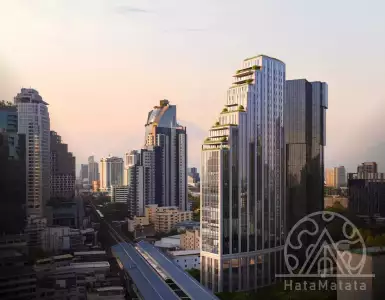
Need advice on your situation?
Get a free consultation on purchasing real estate overseas. We’ll discuss your goals, suggest the best strategies and countries, and explain how to complete the purchase step by step. You’ll get clear answers to all your questions about buying, investing, and relocating abroad.



Sales Director, HataMatata