


BTS’s D:CODE Brings Low-Cost, Smart Condos Next to a Yellow Line Station — What Buyers Should Know

When a transit empire starts building homes, Thailand property buyers need to look closer
When Keeree Kanjanapas, the figure behind Bangkok’s rail growth, shifts attention to housing, the consequences reach beyond new apartments. D:CODE is BTS Group’s entry into the affordable housing market and it changes the conversation about real estate investment in Thailand. The project combines transit access, aggressive pricing and smart-home features in a package pitched at young buyers and commuters.
In this piece we unpack the project facts, the commercial logic, who benefits, and the practical risks for buyers and investors. Our analysis uses the developer’s published figures and the project timetable so you can judge how D:CODE might affect housing prices near Thai mass transit and whether it fits your portfolio or home-buying plans.
D:CODE at a glance: the numbers every buyer should memorise
- Site area: 6.72 hectares
- Buildings: up to 24 low-rise blocks, each 8 storeys
- Total units: 4,150 condominiums
- Unit sizes and starting prices:
- 30 m² from THB 1.89 million
- 45 m² from THB 2.85 million
- 60 m² from THB 3.78 million
- Ownership: Freehold title for all units
- Price positioning: roughly 25–30% below market rates for the area
- Sales model: no down payment required; payments begin on occupancy
- Product extras: fully furnished units with appliances, AI and voice-control features
- Location: Srinakarin Road, adjacent to the Yellow Line’s Sri Iam station
- Timetable: construction starts September 2026, completion targeted December 2028
Put simply, the project offers a mass-market condominium next to an elevated rail station with pricing and purchase terms aimed to remove common barriers for first-time buyers.
Why BTS Group is moving from trains to homes
Keeree Kanjanapas built an empire delivering the transport frames that shape Bangkok’s real estate. The move into the Baan Chao Thai Project and the D:CODE development reads as a strategy to capture value at the intersection of transit and housing. There are three clear commercial motives:
- Capture long-term demand for housing that is close to rapid transit and therefore attractive to commuters.
- Control land-use adjacent to the group’s rail assets, which stabilises ridership and creates captive demand for nearby services.
- Offer a volume product with lower margins but steady sales velocity, compared with high-end condos where cycles matter more.
For investors and owner-occupiers this matters. A developer who owns or controls transport assets can coordinate timing and product features to influence neighbourhood dynamics. We have seen how transport nodes increase footfall and commercial activity; D:CODE is an explicit attempt to align housing supply with that dynamic.
Pricing, product and purchase terms: affordable but not basic
The “affordable” angle is not just lower price tags. D:CODE’s list prices translate to roughly THB 63,000 per sqm across the three headline unit sizes. The developer claims prices are 25–30% below comparable offerings in the area. Key features that change the value equation:
- Freehold ownership: Buyers receive full ownership rights rather than leasehold, which matters for resale and foreign purchases where applicable.
- No down payment: The developer allows buyers to reserve units without an upfront down payment and only requires payments once the buyer moves in. That reduces the initial cash barrier for younger purchasers.
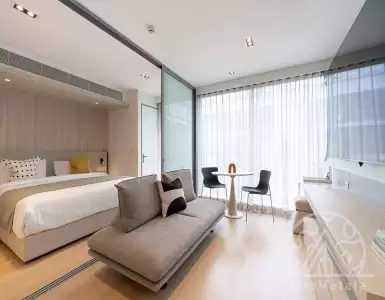
- Fully furnished with appliances: Units are delivered move-in ready, which shortens the time between purchase and rental or occupancy.
- Smart-home features: AI and voice command systems are integrated, aiming to add convenience and a perceived premium usually found in higher-tier projects.
From a buyer’s perspective this is a different package than a raw shell condo. For someone seeking immediate rental income or a turnkey home, the furnished, tech-enabled offering is attractive. For investors, the price discount and transit adjacency suggest potential for stable long-term demand, though yield depends on local rental markets.
Who is D:CODE designed for — buyers and investor profiles
D:CODE is explicitly targeted at a new generation of buyers, but it has broader appeal. Typical profiles include:
- Young professionals working in peripheral business districts who commute by the Yellow Line.
- First-time buyers who struggle to save a conventional down payment.
- Investors seeking rental stock near transit with lower acquisition costs.
What these buyers should ask before committing:
- Confirm the maintenance fee estimate per square metre and typical annual increases.
- Check the project masterplan for commercial areas, parking ratios, and amenities that affect long-term desirability.
- Verify the smart-home hardware and software warranties and whether AI services carry ongoing subscription costs.
- For investors, understand the local rental market for similar unit sizes and furnished offerings.
Our view: for owner-occupiers chasing affordability and convenience, D:CODE’s financing model and freehold title are strong draws. For yield-focused investors, the lower acquisition cost improves entry metrics, but rental demand, management quality and ongoing fees will determine net returns.
Risks and trade-offs: what the press release does not gloss over
A pragmatic buyer or investor must weigh the risks with the appeal. Key issues to consider:
- Construction and delivery risk: the timetable begins September 2026 with completion in December 2028. Market conditions in 2028 may differ significantly from 2024.
- Lower margins for the developer may compress after-sales service budgets; confirm what is covered in warranties and snagging periods.
- Large supply: 4,150 units is a substantial addition to local inventory that could depress secondary prices if demand softens.
- Product homogeneity: uniform low-rise blocks of similar-sized units can lead to competition among units on rental platforms.
- Technology upkeep: smart-home systems need updates and support; buyers must know who pays for upgrades.
We recommend a checklist approach before purchase: review the contract for payment triggers, confirm contingencies around construction delays, and secure independent legal advice on freehold transfer processes.
How D:CODE might change the real estate market near mass transit
Large-scale, lower-cost housing from a transport-linked developer can shift market dynamics. Here are plausible outcomes we expect:
- Increased pressure on mid-market pricing within a walk of stations, as D:CODE sets a new reference price for transit-proximate supply.
- A possible sharpening of competition among developers for first-home buyers, who may now demand similar payment schemes and included furnishing.
- Greater acceptance of smart-home features as a baseline amenity even in affordable segments.
This is not guaranteed.



Sales gallery and the soft-sell: building a brand before a brick is laid
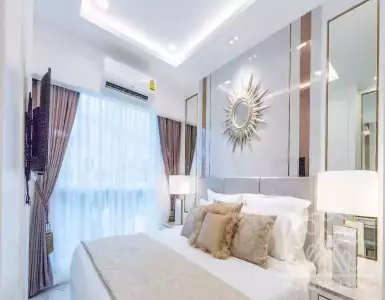
BTS Group opened a Sales Gallery on Srinakarin Road to present the D:CODE concept and sample rooms. The gallery aims to give buyers an immediate sense of living conditions and the smart-home features. For buyers this is useful for three reasons:
- You can inspect the quality of finishes and the furniture package.
- You can test the AI and voice-control systems being promised.
- You can ask about reserves and how the developer will manage communal services once the estate is operational.
We advise prospective buyers to get any verbal promises recorded in the contract or an addendum. Marketing showrooms can make features appear routine; contracts should specify specifics such as appliance brands, furniture lists, and exact smart-home capabilities.
Practical buying and investing tips for this kind of project
- Inspect comparable sales within a 1 km radius to verify the claim of 25–30% discount.
- Confirm whether parking is included or sold separately — parking can be a material extra cost.
- If you plan to rent the unit, run a rent-vs-price yield analysis using furnished rates for similar units.
- Ask for the management company’s track record on other developments and the planned onsite team size.
- If you are a foreign buyer, check Thai ownership rules for condominiums and the proportion of foreign freehold allowance in the building.
These steps help convert marketing claims into a disciplined purchase decision.
Investment scenarios and simple arithmetic
Take the headline figures to run basic scenarios:
- At THB 1.89 million for 30 m², the unit price is roughly THB 63,000 per sqm. That gives buyers a simple metric to compare with nearby offerings.
- If the project truly trades 25–30% below local market rates, buyers who value long-term occupancy next to transit may secure a discount that narrows resale risk.
Remember that rent, maintenance fees, periods of vacancy and taxes will determine net yield. A lower entry price helps, but it is not sufficient alone to guarantee investment returns.
What this means for policy and the broader market
D:CODE is an explicit attempt to align housing supply with transit infrastructure. For planners and the wider market this raises questions about how public and private roles interact in shaping where people live. If large developers replicate this model, we can expect more integrated projects around future rail lines.
For buyers, that means more options near transit; for local markets, it means a potential re-pricing of areas within walking distance to stations.
Frequently Asked Questions
Who can buy a D:CODE unit — are foreigners allowed?
Yes, the developer sells units on a freehold basis. Foreigners can buy condominium units under Thailand’s Condominium Act, subject to the building’s foreign quota. Check the project’s foreign ownership limit before purchase.
What does “no down payment” mean in practice?
The developer markets a purchase route where buyers reserve units without a standard bank-style down payment and start payments when they move in. Contracts will detail reservation fees and the timeline; get legal review to confirm the exact triggers for payment.
How reliable are the AI and voice features included with units?
The Sales Gallery demonstrates the systems but buyers should request written specifications, service guarantees and whether ongoing software updates or subscriptions are chargeable. Confirm who owns the data and how privacy is managed.
If I’m an investor, what rental yield should I expect?
Yield depends on location, unit size and market conditions at completion. Use the THB 63,000/sqm approximate price to compare with prevailing rents for furnished units near the Yellow Line. Factor in maintenance fees, agents’ fees, taxes and potential vacancy.
Final assessment for buyers and investors
D:CODE is a deliberate experiment in making smart, transit-oriented housing affordable for a generation that struggles with upfront costs. The combination of freehold title, no down payment, furnished units, AI features and direct adjacency to the Yellow Line station is an unusual mix.
That mix has upside for buyers who value cash flow planning and immediate occupancy. It also creates hazards: a large volume addition to supply, an extended construction timetable from September 2026 to December 2028, and uncertainty over long-term maintenance of the promised tech features. We advise thorough contract review, scrutiny of operating costs and a clear plan for financing or rental management that maps to the developer’s delivery schedule.
If you are considering a purchase, start with the sales gallery inspection, get the specifications in writing and align your financing with the project’s September 2026 construction start and December 2028 completion target. That timetable is the practical fact that will determine when payments, rentals or occupancy actually begin.
We will find property in Thailand for you
- 🔸 Reliable new buildings and ready-made apartments
- 🔸 Without commissions and intermediaries
- 🔸 Online display and remote transaction

International Real Estate Consultant

Subscribe to the newsletter from Hatamatata.com!
Subscribe to the newsletter from Hatamatata.com!
Popular Posts

We will find property in Thailand for you
- 🔸 Reliable new buildings and ready-made apartments
- 🔸 Without commissions and intermediaries
- 🔸 Online display and remote transaction
International Real Estate Consultant

Subscribe to the newsletter from Hatamatata.com!
Subscribe to the newsletter from Hatamatata.com!
I agree to the processing of personal data and confidentiality rules of Hatamatata
Need advice on your situation?
Get a free consultation on purchasing real estate overseas. We’ll discuss your goals, suggest the best strategies and countries, and explain how to complete the purchase step by step. You’ll get clear answers to all your questions about buying, investing, and relocating abroad.



Irina Nikolaeva
Sales Director, HataMatata