


Experts Say Portugal Property Prices Will Rise 5–10% — Here's What Buyers and Investors Should Do

Portugal real estate faces more price pressure: what the new barometer reveals
Portugal real estate buyers and investors should prepare for another year of tightening affordability. A new Porto Business School Housing Affordability & Public Policy Barometer finds that a large majority of market experts expect housing prices to rise by 5–10% over the next 12 months. That forecast matters for anyone holding property, considering a purchase, or evaluating development projects in Portugal’s cities and regions.
The findings are short and sharp. They do not offer a single cause, but they do point to a clear direction for policy and for private-market responses. In this article we unpack the study’s results, explain what the projected price rise means in practical terms, and outline how investors and buyers can respond to the changing market dynamics.
What the Porto Business School Barometer shows
The barometer is a pulse-check of real estate experts, and its headline conclusions are precise:
- 61.1% of respondents say Portugal’s housing crisis is driven by a combination of structural and cyclical factors.
- 31.5% view the crisis as primarily structural.
- 6.5% attribute it mainly to cyclical causes.
- The majority of experts expect housing prices to increase by 5–10% in the next 12 months.
Experts identified several barriers that are preventing new housing supply from keeping pace with demand. The list includes:
- Housing supply shortages
- Slow permitting processes
- High construction costs
- Regulatory uncertainty
- Labour shortages
To address these constraints, the barometer highlights a set of policy and delivery tools that experts believe would expand affordable housing supply:
- Streamlining licensing and speeding up permitting
- Reducing VAT on social housing
- Increasing predictability of urban planning
- Strengthening public-private partnerships (PPPs)
- Wider use of modular construction, Building Information Modelling (BIM), and artificial intelligence (AI)
Those recommendations make clear that the expert view is: more supply is the solution. But making supply grow is complex and will take time.
How credible is the 5–10% price forecast? Our assessment
We take the barometer seriously because it reflects the views of people active in the sector rather than relying solely on headline macro data. The dominance of the combined structural-and-cyclical diagnosis (61.1%) tells us experts expect longer-term constraints to remain in place even as short-term market forces fluctuate.
What that means in practice:
- If supply remains constrained and demand holds, price growth in the 5–10% range is plausible.
- If policymakers enact the barometer’s suggested measures quickly and effectively, growth could slow — but reforms typically take months or years to affect supply materially.
- If construction costs or labour shortages worsen, developers may pass costs to buyers, increasing prices beyond current forecasts.
We do not rely on the figure as a certainty. Instead we treat 5–10% as the market consensus among experts surveyed. For buyers that is a useful planning number; for developers and investors it is a basis for stress-testing returns.
What the barriers mean for developers and investors
The barometer lists predictable but important obstacles. Each one changes how you should underwrite a project or decide where to buy:
- Slow permitting: Longer approval timelines increase holding costs and extend the period before revenue. Expect longer development cycles when pricing projects.
- High construction costs: Materials and on-site expenses reduce margins. Investors will need higher nominal prices or lower land costs to maintain target returns.
- Regulatory uncertainty: Unclear rules raise political and execution risk. When policy is unsettled, lenders and equity investors will demand higher risk premiums.
- Labour shortages: Skilled trades shortages push wages up and can delay completion dates, again increasing costs.
Practical actions for professionals:
- Build contingency assumptions for longer permitting and construction timelines.
- Include a buffer for rising input costs in pro forma models.
- Prefer markets or municipal authorities with clearer, faster permitting records.
- Use contractual protections where possible to shift certain input risks to contractors.
What buyers and owner-occupiers should know
If you are buying to live in Portugal or for long-term holding, here are the key takeaways from the barometer and our analysis:
- Expect prices to be higher in 12 months, so moving sooner can lock in a lower purchase price.






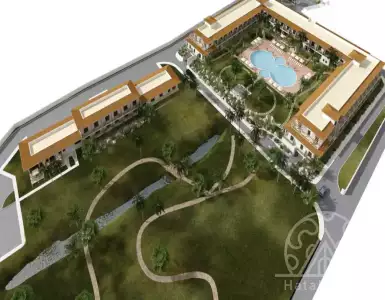

For prospective homeowners, I advise:
- Prioritise neighbourhoods with clear planning rules where future supply is more predictable.
- Budget for a 5–10% price rise when comparing offers over a 6–12 month horizon.
- Consider fixed-rate mortgage options to protect monthly repayment costs.
Policy measures on the table and what they would change
The barometer identifies a clear menu of reforms. Here is how each item could alter the market and what to watch for:
- Streamlining licensing: Faster approvals lower holding costs and make smaller, faster projects (like infill or refurbishment) more viable.
- Reducing VAT on social housing: Lower tax on affordable units reduces developer price requirements, making social housing projects financially easier to deliver.
- Predictability in urban planning: Clear, stable plans attract investment; developers can model schemes with less political risk.
- Stronger PPPs: Public-private partnerships can unlock public land or financing to build more affordable units, sharing risk between the state and private investors.
- Modular construction, BIM, and AI: These technologies speed up construction, reduce errors, and can cut labour requirements. Wider adoption can help offset labour shortages and control costs.
None of these fixes is instantaneous. Political agreement, regulatory changes, and scaling up modular factories or BIM adoption are multi-year endeavours. Still, each measure is practical and targeted to a known constraint.
The technology angle: modular, BIM and AI — realistic boosters or overhyped tools?
The barometer recommends modular building methods along with BIM and AI. We think these tools have real potential, but they require investment and supply-chain adjustments.
Why they matter:
- Modular construction can reduce on-site time, improve quality control, and address trades labour shortages by shifting work into controlled factory settings.
- BIM improves design coordination and reduces clashing systems that lead to delays and cost overruns.
- AI can optimise scheduling, procurement, and predictive maintenance, which reduces lifecycle costs.
What to watch for:
- Developers need to invest in off-site manufacturing capacity or partner with modular specialists.
- Local contractors and regulators must adapt to certify modular processes and comply with planning and building codes.
- Early adopters can gain a competitive edge, but first movers may face integration costs and teething problems.
For investors: consider joint ventures with specialists in modular construction and insist on rigorous cost-benefit analysis.
Market implications by segment and geography
The barometer gives a national view. On the ground, outcomes will vary by city and by property type.
- Prime urban cores: Central districts in Lisbon and Porto may continue to see strong price pressure because demand is concentrated and supply is constrained.
- Secondary cities and suburbs: These areas may see more moderate price growth if they can absorb new supply quickly.
- Affordable/social housing: If VAT cuts and targeted PPPs are implemented, delivery of affordable units could pick up; otherwise, prices will remain out of reach for many.
Investors should map local permitting times and planned public sector projects. Places with active municipal programmes to accelerate approvals or release public land offer better odds for supply-driven moderation.
Risks to the consensus view
We must be explicit about what could upset the experts’ 5–10% expectation:
- A sudden economic shock that reduces demand can halt price increases.
- A sharp escalation in construction costs or a deep labour strike could push prices higher by raising developer costs.
- Political shifts that stall reforms or increase taxes on property could change investor calculations quickly.
I believe the central risk for most players is policy uncertainty. The barometer calls this out; solving it will change the risk profile of development in Portugal.
Tactical advice: what investors and buyers should do now
For investors, developers and owner-occupiers, here are specific, actionable steps we recommend based on the barometer and our market read:
- Reprice deals to reflect a 5–10% expected market increase over the next year.
- Add time buffers in project schedules to account for slow permitting.
- Seek municipalities with track records of quicker approvals or active housing programmes.
- Explore partnerships with modular builders and BIM specialists to control costs and speed delivery.
- For buy-to-let investors: model rental growth and vacancy risk under a scenario of rising prices and tighter affordability.
- For owner-occupiers: consider mortgage rate strategies (fixed vs variable) and buy in areas with clear planning regimes.
These steps will not remove market risk, but they will align exposure with the consensus outlook revealed by the Porto Business School’s barometer.
Conclusion: balanced, not bullish—what this means for decisions today
The Porto Business School Barometer makes one point plain: supply-side constraints are central to Portugal’s housing problem, and most experts foresee a 5–10% price rise in the next year. That is significant for anyone transacting in Portuguese property markets. Reforms like streamlined licensing, VAT changes on social housing, and wider use of modular construction and digital tools are the recommended remedies. They are sensible, and they would help — but they take time and political will.
For buyers and investors, the immediate implication is practical: plan for higher prices, incorporate longer development timelines, and prioritise deals in jurisdictions with clearer planning and faster permitting. If you can secure land, approvals, or construction resources now, you may be better placed to protect returns.
End with a clear fact investors can act on: survey respondents expect 5–10% housing price growth in the next 12 months, so factor that range into purchase timing, pro forma models, and lending decisions.
We will find property in Portugal for you
- 🔸 Reliable new buildings and ready-made apartments
- 🔸 Without commissions and intermediaries
- 🔸 Online display and remote transaction

International Real Estate Consultant

Subscribe to the newsletter from Hatamatata.com!
Subscribe to the newsletter from Hatamatata.com!
Popular Posts

We will find property in Portugal for you
- 🔸 Reliable new buildings and ready-made apartments
- 🔸 Without commissions and intermediaries
- 🔸 Online display and remote transaction
International Real Estate Consultant

Subscribe to the newsletter from Hatamatata.com!
Subscribe to the newsletter from Hatamatata.com!
I agree to the processing of personal data and confidentiality rules of Hatamatata

Need advice on your situation?
Get a free consultation on purchasing real estate overseas. We’ll discuss your goals, suggest the best strategies and countries, and explain how to complete the purchase step by step. You’ll get clear answers to all your questions about buying, investing, and relocating abroad.



Sales Director, HataMatata