


Georgia’s Housing Market Tripled Since 2019 — What Investors Need to Know Now

Georgia’s real estate surge: a rare growth story with mixed signals
The real estate Georgia market has grabbed attention after TBC Capital revealed that the country’s primary residential sector nearly tripled between 2019 and 2025. That figure alone makes investors sit up. But the detail underneath the headline matters: growth is concentrated, the rental cycle has already reversed, and supply is beginning to respond.
At the International Real Estate Forum organised by the Georgian Business Association, TBC Capital presented the data to an audience of private and public sector representatives and nearly 100 international investors and leading agencies from Europe, Israel and the UAE. Irina Kvakhadze, Senior Vice President at TBC Capital, walked through the firm’s findings—numbers that should change how buyers, landlords and portfolio managers see Georgia.
How the market changed between 2019 and 2025
TBC Capital’s research shows dramatic expansion in the primary residential market. Key facts:
- Market size nearly tripled from 2019 to 2025.
- Demand growth peaked in 2022 at +29.5%, driven largely by migration flows.
- Growth moderated to 5.6–6.0% in 2024–2025 and TBC Capital forecasts 4.5% growth in 2026.
Those numbers tell two stories. First, Georgia delivered a growth spurt that outpaced many regional markets over the same period. Second, the market is reverting to a more typical growth trajectory. For investors we cover, that means the easy, outsized returns of 2021–22 are behind the market; future returns will be driven by location selection, product quality and timing.
Why 2022 was the standout year
TBC Capital attributes the 2022 spike to migration flows that lifted both rental and purchase demand. When people move into a market quickly, short-term rental vacancy falls and buyers who plan to live locally scramble to secure housing. Those dynamics often create sharp price and rent spikes that later normalise.
We saw the classic cycle: abrupt demand surge, price and rent acceleration, then a reversion as supply and buyer behaviour adjust. Georgia’s case should be studied by investors who assume sustained double-digit growth is repeatable without structural demand support.
Where growth concentrated: Tbilisi versus Batumi
Geography matters in Georgia. TBC Capital reports a strong geographic split in market share and buyer intent.
- Tbilisi accounts for 68% of the primary residential market.
- Batumi accounts for 21%.
- In Tbilisi 80% of purchases are for residential use (owner-occupiers). In Batumi 85% of purchases are for investment.
That split changes how to evaluate opportunities. Tbilisi is largely a domestic housing market. That produces steadier owner-occupier demand and different rental dynamics than a city oriented to short-term or investment buying.
Batumi looks more like a tourism-and-investor market. High investor share means pricing and yields can move quickly with external flows such as foreign buyer interest and tourism seasons. For an investor, Batumi can offer higher upside in a boom but also higher volatility.
Prices, rents and recent corrections
TBC Capital’s data on valuation and rental changes give a clear picture of the cycle.
- Residential property values in Tbilisi increased by an average of 8% per year between 2019 and 2025.
- For 2025 TBC Capital forecasts a more modest price rise of 3.2%.
- Rental prices, which surged in 2022, began to stabilise from March 2023.
- By 2025 average rent per square metre fell 11% to $10.4.
- TBC Capital expects a further rental correction of about 2.1% in 2026, with no sharp fluctuations forecast.
Our analysis: an 8% annual price rise over six years is substantial, but the market is normalising now that migration-driven demand has eased. Rental yields have already adjusted—in many central districts landlords are coping with lower effective rents than at the market peak. Investors who rely on rent growth to service debt should re-run their yield models with the $10.4/sq m 2025 average and the 2026 correction in mind.
What these numbers mean for yields and cash flow
- If a property in Tbilisi charges $10.4 per sq m on average, gross yields will vary dramatically by neighbourhood and price per sq m.
- High-value central apartments may have lower yields despite rising capital values; peripheral developments with lower entry prices may offer stronger immediate yields but carry location risk.
- Expect a shift from pure capital-gain plays to more balanced strategies where rental income secures cash flow while selective capital appreciation is pursued.
Supply: new permits and what they signal
Supply-side indicators are starting to show movement. TBC Capital’s research points to a rise in construction activity:
- Construction permits issued in Tbilisi increased by 2% in 2025.
That is a small but meaningful uptick. When permits climb, the pipeline of new units grows and competition among sellers increases once projects complete.



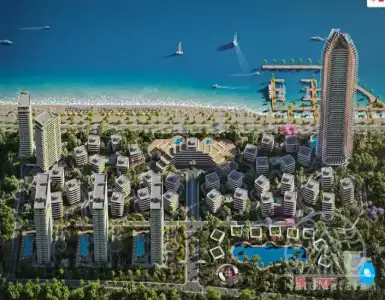




We expect urban micro-markets where the permit growth is concentrated to feel the impact first. Track permit issuance at municipal level to identify upcoming supply pressure.
What this means for different buyer types
We break down implications for four core profiles: owner-occupiers, buy-to-let investors, speculative developers and overseas buyers/expats.
-
Owner-occupiers: Tbilisi remains the primary market for actual residents. If you plan to live in Georgia long-term, the market's normalising prices and improving supply mean better choices and less risk of paying market panic premiums.
-
Buy-to-let investors: Rental income has already seen downward pressure. Model returns using $10.4/sq m and assume a small additional correction in 2026. If your strategy depends on short-term tourist rentals, focus on Batumi and central Tbilisi micro-locations where seasonal demand still supports premium rates.
-
Developers/speculators: The permit increase suggests new projects will arrive. Sales velocity that matched 2021–22 pace is unlikely; now endurance, cost control and product differentiation matter. Projects aimed at owner-occupiers with realistic prices will be safer than speculative luxury builds.
-
Overseas buyers and expats: Expect a bifurcated market. Prime central Tbilisi delivers lifestyle value and long-term appreciation potential. Batumi offers higher investor interest but also higher fluctuation tied to tourism and foreign capital flows.
Risks and the watchlist for 2026
No market is risk-free. Georgia’s recent history includes steep migration-driven gains that can unwind. Important risks:
- Demand shock reversal: If migration slows further, purchase and rental demand can weaken.
- Supply timing: Permits rose 2% in 2025 but construction timelines could cluster deliveries, amplifying short-term oversupply.
- Currency and macro risk: Georgia’s market is influenced by regional economic conditions and foreign capital inflows.
- Local policy changes: Rules on foreign ownership, taxation and rental regulation can change investor returns quickly.
We advise monitoring these indicators closely:
- Municipal permit issuance by neighbourhood
- Quarterly rent indices and vacancy rates
- Net migration statistics and employment data
- Bank lending standards and mortgage uptake
Practical steps for buyers and investors
Here are pragmatic moves we recommend based on TBC Capital’s findings and our market reading.
- Recalculate yields using $10.4/sq m as the baseline rent and assume a small further correction in 2026.
- Prioritise locations: central Tbilisi for owner-occupiers, selected Batumi pockets for short-term rental investors, and emerging peripheral areas only if price discounts compensate for rental weakness.
- Check completion timelines for projects bought off-plan; clustering of completions can depress prices and rents.
- Insist on transparent developer track-records and construction-stage benchmarks before committing to off-plan purchases.
- Consider staggered acquisitions to average entry points rather than betting on immediate continued growth.
For expats, legal due diligence matters. Confirm residency and taxation implications, since rental returns after taxes and fees determine net yield.
Our read: opportunity with caution
Georgia’s residential sector growth from 2019 to 2025 is impressive when measured in raw expansion. At the same time, the market moved through a classic boom-and-normalise cycle: rapid demand spike in 2022, stabilising rents from March 2023, and a return to mid-single-digit growth in 2024–25. TBC Capital’s 4.5% growth forecast for 2026 and the 2% increase in construction permits in 2025 signal a maturing market where stock selection matters more than market timing.
We believe the window for easy speculative gains is narrowing. Investors who treat Georgian property as a long-term, location-sensitive play and who price in the rental correction will be better positioned than those who chase headline growth figures.
Frequently Asked Questions
Q: How fast did Georgia’s primary residential market grow between 2019 and 2025?
A: According to TBC Capital, the primary residential market nearly tripled between 2019 and 2025.
Q: Which cities dominate the market and how do buyer motivations differ?
A: Tbilisi accounts for 68% of the market and 80% of purchases there are for residential use. Batumi accounts for 21%, and 85% of purchases in Batumi are for investment.
Q: What happened to rents and prices after the 2022 spike?
A: Prices in Tbilisi rose on average 8% per year from 2019–2025 but are expected to grow more modestly (3.2% in 2025). Rents surged in 2022, stabilised from March 2023, and by 2025 average rent per sq m fell 11% to $10.4. A further rental correction of about 2.1% in 2026 is forecast.
Q: Should I expect a supply glut because of new construction?
A: Construction permits in Tbilisi increased by 2% in 2025. That points to a growing pipeline that could raise competition once projects complete. Watch where permits are concentrated; neighbourhood-level clustering can create local oversupply.
Endnote: TBC Capital’s numbers show a market that expanded quickly and is now settling—plan purchases and investment models around the $10.4/sq m rent baseline and the 4.5% 2026 market growth forecast, and keep an eye on permit flows for the next sources of competition.
We will find property in UAE (United Arab Emirates) for you
- 🔸 Reliable new buildings and ready-made apartments
- 🔸 Without commissions and intermediaries
- 🔸 Online display and remote transaction

International Real Estate Consultant

Subscribe to the newsletter from Hatamatata.com!
Subscribe to the newsletter from Hatamatata.com!
Popular Posts

We will find property in UAE (United Arab Emirates) for you
- 🔸 Reliable new buildings and ready-made apartments
- 🔸 Without commissions and intermediaries
- 🔸 Online display and remote transaction
International Real Estate Consultant

Subscribe to the newsletter from Hatamatata.com!
Subscribe to the newsletter from Hatamatata.com!
I agree to the processing of personal data and confidentiality rules of Hatamatata

Need advice on your situation?
Get a free consultation on purchasing real estate overseas. We’ll discuss your goals, suggest the best strategies and countries, and explain how to complete the purchase step by step. You’ll get clear answers to all your questions about buying, investing, and relocating abroad.



Irina Nikolaeva
Sales Director, HataMatata