


New Advisory Alliance Opens Door for Foreign Hotel Investors in Italy’s Booming Market

Why this matters now for real estate Italy investors
Italy’s hotel market is drawing fresh international attention, and for good reason: the sector recorded €1.4 billion in investment in the first half of 2025, according to Colliers’ Hotel Market Report H1 2025. If you are watching real estate Italy for hotel or resort opportunities, a new specialised advisory partnership has just appeared that aims to smooth the path for overseas buyers.
On 25 March 2026, Italy Access Advisory (IAA) launched as a strategic collaboration between Chris Henry of Majestic Hospitality and Christian Scali of LV Toscana SRL. IAA promises an end-to-end service offering that covers acquisition, redevelopment, and operations for hospitality properties across Italy, from boutique hotels and luxury resorts to agriturismo and branded residences. This matters because international investors face a mix of attractive returns and practical hurdles when entering the Italian hospitality market.
Quick take
- Market signal: €1.4 billion invested in H1 2025 — the highest hotel investment volume in Italy in five years.
- New advisory player: Italy Access Advisory (IAA), founded by Chris Henry and Christian Scali.
- Service scope: acquisition, redevelopment, regulatory navigation, and hotel management support.
- Practical edge: local know-how plus international development experience.
The market opportunity: what the numbers and trends tell us
Italy is a top tourist destination for high-spending international travellers. Colliers’ H1 2025 data shows a surge in institutional and private capital targeting hospitality assets, particularly in the high-value segments: boutique hotels, luxury resorts, and branded residences.
Why investors are circling:
- Strong demand for distinctive, high-end accommodation in Rome, Florence, Venice, Tuscany and coastal regions.
- A backlog of heritage properties suitable for repositioning into boutique hotels or private villas.
- Tourist flows that continue to favour experiential travel: cuisine, wine country stays, private-use villas and curated itineraries.
This combination creates a niche for investors who can execute quality conversions and manage a premium guest experience. But demand does not erase operational and regulatory complexity. That is where targeted advisory help becomes valuable.
Meet the team: who is behind Italy Access Advisory and what they bring
IAA pairs two complementary profiles: an international hotel developer with U.S. experience and a local Italian operator with deep regional connections.
- Chris Henry is CEO of Majestic Hospitality, a Los Angeles-based development and consulting firm. The company has more than $550 million in active projects, and Henry is a member of the International Society of Hospitality Consultants (ISHC). His track record is in creating and renovating experiential hotels and resorts on an international scale.
- Christian Scali heads LV Toscana SRL, an Italian hospitality management company with local market intelligence and regulatory experience in Italy’s property and hospitality sectors.
My read is simple: Henry brings international execution and product thinking; Scali brings Italian permits, local partners, and operations know-how. For foreign buyers, that combination reduces two big risks—design and positioning that miss guest expectations, and bureaucratic delays that derail timelines.
What IAA offers: services and practical benefits for investors
IAA’s stated service offering is full-service and covers the main obstacles foreign investors routinely face. The advisory model centres on three pillars:
- Acquisition: identifying and sourcing properties that fit a specific hospitality thesis—boutique hotels, resorts, agriturismo, branded residences, vacation houses.
- Development and conversion: design, historic-conservation coordination, technical due diligence, and project management through planning and construction.
- Operations and asset management: pre-opening planning, operator selection, branding strategies, and ongoing management support.
Specific, practical investor benefits include:
- Single point of contact for cross-border transactions, reducing friction with local vendors and authorities.
- Access to a tested network of architects, conservators, contractors and hospitality operators in Italy.
- Guidance on matching product type to market demand—for example, deciding whether a rural farmhouse is better as an eight-suite luxury retreat or a private villa product.
This is not consultancy that ends at paperwork. IAA’s pitch is implementation: from scouting and acquisition to a revenue-ready hotel.
Villa Ardore: a case study that explains IAA’s playbook
If you want to see how this model works, the Villa Ardore project in Chianti Classico is instructive. The property was a 16th-century farmhouse and a low-end bed & breakfast before a repositioning project converted it into a private, five-star hotel. Key facts:
- Origin: 16th-century farmhouse
- Outcome: transformed into an eight-suite, five-star private hotel with a private indoor spa
The project required careful coordination between heritage authorities, hospitality designers and operators to preserve historical integrity while adding modern amenities. That combination of sensitivity to conservation rules and commercial repositioning is central to many successful Italian hotel projects.
Investors should note the kind of returns that can follow from such repositionings but also the concentration of complexity: historic permits, structural upgrades, and guest expectations for modern comfort.
Where investors should exercise caution: risks and red flags
Italy’s hospitality market is attractive, but it is not frictionless. We advise a measured approach that recognises the following risks:
- Regulatory complexity: heritage buildings and rural properties often require multiple permits and sign-offs from local and regional authorities. Timeframes can be long and vary by municipality.
- Conservation requirements: restrictions on alterations to façades, interiors and landscapes can increase renovation costs and limit capacity expansion.
- Seasonality: many Italian destinations are highly seasonal; without a clear demand-smoothing strategy, occupancy and revenue can be uneven across the year.
- Operational staffing: recruitment and retention of qualified hospitality staff is a challenge in certain regions, particularly for boutique luxury offerings that require specialised service standards.
- Overleveraging: financing heritage conversions can be costly; lenders expect clear planning permissions and experienced operators before committing.
Red flags in a deal pipeline include unclear title or easements on historical properties, missing heritage assessments, and unrealistic timelines promised by local contractors.
How to approach a hotel acquisition in Italy: a practical checklist
For investors considering a hotel or resort acquisition in Italy, I lay out a pragmatic checklist based on what IAA says it will offer and what the market requires.
- Clarify your product-market fit
- Decide if you are targeting boutique hotel guests, luxury resort clientele, or long-stay branded residences.
- Technical and heritage due diligence
- Commission structural, seismic and conservation reports.






- Planning and permits roadmap
- Map the local municipal and regional planning process; build a conservative timeline into your feasibility study.
- Capital planning
- Budget for purchase price, restoration, FF&E (furniture, fixtures and equipment), and a contingency. Expect renovation costs to rise when heritage conservation is required.
- Operator selection and pre-opening
- Line up management or a third-party operator early. Pre-opening costs and soft-opening strategies will affect cash flow forecasts.
- Revenue management strategy
- Assess seasonality, channel mix, and pricing structure. Consider packaging, events, and private-use options for higher RevPAR (revenue per available room).
- Exit strategy
- Define an operating period and performance targets that would trigger a sale or refinancing.
IAA’s model addresses many of these steps through a combined international-local advisory team, which matters when investors lack a domestic presence.
The role of agritourism and branded residences in the mix
Italy has a specific opportunity set that differs from many other European markets: agritourism, vineyard estates, and branded residences. These asset types can trade off different risk and return profiles:
- Agritourism projects appeal to experiential travellers seeking rural retreats and are often eligible for specific regional incentives.
- Branded residences can secure pre-sales to wealthy buyers and reduce operating risk for a hotel operator if structured correctly.
Investors should align product choice to local demand and seasonality. For example, Tuscany supports year-round luxury stay demand thanks to food and wine tourism, while some coastal locations remain heavily summer-weighted.
How IAA reduces common barriers for foreign investors
The alliance is pitched around three practical advantages for buyers who are not resident in Italy:
- Local legal and regulatory navigation: Scali’s team brings municipal relationships and a track record with Italian planning authorities.
- International product and brand thinking: Henry’s experience with experiential hotels helps shape offerings that sell to high-net-worth global travellers.
- Consolidated project management: a single advisory that can coordinate cross-border financing, procurement and pre-opening development.
That said, an advisory cannot erase all risk. Investors should still insist on hard deliverables: a signed timeline with permit milestones, fixed-price elements in construction contracts where feasible, and performance guarantees from operators.
Financing and exit considerations
While Colliers’ data shows active capital flowing into the sector, financing a hotel in Italy often requires structuring around local realities. Lenders may ask for:
- Proven operator experience on board before loan approval
- Detailed conservation and technical reports
- Conservative occupancy and ADR assumptions in financial models
Exit options include sale to an institutional buyer, conversion to branded residences, or long-term operation with refinancing once stabilization occurs. Investors should plan exits that align with both market cycles and the slow timetable of heritage approvals.
Final assessment: an advisory that answers a clear need, without erasing complexity
Italy Access Advisory appears to offer practical help where it is most needed: integrating international product design with local regulatory fluency. That combination matches a clear market signal — €1.4 billion in hotel investment in H1 2025 — and a crowded set of heritage assets that are attractive to high-spending travellers.
Still, investors should not interpret the advisory as a shortcut. Historic conversions require patience, careful budgeting and realistic timelines. We advise a cautious, evidence-led approach: insist on robust due diligence, conservative financial models, and a firm timetable for key permit milestones.
If you are evaluating entry into the Italian hospitality market, a practical first step is to secure a local partner with operational track record and a clear planning roadmap. Projects like Villa Ardore prove that high-end repositionings can work, but they also prove that success depends on disciplined execution across technical, legal and operational fronts.
Frequently Asked Questions
How does IAA differ from a standard real estate advisory?
IAA pairs an international development consultant with a local Italian operator. The difference is execution focus: the partnership commits to acquisition, redevelopment oversight, and ongoing operations support rather than limited feasibility studies.
What markets in Italy are most attractive for hotel investment?
High-end demand is strongest in Rome, Florence, Venice, Tuscany, and select coastal areas. Rural wine regions and heritage-rich towns can support boutique luxury conversions when access and seasonality are addressed.
How long does a typical heritage conversion take in Italy?
Timelines vary by municipality and the scale of interventions, but investors should plan for several months to two years for permitting and construction depending on complexity. Allow extra time for heritage approvals and technical assessments.
What are realistic financing requirements for a conversion project?
Lenders often require an experienced operator on board and detailed conservation reports. Expect lenders to scrutinise occupancy assumptions and to require conservative underwriting; pre-opening capital and contingencies should be factored into project budgets.
Article author: our analysis draws on the Colliers Hotel Market Report H1 2025 and the March 25, 2026 announcement of Italy Access Advisory. For investors, the practical takeaway is clear: capital is available but success depends on marrying international product thinking with local regulatory execution.
Tags
We will find property in Italy for you
- 🔸 Reliable new buildings and ready-made apartments
- 🔸 Without commissions and intermediaries
- 🔸 Online display and remote transaction

International Real Estate Consultant

Subscribe to the newsletter from Hatamatata.com!
Subscribe to the newsletter from Hatamatata.com!
Popular Posts

We will find property in Italy for you
- 🔸 Reliable new buildings and ready-made apartments
- 🔸 Without commissions and intermediaries
- 🔸 Online display and remote transaction
International Real Estate Consultant

Subscribe to the newsletter from Hatamatata.com!
Subscribe to the newsletter from Hatamatata.com!
I agree to the processing of personal data and confidentiality rules of Hatamatata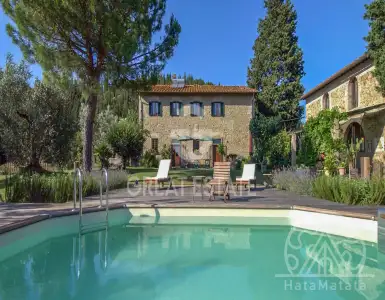

Need advice on your situation?
Get a free consultation on purchasing real estate overseas. We’ll discuss your goals, suggest the best strategies and countries, and explain how to complete the purchase step by step. You’ll get clear answers to all your questions about buying, investing, and relocating abroad.



Irina Nikolaeva
Sales Director, HataMatata