


Why Greece’s Buyers Are Choosing Small Flats — The 51–75 sqm Shift

A clear shift in the real estate Greece market
The market for real estate Greece is changing in a way that will matter to anyone buying, selling or investing here. In plain terms: buyers are opting for smaller apartments. Our analysis of the latest transaction data and industry commentary shows a structural move toward compact homes driven by price moves, operating costs and demographic change. The numbers are stark and they affect strategy for investors and buyers alike.
What the data actually say
Transaction data collected by RE/MAX for 2025 show a distinct pattern in buyer preferences. Key figures:
- 26.4% of apartments sold were 51–75 square metres.
- 25.9% were 76–100 sq m.
- 19.2% were up to 50 sq m.
- 20.8% were 101–150 sq m.
- 7.7% were larger than 151 sq m.
That means one in two homes purchased last year measured between 51 and 100 sq m, with the 51–75 sq m band the most popular single category. The trend is national: 51–75 sq m homes were the top choice in Attica (29%), Thessaloniki (30%) and the rest of Greece (24.6%).
There is a worrying social side to these figures. Eurostat reports that 28.3% of Greeks now live in overcrowded housing, and crowding has worsened since 2022. So demand for smaller units is rising while a large share of the population lives in dense conditions.
Why buyers are downscaling: four forces at work
We see four main drivers behind the move to smaller homes.
- Price inflation on residences
- Residential prices in Greece have risen roughly 85–100% over the past decade. That magnitude of increase changes what buyers can afford and shifts the calculus from space to price per square metre. Many buyers are choosing smaller units to enter the market or to stay within a mortgage budget.
- Higher operating expenses
- Ongoing costs matter more now than before. Heating, cooling, maintenance fees and property taxes scale with size, and their cumulative effect is significant in household budgets. For investors, higher operating costs lower net rental yields if rents do not keep pace with expenses.
- Demographic change
- Greece’s population is shrinking while the share of single-person households and childless couples is rising. Smaller household sizes reduce demand for extra bedrooms and big living areas.
- Design and construction trends
- New developments are being planned for efficiency. Developers now reduce wasted space such as long corridors and oversized entrance halls and focus on flexible layouts, which makes smaller apartments more functional than older units of the same area.
Those factors interact. Price increases push people toward smaller units, then higher running costs and household composition make those smaller units the better economic choice.
How supply and construction are adapting
Developers and architects have responded quickly. We are seeing:
- A rise in compact new-build floorplates where the kitchen, dining and living zones are integrated to save space.
- Greater use of built-in storage, sliding partitions and dual-purpose rooms to increase usable area.
- More studios and one-bedroom apartments aimed at buyers looking for affordability and rental investors seeking steady demand.
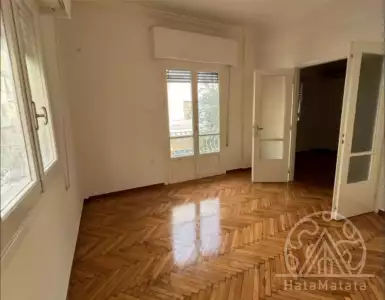
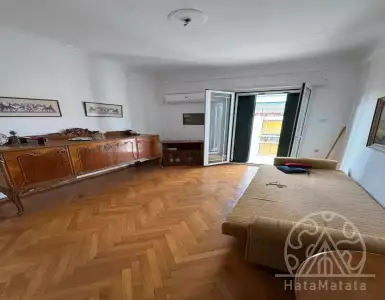
At the same time, the existing housing stock is a mismatch. Older apartments often have inefficient layouts with smaller kitchens and long corridors. That creates renovation opportunities: reconfiguring a 70–90 sq m flat to improve flow and light can create a product that competes with new compact units at a lower price point.
What this means for buyers
If you are buying a home in Greece now, here are practical takeaways based on the trend:
- Prioritise usable square metres over gross floor area. An efficient 51–75 sq m plan can feel larger than an inefficient 80–100 sq m flat.
- Inspect heating and insulation. With energy costs and heating bills high, an apartment with a strong energy performance certificate will save money over time.
- Factor running costs into affordability tests. Monthly condo fees, local property tax and utility bills can tip the balance between two otherwise similar units.
- For first-time buyers, smaller units widen your market options and can improve mortgage serviceability.
From our conversations with agents and developers, buyers are also placing a higher premium on location and access to services. A compact flat near transport, healthcare or work centers will often deliver better quality of life than a larger apartment in a poorly connected suburb.
What this means for investors
Investors must adjust asset allocation and underwriting assumptions.
- Rental demand concentrates in smaller units. With one in two transactions involving 51–100 sq m, rental demand for these sizes is strong, especially in cities and university towns.
- Short-term and medium-term rental strategies may work well with compact apartments in central locations, though you should check local permits and regulations for tourist rentals.
- Renovation and layout optimisation can increase yields. Converting a poorly laid-out two-bedroom into a more modern one-bedroom with open plan living can improve occupancy and rent per square metre.
- Liquidity and exit remain location-dependent. Central Athens and Thessaloniki typically see faster turnover than more remote islands or inland towns.
Risks that investors need to price in:
- Regulatory changes that affect rental laws or short-term letting.
- A rising supply of compact new-builds could compress rents if not matched by tenant demand.
- The social issue of overcrowding could pressure authorities to introduce demand-management policies in certain neighbourhoods.
Social and policy implications
The shift to smaller housing units is not only a market phenomenon. It has social consequences that policymakers should address.
- The Eurostat figure of 28.3% overcrowding signals that many households live in cramped conditions.




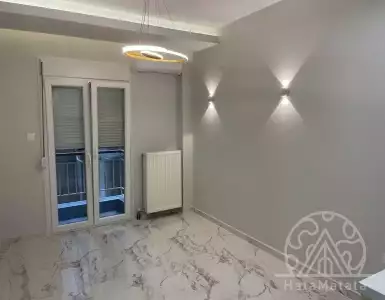

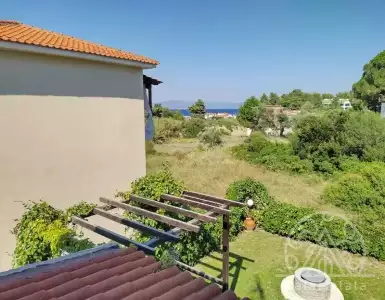
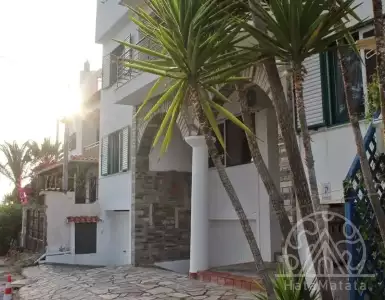
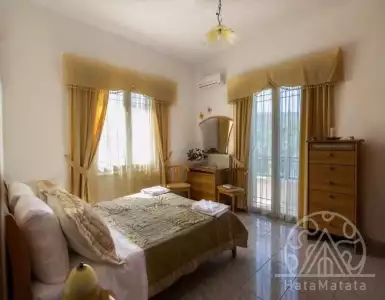
Municipalities and the state face a set of choices: permit more new compact supply, incentivise family-sized dwellings where needed, or support retrofits and social housing to resolve overcrowding.
A practical checklist for buyers and investors
When you view a compact apartment in Greece, run through this checklist:
- Layout efficiency: Is there wasted corridor area? Can walls be moved without structural intervention?
- Energy class: What is the EPC rating? How old is the heating system?
- Fees and taxes: What are monthly condominium fees? What is the annual property tax (ENFIA) band?
- Location fundamentals: Access to transport, groceries, schools and healthcare.
- Rental demand: If you plan to rent the unit, what tenant profile will you target — students, young professionals, couples?
- Legal status: Confirm clear title, building permits and if short-term letting is permitted.
- Resale potential: Evaluate nearby transaction activity for units of similar size and condition.
We recommend having an architect or experienced surveyor review any compact unit you consider. Small modifications can yield disproportionate improvements in usability and value.
Outlook through 2026
Market participants expect the trend toward smaller apartments to continue through 2026. That expectation rests on three assumptions:
- Residential prices will remain elevated compared with a decade ago, sustaining demand for smaller, more affordable units.
- Operating costs and energy expenses will continue to influence household budgets.
- Demographic patterns of smaller households will persist.
That does not mean larger properties will disappear. Luxury buyers, families and households that can afford higher operating costs will still buy larger units. But for the bulk of market transactions and rental demand, 51–75 sq m and 76–100 sq m apartments are likely to remain dominant.
Balancing opportunity and risk: our final assessment
There is a clear market opportunity in compact apartments. For buyers on a budget, efficient 50–75 sq m flats unlock home ownership. For investors, smaller units in the right location can deliver steady rental demand. Yet the trend is not without risk. The high share of overcrowded households and the ongoing affordability squeeze point to structural social pressure that could prompt regulatory responses.
We advise two simple strategies. First, favour functional plans with verified energy performance. Second, underwrite returns conservatively, factoring in higher operating costs and a possible supply increase of compact new builds.
Remember the figures: one in two purchases last year was between 51 and 100 sq m, and 51–75 sq m was the single most common choice at 26.4%. Those numbers are not a fad; they shape how property in Greece will be bought and rented in the near term.
Frequently Asked Questions
Why are so many buyers choosing 51–75 sq m apartments?
Buyers are choosing that size because it balances affordability with livability. 26.4% of purchases fell in this band in 2025. High property prices, rising operating costs and a rise in single-person households make these mid-size units the most pragmatic option.
Is this trend the same across Greece?
Yes. The preference for 51–75 sq m is national. It accounted for 29% of purchases in Attica, 30% in Thessaloniki and 24.6% in the rest of Greece. The pattern is widespread, though local market dynamics still affect price and rental yields.
Will investing in small flats continue to be profitable?
Small flats can be profitable if you select the right location and manage costs. Strong demand exists among renters and first-time buyers. However, you must account for operating expenses, check local rental rules and avoid overpaying at purchase.
What should buyers check before buying a compact unit?
Check layout efficiency and the energy performance certificate, confirm monthly condominium fees and tax bands, verify legal status and permits, and assess proximity to transport and services. Hiring a surveyor or architect to evaluate potential layout improvements often pays off.
We will find property in Greece for you
- 🔸 Reliable new buildings and ready-made apartments
- 🔸 Without commissions and intermediaries
- 🔸 Online display and remote transaction

International Real Estate Consultant

Subscribe to the newsletter from Hatamatata.com!
Subscribe to the newsletter from Hatamatata.com!
Popular Posts

We will find property in Greece for you
- 🔸 Reliable new buildings and ready-made apartments
- 🔸 Without commissions and intermediaries
- 🔸 Online display and remote transaction
International Real Estate Consultant

Subscribe to the newsletter from Hatamatata.com!
Subscribe to the newsletter from Hatamatata.com!
I agree to the processing of personal data and confidentiality rules of Hatamatata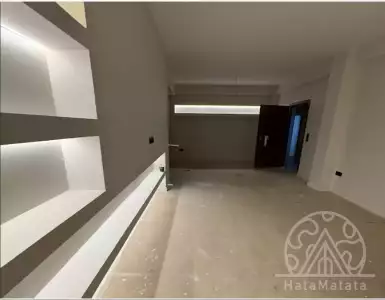
Need advice on your situation?
Get a free consultation on purchasing real estate overseas. We’ll discuss your goals, suggest the best strategies and countries, and explain how to complete the purchase step by step. You’ll get clear answers to all your questions about buying, investing, and relocating abroad.



Sales Director, HataMatata