


Why Phuket Is Outpacing Bangkok: Condo Prices Now Match the Capital's Prime Areas

Phuket property Thailand: a market rewriting the island playbook
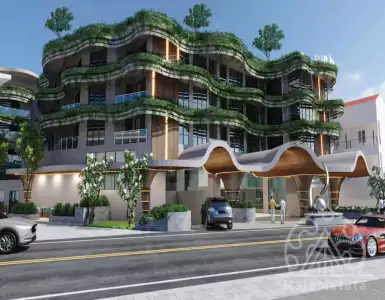
Phuket property Thailand is moving from a tourism-led cycle into what developers call a global residential city, and the numbers are hard to ignore. Developers from Bangkok are redirecting capital, condominium prices in parts of the island are hitting levels similar to Bangkok’s prime districts, and land scarcity on the west coast is forcing a geographic shift in new projects.
This is not simple hype. The data show clear trends that are reshaping where and how to invest on the island. In our analysis, buyers and investors need to treat Phuket like a mature resort market that is undergoing structural change — attractive for certain types of buyers, risky for others.
Why Bangkok developers are shifting focus to Phuket
Bangkok’s residential market has weakened under a mix of slower purchasing power, rising unsold inventory and tighter lending. That pressure has pushed many large Bangkok-based developers to look for growth elsewhere. According to Knight Frank’s Thailand office, a large proportion of that redirected capital is landing in Phuket.
Key reasons for the shift:
- Unsold stock and slower demand in Bangkok have reduced near-term opportunities in the capital, prompting developers to diversify.
- Tourism recovery on Phuket has translated into longer stays, repeat visits and more people choosing the island for second homes or long-term residence.
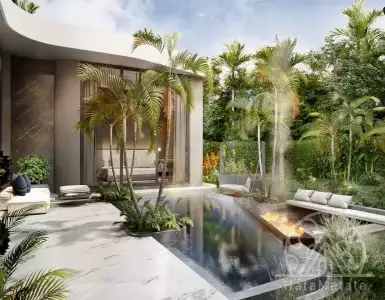
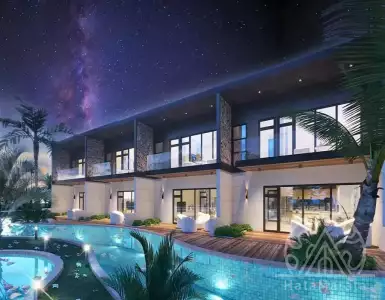
- A new buyer mix — digital nomads, foreign retirees, wealthy holiday-home purchasers and international investors — is changing product demand toward branded residences, luxury condominiums and villas.
I view this as a strategic pivot by developers trying to match product type with a buyer profile that values lifestyle, international connectivity and rental potential. That said, rapid entry by multiple players has transformed the market into a highly competitive environment, particularly for off-plan condominiums.
Supply dynamics: condominiums and villas — the hard figures
Understanding supply is essential for any investor. Phuket’s inventory profile is now dominated by condominium projects, with a substantial but smaller villa pipeline.
Condominium supply
- Accumulated supply in 2025: 42,061 units. This is the island’s total condo pipeline at the start of the year.
- New units launched in 2025: 5,073 units, a drop of 51.7% from the previous year — a clear sign developers are exercising caution after rapid launches in prior years.
- By location, Bang Tao accounted for 30.8% of all new condominium supply in 2025, followed by Karon 21.1% and Rawai 15.6%, which shows demand and launches remain concentrated along the west coast.
Villa supply
- Accumulated villa supply: 7,789 units.
- New villa launches in 2025: 774 units, down 48.2% year-on-year.
- Location shifts are visible: Sri Sunthon held 18.1% of new villa supply, Thalang 17.8% and Bang Jo 16.3%. Developers are moving toward outer zones where land costs are lower.
What this means for investors
- A falling pace of new launches indicates developers are responding to demand signals and trying to reduce the risk of oversupply in the immediate off-plan market.
- Inventory remains significant. Investors buying off-plan need to assess presales velocity and developer track record to avoid projects that take much longer to complete or to sell.
Pricing: prime pockets now trade at Bangkok levels
Prices across Phuket are no longer uniform. Condominium pricing ranges widely, and some submarkets have reached levels normally associated with Thailand’s capital.
Condominium pricing snapshot
- Average selling price range for condominiums: 125,000–160,000 baht per sq m.
- Some locations already exceed 180,000 baht per sq m.
- Bang Tao recorded the highest average price at 283,975 baht per sq m, followed by Layan 197,000 baht per sq m and Kamala 182,375 baht per sq m.
Villa pricing and the ultra-lux segment
- Average villa price in Layan: 285 million baht per unit.
- Bang Tao average villa price: 255.8 million baht.
- Kamala average villa price: 234.3 million baht.
Those figures show Phuket is competing for capital with global resort hubs. Branded residences and luxury villas linked to international hotel groups are pulling wealthy buyers who care about service, management and global distribution networks.
Investor implications
- Sky-high prices in prime pockets compress expected rental yields unless holiday-rental demand and nightly rates remain strong.
- Buyers chasing capital appreciation must be selective: projects with international branding, proven operators and strong management are more likely to attract premium short-term and long-term renters.
- For price-sensitive investors, secondary locations north of the island are beginning to look more interesting because land costs are lower and new projects may be more price-competitive.
Geography and the next wave: where developers are going
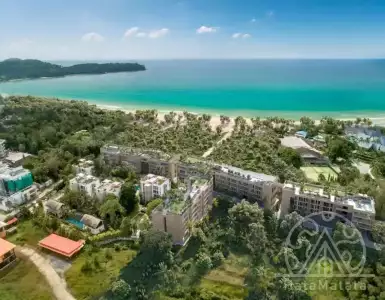
Land scarcity has become an operational constraint in areas along the west coast. That scarcity pushes two outcomes: higher land prices in existing hotspots and a geographic expansion into zones that were secondary until recently.
Where new supply is concentrated
- For condominiums, Bang Tao, Karon and Rawai are still dominant for both launches and sales.
- For villas, developers are shifting into Sri Sunthon, Thalang and Bang Jo because land parcels are larger and cheaper than the coastal strips.
Infrastructure as a game-changer
Investors should watch infrastructure closely. Plans for a new airport in Phang Nga are being discussed and, if realized, could redirect development northwards into Mai Khao, Nai Yang, Thai Mueang and Natai within the next five to 10 years. That could replicate how Bang Tao evolved from a secondary area to a premium pocket.
My view is that the airport discussion is not a short-term trigger but a strategic variable for medium-term land and project selection.

Demand patterns: who is buying and what they want
Foreign buyers are the dominant force in Phuket’s market. The island’s purchasing base is diverse and global.
Top foreign buyer sources mentioned in market data:
- Russia
- China
- Europe
- India
- Middle East
Buyer profiles and product fit
- Second-home buyers and holiday-home purchasers are still important, especially for villas in Choeng Thale, Pa Khlok and Bang Jo.
- Rental investors prefer condominiums in high-tourism micro-markets where short-term demand is consistent.
- High-net-worth buyers favour ultra-luxury villas and branded residences in Layan, Bang Tao and Kamala.
Recent sales trends
- Condominium sales in 2025: 4,455 units, down 24.8% from the previous year. Sales remain strongest in Bang Tao (32.7% of condo sales), Karon (17.9%) and Kamala (9.4%).
- Villa sales in 2025: 631 units, up 12.9%, with Choeng Thale accounting for 19.9% of villa sales, followed by Pa Khlok 13.9% and Bang Jo 13.4%.
These numbers show purchase activity is concentrated where tourism demand and rental viability are strongest, and that luxury villa demand is holding up better than the wider condo market.
Competition, risk and the off-plan squeeze
Market dynamics are not uniformly positive. The off-plan sphere is fiercely competitive after several years of heavy launches.
Key risks to weigh:
- Off-plan saturation in certain submarkets can lengthen sales periods and force developers into deeper promotions or more generous payment terms.
- Projects without a clear selling point — weak branding, no credible operator, or poor site planning — are most at risk of slow take-up.
- Price sensitivity among buyers has grown; purchasers compare projects on management, services, and likely rental yield, not just finish quality.
- Land scarcity in prime coastal pockets is pushing prices and may cap future supply, which supports long-term values but raises entry costs now.
What developers are doing
- Many have slowed new launches: new condo launches fell 51.7% and new villa launches fell 48.2% in 2025.
- Developers are expanding into outer areas where land costs are lower and parcel sizes allow for villa estates.
- Branded projects and hotel-linked residences are gaining market share because they meet a clear demand for professional management and global marketing.
If you are considering a purchase in Phuket, expect a bargaining process for off-plan product. Projects with little differentiation may require deeper scrutiny before you commit.
Practical checklist for buyers and investors
Experience matters in a market this competitive. Below is a pragmatic checklist I use when advising buyers on Phuket real estate.
Due diligence and purchase checklist
- Confirm the developer’s track record: delivery history, completion timelines, financial stability.
- Check presales rates for the project and recent comparable projects in the micro-market.
- Assess branding and operator agreements for branded residences; strong, long-term operators improve rental prospects.
- Review ownership structure: foreigners can buy condominiums as freehold subject to the 49% foreign quota in the building; villas often rely on leasehold structures or Thai company ownership.
- Understand title and land-use issues, especially for larger villa estates where plots may be under varied legal instruments.
- Analyse rental-market data for the micro-market and seasonality; high nightly rates during peak season do not guarantee year-round occupancy.
- Factor in taxes, maintenance fees, and management charges — high service levels come with higher recurring costs.
- Watch infrastructure plans and zoning changes that could affect long-term value, such as the proposed Phang Nga airport.
I recommend buyers demand transparent cash-flow projections and independent rental estimates rather than marketing figures. That will keep expectations realistic.
How to spot value in a heated market
Value in Phuket today is not just low price. It is the combination of location, operator credibility, product quality and realistic yield assumptions.
Look for projects with:
- Strong operator or brand affiliation that guarantees professional management.
- Clear access to beaches, restaurants and transport connections.
- Competitive pricing relative to comparable stock in the micro-market, adjusted for service levels and management fees.
- Proven sales traction or a history of resale performance in the immediate area.
- Flexible payment terms that match the buyer’s financing profile — but be wary when deep discounts are used to mask structural demand issues.
I prefer projects where the developer discloses presales and construction milestones and where independent agents report consistent rental demand.
Frequently Asked Questions
Can foreigners buy property in Phuket?
Yes. Foreigners can buy condominiums freehold, subject to the building’s foreign ownership quota. Villas are usually sold leasehold or structured through Thai companies; you should get specialised legal advice on the title and long-term implications before signing.
Are prices in Phuket likely to keep rising?
Prices in prime pockets have already reached levels comparable with Bangkok’s prime areas, which limits upside unless tourism and rental income grow further. Expect continued price pressure in scarce coastal locations, but longer-term gains will depend on demand resilience and infrastructure improvements.
Is oversupply a real danger?
There is a concentrated inventory: 42,061 accumulated condo units and 7,789 villa units in 2025. However, new launches fell sharply (condos down 51.7%, villas down 48.2%), which suggests developers are reacting to the risk. Oversupply is a risk mainly in secondary projects without clear demand drivers.
Which areas should investors watch next?
Watch northern and outer locations if infrastructure improves. A potential airport in Phang Nga could make areas such as Mai Khao, Nai Yang, Thai Mueang and Natai more attractive over the next five to 10 years. For immediate liquidity and rental demand, Bang Tao, Layan, Choeng Thale and Kamala remain top choices.
Bottom line: pick your spot and your operator carefully
Phuket is changing: developers from Bangkok have poured capital into the island, supply has grown rapidly but launch activity is cooling, and prime pockets now trade at high per-square-metre prices. For investors I advise a selective approach: focus on micro-markets with proven tourist demand, insist on strong operator agreements for branded projects, and factor in land scarcity when assessing long-term value.
A final practical fact: Bang Tao recorded the highest average condo price at 283,975 baht per square metre in 2025, a clear signal that cost of entry in prime Phuket has reached an advanced stage.
Tags
We will find property in Thailand for you
- 🔸 Reliable new buildings and ready-made apartments
- 🔸 Without commissions and intermediaries
- 🔸 Online display and remote transaction

International Real Estate Consultant

Subscribe to the newsletter from Hatamatata.com!
Subscribe to the newsletter from Hatamatata.com!
Popular Posts

We will find property in Thailand for you
- 🔸 Reliable new buildings and ready-made apartments
- 🔸 Without commissions and intermediaries
- 🔸 Online display and remote transaction
International Real Estate Consultant

Subscribe to the newsletter from Hatamatata.com!
Subscribe to the newsletter from Hatamatata.com!
I agree to the processing of personal data and confidentiality rules of HatamatataPopular Offers

 1
1
 0
0
 2
2
80
2
2
80
 4
4
166
4
4
166
Need advice on your situation?
Get a free consultation on purchasing real estate overseas. We’ll discuss your goals, suggest the best strategies and countries, and explain how to complete the purchase step by step. You’ll get clear answers to all your questions about buying, investing, and relocating abroad.



Sales Director, HataMatata