


Flat in Portugal


Choosing a property in Portugal for your request
- 🔸 Reliable new buildings and ready-made apartments
- 🔸 Without commissions and intermediaries
- 🔸 Online display and remote transaction
Our managers will help you choose a property

Liliya
International Real Estate Consultant
Need help choosing a property?
Leave a request and our manager will contact you.
Our managers will help you choose a property
Liliya
International Real Estate Consultant



Weather in Portugal
For Sale flat in Portugal
Flats in Setubal


Flats in Leiria
Choosing a property in Portugal for your request
- 🔸 Reliable new buildings and ready-made apartments
- 🔸 Without commissions and intermediaries
- 🔸 Online display and remote transaction
Our managers will help you choose a property
Liliya
International Real Estate Consultant
Flats in Braga
Flats in Azores
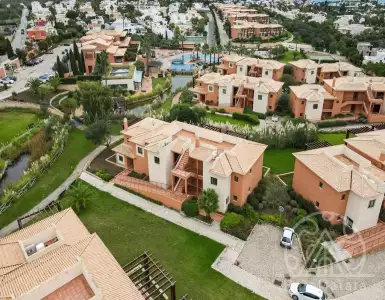


Flats in Porto



Flats in Madeira

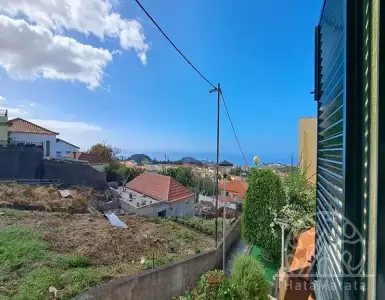
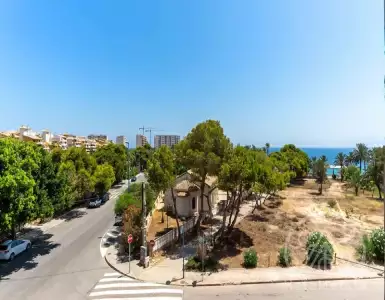
Flats in Fara
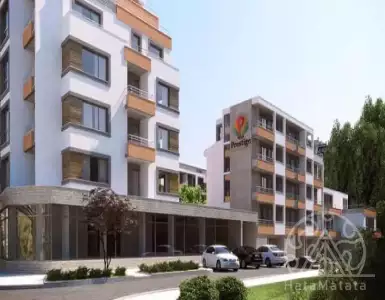
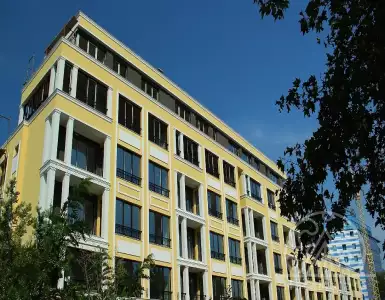
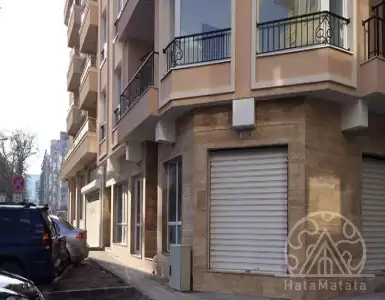
Flats in Lisbon
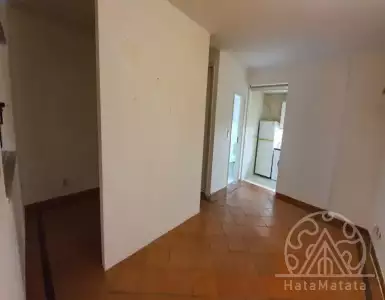
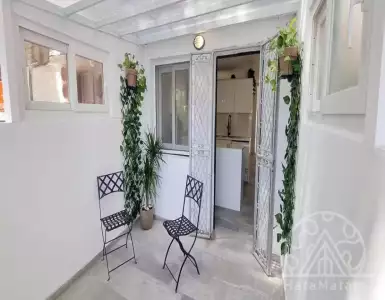
Flats in Algarve
Flat in Portugal
Choosing a property in Portugal for your request
- 🔸 Reliable new buildings and ready-made apartments
- 🔸 Without commissions and intermediaries
- 🔸 Online display and remote transaction
Our managers will help you choose a property
Liliya
International Real Estate Consultant
Need help choosing a property?
Leave a request and our manager will contact you.
Our managers will help you choose a property
Liliya
International Real Estate Consultant
Individual selection flats in Portugal
Save time — for free we will select objects for your budget and goals
🇵🇹 Flats in Portugal: Lisbon and Algarve price ranges, ownership rules and property taxes
Portugal combines Atlantic coastline, historic cities and modern infrastructure into one of Europe’s most accessible and liquid residential markets, making a Flat in Portugal attractive to private buyers and investors alike. Demand is driven by climate, connectivity, strong tourism, and an international lifestyle centered in Lisbon, Porto and the Algarve; those factors translate into predictable rental streams, steady capital appreciation in key micro-locations and a wide choice of property formats from compact city flats to luxury penthouses and resort apartments.
📍 Where to buy Flat in Portugal: geography, climate and infrastructure
Portugal’s coast from Viana do Castelo in the north to Faro in the south creates distinct micro-markets with different climates and demand profiles. Lisbon and the Tagus Estuary offer a temperate Atlantic climate with mild winters and long tourist seasons; Porto and the Douro corridor feature urban density and growing tech clusters; the Algarve (Faro, Albufeira, Vilamoura, Lagos, Quinta do Lago, Vale do Lobo) attracts holiday rentals and second-home buyers with warm summers and high short-term occupancy rates.
Portugal’s transport spine—Lisbon Humberto Delgado Airport, Porto Francisco Sá Carneiro Airport, the A1 and A2 motorways, the high-speed rail axis (Lisbon–Porto) and the ferry and marina infrastructure in Cascais and Vilamoura—shapes where flats are most desirable. Neighborhoods near metro lines (Lisbon’s Red and Green lines, Porto’s Metro do Porto) typically command premiums due to commute convenience.
Urban regeneration projects such as Parque das Nações (Lisbon), the waterfront renewal in Matosinhos (Porto) and the ongoing conversion of industrial districts in Alcântara and Marvila have created sustained demand for flats. Key infrastructure projects—hospitals (Hospital de Santa Maria, Centro Hospitalar do Porto), universities (University of Lisbon, University of Porto) and business parks (Taguspark, Oeiras Valley)—feed rental markets for professionals and students.
💼 Economy and investment climate in Portugal shaping Flat purchases
Portugal’s open-market economy, stable tourism inflows and export-oriented services sector underpin residential demand and liquidity for Flat for sale in Portugal. The growth of remote-working professionals and tech companies in Lisbon and Porto increases long-term rental absorption in central neighborhoods and suburban business corridors.
Tax incentives such as the Non-Habitual Resident regime and a relatively moderate cost base support expatriate relocation; corporate and tourism activity in Lisbon, Porto and the Algarve sustains consistent short-term rental demand and business travel occupancy. Tourist volumes in core municipalities often push seasonal occupancy above 60–80% in prime Algarve and central Lisbon neighborhoods, supporting higher short-term yields.
Macroeconomic factors—GDP growth prospects, employment in services and tourism—impact both rental yield for flat in Portugal and ROI on flat in Portugal; areas with diversified economies (Lisbon, Porto, Braga) show stronger liquidity than single-season holiday towns.
💶 How much Flat costs in Portugal
Pricing varies by city, condition (new build vs resale) and micro-location; typical ranges and unit examples:
- Lisbon central (Chiado, Príncipe Real, Parque das Nações): $5,000–$12,000 per m², average central flat price $400,000–$900,000 for 50–120 m².
- Porto (Baixa, Foz do Douro, Boavista): $2,500–$6,000 per m², typical flat $180,000–$450,000.
- Algarve prime zones (Quinta do Lago, Vale do Lobo, Vilamoura): $3,500–$10,000 per m², holiday apartments $250,000–$1,200,000.
- Secondary cities (Braga, Coimbra, Aveiro): $1,200–$3,000 per m², flats $80,000–$250,000.
Market dynamics: new developments usually trade at 10–30% premium to comparable resale stock; studio/one-bedroom flats (35–60 m²) start near $120,000 in secondary markets and $220,000+ in Lisbon. Investor demand pushes floor-level and waterfront premiums; supply constraints in historic districts maintain pricing resilience.
Property formats and price drivers: - Studios and micro-flats (30–45 m²): strong rental demand, entry prices $120,000–$300,000.
- Two- to three-bedroom family flats (70–130 m²): steady capital growth, $200,000–$900,000 depending on location.
- Luxury penthouses and townhouse conversions: high-end pockets in Chiado, Cascais and Quinta do Lago, $800,000–$5,000,000+.
🚆 Regions and cities in Portugal where Flat is most often purchased
Lisbon metro: Lisbon municipality, Cascais, Oeiras—high demand for city flats, proximity to international schools, embassies and corporate HQs; rental demand from tech professionals and EU relocators is strongest here. Price differences: central Lisbon often costs 2–3x higher per m² than outer suburbs.
Porto and Northern Portugal: Porto city center, Vila Nova de Gaia, Matosinhos and Braga attract buyers seeking lower entry prices and growing rental markets; Porto benefits from student population, universities and an expanding tech/services base. Prices generally 30–50% lower than Lisbon.
Algarve: Faro, Vilamoura, Albufeira, Lagos serve seasonal and high-yield holiday rentals; marina access and golf resorts (Quinta do Lago, Vale do Lobo) command premiums and appeal to high-net-worth buyers. Rental yield for flat in Portugal is often highest here for short-term lets.
Other regions: Coimbra and Aveiro serve student and local employment rentals; the Silver Coast (Figueira da Foz, Nazaré) is a more affordable coastal alternative with rising second-home interest. Infrastructure and transport access, such as proximity to airports and highways, directly correlate with pricing and occupancy.
🏗️ Top developers and projects offering Flat in Portugal
Leading Portuguese construction and development groups active in residential projects include Mota-Engil, Grupo Casais, Teixeira Duarte, Lena Construction Group, and international investors/developers like Vinci and Patrizia that partner on large urban regeneration projects. These firms deliver new-build flats, conversions and mixed-use schemes.
Representative projects and neighborhoods to watch:
- Parque das Nações (Lisbon) — large new-build and conversion stock with developers focused on modern apartments and mixed-use amenities.
- Chiado and Alfama restorations (Lisbon) — boutique conversions by specialist developers, high historical-value premiums.
- Foz do Douro and Boavista (Porto) — contemporary multi-unit projects and renovated period flats.
- Quinta do Lago / Vale do Lobo (Algarve) — resort-style developments and gated communities targeting luxury buyers.
Developer advantages: - Established builders offer warranty and bank-backed completion guarantees.
- Off-plan purchases from major developers often include staged payments and after-sales property management options.
- Institutional investors (asset managers, REIT-like vehicles) support secondary market liquidity in core nodes.
🏦 Mortgage Portugal for foreigners and financing options for Flat in Portugal
Portuguese banks such as Caixa Geral de Depósitos, Millennium bcp, Novo Banco and international banks provide mortgages to non-residents with specific conditions. Typical terms: loan-to-value (LTV) 60–70% for non-resident buyers, up to 80% in some cases for EU citizens or resident applicants; loan terms up to 30 years depending on age and income.
Interest rates vary by profile and product: fixed and variable options are available with typical market spreads producing effective rates commonly in the band 2%–4.5%, subject to credit history and currency. Mortgage Portugal for foreigners commonly requires proof of income, local tax number (NIF), bank statements and a Portuguese property valuation.
Developer financing and installment plans: many developers offer flat in Portugal with installment plan for off-plan purchases — deposit 10–30%, staged payments tied to construction milestones, and sometimes interest-free bridging until completion. Bank pre-approvals and mortgage offers can be combined with developer plans to secure both finance and favorable payment structures.
📝 Legal process to buy flat in Portugal step by step
Purchase starts with a reservation deposit and promissory contract (Contrato de Promessa de Compra e Venda), followed by a notary deed (Escritura Pública) for final transfer; buyers must obtain a Portuguese tax number (NIF) and open a local bank account for transfers and tax payments. Legal due diligence includes verifying property title, absence of charges or liens, and confirming building permits and condominium accounts.
Taxes and fees paid during the Legal process to buy flat in Portugal include transfer tax (IMT), stamp duty and notary/registration fees; IMT rates are calculated on a progressive scale based on purchase price and property type and can materially affect upfront flat purchase costs in Portugal. The notary and land registry complete registration; the process from reservation to registerable deed typically takes 2–4 months for resale and longer for off-plan depending on construction schedules.
Practical steps and documentation:
- Engage a local lawyer to perform title and encumbrance checks.
- Obtain NIF and anti-money-laundering identification.
- Sign promissory contract with agreed deposit and completion terms.
- Finalize mortgage approval (if applicable), pay IMT and stamp duty, and sign the final deed before a notary.
- Register the deed at the Conservatória do Registo Predial.
⚖️ Ownership rights and Property taxes in Portugal for foreigners
Foreign buyers receive full freehold ownership (Propriedade) and are subject to the same property rights and condominium rules as residents; rental activity is allowed under municipal licensing and national rules for short-term rentals (Alojamento Local), which require registration and compliance with safety and tax obligations. Property taxes in Portugal for foreigners include municipal tax (IMI) — commonly 0.3%–0.45% of taxable value in many municipalities — with higher bands possible, and transfer taxes (IMT) and stamp duty on purchase.
Rental income tax and capital gains: non-resident owners typically face a flat tax on rental income or may be taxed under domestic rules; capital gains tax applies on disposal, with rates and exemptions depending on residency and reinvestment. Compliance steps include annual tax filings, declaration of rental income, and payment of IMI and other municipal levies.
Residence-permit rules: buying a Flat in Portugal alone does not automatically grant residency for most buyers; however, there are regulated investment routes where acquiring qualifying property can support a residence permit through flat investment in Portugal or Golden visa through flat investment in Portugal under specific legal frameworks and thresholds, subject to evolving legislation and geographic restrictions; professional legal advice is recommended.
🏡 Why buy Flat in Portugal: living, rental and investment use cases
Living and relocation: Lisbon neighborhoods (Parque das Nações, Avenidas Novas, Estrela) and Porto (Foz do Douro, Boavista) offer high-quality flats near schools, hospitals and business centers suitable for full-time families and digital nomads; typical family flats are 80–130 m² with 2–4 bedrooms.
Seasonal residence and holiday rental: Algarve resort flats in Vilamoura, Quinta do Lago and Albufeira suit buyers seeking short-term rental income and holiday use; marina-front and golf-course properties command premiums and strong high-season occupancy.
Investment and rental: buy-to-let investors target central Lisbon and Porto for long-term rentals to professionals and students, and the Algarve for tourist yields; expected gross rental yield for flats varies by market: Lisbon 3%–5%, Porto 4%–6%, Algarve 4%–8% for short-term lets; ROI on flat in Portugal depends on location and management approach, with renovation conversions often boosting yields by 20–40%.
Premium segment and family estates: Cascais, Estoril and Quinta do Lago serve buyers seeking privacy, high-end amenities and family-oriented communities; flats here are often part of larger complexes with concierge, parking and security.
Portugal’s property market shows resilient demand driven by a mix of tourism, foreign relocation and local affordability relative to many Western European capitals; prime Lisbon and Porto micro-locations continue to outperform national averages while the Algarve keeps delivering high seasonal yields for holiday-oriented stock. For buyers considering an Investment flat in Portugal or to Buy flat as a foreigner in Portugal, the combination of stable legal title, transparent developer delivery from established builders, accessible financing (flat in Portugal with mortgage) and a predictable tourism pipeline creates attractive mid-term prospects for capital preservation and rental income growth, subject to local market selection and compliance with evolving fiscal and residency regulations.
Frequently Asked Questions
Flats in Portugal vary widely: small inland units from about €80,000–€180,000 (≈$85k–$190k), mid-market city flats €150,000–€400,000 (≈$160k–$430k), and prime Lisbon/Algarve flats €400,000–€2,000,000+ (≈$430k–$2.2M). Per-square-meter benchmarks are roughly €1,000–€5,000/m² nationwide, with central Lisbon and premium coastal areas often above €5,000/m².
Portugal offers residence routes like the D7 (passive income), work visas, and entrepreneur visas; there are also investment-based permits with specific rules. Owning a flat can support applications as proof of accommodation or economic ties, and certain investment schemes may accept property under conditions, but purchase alone does not automatically grant residency or citizenship.
When buying a flat in Portugal expect a transfer tax (IMT) which is progressive (commonly 0–~8% depending on price and use), a stamp duty (~0.8% of purchase), and notary/registration and legal fees (commonly 1–2%). New-build purchases may involve VAT instead of IMT in specific cases. Exact costs depend on price, location and buyer status.
Owners in Portugal pay an annual municipal property tax (IMI) — commonly in a range roughly 0.3%–0.8% of the taxable value — plus condominium fees, utilities, and insurance. Rental income is taxable under personal or corporate rules and may attract social contributions; vacant or derelict properties can face higher local charges.
Yes. Portuguese lenders commonly offer mortgages to non-residents, subject to income, credit and NIF. Typical loan-to-value (LTV) is lower for non-residents (often around 50%–70%) versus residents (often 60%–80%). Requirements include proof of income, local bank account, property valuation and standard documentation.
Gross rental yields depend on location and letting model: long-term rentals in Lisbon/Porto often show ~3%–5% gross, while secondary cities or tourist areas and short‑term lets can reach ~4%–8% gross. Net yields fall after taxes, management, maintenance and vacancy. Research local demand and regulation before buying for rental.
Typical steps in Portugal: identify a property, sign a promissory contract with a deposit (often ~10%), complete legal due diligence, secure financing, pay IMT/stamp duty and closing costs, sign the final deed at a notary (escritura) and register the title. Use a qualified lawyer for contracts and checks.
Minor interior works often need only a building notice, but structural changes, façade works, or change of use require municipal permits (licença de obras). Condominium approval is needed for shared elements. Historic or protected buildings have extra restrictions. Always consult local municipal planning rules before starting.
Portugal offers high quality of life: mild climate, good public and private healthcare, international schools, reliable transport in cities, and fast internet—appealing to digital nomads and remote workers. Monthly living costs vary by region (roughly €1,200–€2,500 per person in many areas). Services and infrastructure are strong in urban and coastal zones.
Yes. An energy performance certificate (EPC) is mandatory for marketing a flat for sale or rent in Portugal. The EPC rates buildings A–G and must be issued by a certified technician. An up-to-date certificate is required at listing and transfer; improving energy performance can increase marketability and value.
Properties by Region
- Flats in Lisbon (910)
- Flats in Porto (239)
- Flats in Fara (150)
- Flats in Algarve (123)
- Flats in Setubal (77)
- Flats in Azores (67)
- Flats in Madeira (50)
- Flats in Leiria (20)
- Flats in Braga (9)
Properties by Country
- Real estate in Bulgaria (11408)
- Real estate in Montenegro (5186)
- Real estate in Indonesia (2423)
- Real estate in Spain (2289)
- Real estate in Portugal (1975)
- Real estate in Italy (1910)
- Real estate in Turkey (1699)
- Real estate in Cyprus (1594)
- Real estate in Thailand (1565)
- Real estate in Croatia (1431)
- Real estate in Greece (1082)
- Real estate in USA (1013)
- Real estate in France (1006)
- Real estate in Georgia (519)
- Real estate in Serbia (328)
- Real estate in Slovenia (123)
- Real estate in Egypt (23)
Don't know where to start buying a property in Portugal?
Leave a request and receive free advice on prices, taxes, residence permits and the real estate market. in Portugal.

Maria Guven
Head of Direct Sales Department
+90-507-705-8082