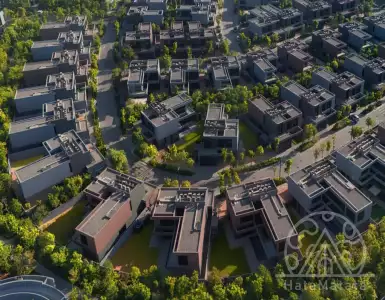
 1 211 472 $
Villa with 5 bedrooms in Sharjah, UAE (United Arab Emirates)
Bedrooms: 5 Bathrooms: 4
Sharjah, UAE (United Arab Emirates)
Explore luxurious properties in UAE. Enjoy tax-free income, high rental yields, and a stable real estate market for savvy investors.
 Lilia Karimova, International Real Estate Market Analyst
Updated:
1 211 472 $
Sharjah, UAE (United Arab Emirates)
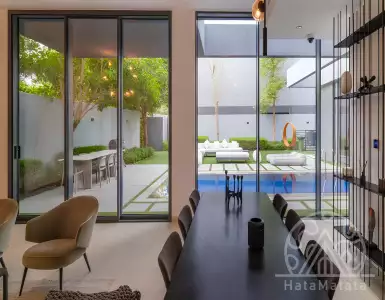 910 000 $
Sharjah, UAE (United Arab Emirates)
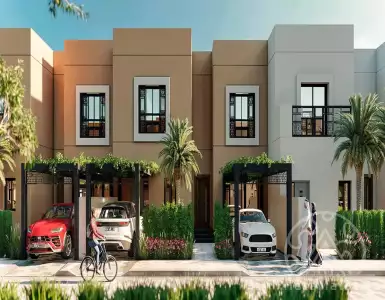 542 596 $
Sharjah, UAE (United Arab Emirates)
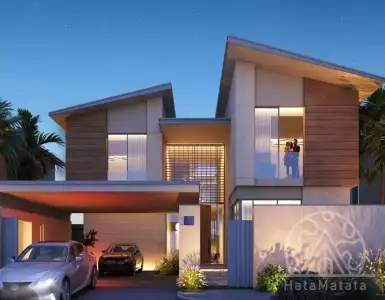 2 392 940 $
Abu Dhabi, UAE (United Arab Emirates)
 1 242 444 $
Abu Dhabi, UAE (United Arab Emirates)
 4 865 646 $
Abu Dhabi, UAE (United Arab Emirates)
Save time — for free we will select objects for your budget and goals
 6 547 826 $
Dubai, UAE (United Arab Emirates)
 3 964 088 $
Dubai, UAE (United Arab Emirates)
 3 574 758 $
Dubai, UAE (United Arab Emirates)
 Legal review:
Deni Gerikhanov, International Real Estate Lawyer
 Financial review:
Evgeniya Skripko, Financial Expert in International Real Estate
Reviewed:
The UAE is one of the world’s most dynamic real estate markets for villa buyers, where coastal lifestyle, modern infrastructure and business hubs combine with investor-friendly regulations to shape demand. Coastal emirates, man-made islands and gated suburban communities create distinct villa types from beachfront mansions on Palm Jumeirah to family villas in Arabian Ranches and waterfront homes on Saadiyat Island. Buyers consider climate, transport connectivity, proximity to international schools and healthcare, and mixed-use masterplans when choosing a location, and those factors determine price, liquidity and rental performance.
The UAE’s geography mixes coastlines on the Arabian Gulf and the Gulf of Oman with desert hinterlands, producing two villa markets: premium waterfront and suburban gated communities. Coastal locations such as Palm Jumeirah, Jumeirah, and Saadiyat attract luxury buyers seeking beach access and marina infrastructure, while inland masterplans like Arabian Ranches, DAMAC Hills and Dubai Hills Estate target families seeking large plots and community amenities. Climate drives design: villas commonly include covered outdoor living, private pools, and energy-efficient glazing to manage summer heat.
Transport and connectivity are decisive for demand: proximity to major highways (Sheikh Zayed Road, Emirates Road), international airports (Dubai International, Abu Dhabi International), metro lines, and upcoming public transit corridors increases resale liquidity. Business and tourist centers—Downtown Dubai, DIFC, Abu Dhabi’s Al Maryah Island, and Yas Island—create strong short- and long-term rental pools for both expatriate professionals and high-net-worth visitors. Infrastructure such as top-tier schools (GEMS, Repton, American Community School), hospitals (Cleveland Clinic Abu Dhabi, Mediclinic, NMC), and retail hubs (Dubai Mall, Yas Mall) directly elevates local villa values.
Demand segmentation follows lifestyle and utility: foreign investors and occupational relocators seek high-amenity districts with proven rental demand; family buyers prioritize schooling and green space; ultra-high-net-worth clients target private islands and golf estates. These practical locational drivers shape which villa types are most sought after and how quickly they rent or resell.
Pricing for a villa in UAE (United Arab Emirates) spans a wide spectrum by city, community and specification, with clear differences between new developments and completed projects. Entry-level suburban villas start from approximately $400,000, while luxury beachfront and signature island properties commonly exceed $3,000,000, and trophy mansions surpass $10,000,000 in prime pockets. Size bands typically run from 200–400 sqm plots for townhouses to 1,000+ sqm for high-end villas.
Market breakdown by region and typical price ranges:
Property formats and market dynamics:
These figures inform both private buyers and investors evaluating a Villa for sale in UAE (United Arab Emirates) against alternative global markets.
Choosing where to buy villa in UAE (United Arab Emirates) depends on purpose: rental income, primary residence, relocation, or prestige investment. Dubai remains the largest volume market with unparalleled tourism and corporate tenancy flows; Palm Jumeirah and Downtown-adjacent villas are top for luxury short-term rentals while Arabian Ranches, Jumeirah Park, and Dubai Hills attract long-term family tenants. Abu Dhabi’s Saadiyat Island and Yas Island favor diplomatic, cultural and entertainment-driven demand, supporting both holiday rentals and corporate leases.
Infrastructure and transport:
Price differentials and foreign popularity:
Market confidence is shaped by developers with track records for delivery, amenity programming and capital appreciation. Key developers and signature projects include:
Buyer considerations:
These names form the supply backbone for anyone seeking an Investment villa in UAE (United Arab Emirates) or a lifestyle purchase.
Financing options influence acquisition scale and returns for buyers planning leverage. Mortgage UAE (United Arab Emirates) for foreigners is widely available from local and regional banks, though terms are more conservative than for nationals. Typical parameters:
Developer and seller finance:
Banks will require proof of income, credit history, and property valuation; non-resident applications often need higher documentation and possibly local guarantors.
Understanding the Legal process to buy villa in UAE (United Arab Emirates) ensures secure transfer and clear title. The typical purchase workflow includes:
Registration, payments and timelines:
Key checkpoints to minimize risk:
The UAE’s tax and ownership regime is deliberately investor-friendly, but buyers must be clear on specific obligations and what ownership confers. Property taxes in UAE (United Arab Emirates) for foreigners are limited: there is typically no annual property tax, but buyers face transactional charges, service fees and selective taxes. Notable fees and rules include:
Residency and citizenship implications:
Buyers should consult immigration and legal advisors to understand whether a specific villa acquisition can support residency or long-term visa options.
Villas in the UAE serve a broad range of purposes and each use-case maps naturally to specific locations and property types. For primary residence and family living, gated communities with schools and parks such as Arabian Ranches, Dubai Hills Estate and Saadiyat Island are preferred for safety, green space and community amenities. For relocation and corporate assignments, proximity to business districts—DIFC, Dubai International Financial Centre, Al Maryah Island—and airport links matter most.
Investment and rental use:
Use-case mapping and financial metrics:
The market outlook remains positive for diversified buyer profiles seeking lifestyle, rental income or capital growth.
Market prospects for villa buyers remain robust as continued infrastructure investments, tourism flows and corporate relocations sustain demand for family and luxury homes. Supply in prime waterfront and established gated communities is constrained, supporting long-term value retention, while suburban masterplans and northern emirate offerings provide scalable entry points and potentially higher rental yields. For investors and owner-occupiers, careful selection by location, developer reputation and financing structure will determine short-term cashflow and long-term appreciation.
Yes. Foreign buyers can own villas in designated freehold areas in the UAE (United Arab Emirates); outside those zones ownership may be leasehold or long-term usufruct. Expect transfer/registration fees of about 2–5% and typical transaction times of 2–8 weeks. Mortgages and full-title deeds are available in most emirates.
Country-wide asking prices for villas in the UAE (United Arab Emirates) typically range around AED 3–6 million on average; prime beachfront or ultra-luxury villas can list from AED 6 million up to AED 50+ million. Average rental yields hover 4–6%. Typical transaction times are 2–12 weeks; transfer fees commonly 2–4%.
Many emirates offer property-based residency if you meet local thresholds; common real estate investor criteria are around AED 2 million for a property-linked investor visa. Visa durations vary (commonly 5 years, sometimes up to 10 in specific programs). Processing takes roughly 2–8 weeks and rules differ by emirate.
Villas in the UAE (United Arab Emirates) typically deliver gross rental yields of about 3–7% depending on emirate and location. Historical capital appreciation varies by cycle, roughly 2–8% annual in active markets. Plan a 3–10 year holding period for reliable ROI; net returns depend on fees, vacancy and financing.
Yes. Non-resident buyers can access mortgages in the UAE (United Arab Emirates) but LTVs are usually lower (around 40–50% LTV); residents may obtain 70–80% LTV depending on profile. Approval typically takes 2–6 weeks, requires income proof, bank statements and a down payment; tenors can extend up to ~25 years.
The UAE (United Arab Emirates) imposes no personal income tax or routine capital gains tax on private property sales. Expect transfer/registration fees of about 2–5% of the purchase price, VAT 5% on certain new developments or services, plus annual service/community charges and possible agency or mortgage fees at transfer time.
Yes—UAE (United Arab Emirates) advantages include a currency peg to the US dollar, strong sovereign reserves and tax-friendly rules, which support capital preservation. For lower volatility aim to hold 5+ years, diversify across emirates, and factor in maintenance/fees; property can act as an inflation hedge when held medium-to-long term.
Timeline in the UAE (United Arab Emirates): cash purchases often close in 2–6 weeks; mortgage-backed deals usually take 6–12 weeks including bank approval and valuation. Due diligence and contract exchange add 1–3 weeks. Final registration at the land department completes the transfer on the agreed completion date.
Key UAE (United Arab Emirates) factors: emirate (Dubai/Abu Dhabi typically offer higher liquidity), freehold vs leasehold, proximity to airports, schools and business hubs, infrastructure projects, and community service charges. These impact rental demand, resale speed and expected yields—assess local vacancy and resale timelines (3–7 years typical).
Yes. You can rent villas in the UAE (United Arab Emirates); long-term management fees run about 8–12% of annual rent. Short-term lets can yield more but may require permits or licensing in some emirates. Tenancy regulations protect tenants; eviction, rent-increase and registration rules vary by emirate; expect to register contracts with local authorities.
The most affordable listing in UAE (United Arab Emirates) starts from 23 000 $ right now, out of 549 properties in the catalog. Sort the catalog by price to see the cheapest first and compare them with nearby towns in the region. HataMatata catalog data as of November 13, 2026.
Yes: 61 of 549 properties in UAE (United Arab Emirates) (11%) have a pool, private or shared in the complex. The most affordable of them starts from 421 000 $. HataMatata catalog data as of November 13, 2026.
Yes: 2 of 549 properties in UAE (United Arab Emirates) (0%) have a sea view or are within 1 km of the beach. The most affordable of them starts from 702 000 $. HataMatata catalog data as of November 13, 2026.
Leave a request and receive free advice on prices, taxes, residence permits and the real estate market in UAE (United Arab Emirates).
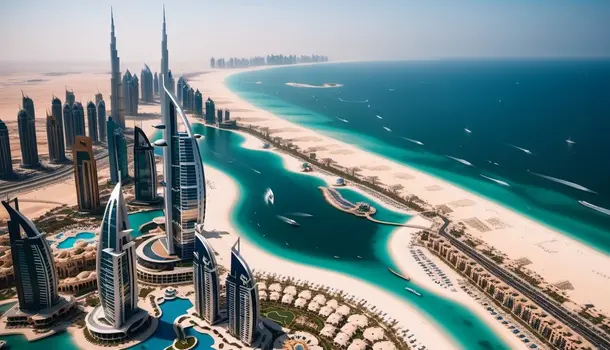 Dubai
 Abu Dhabi
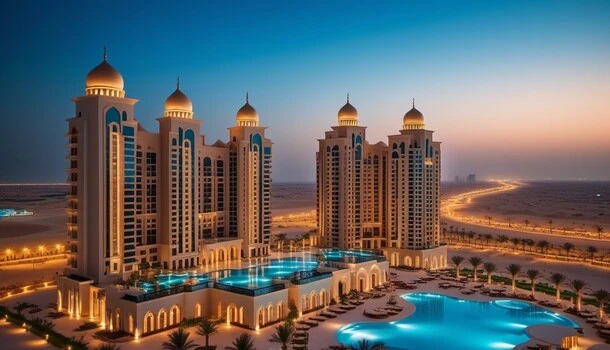 Sharjah
 Ras al-Khaimah