 10 279 503 $
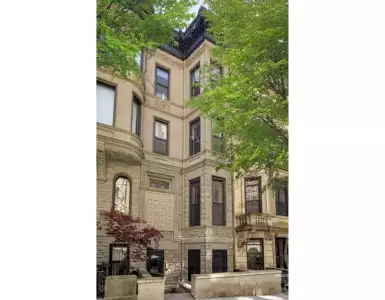
Townhouse with 7 bedrooms in New York, USA
Bedrooms: 7 Bathrooms: 6
New York, USA
Explore exclusive properties in the USA - ideal for living or investing. Benefit from diverse landscapes and vibrant cities for a lucrative real estate opportunity.
 Damir Tsoi, Editor and Property Selection Specialist
Updated:
10 279 503 $
New York, USA
 5 191 853 $
New York, USA
 8 797 671 $
New York, USA
 6 919 797 $
Coral Gables, USA
 1 800 160 $
Scottsdale, USA
 City View view 389 900 $
Ormond Beach, USA
Save time — for free we will select objects for your budget and goals
 Legal review:
Deni Gerikhanov, International Real Estate Lawyer
 Financial review:
Evgeniya Skripko, Financial Expert in International Real Estate
Reviewed:
The US townhouse market blends urban density and suburban convenience, offering compact multi-level homes with private entrances, often in transit-friendly neighborhoods and gated communities. Demand is driven by proximity to business hubs, schools, and public transit, and the market supplies a range from renovated brownstones in Brooklyn to new townhome clusters in suburbs of Dallas and Atlanta. Investors and owner-occupiers value townhouses for lower maintenance than detached houses, higher per-unit rental yields in urban cores, and strong resale liquidity in cities with housing shortages.
Townhouses concentrate in dense coastal and Sun Belt metro areas where land is scarce and walkable neighborhoods attract residents. Northeast cities like New York, Boston, and Philadelphia feature historic brownstones and high demand near universities and finance centers, while Sun Belt metros such as Miami, Dallas, Phoenix, and Atlanta show fast new-townhome construction near highways and commuter rail. Climate influences design choices, with basements common in the Northeast, slab construction in the Sun Belt, and hurricane-resistant builds along the Gulf Coast.
Transportation nodes and airports drive premium pricing for townhouses within a 20–30 minute commute of CBDs and major airports like JFK, LAX, ATL, and DFW. Proximity to subway lines and commuter rail in cities such as Washington DC (Metro) and Boston (MBTA) elevates rental demand and resale value.
Infrastructure amenities — schools (public and charter), hospitals like Massachusetts General Hospital and Mayo Clinic satellite campuses, and tech campuses such as Silicon Valley nodes — create pockets of sustained townhouse demand.
The US maintains the world’s largest nominal GDP with diversified sectors — finance, tech, health care, and logistics — which create steady housing demand in core metros and secondary cities. Business relocations and corporate expansions raise local housing needs; for example, tech growth in Austin and life-science expansion in Boston lift townhouse absorption rates. Tourism flows to cities such as New York City and Orlando support short-term rental markets in certain jurisdictions.
Tax and regulatory frameworks vary by state and city, affecting net yields and liquidity; property tax rates can exceed 2% of assessed value in some counties while others remain below 1%, influencing location decisions for investors seeking stable returns. Foreign direct investment trends add capital to luxury townhouse segments in gateway cities and build-to-rent communities in Sun Belt metros, improving liquidity for well-located assets.
Macroeconomic cycles, mortgage rate shifts, and employment growth directly influence demand and pricing; high-employment metros typically show lower vacancy and stronger price appreciation, supporting Investment townhouse in USA strategies.
Prices for Townhouse in USA vary widely by city, neighborhood, and new construction versus resale. Entry-level townhouses in secondary markets start around $200,000–$350,000, suburban new townhome communities typically range $350,000–$650,000, while premium urban townhouses in Manhattan, Boston Back Bay, or Georgetown often exceed $2 million.
Market breakdown by city with typical price ranges and sizes:
Selecting a region depends on intended use and return profile. Buyers seeking strong capital appreciation and luxury demand prioritize New York, Boston, and Washington DC, where scarcity and historic neighborhoods sustain prices. Investors seeking yield and scale construction favor Sun Belt metros — Austin, Phoenix, Dallas, Atlanta, Orlando — with lower entry prices and faster rent growth.
Transit-oriented townhouses near commuter rail and subway stations see higher occupancy and rental premiums; look for properties within 1 mile of transit in Philadelphia (SEPTA), Chicago (CTA), and San Francisco (BART). Rental markets near major universities such as Columbia, Harvard, and University of Pennsylvania create steady student and academic housing demand.
Foreign buyers often concentrate in gateway cities for prestige assets and liquidity, whereas domestic investors target fast-growing suburbs for yield and scale. Price differentials reflect this: gateway city premiums can be 30–70% above comparable Sun Belt assets.
Major national builders and regional developers drive townhouse supply through branded townhome lines and masterplanned communities. Industry leaders include Toll Brothers (townhome communities and “Carriage Homes” collections), Lennar (Lennar Townhomes, “Townhomes by Lennar” product line), D.R. Horton (townhome subdivisions), PulteGroup (townhome communities within Pulte/Del Webb portfolios), and KB Home (attached townhome options in suburban masterplans). Institutional developers such as Greystar and Related Companies deliver build-to-rent townhouses and luxury urban townhome projects in gateway markets.
Representative projects and neighborhood examples where these developers or concepts are active: Battery Park City and Brooklyn Brownstones in New York, South End townhouses in Boston, Georgetown row houses in Washington DC, The Wharf and Capitol Riverfront townhome blocks in DC, and masterplan townhome tracts in The Woodlands (near Houston) and Avondale/South Fulton (Atlanta suburbs).
Project traits to evaluate include HOA rules, parking allocation, energy efficiency certifications (Energy Star), and developer warranty coverage, which affect operating costs and resale.
Foreign buyers can obtain financing though terms are typically more conservative than for citizens. Mortgage USA for foreigners usually requires 20–30% down payment, sometimes up to 40% depending on borrower profile and lender. Interest rates for non-resident borrowers tend to be 0.25–1.0 percentage points higher than prime conforming rates, and loan terms commonly are 15–30 years with fixed or adjustable options.
Major banks offering programs to international buyers include Wells Fargo, Bank of America, Chase, Citibank, and international banks such as HSBC; private banks and mortgage brokers also arrange portfolio loans. townhouse in USA with mortgage is widely available but approval requires proof of income, credit history (translated and verified), passport, ITIN or SSN if available, and often US-based bank accounts.
Developer installment plans are offered on many new-construction townhomes, especially in masterplanned communities, with staged deposits, interest-only bridge financing, or temporary rent-back options. townhouse in USA with installment plan programs can reduce immediate cash outlay but typically carry stricter timelines and final mortgage qualification at closing.
The Legal process to buy townhouse in USA follows a structured path: offer, contract (purchase & sale), escrow opening, inspections, title search, mortgage underwriting, final closing and recording. Buyers pay earnest money, complete inspections (structural, pest, HVAC), and use escrow agents/title companies to manage funds and clear liens. Title insurance (owner’s and lender’s) is standard to protect against undisclosed encumbrances.
Typical timeline from offer to closing on resale townhouses ranges from 30 to 60 days, while new construction can take several months depending on build schedules and developer occupancy. Closing costs commonly add 2–5% of purchase price for buyers, covering title fees, recording fees, lender fees, and transfer taxes in some jurisdictions.
Foreign buyers should secure an experienced real estate attorney and a licensed local real estate agent, complete a source-of-funds verification, and coordinate tax-identification setup; escrow agents and title companies play the notary/settlement role for closings.
Owning a townhouse in the US does not automatically grant residency or citizenship; Residence permit through townhouse investment in USA and Golden visa through townhouse investment in USA are not available as direct pathways. Investors may pursue other visa routes such as E-2 or EB-5 if they meet specific business investment thresholds, but property purchase alone is not qualifying.
Tax obligations for foreign owners include Property taxes in USA for foreigners, which are levied by local governments and paid annually or semi-annually; foreign sellers may be subject to FIRPTA withholding on disposition proceeds. Rental income earned by non-resident owners is subject to federal income tax and often state tax; non-resident owners can elect net-basis taxation to deduct expenses.
HOA regulations, local short-term rental ordinances, and licensing (for short-term rentals in cities like Miami Beach or New Orleans) can limit rental operations. Complying with reporting requirements and filing US tax returns for rental income is mandatory for foreign owners.
Townhouses serve diverse buyer goals: primary residences, relocation, seasonal homes, buy-to-let investment, family occupation, and premium trophy assets. For families seeking schools and space, suburban townhomes near Naperville (Chicago area), Bellevue (Seattle area), or Scottsdale (Phoenix area) combine yard space with community amenities.
Seasonal and second-home buyers target coastal townhouses in Miami, Fort Lauderdale, and the Outer Banks, while urban professionals and investors target rental demand near universities and tech campuses in Boston, Cambridge, and Palo Alto. Buy-to-let investors often choose Sun Belt suburbs and college towns for higher Rental yield for townhouse in USA and lower entry prices.
Premium townhouse purchases in Manhattan brownstone neighborhoods, Back Bay, and Capitol Hill suit buyers prioritizing prestige and long-term capital ROI on townhouse in USA, whereas build-to-rent townhomes in growth metros are optimized for steady cash flow.
The US townhouse market continues to balance scarcity in historic urban cores with rapid suburban townhome growth in expanding metros, offering a range of entry points for private buyers and institutional investors. Rising demand for walkable, transit-friendly housing and the scale potential of build-to-rent townhome product lines support both capital appreciation and cash-flow strategies, while regulatory and tax differences across states will keep location selection central to performance of any Townhouse for sale in USA, especially for buyers considering to Buy townhouse as a foreigner in USA or evaluating townhouse purchase costs in USA.
Townhouse prices in the USA vary widely by market. Typical price bands: entry-level $150,000–$350,000, suburban/commuter $300,000–$700,000, high-demand urban/coastal $500,000–$1,500,000+. Expect premiums in major metros and discounts in lower-cost regions; financing, taxes and HOA fees add to total ownership cost (USD).
Foreigners can pursue family-based or employment-based immigrant visas, nonimmigrant work visas (H, L), student visas (F), treaty investor E-2 (for qualifying nationals, requires active business) and immigrant investor EB-5 (requires substantial qualified investment and job creation). Owning a townhouse in the USA generally does not by itself grant residency or citizenship.
Quality of life in the USA varies by city and state: healthcare is high-quality but costly, schools range from underperforming to top-ranked, transport can be car-dependent outside metros, and infrastructure varies. Monthly living costs differ greatly; utilities $150–300/month typical. Many areas offer fast broadband (25–200+ Mbps), making the USA generally suitable for remote workers and digital nomads in well-connected cities.
Owners pay local property tax (commonly ~0.2%–2.5% of assessed value annually), state and federal income tax on rental income, and capital gains tax when selling (long-term federal rates up to ~20% plus possible state tax; short-term taxed as ordinary income). Other possible levies: local assessments, transfer taxes, and special district charges (USD).
Yes. Many US lenders offer mortgages to non-residents with larger down payments—commonly 20%–50% down—and proof of income/assets. Loan-to-value and interest rates may be less favorable than for residents. Expect additional documentation (tax ID, passport) and potential higher closing costs; terms vary by lender and state (USD).
Townhouse HOAs in the USA commonly set monthly fees ($100–800+/month), maintenance responsibilities, architectural rules, pet and parking policies, and rental restrictions. HOAs maintain reserves and can levy special assessments. Review governing documents and budgets before buying—HOA rules can materially affect cost, resale and daily living (USD where fees apply).
Common pre-purchase checks in the USA: general home inspection ($300–600), pest/termite ($75–200), roof inspection, HVAC and electrical, radon test ($100–200) and sewer/video when applicable. For townhouses, confirm shared-wall, foundation and common-area conditions and review HOA maintenance records. Inspections reduce risk and inform repair negotiations (USD).
Buyer closing costs in the USA typically run about 2%–5% of purchase price and can include lender fees, title insurance, escrow/closing agent fees, recording and transfer fees. Sellers often pay real estate commissions and some transfer taxes. Costs vary by state and transaction structure—budget accordingly (USD).
Short-term rentals are possible but regulated. Many US cities require permits, collect occupancy taxes (commonly 5%–15%), and some HOAs or zoning rules prohibit short-term leasing. Check local ordinances, HOA covenants and state tax rules before listing; failure to comply can lead to fines or bans. Rental income is taxable as ordinary income (USD).
Insurance: homeowners or condo policies ($600–1,800+/yr) plus possible flood or wind policies; master HOA policies may affect owner coverage needs. Resale factors in the USA include HOA financial health, school district ratings, property tax rates, local job market, and nearby amenities. Good maintenance and low HOA delinquencies support stronger resale values (USD).
The most affordable listing in USA starts from 389 000 $ right now, out of 37 properties in the catalog. Sort the catalog by price to see the cheapest first and compare them with nearby towns in the region. HataMatata catalog data as of November 22, 2026.
Leave a request and receive free advice on prices, taxes, residence permits and the real estate market in USA.
 New York
 Florida
 California