


Airbnb boom reshaped Cyprus property — where investors are earning the best yields

Short-term rentals have rewritten the rules for real estate Cyprus
The short-term rental boom is no longer a side-market; platforms such as Airbnb have reshaped the real estate Cyprus market within a few years. What began as a way for homeowners to top up income has evolved into a structured investment model that affects pricing, product design and sales strategies across the island. For buyers and investors we cover here what that change means in practical terms — where demand is strongest, which property types perform, how professional operators are changing the sector and which risks to watch.
When you read market reports that point to rising tourist numbers and new traveller preferences, remember this is not abstract: it alters rentability, exit strategies and the value of newly built stock. In our analysis we put particular emphasis on city-level distinctions: Limassol leads year-round demand, Paphos retains strong tourist appeal, Larnaca and Nicosia offer stable alternatives, and Ayia Napa/Protaras specialise in villa rentals.
How short-term rentals changed Cyprus property markets
Short-term letting used to be an occasional source of income. Now it affects how developers design blocks, how agents market properties and how investors value assets.
- Professional operators now manage portfolios of multiple units, turning single listings into businesses rather than one-off lettings.
- Developers are responding with purpose-built projects designed for short-term letting, often sold with pre-arranged management agreements and income guarantees.
- Traveller behaviour — demand for flexibility, more private space and integrated local experiences — has increased appetite for holiday apartments and villas.
This shift matters to investors because it changes two core assumptions: occupancy volatility and liquidity. A well-located apartment in a city with year-round demand can trade more like a rental asset than a second home. Conversely, a villa that earns strong summer income may be dead weight in off-season months. Any serious investment decision must start by separating these two cash-flow profiles.
City-by-city: where demand is concentrated and why
The differences between urban and coastal demand in Cyprus are stark. Below we summarise the performance drivers for each major market based on current trends.
Limassol — year-round, higher-end returns
Limassol is the most consistent performer for short-term rentals. The city benefits from a blend of leisure travellers, international professionals and corporate visitors. Key points:
- Limassol leads year-round short-term rentals demand thanks to its cosmopolitan environment and business activity.
- Product mix leans toward luxury developments and modern apartment towers, many near the marina and business districts.
- Occupancy is supported by both leisure and corporate travel, producing consistently higher occupancy levels throughout the year compared with more seasonal markets.
What this means for investors: you can expect more predictable cash flow in Limassol if you buy into the right micro-locations (marina, business district, major new developments). Price per square metre will be higher than in seasonal resort towns, but the income profile tends to justify that premium when managed professionally.
Paphos — seasonal, strong tourist flows from the UK and central Europe
Paphos remains attractive for buyers who want good tourist demand without the highest acquisition prices.
- Paphos continues to attract robust visitor numbers, particularly from the United Kingdom and central Europe.
- Demand is more seasonal; summer months drive most revenue.
- Competitive purchase prices enable solid percentage returns for well-located apartments close to coastal attractions.
Investor take: If you want higher yield on capital outlay, Paphos can provide it. But accept that winter months are quieter and that operational management must account for peaks and troughs.
Larnaca — gaining momentum through regeneration and airport proximity
Larnaca is rising up investor watchlists for two reasons stated in market reports: ongoing seafront regeneration and proximity to the island’s main airport. These factors make it well placed for short stays and quick-turn bookings.
- The seafront work is improving public spaces and hospitality offerings.
- Airport proximity attracts transit and short-stay travellers seeking convenience.
For investors this creates an interesting position: buy-in prices are often below Limassol, but growth drivers are present. The right apartment close to regenerated areas or the seafront can convert into a reliable short-term rental asset.
Nicosia — steady, business-driven demand
Nicosia’s short-term rental market is not a holiday hot spot. It is a business and academic centre with steady if more moderate returns.
- Demand is driven by business travellers, academics and conference visitors.
- Revenue is more stable and less seasonal compared with coastal resorts.
Investor takeaway: Nicosia suits buyers seeking stability rather than high seasonal spikes. It can complement a mixed portfolio if you want to hedge seasonality from resort properties.
Ayia Napa & Protaras (Famagusta) — villa market focused on families
The Famagusta region is distinct. Here the market is dominated by detached villas with private pools.
- Ayia Napa and Protaras focus on villa short-term rentals, primarily for families and groups.
- These properties produce strong summer revenues but limited winter demand.
If you prefer a model where income spikes in season and operating margins are high during peak months, a villa in this area can be lucrative.






The new collaborative model: developers, investors and operators
A critical trend is collaboration. The market is moving away from isolated buy-and-let to coordinated models where developers, investors and professional managers work together.
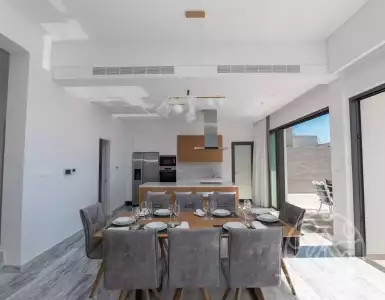
- Developers are creating assets explicitly for short-term letting, with layout and finish optimised for guest turnover and cleaning.
- Investors increasingly buy into projects with pre-arranged management agreements or even guaranteed income schemes.
- Professional operators handle pricing, distribution across booking platforms, guest relations and maintenance.
Why that matters: management expertise can make or break a short-term rental investment. Distribution across multiple platforms, dynamic pricing and a professional approach to guest experience lift occupancy and effective yield. We have seen instances where identical units differ in net income by a significant margin depending on the operator.
What investors should insist on before buying:
- Transparent management fee structures and examples of net yields under current operating conditions.
- Clear contract terms around occupancy targets and income guarantees, if offered.
- Escrow or audit rights to verify bookings and revenue figures.
Practical due diligence for buyers and investors
Short-term rentals require a different due diligence checklist than long-term buy-to-let. Based on market practice, here are the items we advise you to prioritise.
- Location micro-analysis: proximity to beaches, marinas, business districts or regeneration projects determines demand profile.
- Product fit: does the unit cater to your target guest type (families, business travellers, couples)?
- Operating costs: management fees, cleaning, utilities, platform commissions and local taxes all affect net yield.
- Seasonality plan: model income using conservative off-season occupancy and higher summer rates.
- Regulatory environment: check local short-term rental rules and impending regulation that might affect permit validity or operational constraints.
- Exit strategy: verify resale prospects in both the holiday and long-term rental markets.
We recommend model scenarios: best-case, base-case and worst-case yearly P&L. A realistic base-case should assume lower-than-peak occupancy, because many investors overestimate summer months and underestimate winter vacancies.
Risks and regulatory considerations
The growth of short-term rentals is beneficial for many, but it creates policy challenges. Regulators across Europe are tightening conditions and Cyprus is likely to follow that route to maintain quality standards and manage the impact on local housing.
Risks to consider:
- Regulation tightening could raise compliance costs or limit nights available for short-term letting.
- Oversupply in specific micro-markets could depress rates and occupancy.
- Operational risk from poor management, leading to reputational damage and lower bookings.
- Concentration risk when portfolios are clustered in a single resort or building.
We advise investors to maintain operational flexibility: contracts that allow switching between short-term and longer-term rental models, and to partner with reputable managers who can adapt to regulatory change.
How to build a resilient short-term rental portfolio in Cyprus
If you want to use short-term rentals as a primary investment strategy, consider a balanced approach.
- Mix city assets (Limassol, Nicosia) with seasonal coastal properties (Paphos, Ayia Napa).
- Prioritise units with professional management and transparent reporting.
- Focus on quality and guest experience: good photos, quick responses, professional cleaning and maintenance translate into higher platform visibility and repeat bookings.
- Keep contingency cash for off-season periods and unexpected repairs.
We prefer portfolios that combine at least one year-round performer with a seasonal asset. That combination smooths cash flow and helps manage operating costs.
What returns can investors expect? (qualitative guidance)
Reports show the sector’s expansion and experience from market participants points to attractive yields for well-managed assets in key cities. Exact percentages vary by location, property type and management model. Two practical rules:
- Urban units in Limassol and similar markets typically trade at higher acquisition costs but deliver steadier occupancy.
- Coastal apartments and villas in Paphos, Ayia Napa and Protaras can return higher seasonal income but require disciplined off-season planning.
Because return metrics vary, focus less on headline nightly rate and more on realised net income after fees, taxes and operating expenses.
Where we see opportunity — and where to be cautious
Opportunities:
- Limassol for year-round cash flow supported by business and leisure travel.
- Paphos for investors seeking value and seasonal yield from UK and central European tourism.
- Larnaca for growth plays tied to seafront regeneration and airport-driven demand.
- Professional partnerships with developers and operators offering proven track records.
Cautions:
- Sole reliance on summer-only villas without a reserve fund.
- Buying into projects without verified management performance data.
- Over-pay for apartments on presale based on optimistic occupancy projections.
Frequently Asked Questions
Can short-term rentals replace traditional buy-to-let in Cyprus?
Short-term rentals can replace buy-to-let for many investors, but they require active management and exposure to seasonality. For year-round replacement, consider markets like Limassol where business travel and leisure converge.
Is regulation likely to affect short-term rental returns?
Yes. The sector is moving toward higher regulation and quality standards. That could increase compliance costs and operational overhead, but it may also raise barriers to entry for poorly managed listings, which can help professional operators.
Which city is best for a first-time short-term rental investor?
Limassol is sensible for investors seeking consistency; Paphos offers lower purchase prices and seasonal upside. Your choice should reflect risk tolerance, cash reserves and whether you plan to outsource management.
Should I buy a villa or an apartment for short-term letting?
Buy a villa if you target families and summer holiday income and can handle higher maintenance. Buy an apartment for year-round demand, easier turnover and typically lower maintenance costs.
Final assessment and practical takeaway
The short-term rental sector has become an engine of demand across Cyprus property markets, with Limassol as the primary year-round stronghold and Paphos, Larnaca, Nicosia and Ayia Napa offering differentiated opportunities. My practical advice: prioritise location, insist on transparent management agreements, and model cash flow across seasons before committing capital. Investors who secure professional operators and structure purchases with contingency reserves are better positioned to convert tourism demand into reliable net income.
Tags
We will find property in Cyprus for you
- 🔸 Reliable new buildings and ready-made apartments
- 🔸 Without commissions and intermediaries
- 🔸 Online display and remote transaction

International Real Estate Consultant

Subscribe to the newsletter from Hatamatata.com!
Subscribe to the newsletter from Hatamatata.com!
Popular Posts

We will find property in Cyprus for you
- 🔸 Reliable new buildings and ready-made apartments
- 🔸 Without commissions and intermediaries
- 🔸 Online display and remote transaction
International Real Estate Consultant

Subscribe to the newsletter from Hatamatata.com!
Subscribe to the newsletter from Hatamatata.com!
I agree to the processing of personal data and confidentiality rules of Hatamatata

Need advice on your situation?
Get a free consultation on purchasing real estate overseas. We’ll discuss your goals, suggest the best strategies and countries, and explain how to complete the purchase step by step. You’ll get clear answers to all your questions about buying, investing, and relocating abroad.



Irina Nikolaeva
Sales Director, HataMatata