


Bangkok’s Empty Cities: 730,000 Units and What It Means for Property Thailand Buyers

Bangkok’s skyline keeps growing while its homes sit dark
Bangkok’s neon streets and rising towers give the impression of a city still in demand, but the numbers tell a different story for property Thailand buyers and investors. At the end of last year there were an estimated 1.64 million empty housing units across Thailand, with 730,000 of those in Bangkok. That surplus is equivalent to about THB 3.45 trillion (USD 109 billion) in idle capital — a scale of waste that forces anyone interested in real estate investment to pause and reassess.
In our analysis, this is not a short-term blip. The glut in Bangkok is concentrated in a specific product type: mid-market condominiums built during the boom years of the late 2010s, especially along new transit corridors on the city’s outskirts. These developments were aimed at investors and price-sensitive buyers, but demand has shifted since they were conceived. The mismatch between what was built and what people want now is the central problem.
How the oversupply emerged: policy, pandemic and market timing
The excess supply in Bangkok did not appear at random. Several concrete events and choices combined to push completions past the market’s capacity to absorb them.
- 2019 lending rules: In April 2019 the Bank of Thailand tightened loan-to-value rules, increasing down-payment requirements for second and third properties. That measure was intended to curb speculation, and it did. It also removed a major buyer segment — speculative investors — from the condominium market.
- Pandemic disruption: Within a year, Thailand’s borders shut. Foreign buyers were effectively excluded for two years, and projects planned for 2019–2020 that were delayed only completed in 2023–2024, increasing supply at a time of weak demand.
- Developers pushed on: With land paid for and financing in place, many developers proceeded with construction rather than halt projects, which kept the delivery pipeline active even after market conditions changed.
- High household debt: Household debt in Thailand rose to roughly 90% of GDP, limiting local buyers’ ability to take on new mortgages and reducing mortgage affordability.
Put together, these forces created a scenario where completions outpaced absorption for several years. Data from the Thai Real Estate Research and Valuation Centre shows the national count of empty units ended last year at 1.64 million, concentrated in Bangkok and other once-hot corridors.
Who loses and who stands to benefit
This oversupply creates winners and losers in the market. We need to be precise about both.
Losers
- Developers: Many firms face slower sales velocity, prolonged marketing campaigns and pressure on margins as they offer discounts or incentives.
- Small investors who bought off-plan: Those who relied on quick capital gains or rental income may face illiquidity and carrying costs.
- Local first-time buyers: Tight bank underwriting and high household debt make mortgages harder to obtain for younger buyers.
Possible beneficiaries
- Price-sensitive buyers: Oversupply gives negotiating power to buyers able to secure better prices, incentives or rental guarantees.
- Long-term investors who can wait out the cycle: If income growth resumes and credit conditions ease, buying into discounted stock could pay off over a longer horizon.
But the situation is complex. For foreign investors, another challenge has emerged: banking friction. Since September, several Thai banks have tightened account opening rules and in some cases frozen accounts as part of anti-financial-crime measures. Bangkok Bank, among others, now asks for long-term visas, proof of marriage to Thai nationals or property ownership to open new deposit accounts. Expatriate forums report accounts being locked without prior notice, undermining confidence. We see this as more than a transactional headache — it affects trust and the ease of doing cross-border property transactions.
Product mismatch: why the existing supply is unpopular
A recurring quote from local industry figures captures the problem: the existing condominiums are becoming outdated fast. Marciano Birjmohun, vice chairman of the Singapore-Thai Chamber of Commerce, puts it bluntly: "Whatever stock there is in the market, it’s getting outdated very quickly. It doesn’t match today’s consumer anymore." That is a market failure of product-market fit.
Key aspects of the mismatch:
- Amenities and unit design: Many mid-market units have older amenity packages and layouts that don’t meet the lifestyle and work-from-home needs of millennial buyers.
- Location vs. desirability: Projects sited along new transit lines on the urban fringe were built to capture future demand that has not matured as predicted.
- Target buyer shift: The investor base is getting younger, while developers built for an older investor profile and for foreign buyers who were shut out during the pandemic.
In short, the units are there, but the people who want them either cannot afford them, are not the right demographic, or were not in the market when the product launched.
The regional ripple: Phuket, Chiang Mai and potential contagion
Bangkok’s problem is not confined to the capital. Developers and analysts are watching other markets for similar signs.
Phuket
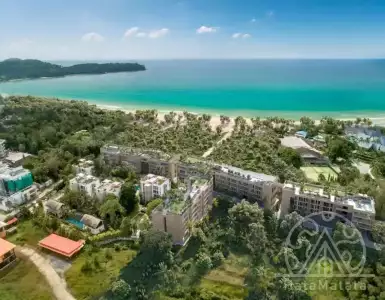
Phuket has been a magnet for domestic and international buyers since tourism reopened. Developers such as Sansiri plan to launch about 20 new projects in the province over the next three years, targeting THB 24 billion in sales by 2028. Colliers warns that around 10,000 new flats could enter the Phuket market this year alone, and unsold inventory was 4,982 units across 16 projects at the end of Q4 last year. The risk is clear: if supply growth outpaces demand again, the island could replicate Bangkok’s oversupply problem in a few years.
Chiang Mai
Chiang Mai is a different case. Developers report stronger sales to certain foreign buyers, notably ethnic Burmese and wealthy Chinese investors. Birjmohun says the city is "doing fantastically now" because of lifestyle appeal and affordability relative to Bangkok.








What this means regionally
- The cycle is not uniform across Thailand. Buyers and investors need to evaluate each local market on its own fundamentals.
- Heat in one market can move capital to another, but unchecked new supply can quickly swallow that migration of demand.
Practical advice for buyers and investors: what to do next
We are often asked how buyers and investors should react to these figures. Our advice is practical rather than sensational.
For residential buyers in Thailand
- Prioritise affordability and mortgage pre-approval. With household debt high, banks are cautious. Secure lending pre-approval before committing.
- Inspect units for quality and amenity relevance. Don’t buy purely on price if the unit’s layout and facilities won’t meet mid-term rental or resale demand.
- Consider resale stock and price discovery. Oversupply increases negotiating power; seek transparent comparables and historical sales velocity.
For buy-to-let investors
- Stress-test rental assumptions. Confirm current rental yields in the micro-market rather than relying on developer projections.
- Factor in vacancy risk. Expect longer vacancy periods for fringe mid-market condos compared with central or specialist products.
- Consider alternative assets. Short-term rentals, serviced apartments and assets in tourism hubs like Chiang Mai can outperform in certain subsegments, but they also carry seasonal risk.
For foreign buyers
- Verify banking and payment pathways. Changes to account opening mean cross-border payment plans should be tested in advance.
- Be aware of title restrictions. Condominium freehold sales are the standard path for foreigners, but ensure the developer’s foreign quota and ownership documentation are clear.
For investors evaluating developers
- Check balance sheets and pre-sale ratios. Developers with heavy unsold inventory or thin margins are likelier to extend payment schemes or discounts that can erode long-term returns.
- Watch project pipeline timing. Completions scheduled in the next 12–24 months will add to supply and affect pricing in the short term.
Risks to watch and exit signals
Every market downturn has risk factors that can deepen pain. In Bangkok we are watching these variables closely:
- Income stagnation: Salaries in Thailand rose by 4.5% in 2025, according to Deloitte, below the historical average. Slow wage growth limits capacity to service mortgages.
- Tighter credit: Banks have tightened underwriting; any further regulatory constraints would lower demand again.
- Continued construction: If developers keep delivering speculative projects, absorption will lag and prices will correct.
- Banking friction for foreigners: Account freezes and stricter rules reduce the pool of international buyers.
Exit signals for investors could include a sustained decline in the unsold inventory ratio, an uptick in mortgage approvals for first-time buyers, or a meaningful recovery in household incomes. Until then, expect price pressure and lengthening sale cycles.
Policy options and realistic outcomes
Analysts argue that a meaningful correction in Bangkok requires one or more of three things: income growth, looser credit conditions, or a slowdown in construction. Each option has political and economic constraints.
- Income growth depends on macroeconomic recovery and structural reforms that take time.
- Easing credit rules may revive demand, but central bank authorities will be cautious about reigniting household leverage.
- Slowing construction is partly in developers’ hands, but many remain locked into projects that were financed under different assumptions.
We do not see a quick fix. The most realistic outcome is a protracted adjustment period during which prices and rents find a new equilibrium, and some developers will write down assets or repurpose projects.
Frequently Asked Questions
Why are there so many empty units in Bangkok?
A combination of stricter lending rules introduced in 2019, the pandemic that stopped foreign buyers, and a wave of completions from projects started during the 2016–2018 boom created more supply than the market could absorb.
How many units are empty and what is the cost?
Nationally there were 1.64 million empty units, with 730,000 in Bangkok. The idle capital tied up in those units is estimated at THB 3.45 trillion (USD 109 billion).
Is Phuket likely to follow Bangkok into oversupply?
There is a risk. Colliers expects about 10,000 new flats into Phuket this year and unsold inventory was nearly 5,000 units in Q4 last year. If demand does not keep up, prices and rental yields could deteriorate.
What should a foreign buyer check before buying property in Thailand?
Confirm banking and payment routes in advance, check condominium foreign quota and freehold documentation, secure mortgage or funding plans, and assess rental demand and vacancy risk for the specific micro-market.
Bottom line: time and credit will decide the adjustment
Bangkok’s built environment tells a story of optimism that outpaced reality. For buyers and investors in property Thailand, the current cycle favours careful underwriting, patient capital and micro-market research. Unless household incomes rise, credit loosens or construction slows markedly, the city may continue to show high vacancy rates even as new towers cut the skyline. For anyone considering a purchase, the practical takeaway is clear: expect more negotiating room, verify financing and rental assumptions, and treat fringe mid-market condominiums with caution — they are where the oversupply is deepest.
We will find property in Thailand for you
- 🔸 Reliable new buildings and ready-made apartments
- 🔸 Without commissions and intermediaries
- 🔸 Online display and remote transaction

International Real Estate Consultant

Subscribe to the newsletter from Hatamatata.com!
Subscribe to the newsletter from Hatamatata.com!
Popular Posts

We will find property in Thailand for you
- 🔸 Reliable new buildings and ready-made apartments
- 🔸 Without commissions and intermediaries
- 🔸 Online display and remote transaction
International Real Estate Consultant

Subscribe to the newsletter from Hatamatata.com!
Subscribe to the newsletter from Hatamatata.com!
I agree to the processing of personal data and confidentiality rules of Hatamatata


Need advice on your situation?
Get a free consultation on purchasing real estate overseas. We’ll discuss your goals, suggest the best strategies and countries, and explain how to complete the purchase step by step. You’ll get clear answers to all your questions about buying, investing, and relocating abroad.



Sales Director, HataMatata