


US$500,000 Buys 80 sqm in Bangkok — The Case for Thailand Property in 2026

Why Thailand property is getting attention now
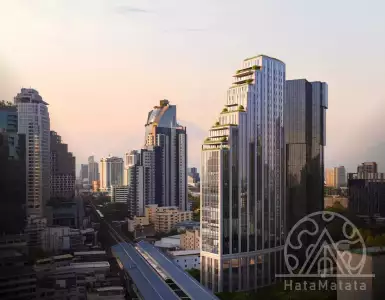
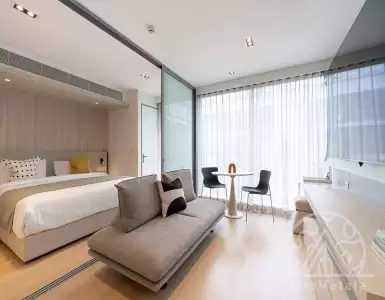
If you have US$500,000 to spend on real estate, where you buy shapes everything from living space to rental income. In Bangkok that sum will typically buy about 80 square metres of freehold condominium in prime Sukhumvit. The same budget translates into roughly 20 sq m in Singapore’s Core Central Region and about 10 sq m on Hong Kong’s Peak. That contrast explains why buyers and investors are looking at Bangkok differently in 2026: more space, higher yields, simpler tax rules.
In our analysis we separate headline comparisons, neighbourhood-level opportunities, legal and tax realities, and the practical steps investors should take now. We do not sugarcoat the downsides: foreign-quota limits, leasehold alternatives, currency and political risk remain real considerations. But for buyers focused on rental income and value per square metre, Bangkok’s proposition is tangible and measurable.
How far your money goes: price-per-square-metre comparisons
Put simply, Bangkok undercuts its regional rivals on price. Use these figures when assessing value between cities.
- Bangkok mid-market: around 140,000–155,000 baht/sqm (about US$4,200/sqm). Prime CBD stock on Sukhumvit, Silom and Sathorn runs 200,000–350,000 baht/sqm.
- Singapore Core Central Region (Q3 2025): new-launch averages roughly US$26,900/sqm.
- Hong Kong Peak/Mid-Levels: typically US$48,000–83,000/sqm.
To put the budget comparison into context:
- US$500,000 buys ~80 sqm freehold condo in prime Bangkok Sukhumvit.
- The same US$500,000 buys ~20 sqm in Singapore CCR.
- The same US$500,000 buys ~10 sqm on Hong Kong’s Peak.
This is not a short-term discount. The price gap has been structural for over a decade and is amplified for buyers holding Hong Kong or Singapore dollars because the Thai baht’s relative weakness stretches purchasing power further.
Income advantage: rental yields and the best Bangkok submarkets
Investors focused on cash return will like Bangkok’s yield story. Citywide gross rental yield sits around 6%, which is substantially higher than the alternatives noted below.
- Bangkok (citywide): ~6% gross yield.
- Singapore: 3.1–3.4% (citywide averages).
- Hong Kong: ~3.9%.
Even Bangkok’s most expensive pockets outperform the citywide averages of Singapore and Hong Kong. Prime Sukhumvit around Asoke and Phrom Phong still delivers 4–5.5% gross yields.
Two submarkets stand out for yield and growth potential:
On Nut and the lower BTS Sukhumvit corridor
- Price band: 128,000–160,000 baht/sqm (roughly 25–40% cheaper than upper Sukhumvit).
- Gross yields: 5–6.5%, with studios reaching 7%.
- Typical rents: one-bedroom ~20,000 baht/month, two-bedroom ~34,000 baht/month.
- Tenant base: expatriate professionals, international school staff, digital nomads.
On Nut and the adjoining Phra Khanong, Punnawithi and Udom Suk form a reliable rental belt because of direct BTS access to central business nodes without transfers. Early rent growth data show momentum: Phra Khanong and Bang Na posted 8–13% year-on-year rent growth in early 2026 while sale prices remained largely flat—evidence that rental demand is tightening even before capital appreciation catches up.
Huai Khwang: the growth play
- Price band: 125,000–135,000 baht/sqm, about 13–17% below the Bangkok median.
- Gross yields: 5–7%, the strongest band among major Bangkok submarkets.
- Catalysts: location on the MRT Blue Line and the upcoming MRT Orange Line eastern section (targeted for late 2027).
REIC data for Q4 2024 flagged Huai Khwang–Chatuchak–Din Daeng as the fastest-appreciating submarket in greater Bangkok. Crucially, current prices in Huai Khwang have not fully reflected the re-rating potential from new transport connections, making it a classic growth-play corridor.
Legal, tax and visa considerations that matter to buyers
Thailand’s legal and fiscal framework for foreign property buyers is one of the practical reasons Bangkok attracts cross-border capital. Key features to keep in mind:
- Foreigners can buy freehold condominiums under the 1979 Condominium Act, subject to a 49% foreign quota per building.
- There is no stamp duty surcharge for foreigners in most typical condo purchases.
- The country levies no capital gains tax on resale of condos.
- Annual land and building tax on a rented condo is 0.02–0.30% of assessed value.
- Total transaction costs for a condo typically sit between 2.5% and 6.3%.
Compare that with regional rules:
- Singapore: a 60% Additional Buyer’s Stamp Duty (ABSD) applies to foreigners on top of other taxes; the ABSD can add hundreds of thousands in one-off cost on a multi-million-dollar purchase.
- Hong Kong: the equivalent surcharge was abolished in February 2024, but prime prices remain high and absolute costs remain a barrier.
Visa pathways that support medium-to-long-term stays include:
- Thailand Privilege Visa: tiers from 650,000 baht (five-year Bronze) up to 1.5 million baht (ten-year Platinum), with immigration services bundled.
- Long-Term Resident (LTR) Visa: ten-year option requiring US$1 million in assets and US$500,000 Thai investment; the program allows some work-from-Thailand professionals to pay a flat 17% income tax rate.
- Destination Thailand Visa (DTV): launched July 2024, 10,000 baht for five-year multi-entry, allowing stays up to 180 days per entry—designed for remote workers and location-independent professionals.
These visa options are not just bureaucratic conveniences.






Who is already buying — buyer mix and capital flows
Foreign purchases remain a meaningful share of Thailand’s condo market:
- In 2025, foreigners bought roughly 14,899 condo units worth 60.92 billion baht; that was about 14.7% of nationwide condo transfers and roughly 18% of new Bangkok sales.
- Chinese buyers led purchases for the seventh consecutive year.
Motivations vary by nationality:
- Wealthy Chinese buyers are moving capital offshore after weakness in China’s domestic property market since 2021.
- Hong Kong buyers remain active because Bangkok offers roughly one-fifth per square metre of price compared with their home market, and enquiries from Hong Kong rose more than 30% according to developer reports.
- Middle Eastern interest is rising, with enquiries from Gulf states, Turkey and Israel increasing year-on-year.
Other notable trends: Myanmar purchases were up 146%, Taiwan buyers rose 57%, and Indian buyers had the highest average ticket price at 6.9 million baht per unit.
This buyer mix matters because it affects demand segmentation—some neighbourhoods attract wealthier end-user families, others draw long-stay expatriates and remote workers who drive rental yields.
Risks and what could go wrong
Bangkok’s case is strong, but nothing is guaranteed. Key risks buyers should weigh:
- Foreign-quota limits: the 49% per-building cap can lock foreign buyers out of popular projects, pushing them toward leaseholds (often up to 30 years) or secondary-market purchases.
- Currency risk: buyers financing purchases or repatriating profits will feel exchange-rate moves; the baht’s relative weakness has helped dollar-denominated buyers so far, but that can reverse.
- Supply and oversupply: some Bangkok corridors have high new-launch volume; investors need to check pipeline completions and absorption rates.
- Infrastructure delays: projects like the MRT Orange Line have target dates (e.g., eastern section targeted late 2027) but public projects can face delays that affect timing of re-rating.
- Regulatory change: tax or foreign-ownership rules could shift with new administrations; rely on current law but plan for contingencies.
We recommend stress-testing scenarios: what if rents fall 10% next year? What if the baht strengthens 10%? Model cash flows, not headlines.
Practical checklist and strategy for buyers and investors
If you are considering Thailand property, follow a disciplined process rather than buying on momentum. Key steps we recommend:
- Verify the foreign quota status of any condominium building before committing.
- Confirm title and land-office records with a qualified Thai lawyer.
- Factor in total transaction costs of 2.5–6.3%, plus routine holding costs such as the 0.02–0.30% land and building tax if rented.
- If rental income is primary, prioritise submarkets with proven tenant pools: On Nut, Phra Khanong, Huai Khwang.
- Compare gross yields against financing costs and vacancy assumptions; aim for conservative yield estimates rather than headline figures.
- Plan exit options: resale to domestic buyers, resale to other foreigners, or conversion to long-term lease if freehold quota is exhausted in your preferred building.
- Build a timeline around infrastructure catalysts that matter to your asset: for Huai Khwang that includes the MRT Orange Line eastern opening due in late 2027.
Also engage local brokers and tax specialists to understand transfer fee allocations, withholding tax implications for non-residents, and any developer incentives that affect first-year cash flows.
Where this fits in a regional allocation
If your portfolio goal is yield and affordable entry to a major Asian city, Bangkok is a plausible choice. If your priority is legal certainty and capital preservation in currencies like SGD or HKD, Singapore and Hong Kong remain attractive but far more expensive on a per-square-metre basis.
We would say this in plain terms: Bangkok is where your dollar buys more floor area and, in many cases, more rental income, while Singapore and Hong Kong still trade on scarcity and global-benchmark status.
Frequently Asked Questions
Can foreigners buy freehold property in Thailand? What are the limits?
Yes. Foreign nationals can buy freehold condominiums under the 1979 Condominium Act, subject to a 49% foreign quota per building. If the quota is full, buyers often use leasehold structures (commonly up to 30 years) or secondary-market purchases.
What kind of rental yields can I expect in Bangkok compared with Singapore or Hong Kong?
Citywide gross yields in Bangkok average about 6%, versus 3.1–3.4% in Singapore and ~3.9% in Hong Kong. Certain Bangkok submarkets like Huai Khwang and On Nut can deliver 5–7% gross yields, studios sometimes reaching 7%.
Are there direct taxes or stamp duties for foreign buyers?
Thailand does not impose an extra stamp-duty-like surcharge on foreign condo buyers the way Singapore charges ABSD. Thailand also has no capital gains tax on condo resale; annual property tax on rented condos runs 0.02–0.30% of assessed value. Transaction costs generally total 2.5–6.3%.
Which visas support long stays and rental demand?
Options include the Thailand Privilege Visa (paid tiers from 650,000 baht to 1.5 million baht), the Long-Term Resident (LTR) Visa (requires US$1 million assets and US$500,000 Thai investment), and the Destination Thailand Visa (DTV) (10,000 baht five-year multi-entry), each of which helps underpin longer-stay tenant demand.
Bottom line — a practical takeaway
Bangkok offers a measurable combination of lower price per square metre and higher rental yields: US$500,000 buys roughly 80 sqm in prime Sukhumvit versus ~20 sqm in Singapore CCR and ~10 sqm on Hong Kong’s Peak, and Bangkok’s ~6% citywide gross yield typically doubles what investors collect in those rival cities. For buyers targeting income and space, On Nut and Huai Khwang are immediate places to examine, and the MRT Orange Line eastern section due late 2027 is the near-term catalyst that could re-rate prices in surrounding submarkets.
Tags
We will find property in Turkey for you
- 🔸 Reliable new buildings and ready-made apartments
- 🔸 Without commissions and intermediaries
- 🔸 Online display and remote transaction

International Real Estate Consultant

Subscribe to the newsletter from Hatamatata.com!
Subscribe to the newsletter from Hatamatata.com!
Popular Posts

We will find property in Turkey for you
- 🔸 Reliable new buildings and ready-made apartments
- 🔸 Without commissions and intermediaries
- 🔸 Online display and remote transaction
International Real Estate Consultant

Subscribe to the newsletter from Hatamatata.com!
Subscribe to the newsletter from Hatamatata.com!
I agree to the processing of personal data and confidentiality rules of Hatamatata
Need advice on your situation?
Get a free consultation on purchasing real estate overseas. We’ll discuss your goals, suggest the best strategies and countries, and explain how to complete the purchase step by step. You’ll get clear answers to all your questions about buying, investing, and relocating abroad.



Sales Director, HataMatata