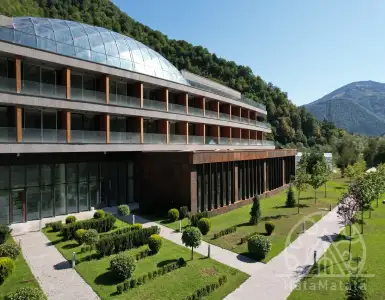
 125 000 $
Flat with 1 bedroom in Dushet municipality, Georgia
Bedrooms: 1 Bathrooms: 1
Dushet municipality, Georgia
Submit RequestDiscover the charm of Georgia with properties in Mtskheta-Mtianeti. Enjoy stunning landscapes, rich history, and booming tourism. Invest in a promising real estate market.
 Lilia Karimova, International Real Estate Market Analyst
Updated:
Properties matching your filters: 2
125 000 $
Dushet municipality, Georgia
Submit Request Mountain View view 110 255 $
Tianeti, Georgia
Submit RequestLeave a request and we will pick 3 best options for your budget
Other suggestions: some details may differ from your filters.
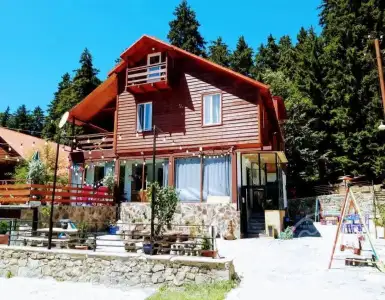 480 000 $
Bakuriani, Georgia
Submit Request 70 896 $
 135 587 $
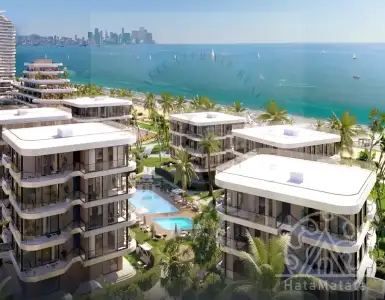 Sea View view 49 770 $
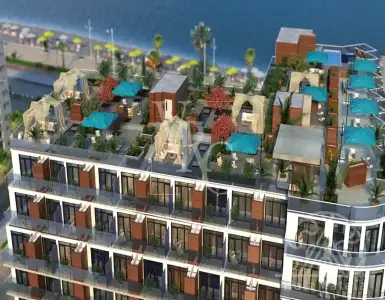 Mountain View view 33 500 $
 City View view 63 800 $
 Mtskheta-Mtianeti2 listings
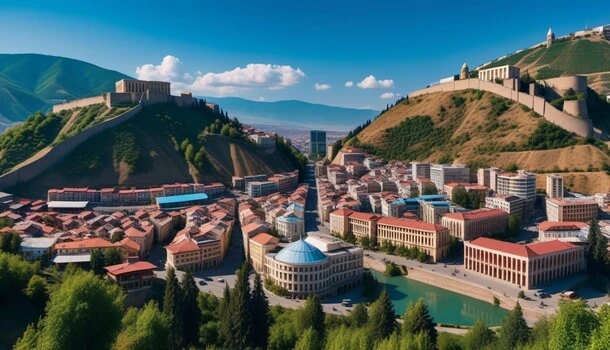 Tbilisi184 listings
 Ajaria66 listings
 Guria6 listings
 Samegrelo-Upper Svaneti3 listings
With its mild climate, the Mtskheta-Mtianeti region in Georgia offers a pleasant environment for those seeking to settle in a serene location. Known for its diverse cultural heritage, this area boasts ancient churches, archaeological sites, and traditional Georgian architecture.
The breathtaking natural beauty of the Caucasus Mountains surrounds the region, providing stunning views and ample opportunities for outdoor activities such as hiking and mountain biking. Whether you're looking for a peaceful retreat or an adventurous lifestyle, Mtskheta-Mtianeti offers the perfect balance of tranquility and excitement.
 Legal review:
Deni Gerikhanov, International Real Estate Lawyer
 Financial review:
Evgeniya Skripko, Financial Expert in International Real Estate
Reviewed:
Mtskheta-Mtianeti sits where high mountains meet the lowland plain outside the capital, and that mix is why buyers from families to institutional investors look to buy property in Mtskheta-Mtianeti. The region combines UNESCO heritage in Mtskheta city, winter sports around Gudauri, and growing commuter communities within a 30-minute drive of central Tbilisi. This text explains geography, infrastructure, market figures, legal steps and realistic buyer scenarios so you can evaluate real estate in Mtskheta-Mtianeti with confidence.
Mtskheta-Mtianeti offers a wide price spectrum from small rural plots to premium ski-apartments in Gudauri, and average levels reflect that diversity: apartments in Mtskheta city typically range between $700 and $1,200 per m² for new build units, while older central units on the secondary market often trade for $400–800 per m². Mountain resort properties are at the top end: Gudauri and Stepantsminda apartments and hotel units commonly range from $1,200 to $3,000 per m², depending on slope proximity and finished quality.
Mtskheta-Mtianeti land and houses show clear segmentation by accessibility and utility connections. Buildable plots near Mtskheta or along the Zhinvali reservoir command premiums — plots of 500–1,500 m² near main roads are commonly priced from $20,000 to $150,000 — whereas remote agricultural plots start much lower, often $3–10 per m². Small family homes and renovated guesthouses in tourist micro-markets sell between $30,000 and $250,000, depending on location and size.
Market dynamics are seasonal and location-driven. Short-term rental yields in Gudauri and Kazbegi can reach 6–10% gross in high season for well-managed units, while long-term residential rentals around Mtskheta average 4–6% gross. Demand patterns show commuter buyers near Mtskheta, leisure and investor demand in Gudauri/Kazbegi, and local buyers for village houses in Dusheti and Tianeti.
Mtskheta city is the natural first choice for buyers seeking historic culture plus commuting convenience to Tbilisi. The old town around Svetitskhoveli Cathedral and Samtavro Monastery has the highest demand among private buyers seeking heritage homes or small apartments, while newer residential districts along the Tbilisi–Mtskheta road attract families who work in Tbilisi but want green space and lower prices.
Gudauri and the Kobi corridor are the primary targets for ski-season investors and operators. Gudauri ski-resort properties are designed for short-term rentals, with facilities clustered near the main lifts and along the Georgian Military Highway. Stepantsminda (Kazbegi) suits buyers looking for dramatic mountain views and year-round tourism traffic around Mount Kazbek and the Gergeti Trinity Church.
Dusheti and Tianeti offer budget-friendly rural and small-town buying options with potential for conversion into guesthouses or eco-tourism stays. Areas to watch include Ananuri and the Zhinvali reservoir corridor for waterside plots, Saguramo for country homes close to Tbilisi, and Khevi villages for off-grid lifestyle and long-term value upside.
Mtskheta city sits roughly 20–30 km north of Tbilisi, connected by the E60/Georgian Military Highway and a frequent commuter road; drive times to Tbilisi center are typically 20–35 minutes depending on traffic. The Georgian Military Highway continues north through Ananuri, Gudauri and on to Stepantsminda/Kazbegi, providing all-season road access to mountain resorts and border crossings toward Russia.
Infrastructure in the region is a mix of upgraded arterial links and more basic rural roads. Mtskheta has municipal services, centralized water and gas in the city, regular public transport and quick access to Tbilisi International Airport (about 35–50 minutes by car). Medical needs are served by a regional hospital in Mtskheta and rapid access to Tbilisi hospitals such as Tbilisi Central University Clinic; education needs are met by local schools and easy commuting distance to universities in Tbilisi (Tbilisi State University, Georgian Technical University).
Connectivity is improving: mobile 4G/5G coverage is available from providers MagtiCom and Geocell in most towns, and fiber/DSL options are expanding in Mtskheta and larger settlements. Utilities, road improvements and tourism-focused services (ski lifts, lift-ticket infrastructure in Gudauri) make the region functionally integrated with the national economy.
Georgia’s national economy has a nominal GDP around $18–20 billion and a GDP per capita in the range of $4,000–6,000, with tourism and services driving growing regional demand. Mtskheta-Mtianeti benefits from proximity to Tbilisi’s labor and consumer markets and from steady mountain tourism; ski and adventure tourism produce concentrated seasonal inflows of visitors that support rental markets in Gudauri and Stepantsminda.
Employment in the region is mixed: commuting to Tbilisi lowers local unemployment pressures for residents near Mtskheta, while tourism creates seasonal jobs in hospitality, transportation and construction in the highlands. Investment interest has focused on short-stay accommodation, renovation of historic buildings in Mtskheta, and small- to mid-scale hotels and guesthouses in mountain areas.
Real estate investment in Mtskheta-Mtianeti is driven by three structural advantages: close proximity to the capital, established tourism corridors (ski and trekking), and relatively low acquisition costs compared with major European mountain resorts. Investors targeting short-term holiday rentals or boutique hospitality can achieve faster payback in resort nodes; commuter-focused apartments around Mtskheta show steady demand from families and professionals.
Large-scale development in the region is a mix of national resort initiatives and smaller boutique projects. Gudauri’s resort complex has seen phased private and public investment in lift infrastructure, piste expansion and hospitality facilities; the area features multiple condo-hotel conversions and independent ski-apartment projects aimed at foreigners and domestic buyers. Stepantsminda benefits from selective hotel-led projects, including boutique properties and the presence of Rooms Hotel Kazbegi as an anchor hospitality brand for mountain luxury.
Most residential volume outside resorts comes from local developers and contractors who specialize in low-rise apartment blocks around Mtskheta and renovation of historical houses in the Old Town. Municipal investment projects focus on road upgrades, water management (Zhinvali reservoir corridor) and tourist access points that enhance property values over time. Because the region has many small-scale projects, partnering with an experienced local agent or lawyer is key to verify developer reputations and delivery histories.
Georgian banks offer mortgage products to foreigners, and major lenders active for residential lending include Bank of Georgia, TBC Bank, ProCredit Bank and Liberty Bank. Foreign borrowers should expect typical down payments of 20–30%, with loan-to-value ratios for foreign applicants commonly up to 70–80% for approved projects. Mortgage terms can extend up to 20–25 years for residential loans, with interest rate ranges generally in the 7–12% band depending on currency, borrower profile and collateral.
Developers commonly advertise interest-free installment plans for new build property in Mtskheta-Mtianeti, especially for pre-completion purchases. These plans often require a 20–30% down payment and offer 12–36 month payment schedules without interest or with subsidized rates. Financing in local currency (GEL) can be cheaper but exposes buyers to exchange-rate movements if their income is in foreign currencies; some banks offer USD/EUR mortgages subject to stricter lending criteria.
The purchase path is straightforward and transparent when you follow the legal steps. Begin with property selection and a thorough due diligence phase: request cadastral extracts from the National Agency of Public Registry, verify the seller’s title, confirm utility connections and check any municipal zoning or heritage restrictions (especially in Mtskheta Old Town and near protected sites). A local lawyer or licensed agent can complete title searches and confirm taxes and encumbrances before signing any agreement.
After due diligence, buyers typically sign a preliminary sales agreement and place a deposit (commonly 5–20% of the purchase price). The final sale is executed through a notarized sales-purchase agreement; the transaction is recorded in the National Agency of Public Registry where the buyer receives registered title. Payments are usually made by bank transfer; cash transactions are possible but less common for international buyers and can complicate compliance and record-keeping.
Closing costs are modest compared with many European markets. Expect notary fees, registration fees and possibly agent commissions. There is no general property transfer tax; annual property taxes are low. Overseas buyers often complete transactions in USD, EUR or GEL depending on bank and seller preferences.
Georgia allows foreigners to buy most types of property with relatively few restrictions, which is a major attraction for international buyers. The main caveat is agricultural land, where ownership rules are more limited and may require additional permissions; built property, apartments and commercial real estate are freely purchasable by non-residents. Property ownership is registered publicly at the National Agency of Public Registry, creating transparent proprietary rights.
A property purchase can support applications for temporary residence under Georgian immigration rules, but Georgia does not offer automatic citizenship in exchange for property acquisition. Residency pathways and thresholds can vary, and some residence permits tied to investment require documentation of funds, a valid purchase contract and proof of ownership. Citizenship by naturalization typically requires a longer period of lawful residence, language proficiency and other standard requirements; direct citizenship-by-investment programs are not a routine option.
Taxation on property is user-friendly but not zero: rental income must be declared under Georgian tax law, and there are registration and notary fees at purchase. Buyers should consult a local lawyer or tax advisor to understand tax liabilities on rental income, corporate ownership structures, and any double-taxation treaties that may affect the buyer’s home country.
Mtskheta-Mtianeti fits multiple buyer profiles because of its proximity to Tbilisi and strong tourism corridors. Families and commuters looking for quieter living with quick access to the capital will find opportunities in Mtskheta city and Saguramo with units from $700/m² upward and modern utilities. Investors targeting holiday rental income should focus on Gudauri and Stepantsminda where short-stay demand from skiers and trekkers is concentrated and peak-season yields can be attractive.
Buyers seeking long-term capital appreciation and lifestyle value often buy historic houses in Mtskheta Old Town for renovation and boutique guesthouse operation; these properties require sensitive restoration but benefit from UNESCO-linked tourism flows. Remote workers and digital nomads can find affordable, well-connected apartments or country homes in Dusheti and Tianeti with reliable mobile internet and growing co-working options in nearby Tbilisi suburbs.
There are clear steps you can take now: shortlist neighborhoods based on intended use, engage a local lawyer for title checks, and contact banks early if you plan to use mortgage financing. Real estate in Mtskheta-Mtianeti combines historical ambience, mountain leisure and practical access to the capital, so whether your goal is a family residence, a revenue-generating short-stay asset, or a long-term investment you can structure, there are realistic and verifiable paths to buy property in Mtskheta-Mtianeti that respect local regulations and maximize return.
Don't know which area to choose in Mtskheta-Mtianeti? We will tell you in which areas it is better to live or invest, and show you the appropriate options.