


Real Estate in Basilicata
Do you want to buy real estate in Basilicata? We'll tell you where to start

Liliya
International Real Estate Consultant
Need help choosing a property?
Leave a request and our manager will contact you.
International Real Estate Consultant
Real Estate in Basilicata
Do you want to buy real estate in Basilicata? We'll tell you where to start
Liliya
International Real Estate Consultant
Need help choosing a property?
Leave a request and our manager will contact you.
International Real Estate Consultant
Selection real estate in Basilicata in 15 minutes
Leave a request and we will select the 3 best options for your budget
Weather in Basilicata
 !
!
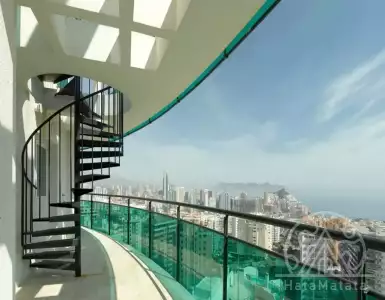
For sale Flat , Spain 209 543 $
📌 A few apartments for sale in Cala de Finestrat - a cozy place between Benidorm and Vieijahoyosa with a...
 !
!
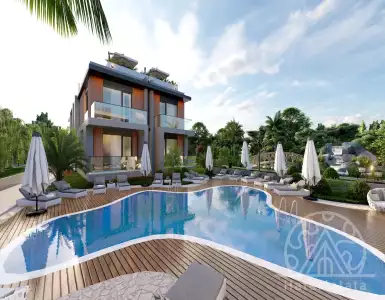
Flat for sale , Cyprus 126 834 $
The new residential complex is located in the foothills of Alsanjak. The complex consists of two two-storey buildings. Block A - 12...
For Sale Real Estate in Basilicata
Didnt find the right facility?
Leave a request - we will handle the selection and send the best offers in a short period of time



Irina Nikolaeva
Sales Director, HataMatata
Selection real estate in Basilicata in 15 minutes
Leave a request and we will select the 3 best options for your budget
🇮🇹 Property for sale in Basilicata: listings, price trends and towns Matera, Potenza
Basilicata is one of Italy’s most overlooked real estate opportunities: compact, diverse and affordable, it stretches from the Tyrrhenian coast at Maratea to the Ionian beaches of Metaponto and inland up to the Apennines around Potenza. Buyers find everything from UNESCO-protected cave dwellings in Matera to modern apartments near industry hubs in Melfi and Viggiano. The region’s small population—around 550,000 people—and area of about 9,995 km² create pockets of undervalued property where careful investors and lifestyle buyers can still secure strong upside.
💶 Property prices in Basilicata and what you can expect
Basilicata real estate remains firmly below national averages while offering pockets of premium pricing in tourism hotspots. Prices vary dramatically by type, condition and proximity to coast or urban centers. Typical ranges by area and property type are:
- Matera (Sassi, Centro Storico): €1,500–€4,500/m² depending on restoration quality and tourist potential.
- Potenza (city centre and suburbs): €800–€1,400/m² for apartments; new builds slightly higher.
- Maratea (coastal, sea-facing): €2,500–€5,000/m² for prime villas and penthouses.
- Coastal towns (Metaponto, Policoro, Pisticci Marina): €1,200–€2,200/m².
- Rural inland villages and hamlets: €200–€800/m², with some €1 homes requiring full renovation.
Basilicata offers clear entry points for different budgets: buying a small stone house in a hill village or a restored Sassi apartment in Matera will have very different cost structures and conversion budgets. Renovation in Sassi often pushes costs up because of heritage rules; expect restoration costs of €800–€1,800/m² in protected zones.
Prices are influenced by tourism and industry. Demand for short-term rentals and boutique hospitality in Matera and Maratea drives premium pricing, while steady local demand from manufacturing and energy sectors supports values around Melfi and Viggiano.
🎯 Best areas in Basilicata to buy property for different goals
Matera is the clear choice for buyers focused on tourism, short-term rental and high cultural value. The Sassi di Matera has UNESCO status and strong seasonal occupancy for boutique apartments converted from rupestrian homes. Potenza suits administrative buyers and families due to the University of Basilicata campuses and public services. Maratea attracts buyers wanting luxury coastal living and long summer seasons.
Other recommended locations and strengths:
- Bernalda and Pisticci: restoration interest and proximity to Metaponto beaches.
- Melfi: stable long-term rental demand thanks to the Stellantis (formerly Fiat) factory and related supply chain — around 7,000 direct employees at peak.
- Viggiano and Val d’Agri: presence of ENI and oilfield operations creates higher income levels locally and rental demand for professionals.
- Policoro and Metaponto: seasonal rental income and family holiday purchases.
Each of these areas supports distinct strategies: short-term vacation rental in Matera or Maratea, stable long-term leases near Melfi and Potenza, or bargain-refurbish-and-hold in inland villages.
🚆 Geography, transport and infrastructure in Basilicata
Basilicata’s geography links mountains to two coastlines, meaning transport corridors are key. Potenza is the regional administrative hub with road links to the A3 and A14 corridors via regional highways; Matera is more accessible from Bari and Brindisi airports and by provincial roads. Rail connections include regional lines serving Potenza and Matera’s improved links to Bari and Naples via intermodal connections.
Healthcare and education infrastructure are concentrated in Potenza and Matera. The region hosts the University of Basilicata with campuses in both cities, producing students and rental demand. Public hospitals are in Potenza and Matera with specialist centres for cardiology and oncology accessible regionally. Business and logistic corridors are reinforced by industrial districts around Melfi and by the Val d’Agri energy infrastructure.
Lifestyle infrastructure is developing: boutique hotels in Matera, marinas near Maratea, agricultural agritourism across the Vulture area and growing coworking spaces in Matera and Potenza catering to remote workers and creatives.
💼 Economy and investment potential in Basilicata
Basilicata’s economy is compact and sector-focused: energy extraction, automotive manufacturing and growing tourism. The Val d’Agri oilfield, operated by ENI, is one of Western Europe’s largest onshore fields and remains a major regional revenue source. Automotive manufacturing anchored by the Stellantis plant in Melfi supports supply chains and stable employment.
Key economic indicators to consider:
- Population supporting local consumption: approximately 550,000.
- Strong industrial employment pockets around Melfi (automotive) and Viggiano/Val d’Agri (energy).
- Tourism spike in Matera after cultural investments, with several hundred thousand annual visitors to Matera alone in peak cultural years.
Investment potential is twofold: value-add residential conversions in historic centres for short-term rental or boutique hospitality, and stable rental income near industrial hubs. Infrastructure upgrades and regional incentives for rural repopulation also signal upward potential in select villages.
🏗️ Major projects and developers active in Basilicata
Several verifiable players shape the region’s real estate demand and supply. ENI’s operations in Val d’Agri and Viggiano underpin local housing need and service sectors. Stellantis’ Melfi plant is a long-term anchor for the local economy and related housing demand. The Matera 2019 Foundation and subsequent restoration programmes spurred significant private redevelopment of the Sassi and historic fabric.
Notable project types and actors:
- ENI-led energy infrastructure in Val d’Agri and Viggiano creating employee housing demand.
- Stellantis (Melfi plant) maintaining supplier investments and staff housing requirements.
- Public-private restoration and hospitality projects in Matera driven by the Matera 2019 legacy and boutique developers renovating Sassi properties.
Local development is often handled by regional builders and specialist restorers rather than large national residential developers, so working with experienced local architects and notaries is essential when buying new build property in Basilicata or converting historic stock.
🧾 Property purchase process in Basilicata step-by-step
Buying property in Basilicata follows Italian national practice with local nuances. Steps typically include:
- Search and negotiate: identify a property, verify zoning and heritage restrictions (especially in Matera Sassi).
- Reservation and deposit: sign a preliminary agreement (compromesso) and pay a deposit or caparra, commonly 10% of the purchase price.
- Due diligence and financing: obtain title search, check cadastral maps and apply for mortgage if needed.
- Final deed (rogito): complete purchase before a notaio; pay the balance and taxes; the notaio registers the deed.
Buyers must obtain a codice fiscale, open an Italian bank account for transfers, and ensure compliance with local municipality requirements for renovations and heritage permissions. For new build property in Basilicata and off-plan purchases, carefully review developer guarantees and any installment plan clauses.
🏦 Mortgages and installment plans for property in Basilicata
Financing is available to foreign buyers through Italian banks and international lenders. Typical conditions:
- Down payment for non-residents: 20–40%, often 30% recommended for safety.
- Loan-to-value for foreigners: commonly 60–70%, with higher LTVs possible for EU citizens or repeat customers.
- Terms: 15–25 years typical; interest rates vary by credit profile and chosen fixed or variable option, commonly in a 2.5–5.5% range depending on market and term.
Developers and local sellers sometimes offer interest-free installment plans, particularly on new build property in Basilicata, with staged payments during construction. Banks will also assess rental income potential for buy-to-let financing and can structure amortization to match expected cash flows.
⚖️ Legal aspects, residence permits and citizenship connected to property in Basilicata
Buying property in Basilicata does not automatically grant a residence permit or citizenship. Legal realities to know:
- EU citizens may reside freely; registration with the local municipality grants residence rights.
- Non-EU nationals cannot obtain a residence permit solely by purchasing property; options include a regular work visa, elective residence visa if you can demonstrate sufficient stable income, or family reunification pathways.
- Citizenship by real estate investment is not available in Italy; naturalization requires lawful residence for the statutory period (commonly 10 years for non-EU nationals) and other conditions.
Property purchases can support visa applications by proving accommodation, and rental income can be part of the income evidence for elective residence, but the purchase alone is not an immigration shortcut. Always consult an immigration lawyer for individual cases.
📈 Market dynamics, yields and buyer scenarios for real estate investment in Basilicata
Basilicata suits distinct buyer profiles with measurable outcomes:
- Short-term rental and boutique hospitality investors: focus on Matera Sassi and Maratea where seasonal occupancy and nightly rates can push gross yields to 5–8% for well-managed properties.
- Long-term rental and employee housing: target Melfi and Viggiano for steady demand, with gross yields around 3–5% and lower vacancy risk.
- Value-add renovators: inland villages and towns offer low entry prices (€200–€800/m²) with upside if restored and marketed for agritourism or second-home buyers.
- Lifestyle buyers and relocators: Potenza and coastal areas offer family amenities, schools and healthcare, suitable for primary residence or seasonal living.
Practical considerations include local tax regimes (IMU for second homes, TARI waste tax), renovation permits for Sassi, and short-term rental registration obligations. Match purchase location to strategy: Matera for tourism yields, Melfi for stability, Maratea for premium lifestyle.
🗺️ Key districts, towns and specific locations to research in Basilicata
Targeted locations matter more here than region-wide averages. Explore:
- Matera: Sassi, Centro Storico, Serra Venerdì — prime for boutique rentals and restorations.
- Potenza: Centro Storico, Santa Maria, Poggio Tre Galli — administrative and family housing.
- Maratea: Fiumicello and Castrocucco areas for sea views and luxury properties.
- Melfi and neighbouring zones for employee rentals tied to Stellantis supply chain.
- Viggiano and Val d’Agri for properties serving energy-sector staff and contractors.
- Bernalda, Pisticci and Metaponto along the Ionian coast for holiday homes and agritourism.
Each district has its own planning rules, market rhythm and typical buyer profile, so local due diligence and relationships with municipal offices, notaries and restoration specialists are essential to secure predictable outcomes.
Buying property in Basilicata brings a mix of cultural value, affordable entry points and industry-backed stability depending on where you look. Whether you are pursuing a renovated Sassi apartment in Matera for short-term rental, a family home near Potenza for long-term residency, a coastal villa in Maratea for seasonal use, or a practical buy-to-let near Melfi’s industrial base, the region offers specific neighborhoods, verifiable economic anchors and financing options—including mortgage in Italy for foreigners and developer installment plans—to match those strategies while reminding buyers that property alone does not equal residency or citizenship.
Frequently Asked Questions
Asking prices vary widely. Regional averages run about $860–$1,080/sq m (≈€800–€1,000). Matera city is higher: $1,300–$2,160/sq m (≈€1,200–€2,000). Coastal/tourist areas (Maratea) can reach $1,620–$2,700/sq m (≈€1,500–€2,500). Small inland villages often list from $215–$760/sq m (≈€200–€700). Prices depend on condition, tourism demand, and access.
Yes. Foreign nationals (EU and non-EU) can buy property in Basilicata with few legal restrictions; some reciprocity rules may apply for certain nationalities. You need a codice fiscale, an Italian bank account, and a notary for closing. Buying property alone does not grant residency or special rights beyond ownership.
Investment potential is mixed: Matera and coastal towns show strong short‑term rental demand with gross yields around 5–8%; long‑term city rentals average 3–5%. Rural villages have low liquidity but very low purchase prices, giving higher upside if renovated. Expect slower resale in remote areas; liquidity is best in Matera and popular coastal locations.
Common costs: registration tax for resale 2% of cadastral value for primary homes, 9% for second homes (applied to cadastral base), VAT for new builds 10% standard/22% for luxury. Notary and registration fees often total 1–2% ($1k–$6k) of price, plus agent fees ~2–4% + VAT. Annual property tax (IMU) varies by municipality. Budget for surveys, energy certificate, and local fees.
Typical timeline: 1) Offer and preliminary contract with deposit (days–weeks). 2) Due diligence and mortgage approval (if needed) 3–8 weeks. 3) Final deed before a notary often 30–90 days after preliminary contract. Whole process usually 60–120 days for clean, unencumbered sales. Delays arise from title issues, permits, or mortgage processing.
Yes for families who prefer quieter life and lower costs. Main towns (Potenza, Matera) offer hospitals, public and private schools, supermarkets, and regional transport links. Rural areas have fewer services; commuting times can be long. Expect smaller international school options; major medical care is in regional centers. Consider town size vs lifestyle when choosing location.
Many digital nomads find Basilicata appealing for low cost of living and lifestyle. Urban areas and tourist towns have fiber and mobile 4G/5G with typical speeds 30–300 Mbps; remote villages may rely on ADSL or mobile. Coworking is limited. Long stays require appropriate visa/residence permit (EU citizens free; non‑EU need a permit).
Yes — parts of Basilicata are in seismic zones. For safety and insurance, commission a structural and seismic assessment before purchase, especially for older stone or Sassi properties. Retrofitting costs vary; basic seismic upgrades commonly add thousands to tens of thousands USD depending on scope. Check local building permits and historic‑site rules.
Typical renovation ranges: basic updates $430–$860/sq m (≈€400–€800). Full restorations, historic stone or cave homes can be $860–$1,620+/sq m (≈€800–€1,500+). Permits and specialist conservation work (Matera Sassi) increase time and cost. Allow several months to a year for approvals and works on complex projects.
No — purchasing property in Basilicata does not automatically grant residency or citizenship. Italy’s investor visa exists but typically requires substantial investments (examples: equity or bond options €500k–€2M, or philanthropic donations at higher amounts) and property purchase alone is not eligible. Non‑EU buyers can use elective residence or work/family permits; citizenship usually requires long‑term legal residence (around 10 years).
Properties by Region
- Real estate in Tuscany (422)
- Real estate in Lombardy (372)
- Real estate in Umbria (332)
- Real estate in Lazio (210)
- Real estate in Liguria (133)
Properties by Country
- Real estate in Bulgaria (11408)
- Real estate in Montenegro (5375)
- Real estate in Indonesia (2423)
- Real estate in Spain (2289)
- Real estate in Portugal (1975)
- Real estate in Italy (1906)
- Real estate in Turkey (1699)
- Real estate in Cyprus (1594)
- Real estate in Thailand (1565)
- Real estate in Croatia (1431)
- Real estate in Greece (1082)
- Real estate in USA (1013)
- Real estate in France (1006)
- Real estate in Georgia (519)
- Real estate in Serbia (328)
- Real estate in Slovenia (123)
- Real estate in Egypt (23)
Free real estate consultation in Basilicata
Don't know which area to choose in Basilicata? We will tell you in which areas it is better to live or invest, and show you the appropriate options.

Maria Guven
Head of Direct Sales Department
+90-507-705-8082