 95 052 $
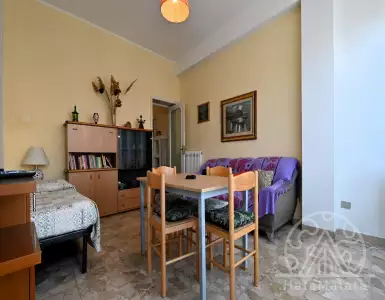
Flat with 1 bedroom in Roseto degli Abruzzi, Italy
Bedrooms: 1 Bathrooms: 1
Roseto degli Abruzzi, Italy
Submit RequestDiscover your dream home in Abruzzo, Italy's hidden gem. Invest in stunning landscapes, affordable real estate, rich history, and delicious cuisine.
 Irina Nikolaeva, Southern Europe Real Estate Expert
Updated:
95 052 $
Roseto degli Abruzzi, Italy
Submit Request 462 077 $
Roseto degli Abruzzi, Italy
Submit Request 152 147 $
Roseto degli Abruzzi, Italy
Submit RequestLeave a request and we will select the 3 best options for your budget
Experience the stunning weather of Abruzzo, Italy. With hot summers and mild winters, this region boasts a Mediterranean climate perfect for outdoor activities year-round.
Discover the rich cultural heritage of historic towns and villages, where traditional festivals and local cuisine abound. Immerse yourself in the natural beauty of the Apennine Mountains and Adriatic coastline, offering breathtaking views and endless opportunities for exploration.
Whether you are seeking a quaint village retreat or a seaside escape, Abruzzo has something for everyone. Start your journey to this hidden gem of Italy today.
 Legal review:
Deni Gerikhanov, International Real Estate Lawyer
 Financial review:
Evgeniya Skripko, Financial Expert in International Real Estate
Reviewed:
Abruzzo offers a rare combination for buyers seeking property in Italy: long Adriatic coastline, protected mountain parks, reliable infrastructure between Rome and the Adriatic, and affordable prices compared with major Italian regions. Whether you are a private buyer, second‑home seeker, remote worker, or an international investor looking for real estate in Abruzzo, the region delivers clear, quantifiable advantages that make the purchase process straightforward and the investment case measurable.
Abruzzo remains one of Italy’s more affordable markets for buying property in Abruzzo while still offering coastal and mountain premium pockets.
Prices per square metre vary sharply by location and by new build versus secondary market property in Abruzzo. Average asking prices fall into these ranges:
New build property in Abruzzo often commands a premium of +10–25% compared with comparable secondary market property in the same town, especially near the coast and in Pescara. Typical unit sizes are 50–90 m² for apartments, 120–300 m² for detached villas, and 200–600 m² for larger rural casali (farmhouses) that can be converted into B&Bs. Rental income expectations depend on location: long‑term yields typically 3–5% gross, while seasonal short‑term yields in prime coastal towns can reach 5–8% gross during high season.
Abruzzo covers about 10,800 km² with a population of roughly 1.3 million, stretching from the Adriatic coast to the Apennine ridge. Coastal mobility is supported by the A14 Autostrada (Bologna‑Taranto) and the SS16 Adriatica, while inland access includes the A24/A25 motorways linking Rome to L’Aquila and Teramo. The region has one main airport, Aeroporto d’Abruzzo (Pescara), with connections across Europe and fast road links to coastal resorts. Rail services connect Pescara to Rome, Bari and northern routes; regional lines serve Teramo, Chieti and Vasto.
Healthcare and education infrastructure are concentrated in urban centres. Azienda Ospedaliera Regionale San Salvatore (L’Aquila), Ospedale Civile Spirito Santo (Pescara) and Ospedale di Teramo provide major hospital functions while numerous ASL clinics cover smaller towns. Higher education presence includes Università degli Studi “G. d’Annunzio” Chieti‑Pescara, and branches of national universities in Teramo and L’Aquila, supporting student rental demand. Retail, cultural venues and business services cluster in Pescara, Chieti, Teramo and L’Aquila, while ski lifts, national parks (Gran Sasso‑Monti della Laga, Majella) and protected coastal reserves underpin tourism infrastructure.
Abruzzo’s regional GDP is approximately €33 billion, driven by a mix of manufacturing, agriculture, tourism and services. Industrial clusters include mechanical engineering, food processing and aerospace suppliers, with important mid‑sized exporters in Chieti and Teramo provinces. Employment metrics show regional unemployment around 9–10%, slightly variable by province and season. Tourism contributes materially to local economies: the region regularly attracts over 3 million visitors annually across coast and mountain destinations, supporting short‑term lettings and hospitality conversions.
Foreign buyer interest has been rising, especially from the UK, Germany, the Netherlands and northern Europe, attracted by coastal towns and restored historic properties. Institutional and private investors increasingly look at Abruzzo for diversification because acquisition costs are lower than Tuscany or Liguria while infrastructure and transport times to Rome remain competitive. Domestic migration trends show modest urbanisation toward Pescara and Teramo for jobs and education, supporting steady rental demand in these cities.
Pescara is the regional focal point for buyers seeking a coastal city with modern amenities and rental demand.
Chieti and Teramo provide a mix of affordable family housing and proximity to industrial employment.
L’Aquila and historic hill towns are attractive for buyers focused on renovation projects and long‑term capital appreciation due to post‑earthquake reconstruction funds and targeted public investment.
Key districts and micro‑areas to consider:
Development in Abruzzo is mixed between local cooperatives (cooperative edilizie), municipal regeneration schemes and national groups active in infrastructure and housing.
Large reconstruction and urban renewal projects followed the L’Aquila seismic events, with combined public‑private efforts and involvement from national contractors. Coastal redevelopment projects include upgrades to marinas and promenades, notably ongoing works around Marina di Pescara and port area enhancements in Ortona and Vasto.
Local construction firms and cooperatives remain prominent for smaller residential and restoration projects, while national players participate in larger infrastructure and mixed‑use developments. Typical project types include seafront apartment complexes, restored historic palazzi, and agriturismo conversions in inland areas.
Italian banks and branches of international banks provide mortgage in Italy for foreigners with common terms and flexibility depending on borrower profile.
Typical financing conditions for non‑resident buyers: loan‑to‑value of 50–70%, down payments of 30–50% are common for non‑EU nationals, with longer term offers (15–25 years) available for residents. Interest rates depend on fixed vs variable choices and borrower risk profile, commonly in a band of 2.5–5.0% as a working range. Banks require Italian tax code (codice fiscale), identification and proof of income or assets.
Developers and sellers often provide property in Abruzzo with installment plan options, ranging from short build‑period deferrals to interest‑bearing or sometimes interest‑free instalments during construction. Typical developer options:
Selecting a property in Abruzzo starts with viewing, negotiating a written offer and signing a preliminary contract (compromesso) with a deposit (caparra).
Next step involves due diligence: cadastral checks, urban planning compliance (visura catastale and certificato di destinazione), mortgage searches and energy performance certificates (APE). A notary (notaio) performs title verification and prepares the final deed (rogito). Typical transactional payments include the preliminary deposit (often 10%), the balance at deed, and registration/tax obligations.
Formal steps in sequence:
Buying property in Abruzzo does not automatically provide a residence permit through property purchase in Abruzzo or citizenship by real estate investment in Abruzzo. Italy does not offer a golden visa tied solely to property acquisition.
Alternatives do exist: non‑EU nationals can apply for the Investor Visa for Italy if they make qualifying investments (for example €500,000 in an Italian company or €2 million in Italian government bonds) but property purchase alone does not meet that threshold. Individuals with stable, sufficient income can apply for elective residency and register as residents; EU citizens have freedom of movement and can register more easily.
For families and inheritance planning, Italian property ownership is straightforward, but buyers should be aware of taxes: when purchasing from a private seller the registration tax is typically 9% of the cadastral value, while purchasing a new build from a developer often involves VAT at 4% (first‑home) or 10% (standard), or 22% for certain luxury categories, subject to qualifications. Legal residency and citizenship processes are separate administrative tracks and usually require prolonged residence and language/integration criteria for naturalisation.
Abruzzo fits several buyer profiles with distinct property and location matches.
For families seeking affordable permanent residence with access to schools and hospitals, Pescara and Teramo provide the best combination of employment, education and family services. For seasonal vacation rental investors, Vasto, Ortona, Giulianova and Alba Adriatica yield high summer occupancy with manageable purchase prices and turnkey rental management options. For buyers targeting renovation and long‑term capital gains, historic centres in L’Aquila and hill towns in the Gran Sasso area offer lower entry prices and eligibility for restoration incentives.
Typical scenarios and recommended property types:
Buying property in Abruzzo can be a pragmatic, data‑driven decision: affordable pricing compared with Italy’s major regions, clear transport links to Rome and national infrastructure, diversified local economies and a growing tourism base. If you plan to buy property in Abruzzo, consider targeted due diligence on micro‑areas, compare mortgage and developer installment plan options, and engage local legal and tax advisors to match the purchase structure to your residency and investment objectives.
Don't know which area to choose in Abruzzo? We will tell you in which areas it is better to live or invest, and show you the appropriate options.
 Abruzzo
 Tuscany
 Umbria
 Lazio
 Lombardy