962 236 $
Pergine Valsugana, Italy
Submit RequestDiscover luxury properties in Trentino-Alto Adige, Italy. Enjoy stunning mountain views, outdoor activities, and high rental income potential. Invest in your dream home today.
 Irina Nikolaeva, Southern Europe Real Estate Expert
Updated:
Properties matching your filters: 2
962 236 $
Pergine Valsugana, Italy
Submit Request Mountain View view 509 419 $
Leave a request and we will pick 3 best options for your budget
Other suggestions: some details may differ from your filters.
 1 316 159 $
 416 783 $
 680 015 $
 2 138 759 $
 1 096 799 $
 1 743 911 $
 Trentino-Alto Adige2 listings
 Tuscany487 listings
 Umbria270 listings
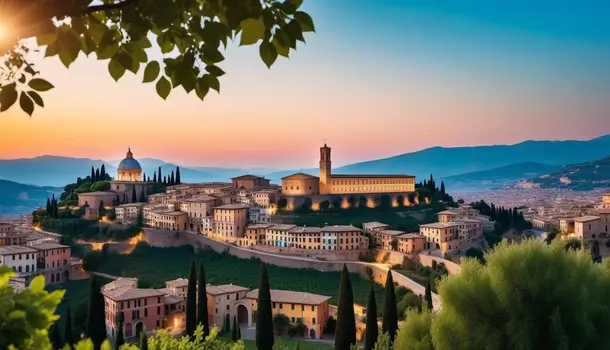 Lazio200 listings
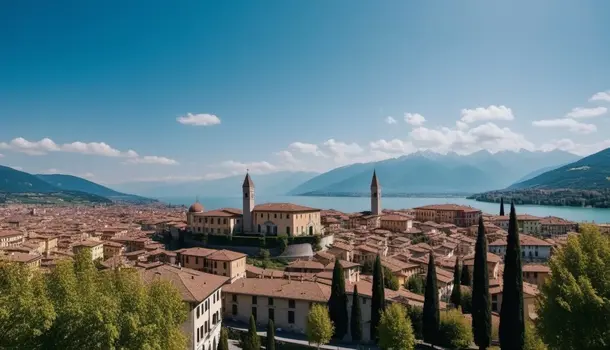 Lombardy161 listings
The charming region of Trentino-Alto Adige in Italy boasts a diverse climate with warm summers and snowy winters, making it a year-round destination. This area is rich in cultural heritage, with a unique blend of Italian and Austrian influences reflected in the local architecture, language, and cuisine.
Visitors can explore picturesque alpine villages, sample delicious wines and cheeses, and take in breathtaking views of the Dolomite mountains. Whether you're seeking outdoor adventures or cultural experiences, Trentino-Alto Adige offers a truly unforgettable escape in the heart of Italy.
 Legal review:
Deni Gerikhanov, International Real Estate Lawyer
 Financial review:
Evgeniya Skripko, Financial Expert in International Real Estate
Reviewed:
Trentino‑Alto Adige sits where the Alps meet everyday practicality: dramatic peaks, lake shorelines and towns with modern services make this region one of Italy’s most stable real estate markets. Whether you are a private buyer looking for a second home in Val Gardena, a family relocating to Trento for its universities, or an international investor seeking holiday‑rental income around Lake Garda, the region combines low unemployment, strong tourism flows and improving transport links that support long‑term property value. This text walks through geography, market stats, prices, districts, financing, legal steps and realistic buyer scenarios for property in Trentino‑Alto Adige.
Trentino‑Alto Adige extends roughly 13,600 km² between the Adige valley and the Dolomites, with a population of about 1.08 million concentrated in two autonomous provinces: Trento and Bolzano (Bozen/Bolzano). Towns on the valley floor such as Trento, Bolzano, Rovereto and Riva del Garda offer milder microclimates and year‑round accessibility, while high‑altitude villages in Val di Fassa and Alta Badia host strong winter tourism.
Trento and Bolzano are regional service hubs with high‑quality public infrastructure: the Università degli Studi di Trento and the Free University of Bozen‑Bolzano supply skilled graduates; major hospitals include Ospedale Santa Chiara in Trento and the provincial hospitals in Bolzano and Merano; numerous lyceums and international schools serve expatriate families.
Transport links are a structural advantage: the A22 Autostrada del Brennero and the main Brenner rail axis connect north to Austria and south to Verona; the Brenner Base Tunnel project shifts freight capacity and shortens transit times; regional air access via Bolzano Airport and easy drives to Verona and Innsbruck expand market reach. Local public transport and well‑maintained ski lifts sustain strong seasonal flows.
Property in Trentino‑Alto Adige shows diverse pricing driven by location, altitude and tourism strength. Market dynamics combine steady demand for urban family housing with higher volatility in the tourist short‑stay segment around the Dolomites and Lake Garda. Typical price bands you can expect:
Trento and Bolzano are the safest bets for long‑term residence and steady rental income; both have universities, hospitals and strong job markets. Merano and Bressanone suit buyers seeking health‑town amenities and international retirees. Rovereto and Pergine Valsugana provide more affordable family housing near industrial and logistics employers.
High‑tourism pockets where short‑term rentals and luxury second homes perform well include:
Public and institutional projects drive long‑term value in the region: the NOI Techpark in Bolzano is a technology and start‑up hub that stimulates demand for nearby housing and serviced apartments. Cultural and regeneration investments such as MUSE – Museo delle Scienze in Trento and the urban revitalisation of Trento railway areas promote city centre attractiveness. Infrastructure projects — notably the Brenner Base Tunnel and upgrades on the A22 corridor — increase logistics and cross‑border commuter potential.
Developments are often led by regional partnerships, housing cooperatives and national banking groups that co‑finance projects; local cooperative builders (Casse Rurali and the provincial housing cooperatives) remain important in social and mid‑range housing. The Dolomiti Superski consortium supports private lodge refurbishments and hotel conversions in ski valleys, maintaining high standards for alpine properties.
For new build property in Trentino‑Alto Adige you will find a mix of boutique developers in mountain resorts and larger regional promoters in Trento and Bolzano; institutional players and local banks provide project financing and pre‑sales for mixed‑use schemes near transport hubs.
Italian banks offer lending to non‑resident buyers, though underwriting is stricter than for residents; typical loan‑to‑value (LTV) for foreigners ranges 40–80% depending on income documentation and property type. Down payments commonly start at 20–30% for EU applicants and 30–40% for many non‑EU applicants; exceptions exist based on bank risk appetite.
Interest rates and terms vary: fixed and variable mortgages across regional banks and national lenders like Intesa Sanpaolo and UniCredit are commonly used; local credit unions and Südtiroler Sparkasse (Sparkasse) provide competitive local offers. Typical mortgage terms span 10–30 years with indicative interest ranges around 2.5–4.5% depending on contract and LTV.
Developers in Trentino‑Alto Adige often propose interest‑free installment plans during construction phases, deferred balance on completion and limited guarantee bonds. For buyers searching for property in Trentino‑Alto Adige with mortgage or property in Trentino‑Alto Adige with installment plan, local banks and developers frequently combine pre‑sales deposits (generally 10–30%) with staged payments.
The purchase process starts with property selection and a written offer; once accepted the standard next step is a preliminary contract (compromesso) with a deposit (caparra) usually 10–30% of the purchase price. Buyers normally hire a local real estate lawyer and rely on a notary (notaio) for due diligence and the final deed (atto di compravendita).
At the notary stage the deed is signed, taxes and fees are calculated and the title is registered at the land registry (Conservatoria dei Registri Immobiliari) and the cadastre (Catasto). Payment methods include bank transfers, escrow accounts via the notary and bank guarantees; wire transfers from abroad are commonplace for international buyers.
Taxation and fees differ by transaction type: purchases from private sellers incur registration taxes, while new build sales from VAT‑registered developers are subject to VAT and possibly reduced rates for first homes. Additional costs to budget include notary fees, cadastral/registration taxes and possible agency fees; professional translations and certified documents are often required for foreign buyers.
Acquiring property in Italy does not automatically grant residency or citizenship; property alone is not a direct route to an Italian residence permit. Buyers who want to live in Italy typically apply for the appropriate visa: EU citizens simply register as residents; non‑EU buyers commonly apply for elective residency or a work/entrepreneur visa supported by proof of accommodation and stable income.
Investor visa routes exist for significant capital commitments (national investment visa thresholds apply), but purchase of residential property alone generally does not meet the investor visa criteria; consult an immigration lawyer about residence permit through property purchase in Trentino‑Alto Adige and other paths. Naturalisation by residence is possible after 10 years for non‑EU citizens and after 4 years for EU citizens, subject to continuous legal residency and integration requirements.
Property ownership does, however, strengthen an application for tax residency or elective residency when paired with documented income and health insurance; local municipal registration (iscrizione anagrafica) is the administrative step that anchors access to health services and schooling.
Long‑term family residence and rental stability are best pursued in Trento and Bolzano, where employment, universities and health infrastructure support steady demand and gross yields around 2–4%. Urban apartments of 60–120 m² close to university campuses or hospitals are ideal for mid‑term rentals and professional relocations.
Short‑term and seasonal investments work well in the Dolomites and Lake Garda: chalets, ski‑in apartments and lakefront units can reach 4–8% gross yields in busy seasons, though management and regulation of short‑let platforms require active oversight. For remote workers and second‑home buyers, towns like Riva del Garda, Merano and Ortisei offer fast internet, co‑working pockets and lifestyle appeal.
For capital appreciation and low maintenance, consider new build property in Trentino‑Alto Adige near infrastructure corridors (A22, train stations, tech parks) and renovation projects in city centres that attract long‑term tenants and buyers. Typical buyer scenarios:
There is a practical route to buying property in Trentino‑Alto Adige: find the right location for your use case, secure financing with a local or national bank, use a notary to finalise the deed and plan for taxes and registration. Whether you prioritise lifestyle, rental income or long‑term capital growth, the region’s combination of alpine appeal, strong infrastructure, low unemployment and increasing cross‑border connectivity makes property in Trentino‑Alto Adige a resilient option for private buyers and international investors alike.
Don't know which area to choose in Trentino-Alto Adige? We will tell you in which areas it is better to live or invest, and show you the appropriate options.