


Real Estate in Calabria
Do you want to buy real estate in Calabria? We'll tell you where to start

Liliya
International Real Estate Consultant
Need help choosing a property?
Leave a request and our manager will contact you.
International Real Estate Consultant
Real Estate in Calabria
Do you want to buy real estate in Calabria? We'll tell you where to start
Liliya
International Real Estate Consultant
Need help choosing a property?
Leave a request and our manager will contact you.
International Real Estate Consultant
Selection real estate in Calabria in 15 minutes
Leave a request and we will select the 3 best options for your budget
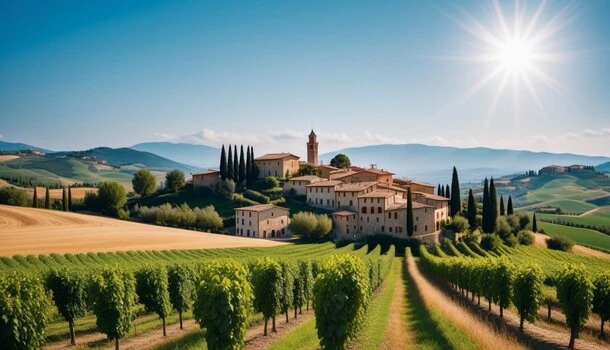
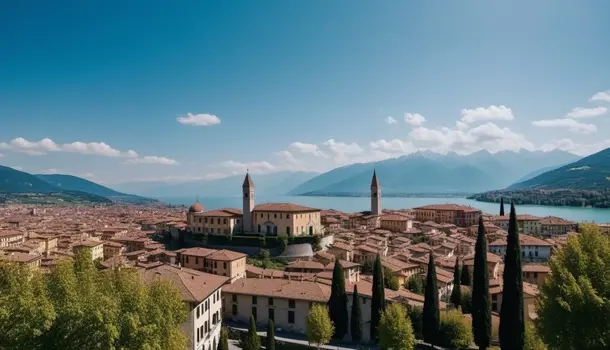
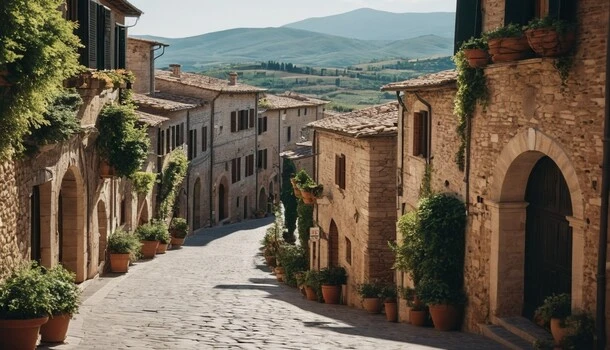
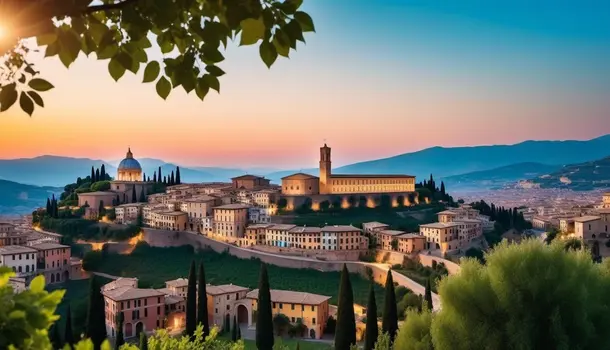
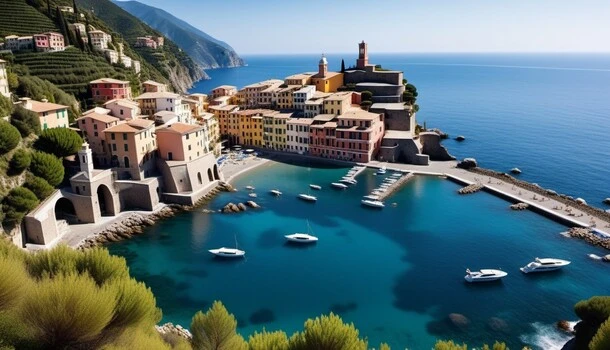
Weather in Calabria
 !
!
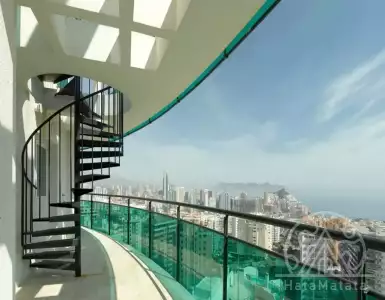
For sale Flat , Spain 211 515 $
📌 A few apartments for sale in Cala de Finestrat - a cozy place between Benidorm and Vieijahoyosa with a...
 !
!
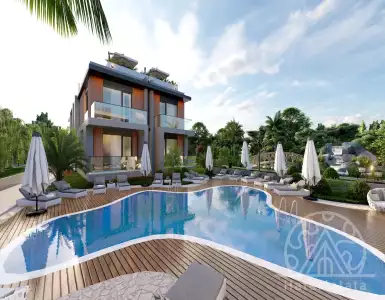
Flat for sale , Cyprus 127 128 $
The new residential complex is located in the foothills of Alsanjak. The complex consists of two two-storey buildings. Block A - 12...
For Sale Real Estate in Calabria
Didnt find the right facility?
Leave a request - we will handle the selection and send the best offers in a short period of time



Irina Nikolaeva
Sales Director, HataMatata
Selection real estate in Calabria in 15 minutes
Leave a request and we will select the 3 best options for your budget
🇮🇹 Calabria real estate: coastal villas, townhouses and rural properties for sale
Calabria sits at Italy’s southern tip with a mix of long sandy bays, rugged mountains and small historic hill towns that together create a diverse property market and a quiet value proposition for international buyers. The region’s population is roughly 1.9 million, and accessibility has improved thanks to the A2 Autostrada del Mediterraneo, rail upgrades and Lamezia Terme International Airport. Buying property in Calabria can mean anything from a renovated apartment in Cosenza to a luxury villa overlooking the Tyrrhenian Sea near Tropea.
🌍 Geography and climate in Calabria and transport accessibility
Calabria stretches from the Tyrrhenian to the Ionian coasts, offering distinct microclimates: mild, windy winters on the coast and colder, snow-prone conditions inland around the Aspromonte and Sila ranges. The coastline includes signature areas such as the Costa degli Dei, Capo Vaticano and the Ionian beaches of Soverato and Squillace, which drive seasonal tourism and short-term rental demand.
Calabria’s principal transport nodes are practical for buyers: Lamezia Terme Airport (SACAL) serves domestic and European routes, the A2 motorway connects north to Salerno and south to Reggio, and the Salerno–Reggio Calabria rail corridor links the region to national high-speed services. Ferry connections operate between Villa San Giovanni and Messina, and ports like Gioia Tauro and Vibo Marina support freight and passenger traffic.
Calabria’s infrastructure includes universities and hospitals that anchor demand: Università della Calabria (Rende), Università Mediterranea di Reggio Calabria, Policlinico Mater Domini (Cosenza) and Ospedale Pugliese-Ciaccio (Catanzaro) deliver education and health services that support families and long-term residents. Local commuter services, regional rail (Ferrovie della Calabria) and ongoing PNRR-funded upgrades are improving last-mile connectivity.
💶 Property prices in Calabria by category and area
Coastal hotspots and historic centers command premiums while inland and mountain villages remain highly affordable, offering clear choices for different buyer goals. Average residential prices across Calabria typically range from about €900 to €1,500 per m², with variations by town and property type.
New build property in Calabria is priced higher than the secondary market because of modern standards and warranties; new builds commonly range €1,500–€3,500 per m² depending on proximity to the sea. Secondary market property in Calabria can start from €400–€900 per m² in rural valleys and small hill towns.
Typical price breakdowns:
- Apartments, regional average: €900–€1,500/m².
- Coastal towns (Tropea, Capo Vaticano, Pizzo): €1,800–€3,500/m²; luxury villas can reach €3,000–€6,000/m².
- City centers (Reggio, Cosenza, Catanzaro): €1,200–€2,000/m².
- Rural houses and farmsteads: €400–€900/m².
- One-bedroom apartments: from €50,000 in small towns to €180,000–€250,000 in popular coastal spots.
- Villas: from €200,000 for modest sea-view houses to over €1.5 million for premium coastal estates.
🎯 Best areas in Calabria to buy property and key districts
Reggio Calabria combines a vibrant lungomare and historic center with port access and ferry links to Sicily; valuable pockets include Centro Storico, Lungomare Falcomatà, Archi and Pellaro for sea views and rental appeal.
Cosenza and the Rende/Arcavacata area benefit from the Università della Calabria, public administration jobs and a growing tech SME cluster; districts such as Centro Storico, Quattromiglia and Arcavacata are sought after by families and student rentals.
Catanzaro, as the regional administrative capital, has active neighborhoods like Lido, Germaneto and Sala; proximity to beaches and government offices creates demand for long-term rentals and professional relocations. Other notable locations:
- Tropea and Capo Vaticano for premium holiday rentals and resale value.
- Pizzo Calabro and Scilla (Chianalea) for heritage tourism and boutique hospitality.
- Lamezia Terme and Sambiase for airport-linked investment and family homes.
- Gioia Tauro and Vibo Marina for logistics-linked housing and redevelopment opportunities.
🏗️ Developers and major projects in Calabria
Major infrastructure and redevelopment work in Calabria is led by well-known national players and local authorities rather than exclusively residential conglomerates, which shapes opportunity for investors. Companies such as Webuild and Rete Ferroviaria Italiana (RFI) have been involved in transport and civil works in the region, including railway upgrades along the Salerno–Reggio Calabria corridor.
Airport operator SACAL has completed modernization works at Lamezia Terme that improve year-round connectivity and indirectly support short-term rental demand near the airport. Port authorities (Autorità di Sistema Portuale) are investing in Gioia Tauro and Vibo Marina to maintain freight throughput and stimulate local logistics employment.
Municipal regeneration projects in Reggio Calabria and Catanzaro leverage national PNRR funds and local developers—buyers will frequently encounter local cooperatives (cooperative edilizie) and small-to-medium construction firms offering renovation projects, restoration of historic stock and limited new builds targeted at domestic second-home buyers.
💳 Mortgages and installment plans for property in Calabria
Italian banks and lenders provide mortgages in Italy for foreigners, with common terms and conditions shaped by residency and documentation. Typical foreign buyer terms: loan-to-value (LTV) 50–70%, down payments commonly 20–40%, and repayment terms spanning 10–30 years depending on age and income. Interest rates vary by lender and credit profile but commonly fall from around 2–4% for competitive fixed or variable deals.
Developers and sellers often offer interest-free installment plans—especially on new build property in Calabria—whereby buyers pay a staged deposit and balance on completion, a useful option for buyers wanting a property in Calabria with installment plan rather than immediate mortgage commitment.
Required documentation for mortgages and installment plans typically includes:
- Passport and codice fiscale (tax code).
- Proof of income (three months’ payslips or tax returns).
- Bank statements and a preliminary property contract.
- Residency status: EU buyers have fewer formalities, non-EU buyers may require additional checks.
🧾 Property purchase process in Calabria step-by-step
First step is property selection and verification of ownership and planning status through a local agent or lawyer; demand registration of the property in the Catasto and an energy certificate (APE). Once a suitable property is selected, buyers sign a preliminary agreement (compromesso) and pay a deposit often equal to 10–20% of the purchase price, which secures the deal pending checks and financing.
Second step involves due diligence: a notary (notaio) checks titles, mortgage encumbrances and cadastral conformity, while buyers arrange a survey and confirm building permits, urban planning compliance and any condominium regulations. If buying a new build, decide between paying VAT on the developer sale or paying registration tax for resale. VAT on new builds is 4% for first-home (prima casa) in applicable cases, 10% reduced rate or 22% standard depending on property class. For private sales, registration tax is 2% of the cadastral value for a primary residence or 9% for a second home where applicable.
Final step is the deed (rogito) executed before a notaio; payment is made via bank transfer and the notaio arranges registration with the Agenzia delle Entrate and the Land Registry. Foreign buyers should obtain a codice fiscale, arrange a local bank account if necessary, and consider hiring a local bilingual lawyer or trusted agent to navigate paperwork.
🏛️ Legal aspects, residence permits, and citizenship related to property in Calabria
Buying property in Calabria does not automatically grant a residence permit or Italian citizenship; this is a crucial legal distinction for international buyers. There is no nationwide “golden visa” specifically for buying real estate; however, Italy offers an Investor Visa with qualifying investments such as €500,000 into an Italian company, €1 million philanthropic donation or €2 million in Italian government bonds, but a property-only purchase does not meet these thresholds.
Non-EU buyers who wish to live in Italy may use property as evidence for an elective residence visa, which requires proof of stable, independent income and suitable accommodation; alternatively, EU citizens have the right to reside and can register locally once they move. Naturalisation timelines remain governed by residency rules: 10 years of legal residence for non-EU nationals, 4 years for EU citizens, with family and marriage routes subject to different conditions.
Buyers should consult immigration counsel when pursuing residence permit through property purchase in Calabria or exploring residence permit by real estate investment in Calabria, because the property can support residency claims but cannot by itself guarantee immigration status or citizenship by real estate investment in Calabria.
📈 Economy and investment potential in Calabria
Calabria’s economy has long been characterized by agriculture, logistics and seasonal tourism, with urban centers diversifying into services and education; the region is improving infrastructure with national and EU funds that stimulate investment. The port of Gioia Tauro remains a strategic logistics hub handling multi-million TEU volumes that create upstream job opportunities and trade flows that benefit nearby real estate markets.
Tourism is a growth driver; coastal destinations such as Tropea, Capo Vaticano and Pizzo attract domestic and European visitors creating a robust holiday-rental segment that supports short-term rental yields above many inland locations. Labour markets show structural challenges—unemployment often exceeds the national average—yet targeted investments, PNRR projects and airport connectivity improvements are increasing appeal for entrepreneurial investors seeking value buys.
Real estate investment in Calabria works because entry prices are low compared with national averages, renovation costs are competitive, and demand from second-home buyers, retirees and international remote workers is rising. Investors targeting rental income or capital appreciation often prioritize towns with transport links, university presence or tourist credentials to capture steady occupancy and higher seasonal rates.
🔎 Investment advantages and buyer scenarios in Calabria
Calabria suits a wide range of buyers: families seeking affordable urban housing in Cosenza or Catanzaro, investors chasing seasonal short-term rental returns in Tropea and Capo Vaticano, and long-term visionaries rehabilitating rural stock for boutique hospitality. Coastal second-home buyers often purchase apartments or small villas near Tropea, Pizzo or Scilla, where holiday rental yields can reach 6–8% in peak seasons but remain seasonal.
Students and university-related renters favor Cosenza and Rende (Arcavacata), delivering stable long-term rental yields typically around 3–5% gross and low vacancy. Remote workers and relocators increasingly target towns with reliable broadband and lifestyle appeal—Tropea, Soverato and Lamezia Terme are common picks for buyers combining living and work-from-home needs.
Buyers considering the secondary market property in Calabria can find renovation projects that significantly increase value; developers and cooperatives commonly offer staged payment plans and refurbishment expertise. Those looking for new build property in Calabria should expect modern finishes, energy efficiency and developer guarantees, often sold with property in Calabria with mortgage options or property in Calabria with installment plan offers.
Calabria’s real estate market is a study in contrasts: affordable entry prices and meaningful upside where transport, tourism and university demand converge, balanced by seasonality and regional economic gaps that require local knowledge. If you are thinking to buy property in Calabria or to pursue real estate investment in Calabria, prepare for standard Italian purchase steps, secure local professional advice on taxes and permits, and match property type to your holding strategy—long-term rent, holiday letting, relocation or renovation-led resale—so your position benefits from the region’s transport links, university hubs and growing tourism draw.
Frequently Asked Questions
Prices vary widely: inland villages $300–$800/sq·m (€280–€750), small towns $900–$1,600/sq·m (€850–€1,500), popular coastal/renovated homes $1,600–$3,200+/sq·m (€1,500–€3,000+). Small apartments often sell from $40k–$120k; larger coastal homes can be $150k–$600k+. These are regional averages—location and condition drive price.
Yes—foreigners can generally buy freehold in Calabria. Requirements: Italian tax ID (Codice Fiscale), local bank account, ID and proof of funds. Non-EU buyers should check reciprocity and visa implications with consular services. No special ownership vehicle is mandatory; many buyers use direct ownership or an Italian company for investment.
Coastal holiday rentals show seasonal strength; gross yields: long-term rents ~3–6% and short-term peaks often >6–10% in top towns. Liquidity is slower than big cities—expect 6–24+ months to sell. Low purchase prices can give upside through renovation and holiday rental demand, but expect seasonality and local-market variability.
Yes for many: low living costs, local markets, and relaxed lifestyle. Infrastructure varies—hospitals in Catanzaro, Reggio Calabria; regional airport at Lamezia Terme; public transport limited outside cities. Primary and secondary schools exist but international options are rare. A car is usually necessary for daily life.
Many towns and cities have fibre and decent mobile 4G/5G; rural villages may rely on ADSL or mobile hotspots. Cost of living is low; quiet coastal or hill towns suit long stays. For stays longer than 90 days non-EU nationals need appropriate visas/residence permits. Check local internet speeds before committing.
Italy offers an Investor Visa requiring large investments (e.g., €250k–€1M; $270k–$1.08M approx.), plus other residency routes like elective residence or work visas. Citizenship by naturalization generally requires long-term legal residency (often several years). Timelines: investor visas can be processed in months; naturalization takes years.
Typical costs: transfer tax 2% (primary home) or ~9% (second home) of cadastral value when buying from private; VAT 10% (new builds) or 22% in some cases. Notary, registration and cadastral fees plus agent costs typically add 2–4% of price. Annual property tax (IMU) applies to second homes, often 0.2–0.8% of cadastral value.
Calabria is seismically active and has landslide/coastal erosion zones. Always check seismic classification, building permits, and structural surveys. Consider earthquake-resistant upgrades and insurance. Coastal properties may face salt corrosion and flood risk—factor potential retrofit costs into your budget.
Yes—some towns offer very low-price or symbolic-sale properties with renovation commitments. National and regional tax deductions or grants for energy and seismic upgrades often exist. Renovation costs typically run $400–$1,200/sq·m for basic work, $1,200–$2,500+/sq·m for full restorations—budget contingencies for unknowns.
Coast: higher prices, stronger summer rental demand, better tourism liquidity. Inland: lower prices, quieter life, stronger year-round local community but slower resale. Choose coast for income potential and services; choose inland for lower entry costs and rural living. Consider access, condition, and local infrastructure when deciding.
Property by cities
Properties by Region
- Real estate in Tuscany (423)
- Real estate in Lombardy (372)
- Real estate in Umbria (334)
- Real estate in Lazio (210)
- Real estate in Liguria (133)
Properties by Country
- Real estate in Bulgaria (11408)
- Real estate in Montenegro (5186)
- Real estate in Indonesia (2423)
- Real estate in Spain (2289)
- Real estate in Portugal (1975)
- Real estate in Italy (1909)
- Real estate in Turkey (1699)
- Real estate in Cyprus (1594)
- Real estate in Thailand (1565)
- Real estate in Croatia (1431)
- Real estate in Greece (1082)
- Real estate in USA (1013)
- Real estate in France (1006)
- Real estate in Georgia (519)
- Real estate in Serbia (328)
- Real estate in Slovenia (123)
- Real estate in Egypt (23)
Free real estate consultation in Calabria
Don't know which area to choose in Calabria? We will tell you in which areas it is better to live or invest, and show you the appropriate options.

Maria Guven
Head of Direct Sales Department
+90-507-705-8082