


Real Estate in Friuli-Venezia Giulia
Do you want to buy real estate in Friuli-Venezia Giulia? We'll tell you where to start

Liliya
International Real Estate Consultant
Need help choosing a property?
Leave a request and our manager will contact you.
International Real Estate Consultant
Real Estate in Friuli-Venezia Giulia
Do you want to buy real estate in Friuli-Venezia Giulia? We'll tell you where to start
Liliya
International Real Estate Consultant
Need help choosing a property?
Leave a request and our manager will contact you.
International Real Estate Consultant
Selection real estate in Friuli-Venezia Giulia in 15 minutes
Leave a request and we will select the 3 best options for your budget

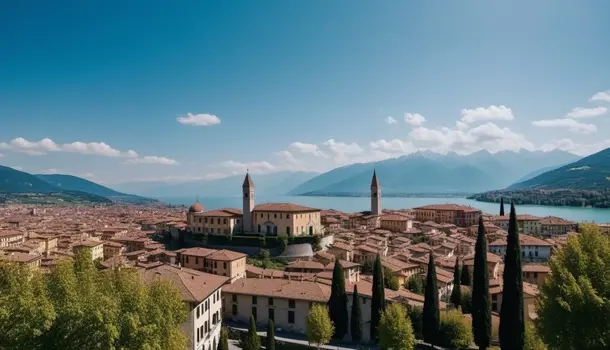
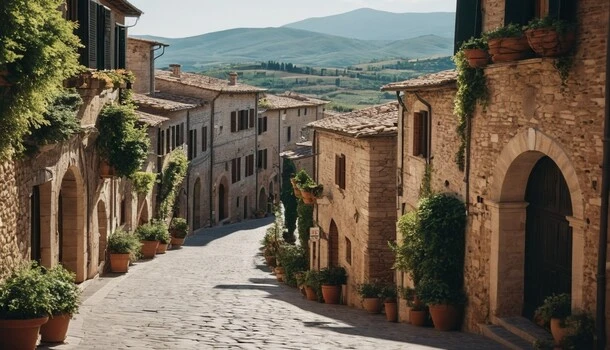

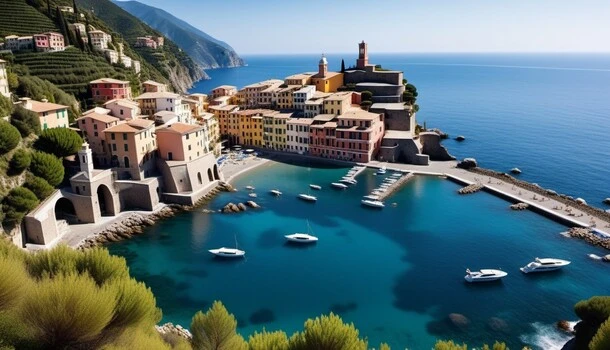
Weather in Friuli-Venezia Giulia
 !
!
For sale Flat , Spain 212 831 $
📌 A few apartments for sale in Cala de Finestrat - a cozy place between Benidorm and Vieijahoyosa with a...
 !
!
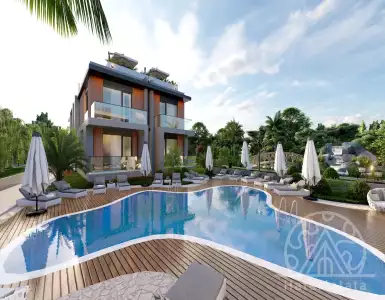
Flat for sale , Cyprus 127 442 $
The new residential complex is located in the foothills of Alsanjak. The complex consists of two two-storey buildings. Block A - 12...
For Sale Real Estate in Friuli-Venezia Giulia
Didnt find the right facility?
Leave a request - we will handle the selection and send the best offers in a short period of time



Irina Nikolaeva
Sales Director, HataMatata
Selection real estate in Friuli-Venezia Giulia in 15 minutes
Leave a request and we will select the 3 best options for your budget
🇮🇹 Properties for sale in Friuli-Venezia Giulia: prices, locations, legal requirements
Friuli‑Venezia Giulia is a compact, well‑connected Italian region that sits where the Alps meet the Adriatic Sea, offering a rare combination of ports, industry, agricultural hinterland and beach resorts within short distances of each other. Buyers who search for property in Friuli‑Venezia Giulia find everything from Trieste waterfront apartments and Collio vineyard estates to family homes in Udine and seasonal rental units in Lignano Sabbiadoro. The region’s population is about 1.2 million, and its transport and social infrastructure make it attractive to families, retirees, cross‑border workers and investors alike.
🗺️ Geography, climate and transport in Friuli‑Venezia Giulia
Friuli‑Venezia Giulia occupies a strategic corner of northeastern Italy, bordering Austria and Slovenia and facing the northern Adriatic. Major transport arteries include the A4 (Turin–Milan–Venice) corridor to the south and the A23 that links Udine to the Austrian border, creating direct routes for freight and commuters. Trieste – Friuli Venezia Giulia Airport in Ronchi dei Legionari handles roughly 1.2 million passengers annually, while Trieste’s port is one of the busiest on the Adriatic with throughput around 70 million tonnes of cargo, underscoring the region’s logistics strength.
Public transport and rail links are robust: high‑quality regional rail connects Trieste, Udine, Pordenone and Gorizia, and international services link the region to Ljubljana, Vienna and Munich. Road travel to Ljubljana is under two hours from Trieste for cross‑border buyers and renters.
Social infrastructure is strong for a region of this size: the University of Trieste enrolls about 15,000 students and the University of Udine about 13,000, while major hospitals include Ospedale Maggiore in Trieste (Cattinara and Ospedale di Cattinara complex) and Ospedale Santa Maria della Misericordia in Udine. Quality schools, specialized medical centers and business incubators support both families and professionals relocating here.
💶 Property prices in Friuli‑Venezia Giulia
Property in Friuli‑Venezia Giulia covers a broad price spectrum from budget apartments to premium coastal villas. Average market levels vary significantly by city and type of property, with clear distinctions between new build property in Friuli‑Venezia Giulia and secondary market property in Friuli‑Venezia Giulia.
- Trieste: €1,800–€4,500/m² overall; central and sea‑front units often €3,000–€6,000/m².
- Udine: €1,200–€2,200/m² for city apartments; suburban houses €1,500–€2,000/m².
- Pordenone: €1,100–€1,900/m² depending on proximity to industrial zones.
- Lignano Sabbiadoro and Grado (tourist beaches): €2,500–€6,500/m² for seaside apartments; peak seasonal rental units command higher nightly rates.
- Gorizia and inland villages: €600–€1,200/m² for more affordable options; historic farmhouses in Collio and Isonzo wine areas €1,800–€3,800/m².
New build projects typically add a 5–20% premium over comparable resale stock. Demand trends show stronger interest in coastal and regional capital properties for short‑let income, while inland and provincial markets favor long‑term leases and second‑home purchases.
🎯 Best areas in Friuli‑Venezia Giulia to buy property
Trieste is the natural choice for buyers who prioritize maritime commerce, international schools and cultural life. Neighborhoods to watch include Centro Storico, Barcola (sea front promenade), Città Vecchia and Roiano for renovation projects with high long‑term capital potential.
Udine is attractive for families and remote workers: Centro Storico, San Gottardo and Parco del Cormor provide access to good schools, parks and regional administration, with more affordable family houses in suburbs like Paderno and Cussignacco.
Coastal towns such as Lignano Sabbiadoro (zones: Sabbiadoro, Pineta, Riviera) and Grado (Isola, Porto Buso) are specialist markets for vacation rentals and seasonal income. Smaller pockets—Collio hills (Cividale del Friuli, Cormons) and Aquileia (archaeological zone)—appeal to boutique buyers seeking vineyard estates or heritage properties.
🏗️ Major developers and projects in Friuli‑Venezia Giulia
The region’s development scene mixes public regeneration projects and private industrial investment. The Autorità di Sistema Portuale del Mare Adriatico Orientale is driving the Porto Vecchio Trieste regeneration, converting port land into mixed‑use and logistics space and improving hinterland connections.
Fincantieri is a major industrial anchor in Monfalcone, where shipyard expansions and related real estate demand continue to support local housing and services. Logistics and freight developments are clustered around Interporto di Cervignano and the intermodal hub in Trieste, which attract warehouse and residential demand for workers.
Coastal private developments such as Portopiccolo Sistiana demonstrate the premium segment at play around Trieste, combining luxury apartments, marina berths and public spaces; local construction firms and national contractors collaborate on refurbishment and new build property in Friuli‑Venezia Giulia projects.
🧾 Mortgages and installment plans for property in Friuli‑Venezia Giulia
Italian banks offer mortgages to foreign buyers; typical LTV ratios range from 50–70% for non‑resident applicants, while EU residents and long‑term residents may achieve up to 80% in selected cases. Interest rates depend on the product: fixed‑rate mortgages commonly start around 2%–3.5%, variable rates can be lower or higher depending on market conditions.
Down payments for foreigners usually fall between 20–40% of the purchase price; banks evaluate income, employment stability and existing liabilities. Developers in the region commonly offer interest‑free construction installment plans (pagamenti in contratti di vendita) that bridge deposit to final deed, which reduces upfront mortgage needs for buyers of new build property in Friuli‑Venezia Giulia.
Mortgage in Italy for foreigners has direct procedures: obtain an Italian tax code (codice fiscale), provide Italian or translated financial documentation, and secure a mortgage offer (proposta di mutuo) before signing the compromesso in many cases.
📝 Property purchase process and taxes in Friuli‑Venezia Giulia
The purchase sequence in Friuli‑Venezia Giulia follows standard Italian practice: property selection, due diligence, preliminary contract (compromesso) with deposit, mortgage approval if required, and final deed (rogito) before a notary. The deposit (caparra confirmatoria) typically ranges from 10–30%.
Tax treatment depends on seller status and buyer purpose: for purchases from a private seller registration tax is 2% of the cadastral value for primary residence (prima casa) and 9% for second homes, plus fixed cadastral and mortgage taxes (usually €50 each). For new build property bought from a developer VAT applies: 4% for qualifying first homes, 10% (reduced) or 22% (standard) otherwise, with registration tax often set as a fixed amount (€200).
Notary fees and agency commissions are additional: notary costs generally run 1–2.5% of the purchase price; agency fees are commonly 2–3% + VAT. Buyers should secure a notaio, request a visura catastale and land registry check, and confirm urban planning compliance before signing.
⚖️ Legal aspects, residence permit and citizenship related to property in Friuli‑Venezia Giulia
Buying property in Italy does not automatically grant residency or citizenship. Italy does not operate a direct "golden visa" through real estate purchase. The government’s Investor Visa exists but requires substantial capital (for example, investments of several hundred thousand euros in companies or millions in government bonds) and is separate from ordinary property purchases.
Property can support an elective residence permit application if the applicant demonstrates adequate independent income and secure accommodation, but the real estate transaction alone is not sufficient to obtain a residence permit through property purchase in Friuli‑Venezia Giulia. Naturalization by residence requires 10 years of legal residence for non‑EU citizens and 4 years for EU citizens; buying a house does not shorten these timelines.
For inheritance, taxation and rental regulations, buyers should consult a local attorney and tax advisor. Non‑EU buyers must register with the local anagrafe when they obtain residency; rental income is subject to Italian taxation and can be declared under a cedolare secca (flat tax) or ordinary regime depending on choice.
📈 Economy and investment potential in Friuli‑Venezia Giulia
The regional economy blends advanced manufacturing, shipbuilding, logistics, wine production and tourism. Regional GDP is close to €40 billion with GDP per capita above the national average (roughly €32,000–€34,000), reflecting strong industrial and export performance. Key sectors include Fincantieri shipbuilding in Monfalcone, logistics through the Port of Trieste and Interporto hubs, precision manufacturing around Pordenone and Friulian wine production in Collio and Isonzo.
Tourism is a major seasonal driver: Lignano Sabbiadoro attracts around 3 million visitors over the season, and cultural tourism around Trieste, Aquileia and Cividale brings steady demand for short‑let accommodation. Cross‑border workers from Slovenia and Austria, plus EU retirees, make the region resilient and diversified, supporting both rental and resale markets.
Investors typically see long‑term yields of 3–4% gross in urban, long‑let stock (Trieste, Udine) and 5–8% gross in seasonal holiday rentals in Lignano and Grado, with capital appreciation strongest for waterfront and centrally located properties.
🔍 Buyer scenarios and which property in Friuli‑Venezia Giulia fits each goal
Family relocation and school access: buyers moving for schools and work frequently choose Udine, central Trieste neighborhoods, and towns with good primary and secondary schools; 3‑4 bedroom apartments and suburban villas of 100–180 m² are typical purchases.
Seasonal rental and holiday income: beachfront apartments in Lignano Sabbiadoro and Grado—studios to 2‑bed units of 30–70 m²—work best for short‑let platforms; expect strong summer occupancy and higher per‑night rates in Riviera and Sabbiadoro zones.
Long‑term investment and logistics exposure: properties near Interporto di Cervignano and accommodation for workers around Monfalcone and Pordenone support stable long‑term leases and an industrial tenant profile.
Premium and lifestyle buyers: vineyard estates in Collio (Cividale del Friuli, Cormons), boutique waterfront homes in Barcola and Portopiccolo, and restored historic apartments in Trieste Centro Storico suit buyers seeking lifestyle and capital preservation.
Remote work and relocation buyers often favor small towns with excellent broadband and commuting links: Cervignano del Friuli, Gorizia and suburban Udine areas deliver affordability while maintaining access to airports and universities.
Buying property in Friuli‑Venezia Giulia delivers varied entry points for private buyers and international investors: coastal holiday apartments and Trieste urban flats serve short‑term rental and lifestyle buyers, while inland houses and properties near logistics hubs suit longer‑term, income‑oriented investments. If you need a targeted market analysis—price comps, rental projections, mortgage pre‑qualification or a step‑by‑step purchase timeline tailored to a specific town such as Trieste, Udine or Lignano—local specialists can provide the notary checks, tax calculations and contract review that will make a cross‑border purchase smooth and secure.
Frequently Asked Questions
Prices vary by city and coast vs inland. Expect about $1,620–$2,160/m² (€1,500–€2,000) region‑wide. Trieste city center often $2,160–$3,240/m² (€2,000–€3,000); Udine $1,296–$1,944/m² (€1,200–€1,800); Pordenone $1,296–$1,836/m² (€1,200–€1,700); rural areas $648–$1,296/m² (€600–€1,200). Coastal tourist spots can be higher.
Yes. EU and non‑EU buyers can purchase real estate; some non‑EU nationals must meet reciprocity rules. Expect to obtain a codice fiscale, clear ID, and often an Italian bank account. Agricultural land or restricted plots can have extra rules. Buying does not automatically grant residency for non‑EU nationals.
Gross rental yields typically range 3–6% for long‑term rentals; coastal and tourist towns can reach 4–7% for short‑let seasonality. Urban hubs (Trieste, Udine) are more liquid and steadier; mountain and rural areas show lower demand and yields. Vacancy and yield depend on property type, location and management costs.
Typical timeline 4–12 weeks from offer to deed (longer if mortgage). Buyer costs: registration tax 2% (primary) or ~9% (second home) of cadastral value, notary fees 1–2% ($1,080–$2,160+), agent fees ~2–3% each side, cadastral/land registry fees small. Budget for legal checks and possible renovation.
Yes, banks lend to non‑residents but LTV is usually lower: 50–70% LTV typical; residents may get up to 70–80%. Loan terms 10–25 years; interest depends on market and credit—roughly 2–5% typical range (fixed/variable). Proof of income, Italian tax ID and local valuation required.
Yes. The region offers good public healthcare, regional hospitals, competitive cost of living, public and international schools in main cities, reliable local transport and highways to Austria/Slovenia. Urban areas have childcare and cultural amenities; expect quieter life in smaller towns but still good basic services.
Many towns have decent broadband and fiber in cities: 100+ Mbps commonly available in Trieste/Udine; rural speeds vary. Lower living costs, outdoor lifestyle and central EU location are attractive. Schengen rules limit non‑EU stays to 90/180 days—longer stays require visa, residence permit or remote‑worker visa if available.
Buying property alone does not grant Italian residency or the investor visa. Options: Investor Visa (not property‑based) requires investments like ~$2.16M (€2M) in bonds, ~$540k (€500k) in an Italian company, ~$270k (€250k) in a startup, or ~$1.08M (€1M) philanthropic. Non‑EU buyers can apply for elective residency; citizenship by naturalization typically needs ~10 years' legal residence.
Check title, liens, land registry, zoning, seismic classification (region is earthquake‑prone in parts), flood risk near rivers/coast, cadastral consistency and building permits. Get an energy performance certificate and structural survey. Hidden renovation costs and unclear permits are common pitfalls.
Trieste and central Udine areas offer the best liquidity; Pordenone and popular coastal towns (tourist spots) also resell faster. Rural mountain villages and remote inland towns have lower demand and longer selling times. Choose proximity to transport, schools and services to maximize resale speed and price.
Properties by Region
- Real estate in Tuscany (418)
- Real estate in Lombardy (372)
- Real estate in Umbria (323)
- Real estate in Lazio (210)
- Real estate in Liguria (133)
Properties by Country
- Real estate in Bulgaria (11408)
- Real estate in Montenegro (5367)
- Real estate in Indonesia (2423)
- Real estate in Spain (2289)
- Real estate in Portugal (1975)
- Real estate in Italy (1893)
- Real estate in Turkey (1699)
- Real estate in Cyprus (1588)
- Real estate in Thailand (1565)
- Real estate in Croatia (1431)
- Real estate in Greece (1080)
- Real estate in USA (1013)
- Real estate in France (1006)
- Real estate in Georgia (519)
- Real estate in Serbia (328)
- Real estate in Slovenia (123)
- Real estate in Egypt (23)
Free real estate consultation in Friuli-Venezia Giulia
Don't know which area to choose in Friuli-Venezia Giulia? We will tell you in which areas it is better to live or invest, and show you the appropriate options.

Maria Guven
Head of Direct Sales Department
+90-507-705-8082