


Real Estate in Puglia
Do you want to buy real estate in Puglia? We'll tell you where to start

Liliya
International Real Estate Consultant
Need help choosing a property?
Leave a request and our manager will contact you.
International Real Estate Consultant
Real Estate in Puglia
Do you want to buy real estate in Puglia? We'll tell you where to start
Liliya
International Real Estate Consultant
Need help choosing a property?
Leave a request and our manager will contact you.
International Real Estate Consultant
Selection real estate in Puglia in 15 minutes
Leave a request and we will select the 3 best options for your budget
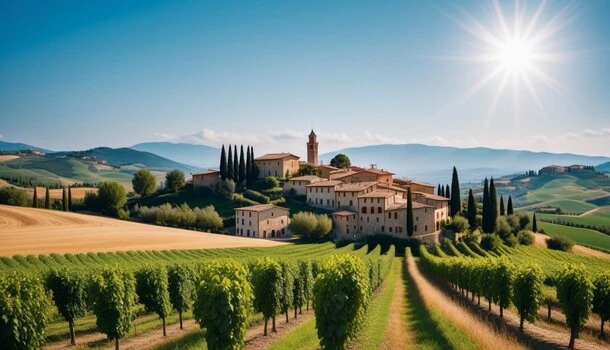
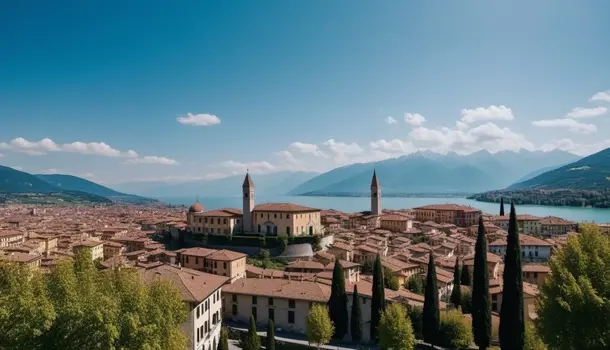
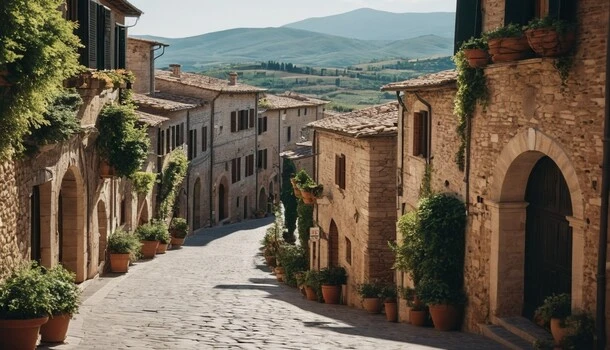
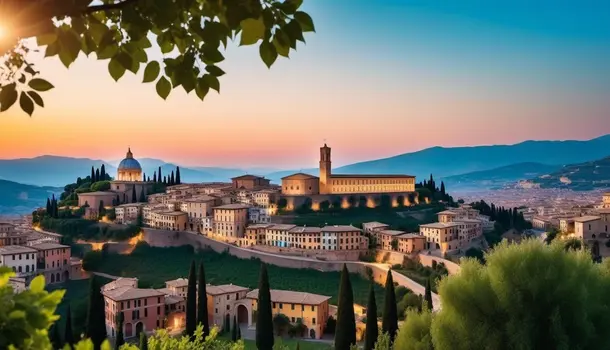
Weather in Puglia
 !
!
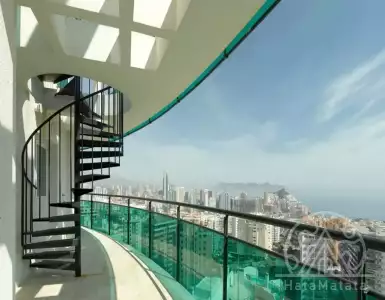
For sale Flat , Spain 212 763 $
📌 A few apartments for sale in Cala de Finestrat - a cozy place between Benidorm and Vieijahoyosa with a...
 !
!
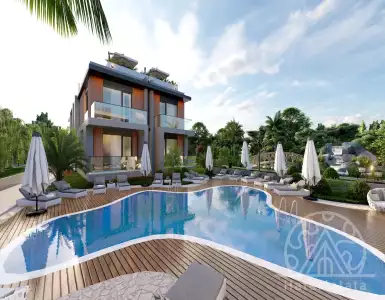
Flat for sale , Cyprus 127 879 $
The new residential complex is located in the foothills of Alsanjak. The complex consists of two two-storey buildings. Block A - 12...
For Sale Real Estate in Puglia
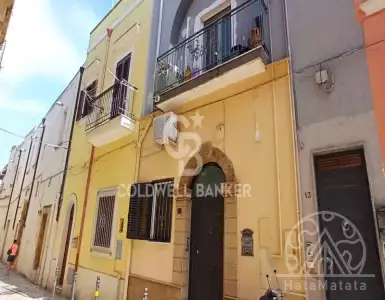
Flats in Brindisi


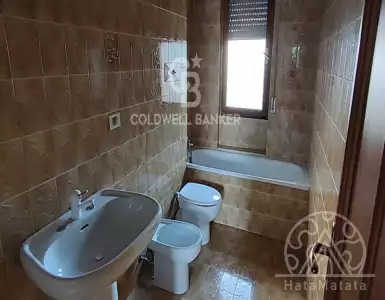
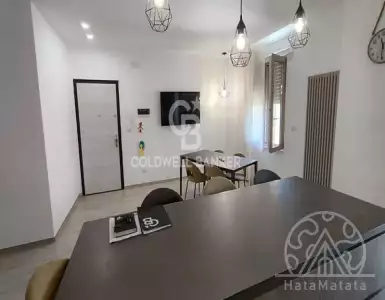
Didnt find the right facility?
Leave a request - we will handle the selection and send the best offers in a short period of time



Irina Nikolaeva
Sales Director, HataMatata
Selection real estate in Puglia in 15 minutes
Leave a request and we will select the 3 best options for your budget
🇮🇹 Buy property in Puglia, Italy: trulli, villas, prices, legal process
Puglia is a large, accessible region in southern Italy where coastline, historic towns and agricultural land meet modern infrastructure and growing international interest in real estate. Buyers who search for property in Puglia find a mix of coastal apartments, restored trulli, rural masserie, and new-build developments in provincial capitals. The region combines a population of about 4 million residents, two international airports, and a tourism engine that supports seasonal and year-round rental markets.
🗺️ Geography, climate and infrastructure in Puglia
Puglia occupies the "heel" of Italy, stretching from the Adriatic to the Ionian Sea with more than 800 km of coastline and Mediterranean climate: hot, dry summers and mild, rainy winters on the coast. Transportation links include Bari Karol Wojtyła Airport (BRI) handling around 5 million passengers annually, Brindisi Papola-Casale Airport (BDS) with roughly 1.5–2 million passengers, and major ports in Bari, Brindisi and Taranto supporting passenger ferries and freight.
Puglia is served by high-speed rail and major motorways: the A14 (Bologna–Bari) and A16 (Naples–Bari) connect to the national network, while regional trains link Lecce, Foggia and Taranto. Local infrastructure investments include port upgrades and airport terminal expansions that improve seasonal accessibility for short-term rentals and tourism.
Puglia's public services include three major universities — University of Bari Aldo Moro, Polytechnic University of Bari and University of Salento in Lecce — and large hospitals such as Policlinico di Bari and Ospedale Vito Fazzi (Lecce), which sustain family relocation and long-term residency demand. Primary and international schools are concentrated in Bari, Lecce and Ostuni, while business districts and logistics hubs cluster around Brindisi and Taranto.
📈 Economy and investment potential in Puglia
Puglia’s regional economy is diversified across agriculture, tourism, logistics and light manufacturing, with an approximate regional GDP around €70–80 billion, reflecting steady growth and increasing attractiveness for foreign buyers. Tourism drives short-term rental income: coastal towns report high season occupancy rates often exceeding 70–85% in peak months, translating into outsized yields for well-managed holiday properties.
Industrial clusters — including agri-food in Foggia and Bari, logistics around Brindisi port and specialized manufacturing in Taranto — provide year-round rental demand and employment that supports long-term rentals to local workers. Migration trends show domestic buyers from Lombardy and Lazio plus growing numbers of northern European purchasers seeking second homes and lifestyle relocations.
Investment incentives at local level and the growth of boutique hospitality — conversions of masserie into hotels and villas — have increased investor interest in restoration projects and new build property in Puglia, while public-private regeneration initiatives in Bari and Lecce support value appreciation.
💶 Property prices in Puglia
Property prices vary strongly by typology and location, presenting clear entry points for different buyer profiles. Coastal towns and historical centres command premiums; inland rural properties and villages offer value and renovation upside.
- Apartments in Bari centre: €1,800–€3,500 per sqm.
- Lecce historic centre apartments: €1,500–€3,000 per sqm.
- Polignano a Mare and Monopoli (coast): €2,500–€6,000 per sqm.
- Ostuni, Martina Franca, Valle d’Itria (stone houses and townhouses): €2,000–€4,500 per sqm.
- Restored trulli and turnkey masserie: €150,000 up to several million euro, with luxury masserie often €700,000–€5,000,000.
Market dynamics show steady demand for restored historic properties and a renewed appetite for new build property in Puglia, especially in Bari and Lecce for urban buyers and in Salento for holiday rental investors. Long-term yields in city rentals typically range 3–5% gross, while short-term holiday lettings in top coastal spots can reach 6–10% gross in peak seasons.
🎯 Best areas in Puglia to buy property in Puglia
Bari metropolitan area is best for buyers seeking year-round rentals, city lifestyle and transport connections to northern Italy and Europe. Districts to watch include Bari Vecchia, Murat, Poggiofranco and the new waterfront developments along Lungomare.
Salento (Lecce province) — including Lecce city, Otranto, Gallipoli, Santa Maria di Leuca — is ideal for holiday rental strategies and high-season occupancy; Lecce offers year-round cultural tourism and students for stable rentals. Valle d’Itria towns — Alberobello, Martina Franca, Cisternino, Locorotondo — are famous for trulli and attract buyers seeking unique restored properties and boutique hospitality projects.
Gargano and northern Puglia (province of Foggia) provide quieter coastal and rural options including Vieste and Peschici; Brindisi and Taranto offer industrial, port and logistics investment potential with more affordable entry prices and workforce rental demand.
🏗️ Major developers and projects in Puglia
Large national and regional players participate in urban regeneration and hospitality conversions, while local restoration specialists lead trulli and masseria projects. Notable hospitality and regeneration examples include Borgo Egnazia near Savelletri (an internationally recognised resort that increased regional visibility) and the redevelopment efforts around Bari waterfront to improve marine and urban amenities.
Active national developers and construction groups working in the region include larger Italian firms operating nationwide that undertake residential and mixed-use projects in Bari and Lecce; local builders and architects focus on restoration of traditional structures to retain authenticity and market value.
Developers commonly offer new build property in Puglia in provincial capitals and seaside towns, while boutique operators convert masserie into hospitality assets, creating opportunities for asset management and short-term rental optimisation for investors.
🏦 Mortgages and installment plans for property in Puglia
Italian banks and international lenders provide mortgages for foreigners; typical mortgage structures for property in Puglia depend on residency and financial profile. Non-resident buyers generally secure LTV ratios of 50–60%, while EU residents may obtain up to 60–70% LTV depending on income documentation. Typical mortgage terms extend up to 20–30 years with indicative interest rates commonly in the 2–4% range depending on fixed or variable options and market conditions.
Developers and sellers often provide interest-free installment plans for new builds and restorations during construction: common arrangements include phased payments linked to completion milestones, with deposit (caparra) and staged payments rather than external financing until the deed. Banks require a codice fiscale, Italian bank account and documentation of income, with down payments commonly 20–40% for residents and 30–50% for many non-resident buyers.
Buyers should consider additional costs such as notary fees, cadastral checks and taxes: new builds sold by VAT-registered builders typically attract VAT at 10% for residential property (reduced in some cases), while resale purchases from private sellers are subject to registration taxes that vary by buyer status and property use.
📝 Property purchase process in Puglia
The typical purchase path begins with selection and an offer (proposta d'acquisto) accompanied by a small earnest deposit to bind the seller and buyer. A signed preliminary contract (compromesso) follows, usually with a 10–30% deposit, and sets the completion (rogito) date when the final deed is signed before a notary (notaio).
Buyers must obtain an Italian codice fiscale, open an Italian bank account for transfers and, when needed, arrange mortgage approval and property due diligence: land registry checks (visura catastale), building compliance (certificato di agibilità) and planning verification. Final payment and the notarised title transfer complete registration in the public registers; the buyer pays transfer taxes, notary fees and any mortgage registration.
Payment methods are typically bank transfers through Italian banking channels with escrow and notary supervision for larger transactions; developers may accept staged payments tied to construction milestones or offer property in Puglia with installment plan options that reduce upfront cash needs.
⚖️ Legal aspects, residence permit and citizenship in Puglia
Purchasing property in Puglia does not automatically grant a residence permit or citizenship. Residency routes linked to financial capacity include the elective residency permit, where applicants must demonstrate stable non-work income and suitable housing, and the Investor Visa for Italy, which requires minimum investments such as €500,000 in an Italian company or €2 million in government bonds.
Buyers should be aware that citizenship by real estate investment in Puglia or elsewhere in Italy is not available: citizenship generally follows long-term legal residence (usually 10 years for non-EU nationals) or ancestry-based routes for eligible applicants. A property purchase can support an application for elective residence or provide proof of accommodation but is not a direct path to nationality.
Legal due diligence is essential: use a local Italian lawyer or notary to verify title, urban planning status and encumbrances, and to ensure compliance with tax registration and inheritance planning. Non-resident buyers must also consider IMU and TASI local property taxes, income tax on rental earnings and potential VAT implications on new builds.
🎯 Investment scenarios and advantages for buyers in Puglia
Buyers seeking lifestyle relocation and year-round living often choose Bari, Lecce and towns with full services; apartments near universities and hospitals provide stable rental demand for families and professionals. Holiday rental investors focus on Salento and Valle d’Itria where high-season occupancy and premium rates deliver short-term yields; targeting restored trulli and masserie supports boutique hospitality models and higher nightly tariffs.
Long-term investors aiming for steady rental income look to central Bari districts and Brindisi logistics areas where tenant demand ties to employment and student populations, producing predictable cash flow with gross yields in the 3–5% range. Buyers seeking capital appreciation target inner-city regeneration projects, waterfront conversions and curated restorations where quality renovations and tourism branding can push values above regional averages.
Remote workers and second-home buyers find Puglia attractive for its climate, affordable prices compared with northern Italy, and broadband expansion in many towns; practical scenarios include purchasing a renovated townhouse in Lecce for year-round use, a seafront apartment in Polignano for holiday rentals, or a masseria for boutique accommodation with higher capital and operating needs.
Puglia offers a wide spectrum of property in Puglia and real estate in Puglia to match different buyer needs: from new build property in Puglia for modern finishes to secondary market property in Puglia for renovation upside and authentic character. Buyers who plan financing ahead, verify legal titles, and match property type to a coherent scenario — living, rental income, or hospitality investment — find clear opportunities across Bari, Lecce, Salento and the Valle d’Itria, with developers, banks and professional advisers available to structure mortgages, installment plans and compliant purchase processes to suit both private buyers and international investors.
Frequently Asked Questions
Prices vary widely: inland/countryside $800–1,500/sq·m (€740–1,400), main cities (Bari) $1,500–2,500/sq·m, popular coastal towns $2,500–5,000/sq·m, luxury seafront $4,000–8,000+/sq·m. Typical full-sale examples: small rural trullo $60k–200k, restored trullo or town apartment $150k–600k, villas from $200k to several million.
Yes. Non-EU and EU buyers can own property in Puglia. You'll need a codice fiscale, Italian bank account for payments, a notary (notaio) for deeds, and registration at the land registry. Some restrictions apply to agricultural land and strategic properties; legal checks and due diligence by a local lawyer/notary are essential.
Puglia has strong holiday rental demand in Salento and Valle d'Itria. Short-term gross yields often range 4–8% in hotspots; long-term rents give 2–4% typical yields. Liquidity is slower than big cities—expect months to 1+ year to sell. Good seasonal cashflow but plan for winter vacancy and property management costs.
Transaction costs typically add 6–15%: transfer/registration taxes (or VAT on new builds), notary fees (~1–2%), and agent fees (commonly 2–3%). Ongoing property tax (IMU) varies by municipality, often 0.4–1% of assessed value. Capital gains tax can apply if sold within 5 years. Budget accordingly and get a full cost breakdown before offer.
Puglia offers a Mediterranean lifestyle, lower living costs than northern Italy, regional airports (Bari, Brindisi), train links Bari–Lecce and local buses. Public healthcare via the SSN with major hospitals in Bari/Brindisi; private options exist. International schools are limited—expat families often choose bilingual schools in Bari or private options. Expect slower bureaucracy.
Yes—urban centers and many towns have fiber and average speeds 50–300 Mbps; rural coverage varies. Affordable long-stay rentals, growing coworking in Bari, Lecce, Ostuni. Seasonal crowds in summer. Check specific village connectivity and mobile signal; bring a backup 4G/5G plan for rural stays.
Property purchase alone doesn't automatically grant residency. Options include elective residence, work visas, or the Italian Investor Visa: common thresholds are €2M (~$2.2M) in gov bonds, €500k (~$540k) in an Italian company, €1M (~$1.1M) donation, or €250k (~$270k) into an innovative startup. Citizenship by naturalization typically requires ~10 years legal residency.
Renovation costs are high due to specialist stonework: expect roughly $750–1,300/sq·m (€700–1,200/sq·m) depending on finishes and structural work. Full restorations often span 6–24 months and can reveal unexpected costs for foundations, sanitation, and insulation—factor a 15–30% contingency.
Top coastal areas: Salento (Otranto, Gallipoli, coastal Lecce) and Valle d'Itria/Adriatic (Polignano a Mare, Monopoli) for demand and rental income; Gargano (Vieste) in the north. Prices in popular seaside towns typically $2,500–6,000/sq·m, with peak seafront listings higher. Salento offers the strongest summer rental market.
Short-term rentals require local registration, guest reporting to authorities, and payment of municipal tourist taxes. Some towns require specific licencing for B&Bs or apartments. Seasonality is strong—peak income June–Sept. Ensure compliance with local rules, VAT/tax reporting on rental income, and short-stay insurance to avoid fines.
Property by cities
Properties by Region
- Real estate in Tuscany (418)
- Real estate in Lombardy (372)
- Real estate in Umbria (323)
- Real estate in Lazio (210)
- Real estate in Liguria (133)
Properties by Country
- Real estate in Bulgaria (11408)
- Real estate in Montenegro (5367)
- Real estate in Indonesia (2423)
- Real estate in Spain (2289)
- Real estate in Portugal (1975)
- Real estate in Italy (1893)
- Real estate in Turkey (1699)
- Real estate in Cyprus (1588)
- Real estate in Thailand (1565)
- Real estate in Croatia (1431)
- Real estate in Greece (1080)
- Real estate in USA (1013)
- Real estate in France (1006)
- Real estate in Georgia (519)
- Real estate in Serbia (328)
- Real estate in Slovenia (123)
- Real estate in Egypt (23)
Free real estate consultation in Puglia
Don't know which area to choose in Puglia? We will tell you in which areas it is better to live or invest, and show you the appropriate options.

Maria Guven
Head of Direct Sales Department
+90-507-705-8082