


Castle in Tuscany
Do you want to buy castle in Tuscany? We'll tell you where to start

Liliya
International Real Estate Consultant
Need help choosing a property?
Leave a request and our manager will contact you.
International Real Estate Consultant
Castle in Tuscany
Do you want to buy castle in Tuscany? We'll tell you where to start
Liliya
International Real Estate Consultant
Need help choosing a property?
Leave a request and our manager will contact you.
International Real Estate Consultant
Selection castles in Tuscany in 15 minutes
Leave a request and we will select the 3 best options for your budget
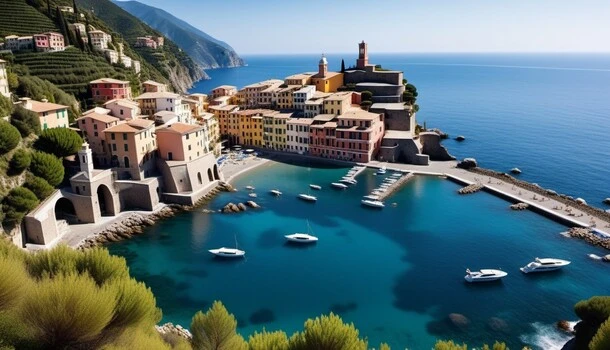
Weather in Tuscany
 !
!
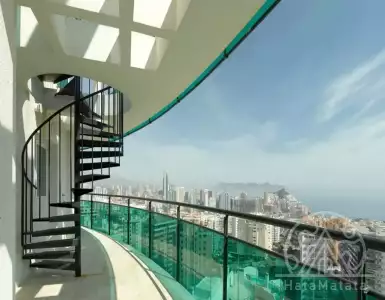
For sale Flat , Spain 210 378 $
📌 A few apartments for sale in Cala de Finestrat - a cozy place between Benidorm and Vieijahoyosa with a...
 !
!
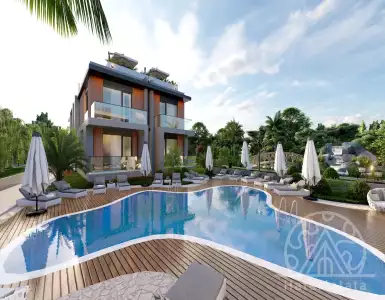
Flat for sale , Cyprus 126 672 $
The new residential complex is located in the foothills of Alsanjak. The complex consists of two two-storey buildings. Block A - 12...
For Sale castle in Tuscany
Didnt find the right facility?
Leave a request - we will handle the selection and send the best offers in a short period of time



Irina Nikolaeva
Sales Director, HataMatata
Selection castles in Tuscany in 15 minutes
Leave a request and we will select the 3 best options for your budget
🇮🇹 Buying a castle in Tuscany: legal steps, restoration costs and regional property factors
Tuscany, often hailed as the crown jewel of Italy, offers a captivating blend of rolling hills, cultural heritage, and a robust economy. For those contemplating a castle in Tuscany, the allure extends beyond aesthetics, touching upon investment potential, lifestyle, and long-term value. Castles here provide an opportunity to own a piece of history in a region known for its breathtaking landscapes and rich cultural tapestry, making it a favored choice for both private buyers and investors.
🌍 Tuscany’s Enchanting Landscape and Its Impact on Castle Purchases
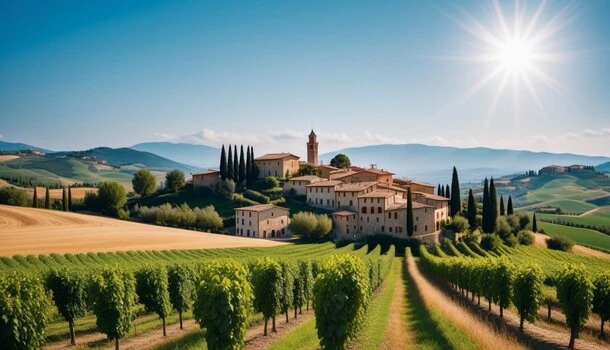
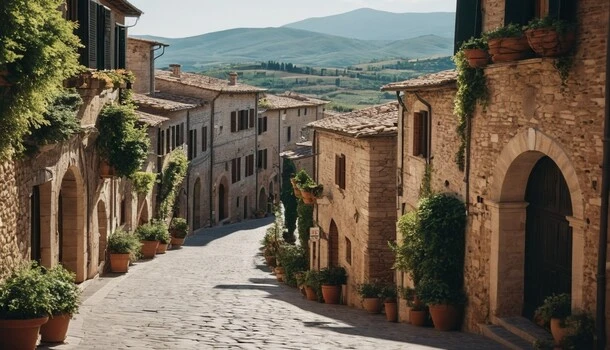
Tuscany's geography is characterized by charming vineyards, olive groves, and breathtaking medieval towns that dot the landscape. Areas such as the Chianti region, nestled between Florence and Siena, are particularly sought after for their stunning views and proximity to tourist attractions. The region's climate, classified as Mediterranean, features hot, dry summers and mild, wet winters, making it ideal for year-round enjoyment.
Tuscany's infrastructure complements its natural beauty, with Florence, Pisa, and Siena serving as central hubs that provide easy access to international travel through well-connected transport networks, including the Florence Airport and efficient rail systems. These cities not only cater to residents but also draw millions of tourists annually, shaping strong demand for properties like castles, especially those that can be converted into luxury accommodations or holiday rentals.
The demand for castles specifically is driven by their unique historical value and charm. Many buyers are drawn to the adaptability of these properties, which range from well-preserved medieval structures to those requiring restoration. The desire for a rustic lifestyle intertwined with modern conveniences ensures that the market for buying a castle in Tuscany remains robust.
📈 Understanding Tuscany’s Economic Landscape and Its Investment Climate
Tuscany's economy is diverse, with notable contributions from tourism, agriculture, and small to medium-sized enterprises. The GDP of Tuscany is among the highest in Italy, reflecting a stable economic environment that is bolstered by the region's global appeal. As of recent analyses, tourism not only fuels the economy but significantly influences real estate prices, especially in high-demand areas where castles are often located.
The influx of tourists plays a critical role in the investment potential for castles in Tuscany. In 2019, Tuscany recorded over 57 million tourist arrivals, with many visitors drawn to its renowned art, architecture, and gastronomy. This growing tourist market boosts the viability of castles as investment properties, particularly for those interested in short-term rentals or transforming these estates into boutique hotels.
Moreover, the tax burden for real estate investments in Italy remains competitive compared to other European countries. Owners of castles can expect property taxes that align with local council rates, while possibilities for tax deductions on restoration expenses can enhance the attractiveness of investing in this real estate segment.
💰 Prices for Castles in Tuscany: What to Expect
The average price of a castle in Tuscany can vary significantly based on location, size, and condition. Typically, buyers can find castles starting at approximately €500,000 for smaller properties, while larger estates with extensive grounds and historical significance may exceed €5 million. Here’s a breakdown of price ranges in several key districts:
- Florence & Surrounding Areas: €1,000,000 - €10,000,000
- Siena: €800,000 - €8,000,000
- Lucca: €600,000 - €5,000,000
- Pisa: €700,000 - €6,500,000
- Arezzo: €500,000 - €4,500,000
Castle formats often include:
- Renovated Castles: Modern amenities with historical charm.
- Restoration Projects: Fixer-uppers requiring investment in renovation.
- Investment Properties: Properties suited for rental conversion.
With such a diverse range of properties available, buyers can select a castle that suits their financial capability while capitalizing on the increasing demand and sentiment around Tuscany’s real estate market.
🏙️ Best Districts in Tuscany for Castle Acquisition
When considering purchasing a castle in Tuscany, the following districts should be on the radar:
- Florence: The cultural heart of Tuscany, Florence offers castles with rich historical significance. Its vibrant tourist scene contributes to strong rental yields, particularly for those considering properties as hospitality ventures.
- Siena: Known for its medieval architecture and the famous Palio horse race, Siena attracts culture-loving investors. The rental market here thrives, bolstered by consistent tourist traffic.
- Lucca: A hidden gem, Lucca has well-preserved walls and a charming old town. This area caters to buyers seeking a quieter lifestyle with solid investment potential in tourism and seasonal rentals.
- Arezzo: With its blend of history and art, Arezzo is becoming increasingly popular among foreign investors looking for competitive prices and high rental yields.
In each of these locations, buyers benefit from well-developed infrastructure, good transport connections, and a rich cultural scene that collectively boost property values and lifestyle.
🏗️ Leading Developers and Projects Featuring Castles in Tuscany
Several reputable developers specialize in the castle market in Tuscany, creating opportunities for buyers looking for quality and luxury. Some notable projects include:
- Castelli di Montegufoni: Located in Montespertoli, this development includes several well-restored castles, now luxurious residences with modern furnishings.
- Borgo di Castiglione: Situated near Arezzo, this restoration project transforms historical castles into high-end residences with a focus on sustainable living.
- Castello di Volpaia: This exclusive development encompasses a medieval castle and surrounding estates, offering customization and unique architectural features.
Developers often provide flexible payment terms, including installment plans and the opportunity for buyers to secure mortgages for castles in Italy for foreigners. Ensuring that you work with reputable firms simplifies the process of acquiring a castle and managing future renovations.
🏦 Navigating Mortgages and Installment Plans for Foreign Buyers in Tuscany
Foreign buyers often enjoy favorable conditions when applying for mortgages on properties in Tuscany. Key aspects include:
- Down Payment: Typically ranges from 20% to 30% of the property's value for non-residents.
- Interest Rates: Generally hover around 3% to 5%, depending on the banking institution and external economic factors.
- Tenure: Most mortgages are available for a duration of 15 to 30 years, allowing for manageable repayments.
For buyers interested in installment plans, many developers in Tuscany offer enticing options, often requiring a deposit followed by a series of payments correlating with the construction phases or property handover.
📄 Step-by-Step Process for Buying a Castle in Tuscany
Navigating the purchase of a castle in Tuscany is seamless when understanding the key steps involved:
- Selection: Identify criteria based on location, size, and budget.
- Reservation: Secure the property with a deposit while engaging a notary expected to handle legal processes.
- Due Diligence: Perform necessary checks on property conditions, historical classification, and planning constraints.
- Contract Signing: Review terms and conditions, ensuring rights and responsibilities are clear.
- Payment: Complete the financial transaction through agreed methods (bank transfer or escrow).
- Registration: The final step involves registering the property with the local land registry.
Each of these components requires attention to detail and often the assistance of legal professionals to avoid pitfalls during the acquisition process.
⚖️ Legal Considerations for Owning Castle in Tuscany
Owning a castle in Tuscany comes with its legal nuances. Buyers should be aware of:
- Property Taxes: Generally, a buyer must account for an annual property tax known as IMU (Imposta Municipale Unica), typically around 0.4% to 0.76% of the property value.
- Rental Rules: If planning to rent the property, adherence to local laws regarding short-term rentals is essential, as regulations can vary greatly by district.
- Residence and Citizenship Opportunities: Purchasing a castle can indeed pave the way for potential residency or citizenship through investment, contingent upon reaching the €500,000 investment threshold.
A thorough understanding of these legal aspects is crucial for a smooth ownership experience and preserving the historical integrity of the property.
✨ Diverse Purposes for Buying a Castle in Tuscany
Buying a castle in Tuscany can serve a multitude of purposes. Whether it's for personal enjoyment, restoration as a luxurious vacation getaway, or even an investment vehicle, the options are expansive:
- Personal Residence: Experience the unique lifestyle Tuscany has to offer, complete with scenic views and cultural richness.
- Seasonal Residence: Ideal for families seeking a second home, integrating leisure with investment potential.
- Rental Investment: Castles positioned in tourist hotspots can provide significant returns through vacation rentals.
- Family Legacy: Owning a castle can serve as a family retreat or an inheritance for future generations, creating lasting memories and investment value.
Each purpose connects seamlessly with specific real estate options, enhancing the appeal of owning a castle in a region as iconic as Tuscany.
The prospect of the castle market in Tuscany remains promising. As demand for historical properties continues to rise alongside the return of international tourism, savvy investors and buyers can expect a vibrant market that combines luxury with investment potential, ensuring that Tuscany remains a sought-after destination for property enthusiasts.
Frequently Asked Questions
Prices vary widely. Small ruins or towers with land can start €150,000–€800,000; modest restored castles €500,000–€3,000,000; well‑restored historic castles €3,000,000–€10,000,000; grand estates and complexes €10,000,000–€50,000,000+. Location (Chianti, Val d'Orcia, coast), restoration level and acreage drive price.
Italy visas include elective residence (non-lucrative), work (employee/self-employed), study, family reunification and an investor visa for qualifying financial investments. Owning a castle in Tuscany does not automatically grant residency or citizenship; property can support proof of accommodation when applying. Visa is applied at the consulate, then a permesso di soggiorno is requested after arrival.
Tuscany offers high quality of life: art cities, wine country and coastal zones. Healthcare via the public SSN after registration, regional hospitals in Florence/Siena, public and limited international schools in major towns. Transport: Autostrada A1, regional trains and airports in Florence and Pisa; rural broadband varies. Good for remote workers in towns; rural castles may need connectivity upgrades.
Historic castles often fall under cultural heritage controls (Soprintendenza) and need permits (permesso di costruire or SCIA) from the comune. Seismic and energy retrofit rules apply. Approvals can take months (commonly 6–18+). Major structural changes are restricted; licensed architects and conservation specialists are required.
Short‑term rentals are possible but must follow local rules: register the property, declare tourist accommodation, collect tourist tax and meet safety standards. Seasonality is strong (peak May–Sept and holidays). Typical gross yields vary widely, roughly 3%–7% depending on location and occupancy; factor in higher maintenance and management costs.
Yes. Common charges: IMU property tax (municipal rate applied to cadastral value), TARI waste tax, and income tax on rental profits (IRPEF or optional cedolare secca ~21% for residential leases). Municipal tourist taxes and local surcharges may apply. Annual tax burden plus utilities often ranges from 0.3%–1.5% of property value, depending on location and use.
Tuscany has strict land‑use and landscape protections. Agricultural land conversion, parceling and new construction can be limited; protected landscape, forestry or Natura areas add restrictions. Changing farmland to residential/commercial use often requires zoning approvals and proof of allowable use; check local town plans before purchase.
Check title and cadastral records, heritage listing/status, building permits and past works, seismic classification, utility connections, boundary surveys, liens/tax debts, and environmental constraints. Obtain structural and restoration cost estimates and a notarized contracts review. Use local notary and technical experts familiar with historic properties.
Many castles sit in rural hills or near historic towns; typical drive times to major transport hubs range 30–120 minutes. Florence and Pisa airports serve most areas; regional rail connects towns but last‑mile travel is usually by car. Coastal castles (Maremma) can be nearer to southern hubs; location determines accessibility for guests and logistics.
Insurance premiums vary by value and coverage, typically €1,000–€10,000+ per year. Routine maintenance for historic buildings often runs about 1%–3% of property value annually; larger or poorly maintained castles can cost more. Major renovations are priced by scope — small works hundreds €/sqm, full restorations commonly €500–€3,000+/sqm depending on finishes and structural needs.
Properties by Region
- Castles in Tuscany (419)
- Castles in Lombardy (372)
- Castles in Umbria (326)
- Castles in Lazio (210)
- Castles in Liguria (133)
- Castles in Campaign (60)
- Castles in Piedmont (58)
- Castles in Sicily (35)
- Castles in Venice (31)
- Castles in Calabria (27)
- Castles in Puglia (26)
- Castles in Abruzzo (20)
- Castles in Veneto (14)
Properties by Country
- Real estate in Bulgaria (11408)
- Real estate in Montenegro (5348)
- Real estate in Indonesia (2423)
- Real estate in Spain (2289)
- Real estate in Portugal (1975)
- Real estate in Italy (1897)
- Real estate in Turkey (1699)
- Real estate in Cyprus (1589)
- Real estate in Thailand (1565)
- Real estate in Croatia (1431)
- Real estate in Greece (1082)
- Real estate in USA (1013)
- Real estate in France (1006)
- Real estate in Georgia (519)
- Real estate in Serbia (328)
- Real estate in Slovenia (123)
- Real estate in Egypt (23)
Free real estate consultation in Tuscany
Don't know which area to choose in Tuscany? We will tell you in which areas it is better to live or invest, and show you the appropriate options.

Maria Guven
Head of Direct Sales Department
+90-507-705-8082