


Abu Dhabi’s Q1 Shock: AED 66bn in Deals and What It Means for UAE Property Investors

Abu Dhabi’s boom quarter: AED 66 billion and a market in motion
The UAE real estate market produced a number that stopped analysts in their tracks in Q1 2026: AED 66 billion in total transaction value. That is a 160.7% year-on-year rise and the highest quarterly total the emirate has recorded. Within the first two paragraphs of this report we need to be blunt: this is impressive growth, and it brings both opportunity and risk for buyers, developers and overseas investors.
In our analysis, the figures show a market moving from buyer interest to committed capital at speed. The Abu Dhabi Real Estate Centre registered more than 13,518 transactions in Q1 2026, versus roughly 6,896 in the same period of 2025. Sales and purchase transactions dominated activity, while mortgage activity also rose noticeably.
Quick facts from Q1 2026
- Total transaction value: AED 66 billion (+160.7% y/y)
- Total transactions: more than 13,518 (Q1 2025: ~6,896)
- Sales and purchases: AED 50.97 billion (+228.6% y/y) across >8,940 transactions
- Mortgage transactions: AED 15.03 billion (+53.4% y/y) across >4,578 transactions
- New projects registered: 16 (a 60% increase from Q1 2025)
These are not idle metrics. They mark a shift from early-cycle interest to widespread activity in buying, financing and launching new supply.
Why transaction values surged: demand, stability and policy
There are several concrete drivers behind the Q1 spike. We see a combination of macro and micro factors working together to lift both sentiment and capital deployment.
- Political and economic stability: The UAE’s macro backdrop remains a key attractor for foreign capital. Stability in governance and the currency is repeatedly cited by investors and by developers such as MERED.
- Visa and tax considerations: Schemes that encourage longer-term residency, including the Golden Visa, and tax structures that are friendly for high-net-worth individuals are part of the attraction.
- Flexible payment plans: Developers continue to offer spread payment schedules that reduce immediate cash outlay and broaden the buyer pool.
- Shift in buyer behaviour: Market participants report a move away from short-term speculation toward holding assets for longer-term occupancy or rental income.
- Financing availability: A 53.4% increase in mortgage value signals lenders are participating. That matters because higher mortgage usage tends to support larger buyer segments and pushes up transactional volumes.
We hear different explanations in market briefings. Some attendees credit residency programs or tax advantages, but the reality is broader: buyers are buying because they trust the market as a place to hold capital over years, not weeks.
Transaction mix: what kinds of deals drove the record quarter
The detail behind the headline shows where activity is concentrated and where new entrants of capital are focused.
- Sales and purchases were the largest component, rising to AED 50.97 billion, up 228.6% y/y, across more than 8,940 transactions. That tells us primary demand for ownership—both for owner-occupiers and investors—has returned or expanded dramatically.
- Mortgage transactions rose to AED 15.03 billion, up 53.4%, across more than 4,578 transactions. This indicates financing is available for buyers and that banks are underwriting deals at scale.
- Registration of 16 new projects in Q1 2026 (a 60% increase y/y) signals developer confidence and a faster pipeline of supply coming to market. Many of these projects sold quickly on launch.
The combination of rising sales plus higher mortgage volumes generally indicates the market is going beyond speculative trading and into broader end-user demand.
Spotlight: Reem Island and the Riviera Residences project
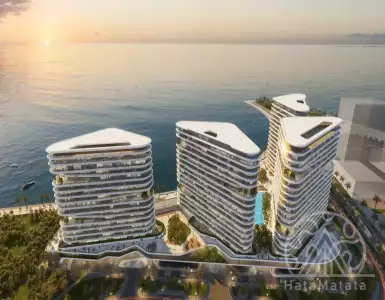
Where are buyers placing their capital? Reem Island is a clear focal point. MERED, an international developer cited in the source material, has started foundation works on Riviera Residences, a premium waterfront scheme on Reem Island following completion of 60% of preliminary works.
Key facts on Riviera Residences from the developer announcement:
- More than 400 apartments
- 11 luxury villas
- Waterfront positioning on Reem Island
This is not just another launch. High-quality waterfront product tends to draw both local high-net-worth buyers and international purchasers seeking lifestyle and capital preservation. The speed of sales at launches mentioned in the official data suggests that similar launches will continue to attract strong demand.
What this means for buyers and investors (practical insights)
We offer the following practical takeaways for anyone looking at Abu Dhabi property now.
- Expect fast-moving launches: Recent projects reportedly see rapid sales on release. If you intend to buy off-plan, have financing approvals and paperwork ready before launch.
- Financing matters: Mortgage activity is up 53.4%. Investors who can access competitive mortgage terms will have an edge on pricing and leverage; expect banks to require standard documentation and clear proof of income and source of funds.
- Focus on end-user demand: The market shows a tilt toward longer-term holding. Properties that serve owner-occupiers—family apartments, family-friendly villas, and waterfront units—are likely to retain demand if the trend persists.
- Assess supply risk: With 16 new projects registered in Q1 there is more product coming. Not all projects will deliver in the same submarket, so evaluate project phasing, developer track records and delivery timelines.
- Due diligence is non-negotiable: Check title, completion guarantees, escrow use, and contract clauses (late delivery penalties, payment schedule flexibility).
 1
1
 49
49
 1
69
1
69
 28
28
 4
4
 6
266
6
266
 4
2
194
4
2
194
We recommend investors be tactical: if you are looking for yield, vet the rental market in the submarket; if you are looking for capital growth, prioritize projects with strong delivery credentials and proven sales velocity.
Risks and cautionary signals
A booming quarter looks attractive, but risks exist and we flag several for buyers and investors.
- Price correction risk: Rapid price appreciation in a short period can increase the chance of correction if demand moderates or if global liquidity conditions change.
- Concentration risk in prime locations: Waterfront and prime-island supply can be limited; this produces tight competition but also concentrated exposure to a specific market segment.
- Developer execution risk: The number of new project registrations is up, but completion depends on developers' balance sheets, supply chains and contractor performance.
- Financing shifts: While mortgage activity rose, higher global interest rates or tighter bank lending standards could affect future buyer affordability.
Balanced exposure and staged purchases reduce these risks. For many investors we speak with, a mix of completed stock and selective off-plan exposure is the most prudent approach.
How regulators and policy shape the market
Policy matters here. Several aspects have an outsized effect on buyer confidence and capital flows:
- Residency programs: Visa schemes that allow long-term stay encourage investors to buy for occupancy and rental longer term.
- Tax environment: Low or neutral tax structures remain appealing to international capital.
- Market governance: Escrow accounts, registration processes and transparent transaction reporting help build trust.
Michael Belton, CEO of MERED, summed it up by saying that incentives such as the Golden Visa play a role, but the broader integrated system of stability and policy enforcement is the main reason foreign investors commit capital to Abu Dhabi.
Where prices and rents might go next
No market forecast is certain. That said, the Q1 metrics suggest a few plausible scenarios:
- Scenario A: Continued demand with steady supply rollout. If developers deliver new projects on schedule and end-user demand remains strong, prices and rental rates could hold or grow modestly.
- Scenario B: Supply catch-up leads to price moderation. If registered projects come to market faster than end-user demand grows, some submarkets could face downward pressure.
- Scenario C: External shocks affect liquidity. A sudden tightening of global finance conditions or a regional shock could reduce speculative flows and put downward pressure on prices.
Our view: the most likely near-term outcome is that certain submarkets—waterfront, island locations, family-friendly districts—retain strength while peripheral or oversupplied micro-markets face more competition. Investors should be selective.
Strategy suggestions for different buyer profiles
- For international investors seeking capital preservation: focus on central Abu Dhabi assets with proven rental demand; consider completed stock to avoid delivery risk.
- For yield investors: target units in high-demand rental micro-markets and check local rental regulations and occupancy trends.
- For owner-occupiers and long-term residents: prioritize quality of life features and access to services; flexible payment plans make new launches attractive.
- For speculative short-term traders: tread carefully. The market is moving away from short-term speculation toward long-term holding, which reduces volatility but also trading opportunities.
Monitoring indicators to watch in 2026
If you are tracking Abu Dhabi property, these metrics will tell you where the market is heading:
- Quarterly transaction values and volumes (watch whether totals stay near Q1 levels)
- New project registrations and their delivery schedules
- Mortgage approval volumes and interest rate moves
- Rental market vacancy and average rents in core submarkets
- Developer pre-sale rates at launch events
We will be watching these indicators closely because they separate transient spikes from durable shifts.
Frequently Asked Questions
Q: Is Abu Dhabi property overheating after Q1 2026? What should I worry about?
A: Q1 shows very strong activity but overheating is not proven. You should worry about localized price spikes, delivery risk from rushed projects and the potential impact of global rate moves. Assess each investment on submarket fundamentals, not headline momentum.
Q: Are mortgages readily available for foreign buyers in Abu Dhabi?
A: Mortgage activity rose by 53.4% in Q1 to AED 15.03 billion, indicating lenders are active. Availability depends on nationality, loan-to-value, income documentation and bank policies. Have pre-approval before committing to off-plan deals.
Q: Will newfound demand push up housing prices across the emirate?
A: The biggest increases are concentrated in sales and premium segments. Price rises are likely uneven: prime waterfront and family areas will show more resilience, while peripheral zones will track new supply and rental demand.
Q: Is it better to buy off-plan or completed stock now?
A: Both have pros and cons. Off-plan can offer lower entry prices and staged payments, but carries delivery and execution risk. Completed stock removes delivery uncertainty and can provide immediate rental income. Match your choice to your risk tolerance and liquidity needs.
Bottom line
Abu Dhabi’s Q1 2026 shows a market with renewed appetite for ownership, bolstered by AED 66 billion in transaction value and faster mortgage activity. For buyers and investors this means competition at launches, more product coming through developer pipelines and a market that rewards careful due diligence over haste. Keep an eye on project delivery timelines and mortgage availability as you make decisions; these variables will determine whether gains are sustained or face correction. The emirate registered 16 new projects in Q1 2026, a 60% increase year-on-year, and that figure will be a key benchmark for supply-side pressure through 2026.
We will find property in UAE (United Arab Emirates) for you
- 🔸 Reliable new buildings and ready-made apartments
- 🔸 Without commissions and intermediaries
- 🔸 Online display and remote transaction

International Real Estate Consultant

Subscribe to the newsletter from Hatamatata.com!
Subscribe to the newsletter from Hatamatata.com!
Popular Posts

We will find property in UAE (United Arab Emirates) for you
- 🔸 Reliable new buildings and ready-made apartments
- 🔸 Without commissions and intermediaries
- 🔸 Online display and remote transaction
International Real Estate Consultant

Subscribe to the newsletter from Hatamatata.com!
Subscribe to the newsletter from Hatamatata.com!
I agree to the processing of personal data and confidentiality rules of HatamatataPopular Offers
 1
1
 2
255
2
255
 3
185
3
185
Need advice on your situation?
Get a free consultation on purchasing real estate overseas. We’ll discuss your goals, suggest the best strategies and countries, and explain how to complete the purchase step by step. You’ll get clear answers to all your questions about buying, investing, and relocating abroad.



Sales Director, HataMatata