


Eagle Hills’ $6.6bn Gamble: How Georgia’s Real Estate Market Could Change

A watershed foreign investment for the real estate in Georgia
A private developer from the United Arab Emirates has committed to what Georgian officials call the largest foreign investment in the country’s history. Eagle Hills Georgia is promising roughly US$5.7–6.6 billion for two mega-projects: the Tbilisi Waterfront / Krtsanisi development covering about 590 hectares, and the Gonio Marina near Batumi on about 260 hectares. We open with this because the size and structure of the deal make direct, practical implications unavoidable for buyers, investors and residents who follow the Georgia property market.
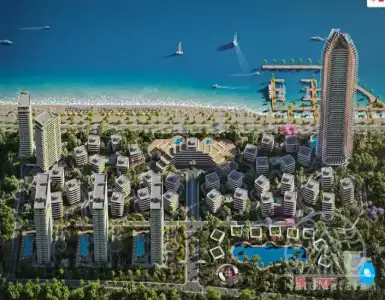
This is not small-scale housebuilding. These are mixed-use waterfront developments with residential districts, hotels, marinas, retail centers, public parks and tourism infrastructure. The project timeline, execution approach, governance model and market reception will decide whether the money changes Georgian cities or mostly creates high-end enclaves.
Why this matters now
- It positions Georgia to receive one of its biggest-ever foreign direct investments.
- It could reshape high-end real estate and tourism capacity in Tbilisi and Batumi.
- It introduces a new model of state equity participation in major property deals.
I will walk through the projects, the deal mechanics, what this means for buyers and investors, and the risks you need to weigh before making decisions in the Georgian property market.
The developments: what is being planned
Eagle Hills Georgia is proposing two flagship works that together equal roughly 850 hectares of development land.
Tbilisi Waterfront / Krtsanisi (approximately 590 hectares)
Planned components:
- Residential districts aimed at premium buyers
- Retail centres and commercial zones
- Public parks and waterfront infrastructure
- Recreation and tourism amenities
The company positions this as an urban regeneration of an underused waterfront area, introducing mixed-use density and tourism services to the Tbilisi market.
Gonio Yachts & Marina (approximately 260 hectares)
Planned components:
- Marina and yacht facilities
- Luxury residences and hotels
- Retail parks and tourism infrastructure
- Public recreational spaces
Gonio is adjacent to Batumi, Georgia’s Black Sea hub for tourism, and the marina is designed to expand the coastal city’s capacity for yachting and higher-end visitors.
These plans align with Eagle Hills’ historic product mix: waterfront regeneration, marinas, hotels and luxury residential developments across emerging markets.
Who is behind the money and how the deal is structured
Eagle Hills is a private development group headquartered in Abu Dhabi. Its founder and chairman is Mohamed Alabbar, known for establishing Emaar Properties in the UAE. Eagle Hills operates in 17+ countries and focuses on large mixed-use waterfront and hospitality projects.
Key deal facts from the agreement signed in October 2025:
- Total commitment: approximately US$5.7–6.6 billion (figures vary between announcements and official documents)
- State equity stake: Georgia will hold about 33.3% of the joint-venture vehicle
- Developer control: Eagle Hills retains the controlling interest and is responsible for planning, financing and attracting further investors
- State contribution: Georgia contributes strategic land assets to the joint venture
That combination — a foreign private developer with operational control and a sizeable state equity stake — differs from many prior FDI arrangements in the country where the state acted mainly as regulator or concession giver.
Track record and what it signals for delivery
Eagle Hills’ portfolio includes projects in Serbia (Belgrade waterfront), Albania, Hungary, Egypt and North Africa, plus hospitality investments in Europe and the Middle East. The firm is known for turning underutilised waterfronts into mixed-use urban destinations, and their projects typically target luxury and upper-tier markets.
This background matters because buyers rely on a developer’s record when purchasing off-plan or choosing to invest in rental/resale positions. Across markets, Eagle Hills’ projects have been associated with:
- High-end construction standards and premium finishes
- Heavy emphasis on amenities such as marinas, beach clubs and leisure facilities
- Frequent partnership with international designers and architects
But there are consistent critiques: incomplete transparency around land transfers and contract terms in past projects, and a product mix that skews toward luxury rather than affordable housing.
How this could affect the Georgian property market
Expect changes concentrated in several areas.
Price and product mix
- The injection of US$5.7–6.6 billion and large-scale waterfront premium product will expand the supply of high-end residential units and hospitality beds, especially in Tbilisi and Batumi.
- That may place upward pressure on luxury housing prices and on rents in premium submarkets, while leaving mass-market housing dynamics largely unaffected unless developers broaden offerings.
Tourism and hospitality
- Planned hotels and marina capacity could increase high-spend tourism flows into Batumi and more international business travel into Tbilisi.
- More hotel rooms and new conferencing or leisure infrastructure could lengthen tourist seasons if demand materialises.
Employment and construction
- The projects are likely to create thousands of construction and service-sector jobs during the multi-year build phase and after opening, although exact job counts have not been disclosed.
Urban infrastructure and services
- Large developments typically require upgrades to roads, utilities and waste management. The agreement will need clear commitments on who pays for that infrastructure and how it is delivered.
Our analysis: this is a bet on premium demand. If international buyers and visitors show up at the scale developers expect, Georgian real estate will see significant premium growth.

 1
1
 49
49
 1
69
1
69
 28
28

Governance, transparency and environmental questions
Several issues warrant careful attention from investors and the public.
Transparency and contract disclosure
- Key terms of the agreement between the Georgian state and Eagle Hills are classified as a commercial secret. Civil society groups have demanded release of the full contract to assess land valuation, revenue sharing, guarantees and state obligations.
- This secrecy raises governance concerns because public land is involved and the state holds a 33.3% stake.
Environmental impact
- Projects of this scale can affect riverine ecosystems in Tbilisi and coastal zones near Gonio. Environmental impact assessments and mitigation plans are critical but not yet publicly available.
Execution and demand risk
- The combined size of the projects — US$5.7–6.6 billion — raises execution risk. Large mixed-use projects have long timelines and require staged financing, pre-sales and stable market demand.
Our position: investors should treat disclosures, independent valuation of contributed land and the public infrastructure schedule as primary variables when assessing their exposure.
What buyers and investors should check before committing
From our experience covering large developments and advising international buyers, here is a checklist to guide due diligence.
Legal and contractual checks
- Verify land title and the structure of state land contribution.
- Request the joint-venture articles and any shareholder agreements that affect minority protections.
- Confirm whether pre-sales, warranties and escrow mechanisms apply to off-plan purchases.
Financial and market assessments
- Ask for a clear construction timeline, financing plan and phased delivery schedule.
- Review local demand metrics: local high-net-worth population growth, international buyer interest, and hotel occupancy trends for Batumi and Tbilisi.
- Seek independent valuations of the state-contributed land and projected unit pricing.
Planning and environmental
- Ensure an independent environmental impact assessment (EIA) is commissioned and publicly available.
- Check zoning, utilities capacity and who pays for upgrades such as new roads or sewage systems.
Exit and liquidity
- Ask how resale and rental markets are expected to function once the project is operational.
- Understand legal restrictions on foreign ownership and any residency or tax incentives attached to purchases.
Practical buying tips
- Avoid committing significant funds to pre-sales unless escrow protections and delivery guarantees are explicit.
- Consider a staged exposure: small initial purchases or investment through established local partners while monitoring early project milestones.
Market timing and likely scenarios
There are three broad outcomes we monitor:
-
Realisation scenario: Projects proceed on schedule, international demand arrives, and Tbilisi and Batumi see a meaningful uplift in premium real estate supply and tourism capacity.
-
Slow-rolling scenario: Phased delivery occurs with intermittent financing gaps; partial sections open as demand allows but the full vision stretches across many years.
-
Contraction scenario: Market or financing shocks reduce scale; components are downscaled or delayed, leaving large tracts under development for extended periods.
Which is most likely depends on financing appetite from international capital markets, pre-sale performance, and whether the deal terms remain politically stable. Given Eagle Hills’ track record in multiple countries and the UAE’s willingness to back major overseas projects, the slow-rolling scenario is plausible while delivery to full scale remains challenging.
Risks to watch and mitigation steps
Key risks
- Execution risk for a project exceeding US$6 billion.
- Environmental impacts on Krtsanisi and the Gonio coastal zone.
- Transparency and governance due to classified contract terms.
- Demand sustainability for large-scale luxury real estate in Georgia.
How investors can mitigate
- Demand transparent disclosure of key contract clauses or insist on third-party escrow protections.
- Require clear EIA reports and climate resilience measures for waterfront construction.
- Base purchase decisions on local market metrics, not on promised masterplan renderings alone.
We advise investors to keep contingency horizons longer than for standard projects and to price in hold costs if delivery timelines extend.
Our view: balanced but cautious
The scale of Eagle Hills’ announced commitment — between US$5.7 and US$6.6 billion — will redraw attention to Georgia from Gulf capital markets and international buyers. That can bring new capital, construction jobs and tourism capacity to Tbilisi and Batumi. But the deal’s political and commercial structure, plus the secrecy that surrounds key contract details, require a cautious approach.
We have covered waterfront redevelopments in emerging markets for years: when transparency and infrastructure commitments are clear, large projects can uplift surrounding areas. When those details are opaque, social friction and litigation often follow, and delivery can slow. The Georgian state holding 33.3% equity is unusual and increases the public stake in outcomes, which is a reason for demanding open information, not less.
Frequently Asked Questions
Q: How large is Eagle Hills’ investment in Georgia?
A: The developer’s commitment is reported at approximately US$5.7–6.6 billion, covering two main projects: the Tbilisi Waterfront / Krtsanisi (about 590 hectares) and Gonio Marina (about 260 hectares).
Q: What ownership does the Georgian state have in the projects?
A: Under the joint venture signed in October 2025, the Georgian state holds roughly 33.3% of the development vehicle; Eagle Hills holds the controlling interest.
Q: What are the main risks for property buyers in these developments?
A: Main risks include execution delays on a multi-billion-dollar scheme, environmental impacts, limited public disclosure of contract terms, and uncertain long-term demand for luxury housing and hospitality.
Q: Should foreign buyers rush to pre-purchase units off-plan?
A: We recommend caution. Insist on escrow protections, transparent delivery timelines, independent valuations of state-contributed land, and clear warranties before committing significant sums.
This project will test Georgia’s ability to manage large-scale foreign investment in the real estate sector while protecting public interest. For buyers and investors the takeaway is simple: monitor contract transparency, verify infrastructure commitments, and assume timelines will be measured in years, not months.
Tags
We will find property in UAE (United Arab Emirates) for you
- 🔸 Reliable new buildings and ready-made apartments
- 🔸 Without commissions and intermediaries
- 🔸 Online display and remote transaction

International Real Estate Consultant

Subscribe to the newsletter from Hatamatata.com!
Subscribe to the newsletter from Hatamatata.com!
Popular Posts

We will find property in UAE (United Arab Emirates) for you
- 🔸 Reliable new buildings and ready-made apartments
- 🔸 Without commissions and intermediaries
- 🔸 Online display and remote transaction
International Real Estate Consultant

Subscribe to the newsletter from Hatamatata.com!
Subscribe to the newsletter from Hatamatata.com!
I agree to the processing of personal data and confidentiality rules of Hatamatata

Need advice on your situation?
Get a free consultation on purchasing real estate overseas. We’ll discuss your goals, suggest the best strategies and countries, and explain how to complete the purchase step by step. You’ll get clear answers to all your questions about buying, investing, and relocating abroad.



Sales Director, HataMatata