


Hartford Tops Realtor.com List — What This Means for Property Buyers and Investors

Hartford’s rise is more than a headline — it changes the real estate USA conversation
Hartford, Connecticut, has reclaimed the title of America’s hottest housing market in Realtor.com’s May report, and that matters for anyone watching the real estate USA scene. The city’s surge is driven by a rare mix of very strong demand and severely limited supply, creating conditions that reward well-prepared buyers and give sellers leverage.
In this article we break down the numbers, compare Hartford to nearby metros, explain why the Northeast is dominating the hottest-markets list, and offer practical steps for buyers, sellers, and investors who are deciding whether to act now or wait.
Why Hartford climbed to the top
Realtor.com’s market hotness index uses two straightforward metrics: unique views per property on Realtor.com and how quickly listings move off the market. Hartford topped the May list because both indicators point to intense buyer interest.
- Hartford drew 5.3 times the national average of viewers per listing, the highest ratio among the top 20 markets.
- The typical home sold in 25 days, which is five days faster than a year ago and almost a month faster than the national norm.
- The median listing price is $475,000, considerably more affordable than nearby large metros.
These facts explain why Hartford rose four spots year over year to eclipse April’s leader, Springfield, Massachusetts. Realtor.com senior economist Hannah Jones told reporters that the combination of surging demand and swift market pace reflects a highly restricted supply of for-sale homes and conditions that are comparatively buyer-friendly versus Boston or New York.
Real estate professionals on the ground add texture. Carl Lantz, a West Hartford agent, says buyers are relocating from denser, more expensive centers like Boston and New York in search of better value while staying within commuting distance. That pattern is reinforced by remote and hybrid work arrangements that allow families to widen their search radius without sacrificing employment access.
What the headline numbers mean for buyers and investors
Numbers are only useful when they inform decisions. Here’s how the data should influence your strategy.
- Price comparison: Hartford median listing $475,000, versus Boston $849,000 and New York $775,000. That gap explains the market pull.
- Speed to close: with a median time on market of 25 days, buyers who do not have financing in place risk losing opportunities to faster, prepared rivals.
- Supply pressure: current listings are about 75% below pre-pandemic norms in Hartford, a severe shortfall that is the primary driver of price growth.
For buyers
- Get financing and contingencies arranged before you write an offer. Preapproval is essential; so is an understanding of what you can afford if a bidding war pushes the price above list.
- Be ready to act quickly. Homes move fast here; delayed decisions mean lost purchasing power.
- Consider flexibility on housing type and neighborhoods. A condo, townhouse, or smaller single-family home in an adjacent town may be the practical route into the market.
For investors
- The demand side is solid; view counts at 5.3x the national average indicate consistent shopper interest that can translate into quicker occupant turnover and stronger rent pricing in many submarkets.
- That said, acquisition costs will be higher because of competition. Expect to use more aggressive underwriting assumptions for purchase price growth and shorter holding periods if you’re flipping.
- Development or value-add plays face hurdles because building new supply takes time and cost—zoning, labor, and materials all limit quick responses to demand.
For sellers
- Low inventory favors sellers, but unrealistic pricing can slow or scuttle an otherwise advantageous window. Price to market to maximize attention and competing offers.
- Expect multiple offers on well-priced, move-in-ready homes; still, maintain inspection and financing protections you need to avoid buyer fall-throughs.
Where Hartford fits in the regional map
Hartford is not an island. Its appeal is shaped by proximity to larger employment hubs and by local qualities that matter to movers.
- Connecticut claims five spots on Realtor.com’s top-20 list for May, and 15 of the 20 hottest markets were in the Northeast. That signals a regional pattern of spillover demand from Boston and New York.
- The range of price points on the list is broad: Rochester, NY, at $330,000 on the low end, and Bridgeport, CT, at $847,000 on the high end. Demand is not restricted to the cheapest markets.
- Greater Hartford offers a variety of community types: urban neighborhoods in Hartford and West Hartford, suburban towns like Glastonbury and parts of Farmington Valley, and more rural pockets in the outer metro. Buyers can choose based on commute tolerance, school priorities, and lifestyle.
Cultural and lifestyle assets strengthen Hartford’s appeal. It is home to historic sites like the Connecticut State Capitol, the homes of Mark Twain and Harriet Beecher Stowe, and the Wadsworth Atheneum Museum of Art.



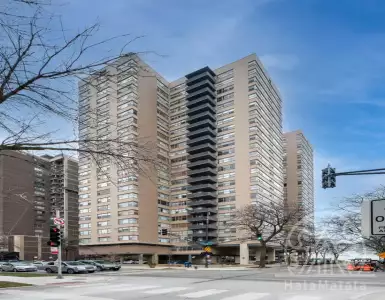




Supply constraints, policy options, and why this won’t be solved overnight
A repeated theme in interviews with local agents is that the shortage of listings is structural. Lantz says there are not enough homes on the market to support normal move-up and move-down activity. Realtor.com’s analysis puts Hartford’s inventory roughly 75% below pre-pandemic levels.
Why supply is constrained
- Homeowners have built equity during the pandemic years and many choose not to sell because they do not want to lose low-rate mortgages.
- New construction is slow because of permitting, labor shortages, and higher construction costs.
- Zoning rules in some suburbs limit higher-density or accessory dwelling unit (ADU) development, constraining options for added supply.
Suggested policy and market remedies
Lantz and other local professionals point to several interventions that could ease pressure over time:
- Incentives for workforce housing to make development of lower-cost units financially viable.
- Encouraging ADUs to add supply without large-scale subdivision.
- Programs to assist first-time and low-income buyers so that more inventory circulates as ownership patterns shift.
Each of these solutions is feasible but slow. Building out meaningful new supply requires capital, political will, and time, and the market in the meantime will continue to favor those who are prepared to act fast.
How the Northeast dominance changes opportunity sets
The Realtor.com top-20 list has been dominated by the Northeast and Midwest for more than two years, but the Northeast has pulled ahead in recent months. For buyers and investors this means competition is not isolated to one city; it is a regional signal.
- A clustering of hot markets in the Northeast suggests that relocation flows from Boston and New York are broad rather than narrow. Buyers who leave expensive, dense metros may choose a variety of Connecticut and Massachusetts towns.
- Markets that have seen listing growth, like Concord and Manchester-Nashua in New Hampshire, show a more relaxed pace that gives buyers more time to decide. Even in those markets, however, inventory remains low by historical measures.
From an investment stance, this regional pressure suggests opportunities for multi-market strategies: acquire in less heated nearby metros where sellers are more motivated, or pursue value-add projects where permitting and construction costs are manageable.
Practical checklist for buyers, sellers, and investors in Hartford today
Buyers
- Secure mortgage preapproval and verify timing for rate locks.
- Have a clear top-line budget and a maximum bid you will not exceed.
- Decide which concessions you can accept (shorter contingency windows, small repairs left to buyer) and which you cannot.
Sellers
- Price competitively using comps that reflect recent days-on-market realities and real sale prices rather than listing price alone.
- Prepare the home to minimize inspection surprises; fast closings happen when documentation and disclosures are complete.
Investors
- Stress-test deals against higher purchase prices and shorter holding cycles.
- Explore towns within a 45–60 minute commute to Boston and NYC where rental demand may be rising.
- Consider new construction only with a careful permitting timeline and contingency for cost overruns.
What can go wrong: risks to be aware of
Inevitably, strong demand and tight supply carry risks:
- Rapid price appreciation can outpace wage growth and local economic fundamentals, making long-term affordability worse.
- If mortgage rates rise significantly, buyer demand could cool quickly, creating price volatility.
- Overreliance on spillover demand means Hartford’s market is tied to economic trends in Boston and New York; shifts in those job markets have ripple effects.
Our view: act with preparation, not haste
We see Hartford’s hot streak as the result of measurable shifts—buyers chasing value within commutable distance of major metros, and a supply shortage severe enough to drive fast sales and competition. That creates opportunities, particularly for prepared buyers and disciplined investors. It also raises the prospect of rising prices that erode purchasing power for anyone who waits without a clear plan.
If you are considering a move into Greater Hartford, get financing in order, identify your preferred neighborhoods, and be ready to act quickly when a properly priced home hits the market. Sellers should price to attract competition, but keep inspection safeguards in place. Developers and policymakers should accept that adding supply is slow and will require multiple tactics, including incentives for workforce housing and easing of regulations that prevent smaller-scale development.
Frequently Asked Questions
Q: Why did Hartford beat Springfield to become the hottest market?
A: Hartford attracted 5.3 times the national average of viewers per listing and has a median listing time of 25 days, indicating both very strong interest and rapid sales. Those metrics moved Hartford ahead of Springfield in Realtor.com’s May rankings.
Q: Is Hartford affordable compared with Boston and New York?
A: Yes. The median listing price in Hartford is $475,000, compared with $849,000 in Boston and $775,000 in New York in May. That gap explains much of the relocation pressure from pricier metros.
Q: Will prices in Hartford keep rising?
A: Continued price growth depends on supply and interest rates. Inventory is about 75% below pre-pandemic levels, which supports upward pressure. However, higher mortgage rates or an economic slowdown could reduce demand and temper increases.
Q: What immediate steps should a buyer take to improve chances of success in this market?
A: Obtain mortgage preapproval, define a firm budget, be prepared to waive or shorten certain contingencies where prudent, and move quickly when a well-priced home appears. That combination matches the speed buyers are facing in Hartford today.
If you are planning to buy in Greater Hartford, remember this concrete fact: the median listing is currently $475,000 and homes move in about 25 days, so preparedness is the single most practical advantage you can build before submitting an offer.
Tags
We will find property in USA for you
- 🔸 Reliable new buildings and ready-made apartments
- 🔸 Without commissions and intermediaries
- 🔸 Online display and remote transaction

International Real Estate Consultant

Subscribe to the newsletter from Hatamatata.com!
Subscribe to the newsletter from Hatamatata.com!
Popular Posts

We will find property in USA for you
- 🔸 Reliable new buildings and ready-made apartments
- 🔸 Without commissions and intermediaries
- 🔸 Online display and remote transaction
International Real Estate Consultant

Subscribe to the newsletter from Hatamatata.com!
Subscribe to the newsletter from Hatamatata.com!
I agree to the processing of personal data and confidentiality rules of HatamatataPopular Offers



Need advice on your situation?
Get a free consultation on purchasing real estate overseas. We’ll discuss your goals, suggest the best strategies and countries, and explain how to complete the purchase step by step. You’ll get clear answers to all your questions about buying, investing, and relocating abroad.



Sales Director, HataMatata